


Swedish Pine Armoire
A Swedish pine armoire brings architectural presence and practical storage to a room through centuries of Scandinavian craftsmanship and painted finishes.
Swedish Pine Armoire
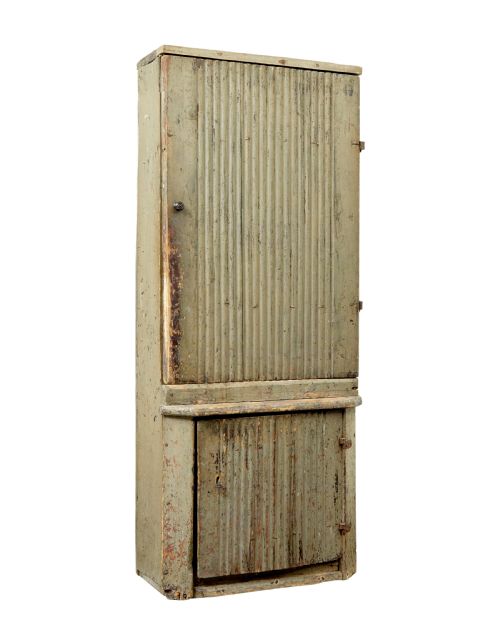
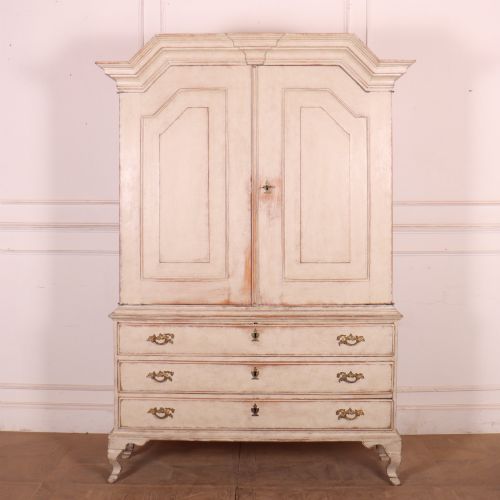
A swedish pine armoire stands as a substantial storage piece, encompassing linen cupboards, wardrobes, and kitchen cabinets built from native softwood. These pieces appear across the eighteenth and nineteenth centuries, spanning Georgian influences and Scandinavian country styles.
The versions most frequently met on this page include nineteenth-century painted pine cupboards and linen cupboards alongside eighteenth-century examples. Forms range from double-door wardrobes and pieces on stands to corner cupboards and traditional folk art cupboards.
Makers and joiners constructed these storage units to serve domestic interiors in Northern Europe, utilising local timber. The surviving examples demonstrate various regional traditions, from Gustavian elegance to rustic Scandinavian folk art.
Judging Quality and Character
Quality rests in the survival of original painted surfaces and the integrity of the pine construction. Pieces with undisturbed mineral paint or authentic folk art decoration hold greater visual weight than later overpainted examples.
Proportion and joinery differentiate standard utility cupboards from finer architectural pieces like Gustavian cabinets or Baroque armoires. The crispness of carved details and the retention of original iron or brass fittings complete the assessment.
Listings feature pine, paint, iron, and brass across items dated to the eighteenth and nineteenth centuries, alongside Georgian and 1800 origins.
The Swedish Pine Armoire Glossary
- Pine
- A softwood native to Northern Europe used extensively for cabinetry and architectural woodwork. It accepts paint readily and provides a stable base for folk art decoration.
- Ragwork
- A decorative painting technique involving cloths or rags to apply or texture pigment onto a surface. This method created patterned or mottled effects on nineteenth-century cupboards.
- Mineral paint
- A durable, matte paint type formulated from natural earths and minerals. It provides the historic surface coatings found on many Scandinavian country pieces.
- Baroque
- An earlier stylistic period predating the Gustavian era, known for heavier proportions and bolder ornamentation. Eighteenth-century examples show more robust architectural profiling.
Swedish Pine Armoire: Frequently Asked Questions
How do I care for a painted pine armoire?
Keep the piece away from direct heat sources and dramatic humidity shifts to protect the historic pine and delicate paint layers. Dust gently with a dry cloth rather than applying modern cleaning sprays or polishes.
Allow the natural patina to remain undisturbed over time. Gentle handling preserves the original mineral paint and ragwork finishes.
What is the difference between an armoire and a linen cupboard?
An armoire generally provides tall vertical wardrobe storage for hanging garments behind doors. A linen cupboard is often configured with internal shelving specifically designed for folded textiles.
Both forms utilise pine construction and frequently share painted Scandinavian exteriors. The internal fittings remain the primary indicator of their original domestic purpose.
How do I identify a Gustavian cabinet?
Gustavian pieces display neoclassical restraint, drawing inspiration from French royal courts filtered through a Swedish sensibility. They often feature lighter painted surfaces and subtle carved fluting.
Contrasting with heavier Baroque forms, Gustavian design emphasises balance and clean architectural lines. These cabinets date predominantly from the late eighteenth and early nineteenth centuries.
Are these cupboards made of solid wood?
Makers constructed these storage pieces using solid pine throughout the carcase, panels, and internal shelving. Local joiners selected softwood for its availability and workability in Scandinavian workshops.
Solid pine construction allows the wood to move naturally with environmental changes over the centuries. This traditional building method accounts for the enduring survival of these pieces.