
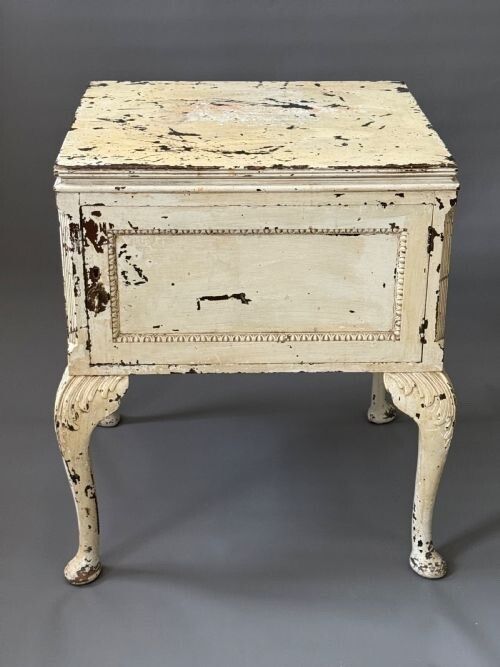
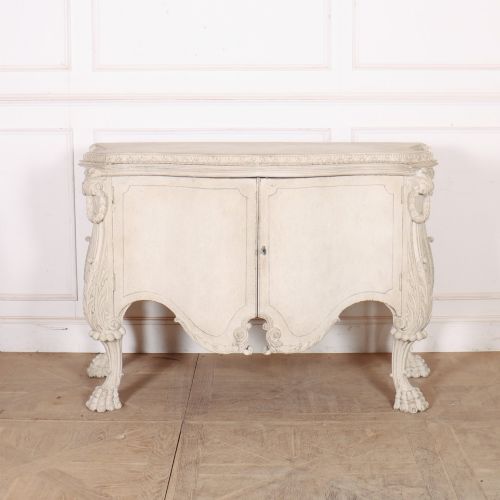
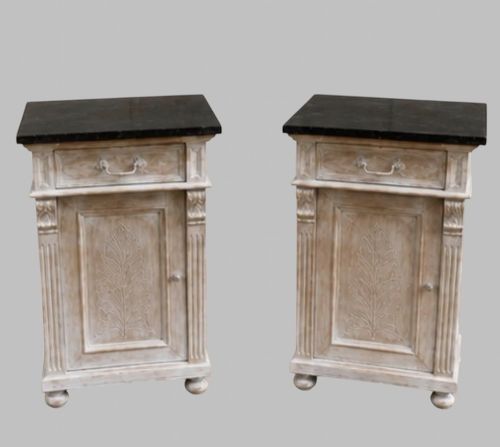
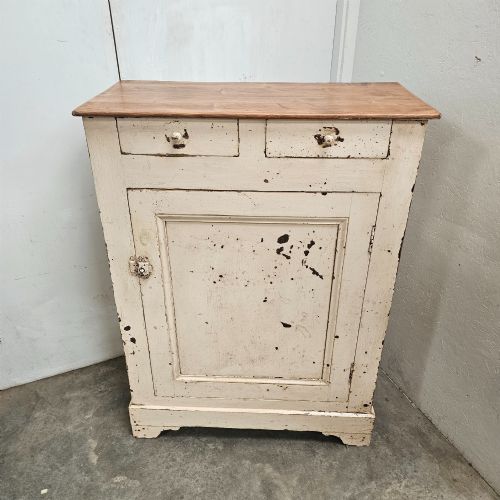
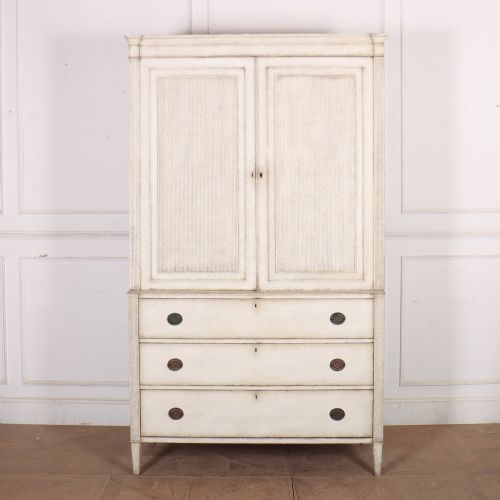
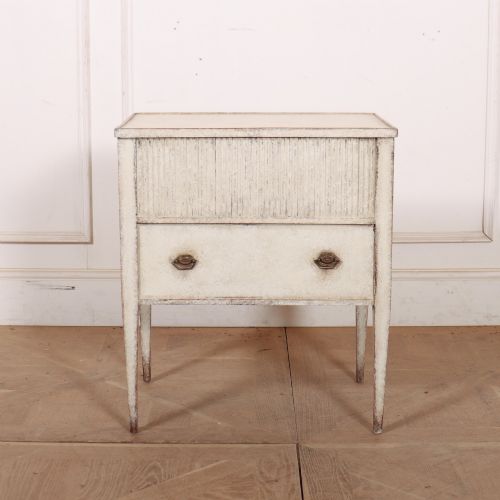
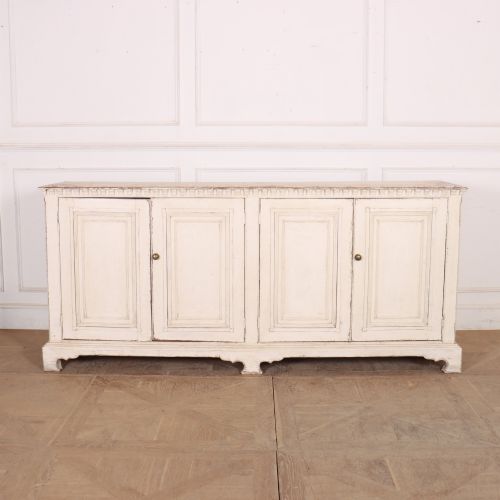

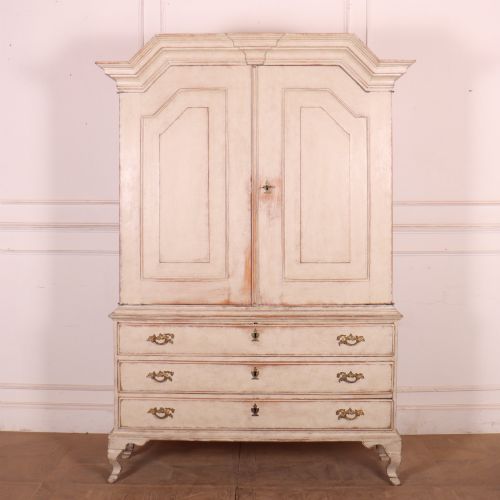


Distressed White Cupboard
A distressed white cupboard brings painted charm to a room, offering practical storage through time-worn timber and muted finishes.
Distressed White Cupboard
A distressed white cupboard covers various forms from bedside tables and linen cupboards to bookcases and side cabinets. These pieces emerge from origins including Sweden, France, Italy and England, spanning the eighteenth and nineteenth centuries into the early twentieth century.
Scandinavian country and Gustavian pieces dominate the aesthetic, featuring aged white and pale painted finishes over timber carcasses. Buyers encounter compact bedside cupboards alongside tall linen presses and enfilades, all showing the marks of age upon their painted surfaces.
Materials and construction
Makers utilised pine and other softwoods for the primary structure, applying layered paint finishes that wear down naturally over decades of use. Hardware typically consists of brass fittings and handles that complement the timber doors and drawers.
Selected pieces incorporate details such as marble tops or glass panel doors, adding functional weight and texture to the painted wooden frames. Joinery reflects traditional country workshop methods appropriate to nineteenth-century and earlier regional furniture.
Listings feature pine and painted timber pieces spanning the eighteenth to the twentieth centuries.
Distinguishing quality in painted furniture
Quality rests in the integrity of the original timber carcass and the character of the layered paint surface rather than a uniform finish. Untouched regional patination and balanced proportions distinguish superior examples from heavily restored or later decorative adaptations.
The sophistication of the carved or moulded detail, particularly in Gustavian and Italian pieces, elevates the form beyond simple utilitarian storage. Original hardware and sound structural joinery further separate finer workshop production from standard domestic utility pieces.
The Distressed White Cupboard Glossary
- Gustavian
- The Swedish interpretation of French neoclassical style, characterised by restrained carving, pale paintwork and elegant proportions. This aesthetic defines many of the lightest painted cupboards.
- Enfilade
- A long sideboard or cabinet designed to stand against a wall, providing extensive surface and cupboard storage. Italian workshops produced notable examples in painted timber.
- Confiturier
- A small French provincial cupboard originally made to store jars of confit and preserves. These compact single-door cabinets serve well as bedside storage.
- Linen cupboard
- A tall piece dedicated to storing household textiles, often fitted with internal shelving or drawers. Swedish and English examples show regional variations in height and door arrangement.
- Patina
- The surface texture and gradual colour change acquired by paint and wood over years of handling and light exposure. Genuine wear indicates age and historical use.
Distressed White Cupboard: Frequently Asked Questions
How do I clean a painted cupboard?
Dust the surface regularly with a soft, dry cloth to prevent dirt accumulation without disturbing the aged paint layer.
Avoid harsh modern chemical cleaners or abrasive pads that can strip the historic finish and underlying timber.
Are these cupboards suitable for modern bedrooms?
Compact bedside cupboards and small cabinets fit easily beside contemporary beds, offering concealed storage for everyday items.
Their neutral painted tones integrate readily with modern interior palettes while introducing historic texture.
How can I tell a Swedish piece from an English one?
Swedish cupboards frequently display Gustavian or Scandinavian country styling with pale, chalky paint finishes and restrained neoclassical moulding.
English pieces tend to utilise darker timbers under the paint or heavier proportions associated with nineteenth-century kitchens and bedrooms.
What is the difference between a linen cupboard and a dresser?
Linen cupboards provide enclosed vertical storage behind solid doors specifically for household textiles and garments.
Dressers typically combine lower cupboard or drawer bases with open upper shelving for display or kitchen utility.