


Swedish Neoclassical Seating
Swedish neoclassical seating brings measured proportion and pale elegance to a room, offering refined forms that anchor an interior with calm restraint.
How they were made
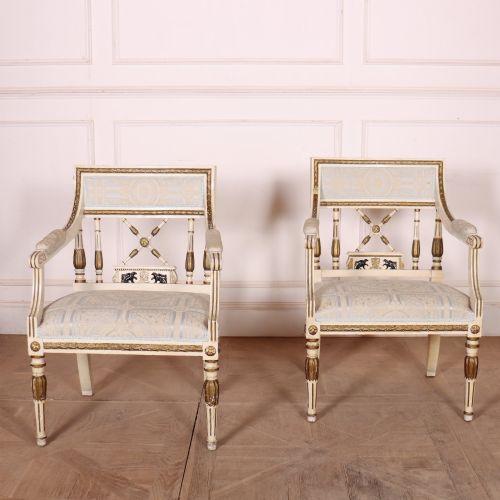
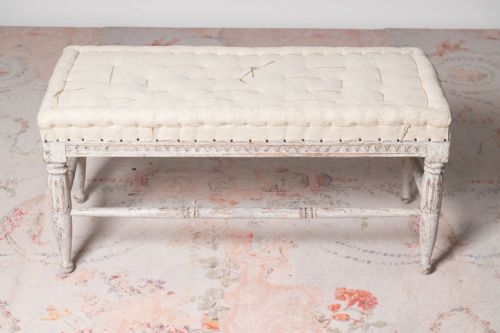
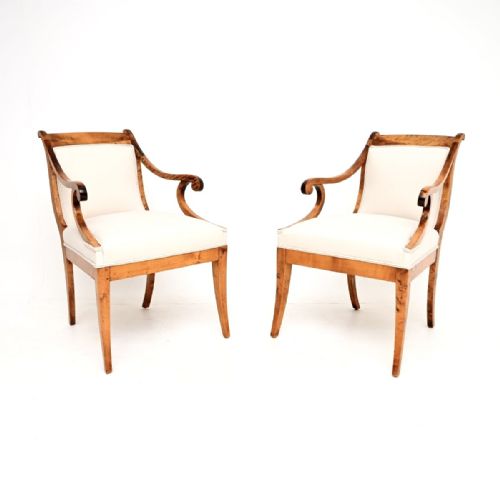
Makers utilised native timbers such as birch and elm alongside painted wood, applying giltwood accents or ebonised details to achieve the desired finish. Frames were frequently carved and painted, often in white or pale tones, to suit the neoclassical palette.
Upholstery involved traditional fabrics including linen, silk, and general upholstery fabric fitted to seats and backs. Construction combined joinery techniques with surface finishes like paint and gilding to create durable yet graceful furniture.
What varies in quality
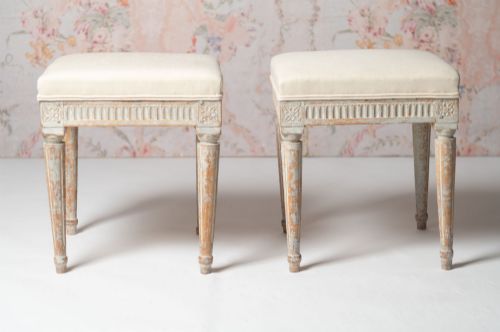
Quality rests in the crispness of the carved details and the integrity of the wooden frames, whether fashioned from solid elm, birch, or painted wood. Finer examples retain their original painted surfaces or gilding with minimal disruption, showing precise hand-carving on the rails and legs.
The standard of upholstery and the retention of period materials distinguish finer seating from later revival pieces. Proportions remain balanced and harmonious in superior examples, whereas lesser pieces can display heavier or less refined lines.
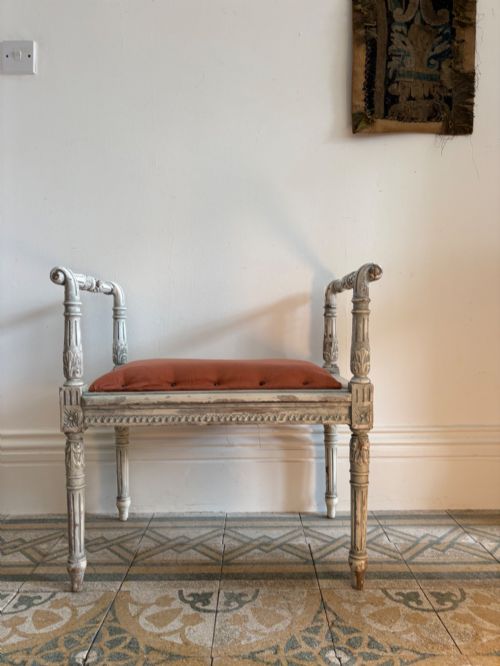
Several long bedroom stools hide quietly in the catalogue, waiting to support tired ankles after a long day of antique hunting.
The Swedish Neoclassical Seating Glossary
- Gustavian
- The Swedish neoclassical style developed during the reign of Gustav III, characterised by restrained classical motifs and pale painted finishes. It draws inspiration from French Louis XVI design but adapts it with distinct Nordic simplicity.
- Birch
- A pale, close-grained hardwood commonly used in Scandinavian furniture making. It accepts finishes well and provides a sturdy yet light framework for seating.
- Giltwood
- Timber treated with gold leaf or gold paint to create a lustrous metallic surface. It appears on more formal neoclassical settees and armchairs.
- Settee
- A long upholstered seat with a back and arms, designed for multiple occupants. These pieces often feature neoclassical carved woodwork along the frame.
Swedish Neoclassical Seating: Frequently Asked Questions
What defines Gustavian seating?
Gustavian seating is marked by clean classical lines, fluted legs, and pale painted finishes that reflect eighteenth-century Swedish interpretation of French design.
The style prioritises symmetry, restraint, and light colour palettes over heavy ornamentation.
How do I care for painted wood frames?
Painted wooden frames require gentle dusting with a dry microfibre cloth to protect the historic surface layer.
Avoid liquid cleaners and wax polishes unless specified for antique painted finishes to prevent lifting the paint.
Are Biedermeier chairs comfortable?
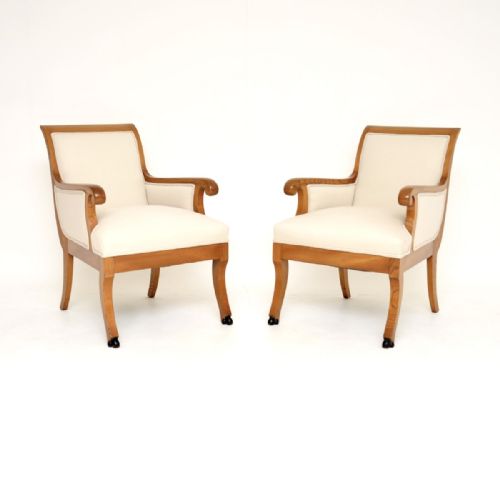
Biedermeier armchairs focus on domestic comfort alongside clean architectural lines, often featuring supportive upholstered backs and seats.
Their ergonomic curves were designed for relaxation while maintaining a formal appearance in the room.
How can I tell a revival piece apart?
Revival pieces from later periods often show mechanical tool marks and different timber seasoning compared to eighteenth-century originals.
Examining the construction methods and the wear patterns on the painted surfaces helps clarify the age of the piece.