




Swedish Neoclassical Chairs
Swedish neoclassical chairs bring restrained architectural lines and pale woods into a room, offering both seating and a distinct decorative presence.
Swedish Neoclassical Chairs
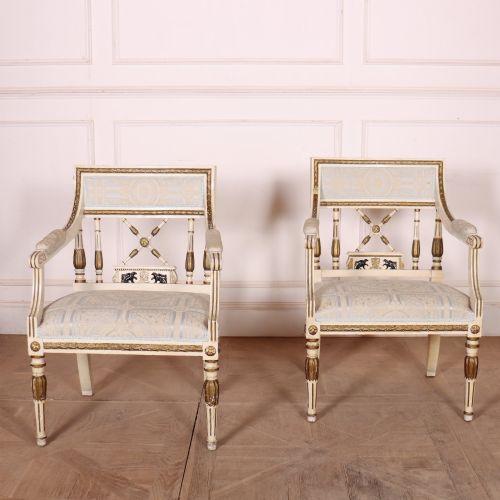
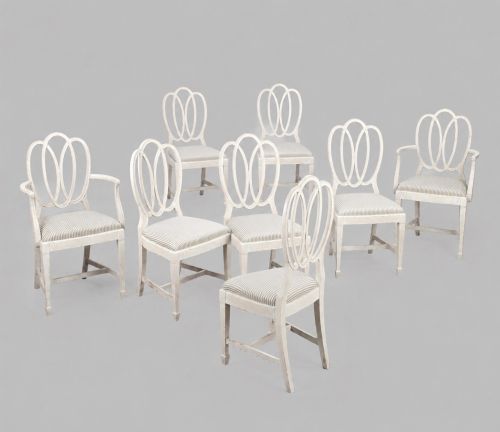
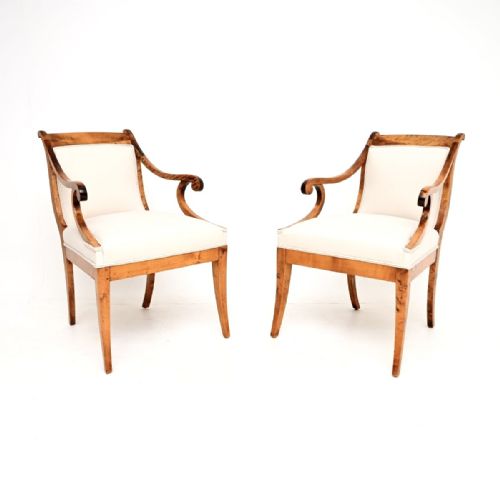
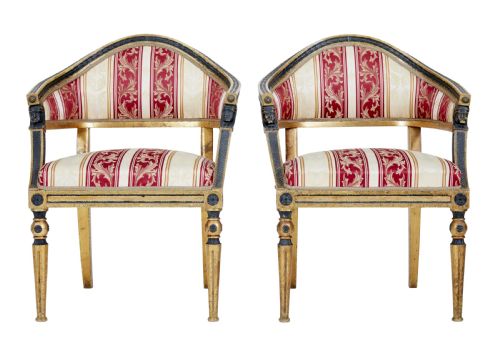
When you search for swedish neoclassical chairs, you encounter a selection spanning armchairs, dining chairs, sofas and settees, and complete lounge suites. These pieces reflect broader stylistic currents including Gustavian, Swedish Empire, Karl Johan, Biedermeier, and Hepplewhite influences across the nineteenth and early twentieth centuries.
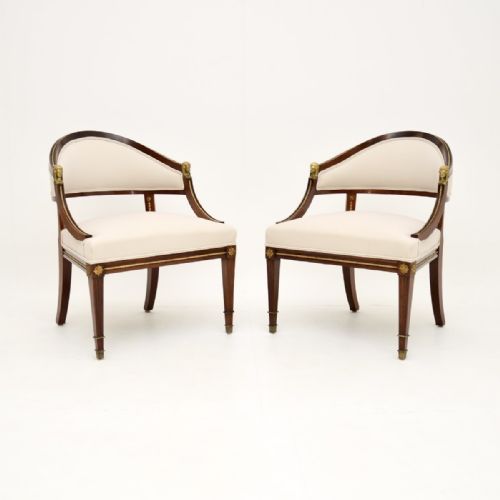
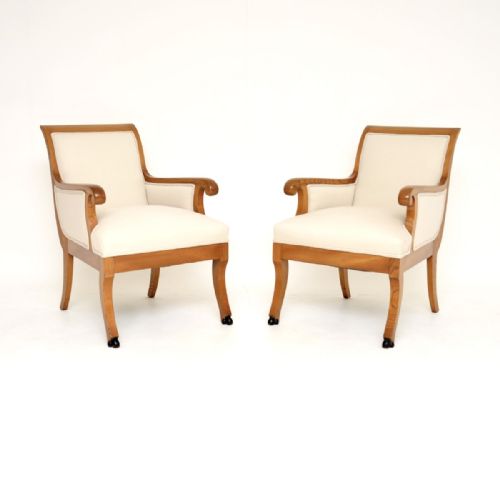
The armchairs and dining chairs on this page demonstrate the enduring popularity of painted wood, giltwood, mahogany, birch, satin birch, elm, and fabric upholstery. Pieces date from the Victorian era, the nineteenth century, and through to 1860, 1880, 1890, 1900, and 1920.
Materials and construction
Cabinetmakers utilised dense timbers such as mahogany alongside domestic woods like birch, satin birch, elm, and painted wood to construct these frames. Selected woods were often ebonized, painted, or highlighted with carved giltwood detailing.
Chairs were finished with upholstery in various fabrics and occasionally incorporated brass elements to accent the structural woodwork.
Listings include items dated across the nineteenth century, the Victorian period, and into the early twentieth century up to 1920.
Factors of quality
Quality rests in the crispness of the carved detail on the wood and the integrity of the frame construction across armchairs and dining chairs. The handling of finishes, from painted surfaces to polished mahogany and birch, distinguishes the finest examples.
The coherence of design within a set or pair, particularly in matching pairs of armchairs and larger dining sets, dictates the visual impact of the seating.
The Swedish Neoclassical Chairs Glossary
- Gustavian
- The Swedish interpretation of neoclassical style, characterised by lighter proportions, restrained ornamentation, and pale painted finishes. This aesthetic developed during the reign of King Gustav III.
- Karl Johan
- A Scandinavian neoclassical style spanning the early to mid nineteenth century, named after King Charles XIV John. It draws heavily on French Empire design vocabulary.
- Satin birch
- A timber featuring a natural sheen and fine grain, frequently utilised in nineteenth-century Scandinavian furniture. It provides a luminous surface quality distinct from standard birch.
- Biedermeier
- A Central European style influencing Scandinavian design from the mid nineteenth century onward, prioritising utility, clean lines, and warm blonde wood grains over excessive ornamentation.
- Giltwood
- Timber treated with gold leaf or gilt preparation to create a metallic decorative surface. It is often found on carved elements of formal period armchairs.
Swedish Neoclassical Chairs: Frequently Asked Questions
How do I style swedish neoclassical chairs at home?
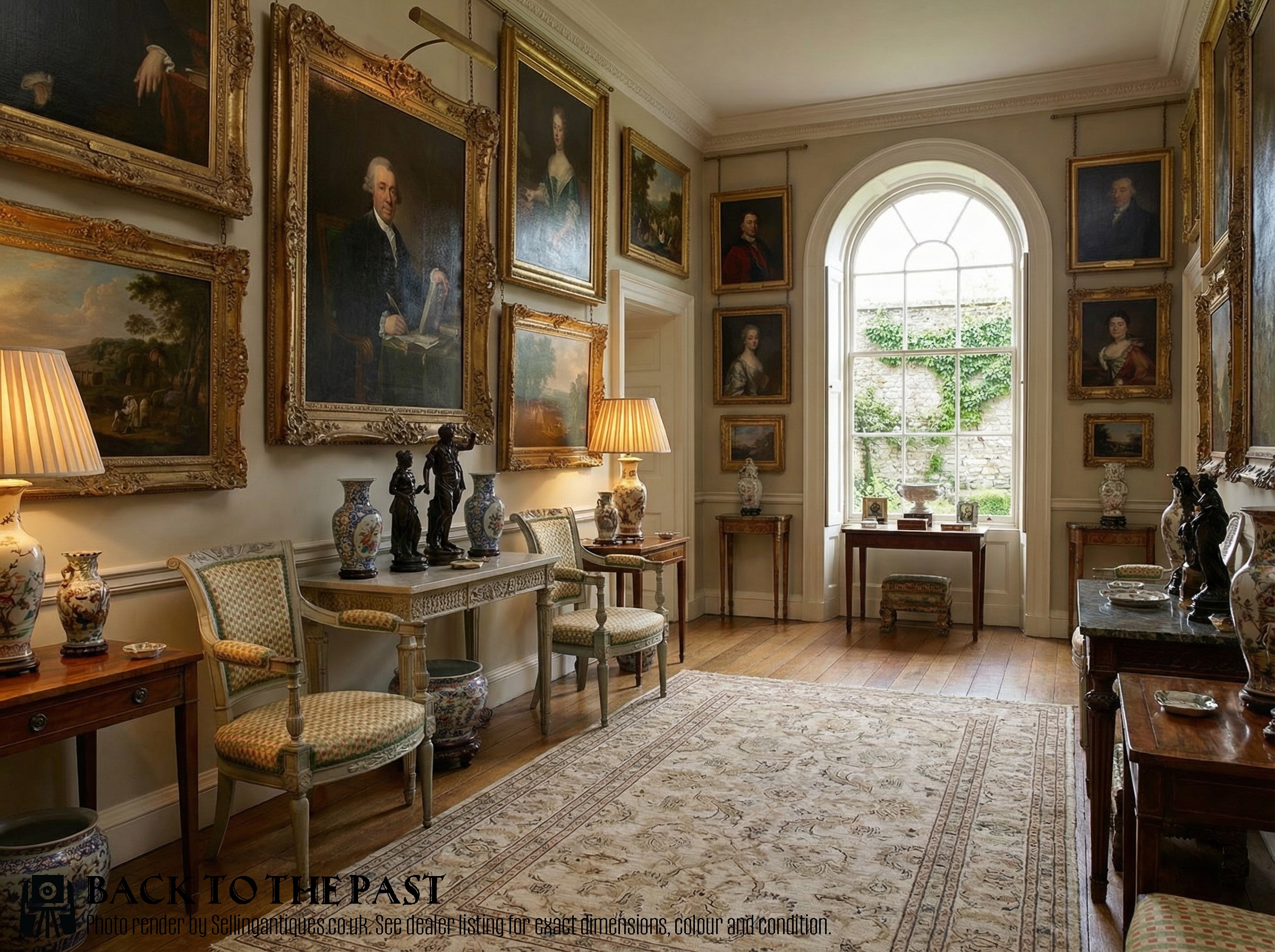
Pair these chairs with neutral walls and simple architectural details to let the wood grain and painted finishes stand out. They suit both traditional dining spaces and contemporary living rooms.
Mix armchairs with simpler seating to avoid a uniform look, allowing individual pairs of armchairs or dining chairs to serve as focal points.
What is the difference between Gustavian and Swedish Empire styles?
Gustavian pieces display lighter, more restrained neoclassical details with pale painted surfaces reflecting late eighteenth-century restraint.
Swedish Empire furniture introduces heavier proportions, darker mahogany timbers, and occasional giltwood or brass accents inspired by later Napoleonic designs.
How should I care for antique painted wood?
Dust surfaces regularly with a soft, dry cloth to prevent dirt accumulation on painted or ebonized finishes. Avoid harsh chemical cleaners that can degrade historic paint.
Keep wooden furniture away from direct sunlight and major heat sources to protect the underlying timber and prevent finish cracking.
Can I use these dining chairs every day?
Most antique dining chairs are structurally sound for regular daily use provided the joints remain tight and stable. Check the frame periodically for any movement.
Consider the upholstery fabric durability when planning daily meals, as antique or delicate textiles may require professional cleaning or protective care.