
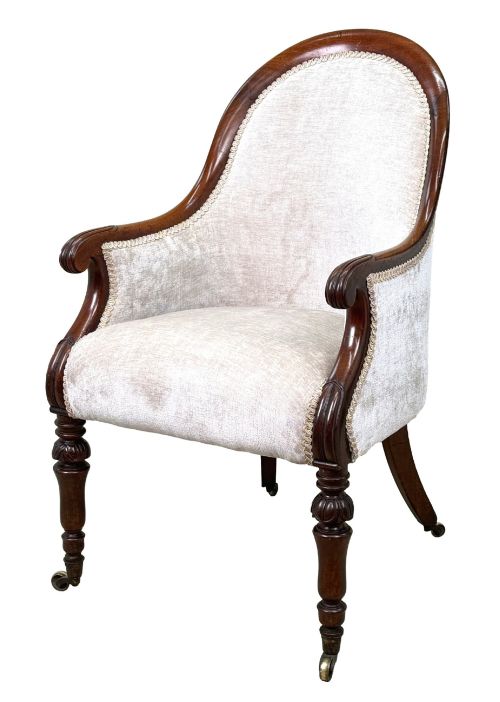
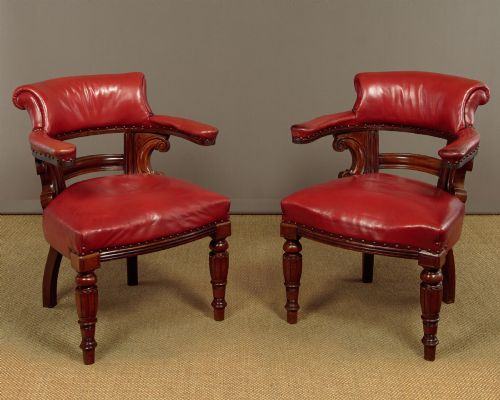
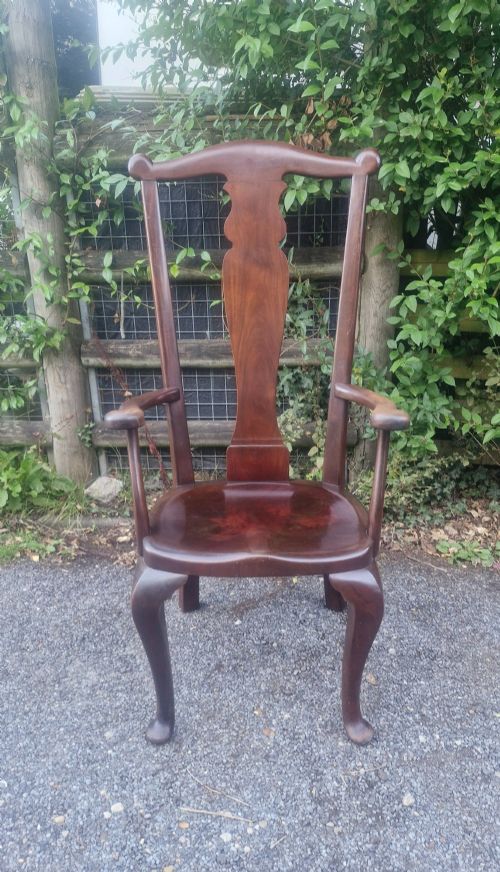
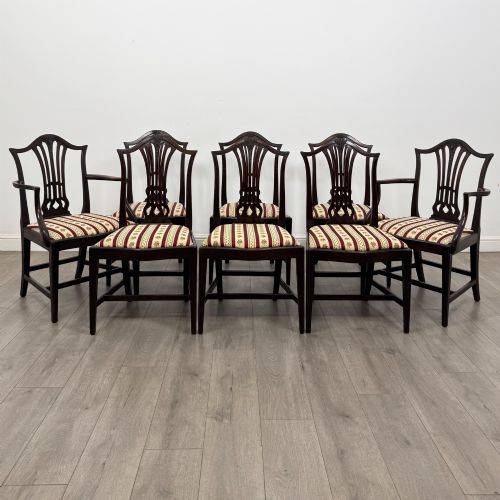
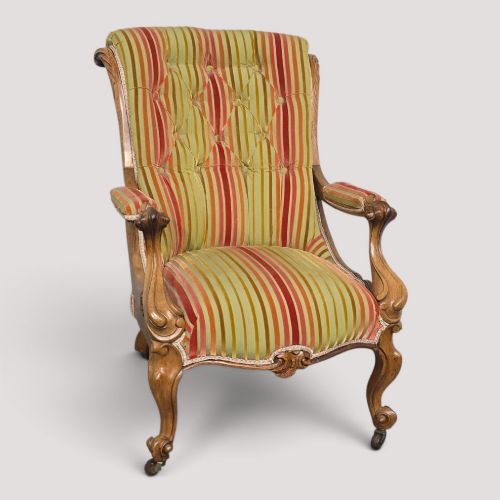
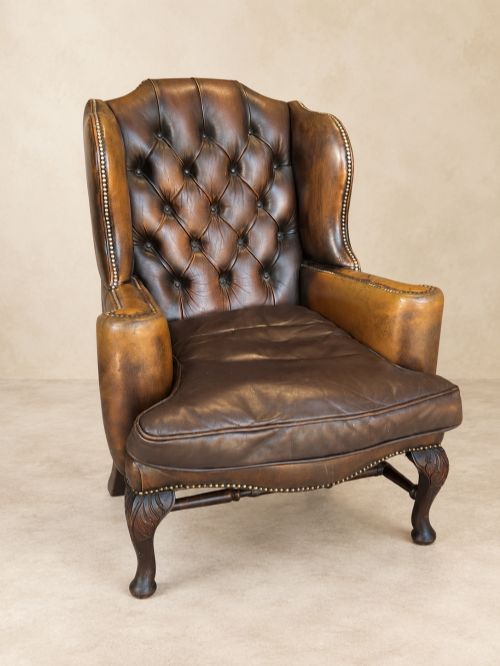
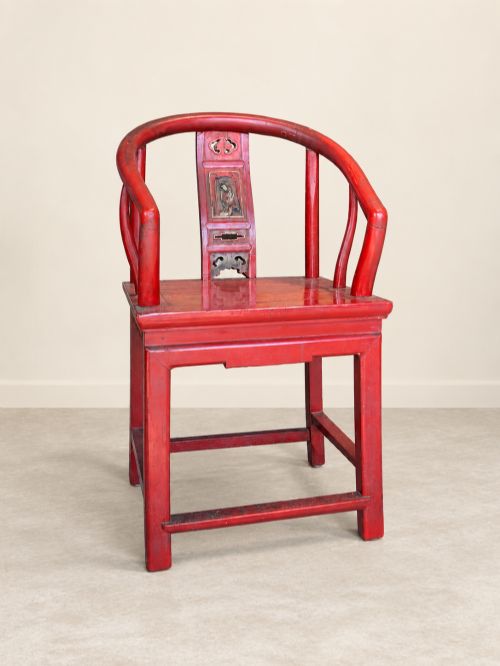
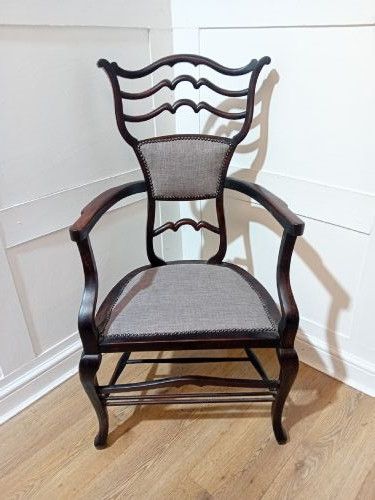
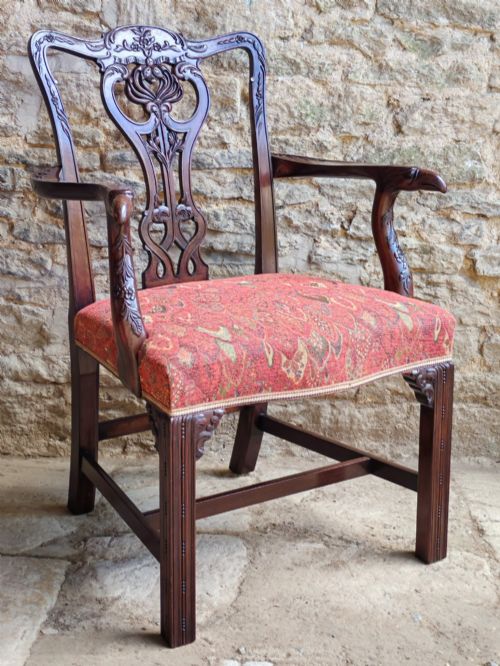
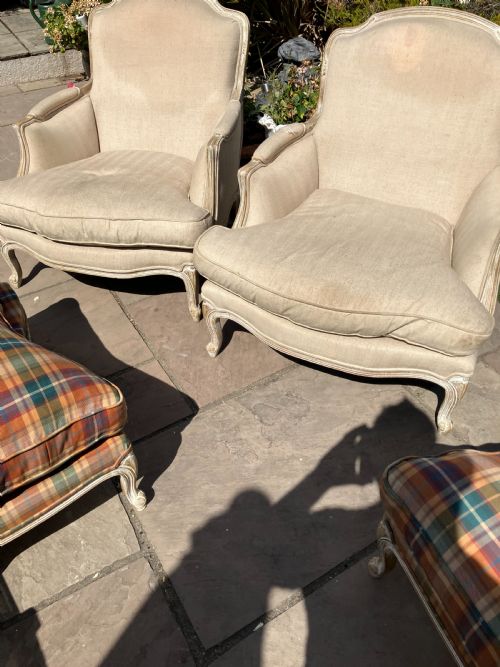

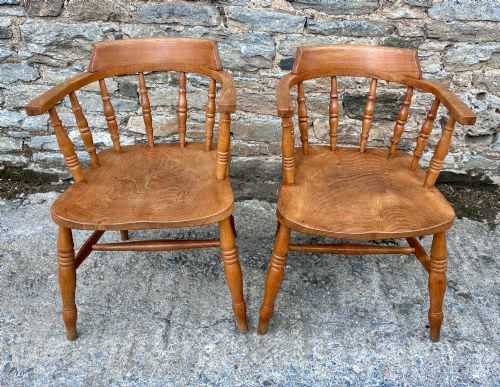
Vintage Carved Armchairs
These vintage carved armchairs span the nineteenth and twentieth centuries, offering solid timber frames and varied upholstery for daily seating.
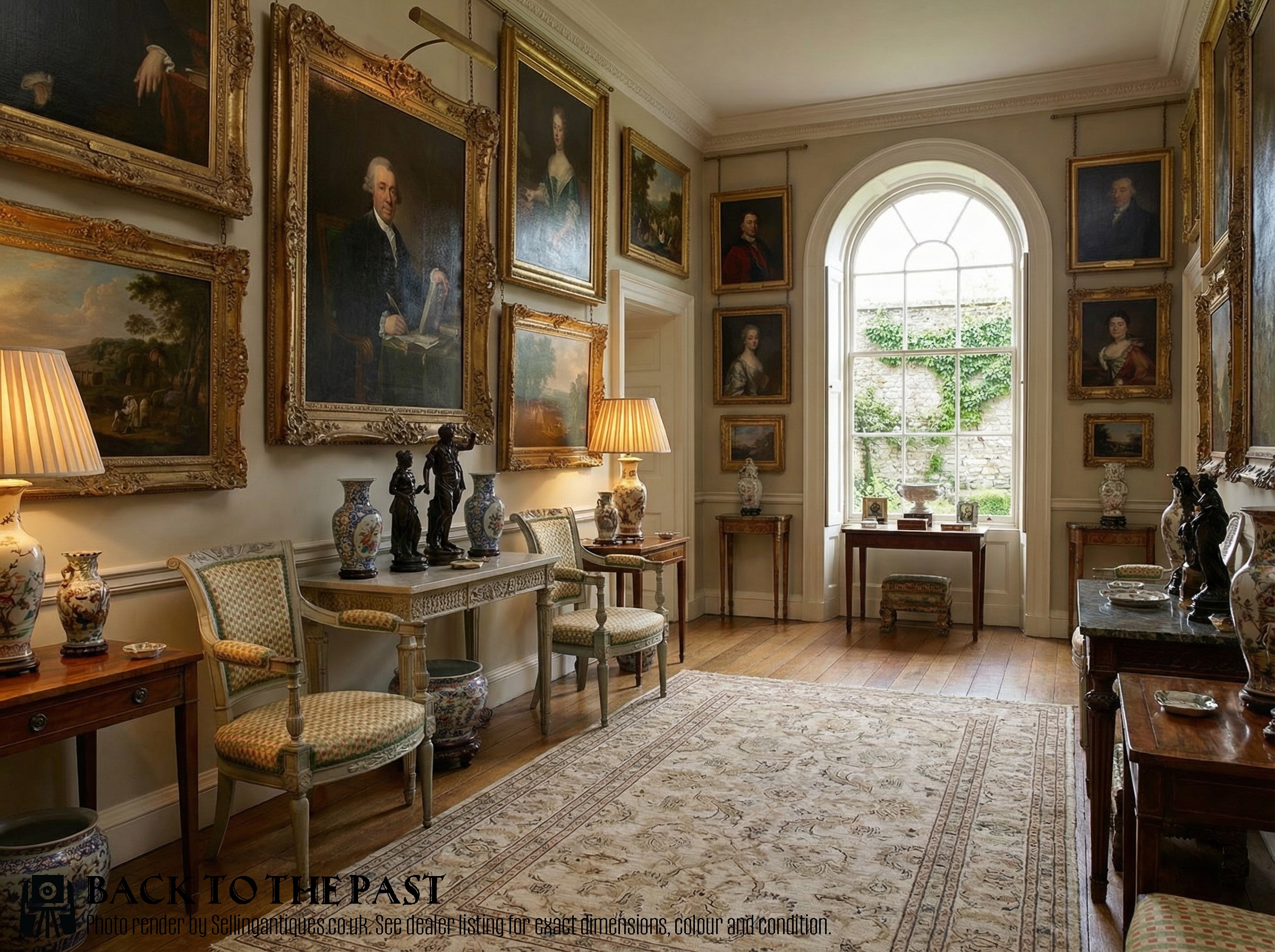
Vintage Carved Armchairs
Vintage carved armchairs encompass seating options ranging from library and desk chairs to dining sets and easy chairs across the Victorian and Edwardian periods.
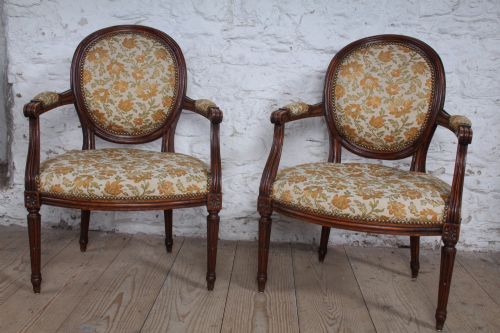
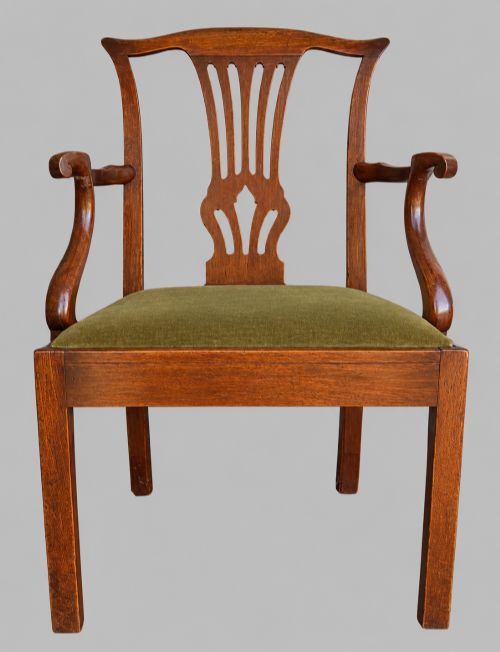
Buyers will encounter revival styles like Chippendale, Queen Anne, and Regency alongside French Louis styles and country pieces.
Timelines stretch from the nineteenth century through the 1930s, utilising woods such as mahogany, walnut, oak, and elm.
Materials and construction
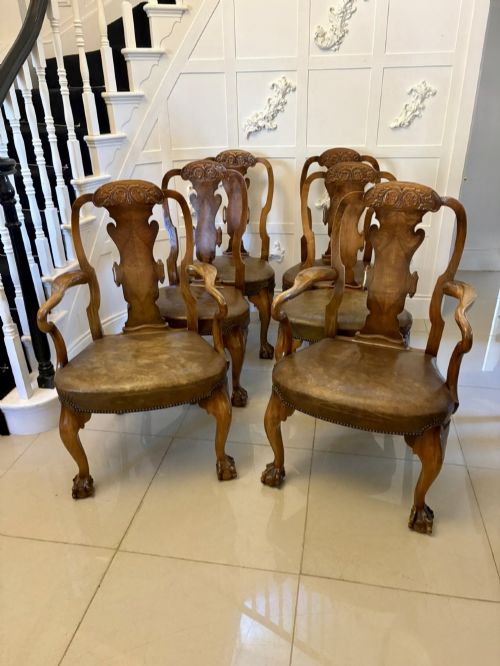
Frames rely on hardwoods including mahogany, walnut, oak, elm, and rosewood, often shaped with hand-carved detailing.
Upholstery materials span leather, fabric, velvet, tapestry, and split cane bergere panels.
Metal accents like brass appear alongside painted and parcel gilt surface treatments.
Listings feature mahogany, walnut, oak, and elm across Victorian and Edwardian periods.
Quality and craftsmanship
Depth and crispness of the hand carving distinguish standard production from superior examples.
The choice and execution of timber frames, from figured mahogany to dense walnut, dictate structural integrity.
Original upholstery methods and period textiles elevate the authenticity of the piece.
Howard and Sons·Maple and Co·Alfred Allen of Birmingham
The Vintage Carved Armchairs Glossary
- Bergere
- An enclosed upholstered armchair with wooden frames, frequently featuring cane sides. This style gained popularity in French-inspired designs.
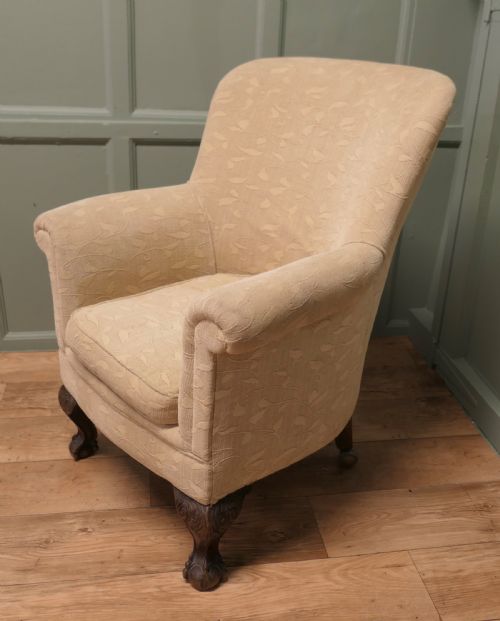
- Tub chair
- A curved armchair where the back and arms form a single continuous rounded rail. These provide enclosed, supportive seating.
- Shield back
- A chair back shaped like a heraldic shield, popular in late eighteenth-century designs and later revivals. Carved splats often fill the centre.
- Parcel gilt
- A decoration technique where portions of a timber or painted surface receive a thin layer of gold leaf. This highlights carved details.
Vintage Carved Armchairs: Frequently Asked Questions
What periods do these armchairs come from?
The pieces span the nineteenth century, Victorian, Edwardian eras, and early twentieth century up to the 1930s.
Revival styles draw inspiration from earlier Georgian and Regency designs.
Which woods are most common?
Mahogany, walnut, and oak appear frequently across the frames.
Elm, rosewood, and maple also feature in specific regional or period items.
Are original upholstery finishes preserved?
Some pieces retain original leather, tapestry, or painted surfaces from their period.
Others show later re-upholstery in fabric or velvet.
How do I identify a library armchair?
Library armchairs usually offer low, sturdy wooden frames designed for reading.
They often incorporate leather upholstery and elbow supports.