




Brown Mahogany Tub Chairs
These brown mahogany tub chairs combine curved timber frames with comfortable seating, offering practical elegance for studies and libraries.
Brown Mahogany Tub Chairs
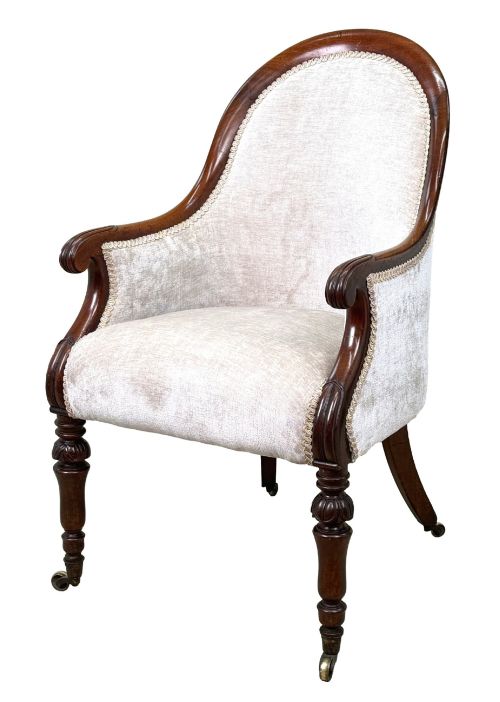
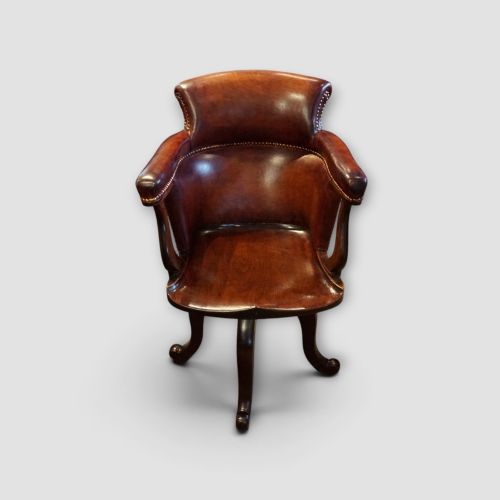
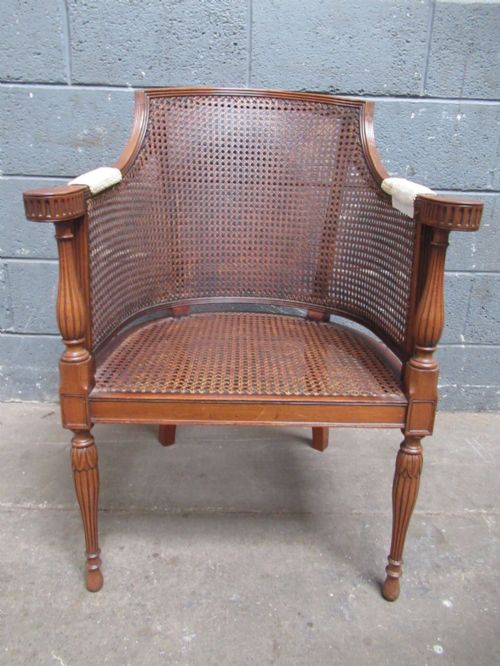
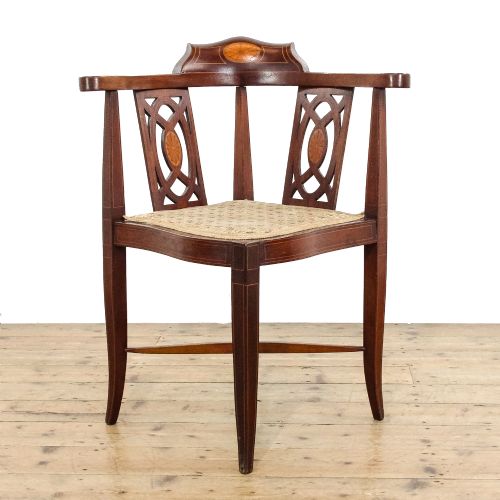
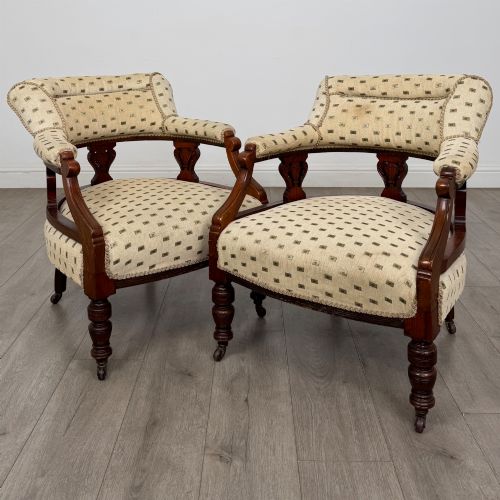
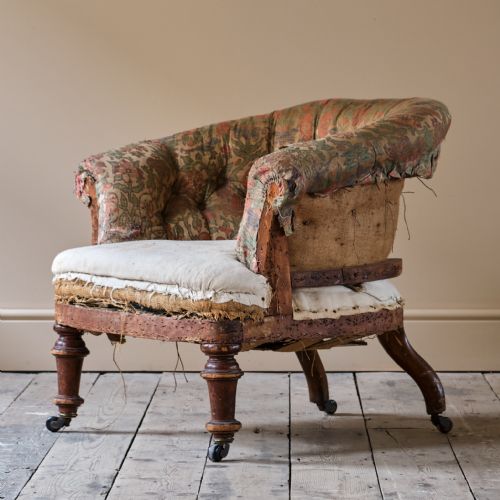
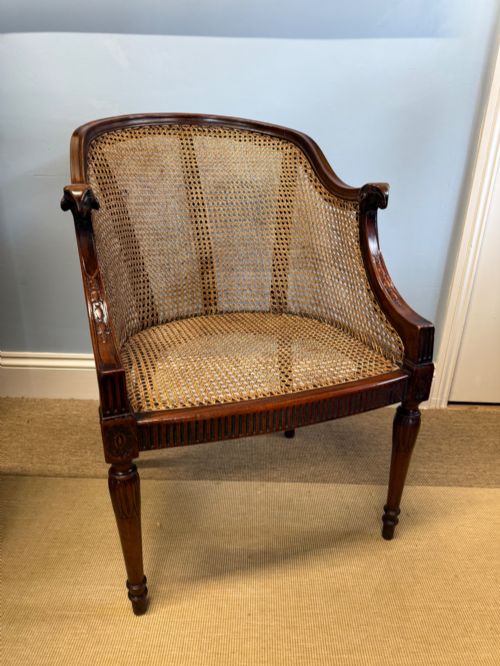
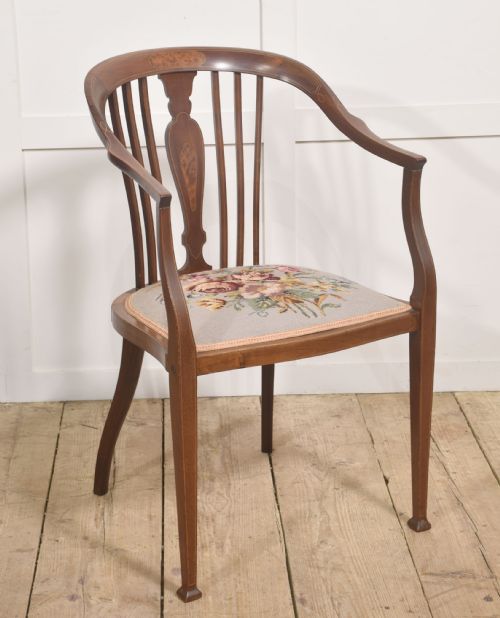
When searching for brown mahogany tub chairs, buyers encounter seating designed with continuous curved backs that wrap around the sitter. The selection ranges from nineteenth-century library pieces to Edwardian examples and later twentieth-century iterations.
Most pieces on this page appear as desk chairs, occasional seating, or library armchairs. They originate from periods spanning the Regency era through to the Edwardian decades and the nineteen-thirties.
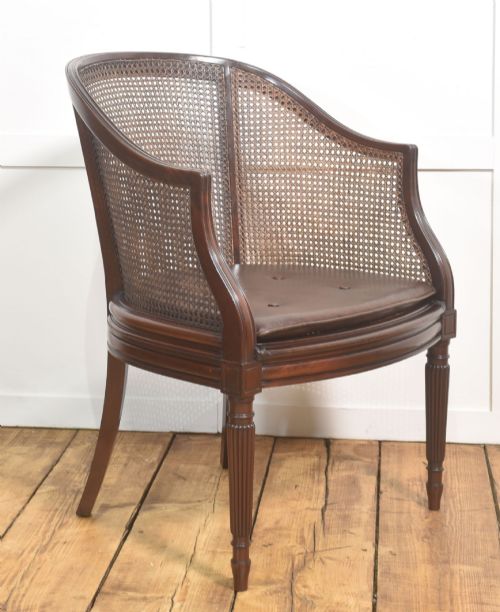
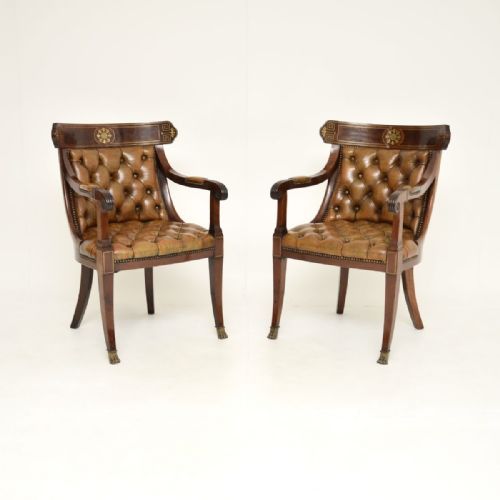
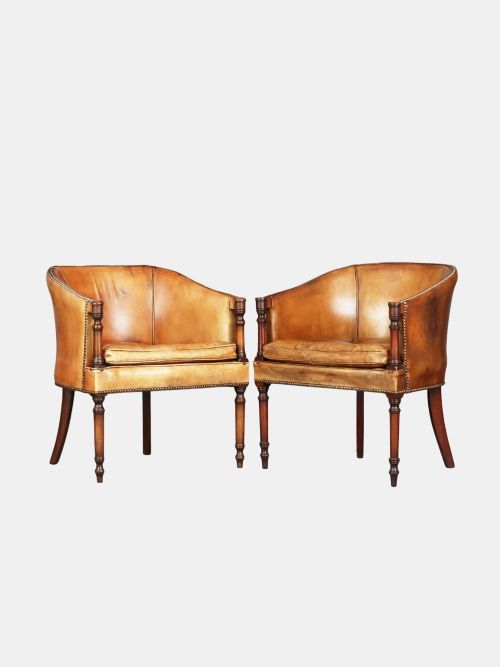
The forms frequently incorporate open armrests and low profiles intended for writing desks or reading corners. Many variations integrate cane panels or upholstered leather seats within the wooden framework.
Materials and construction methods
Makers utilised solid mahogany for the structural frames, often selecting timber with rich brown figuring and deep natural grain. Cabinetmakers bent or shaped the wood to form the distinctive rounded tub profile characteristic of these chairs.
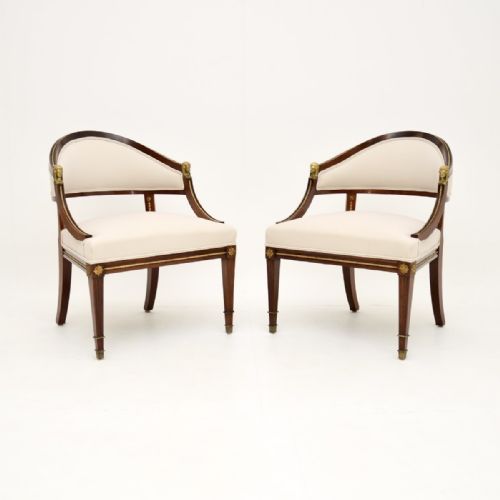
Secondary details frequently involved brass inlays, boxwood or satinwood stringing, and applied ormolu mounts depending on the style. Caning and leather upholstery completed the seating surfaces, secured with traditional tacks or cane weaving techniques.
Several examples retain their original military provenance, ready for campaign reassignment.
Evaluating craftsmanship and condition
Quality rests in the precision of the timber joinery and the integrity of the curved backrest construction. Superior examples display crisp inlay work, well-preserved cane panels, and patinated leather without compromising the underlying wooden structure.
The sophistication of the period styling, from Regency brass details to Edwardian satinwood banding, separates standard utility seating from finer library and salon pieces.
Gillows·Jenks & Wood·E.W. Godwin
The Brown Mahogany Tub Chairs Glossary
- Tub chair
- An armchair featuring a continuous curved back and arms forming a single enclosed shape. This form provides supportive sides for the occupant.
- Bergère
- An enclosed upholstered armchair with a wooden frame where the back and sides often incorporate cane work. These typically include a loose cushion for the seat.
- Library chair
- A sturdy armchair designed for reading rooms and studies, frequently upholstered in leather. Such seating often pairs with partner desks or writing tables.
- Caning
- Woven rattan material used to form light, flexible panels for chair backs and seats. This technique appears widely on Edwardian and nineteenth-century frames.
- Satinwood
- A durable exotic hardwood utilised for contrasting inlay and stringing on mahogany furniture. It creates bright linear decoration against darker timber.
Brown Mahogany Tub Chairs: Frequently Asked Questions
Where do tub chairs work best?
These seats suit studies, libraries, and bedroom dressing areas where a compact profile fits neatly beneath a desk or into a corner.
Their enclosed rounded backs also make them practical standalone reading chairs in living spaces.
How do I identify a Regency period chair?
Regency pieces often display classical influences with clean lines, dark mahogany surfaces, and sometimes brass inlay work.
Craftsmen from this era favoured structural simplicity combined with refined decorative details.
Are these chairs suitable for daily desk use?
Many examples function effectively as desk or office chairs due to their supportive rounded armrests and sturdy timber frames.
Leather-upholstered variants provide durable surfaces well suited to writing tasks.
What is the difference between Edwardian and Victorian examples?
Victorian pieces tend to feature heavier proportions and darker, more robust mahogany frames intended for formal libraries.
Edwardian iterations frequently incorporate lighter satinwood or boxwood inlay with cane panels for a more delicate appearance.