





Studded Wooden Box
A studded wooden box brings tactile depth to a room, offering robust storage shaped by centuries of travel and trade.
Studded Wooden Box
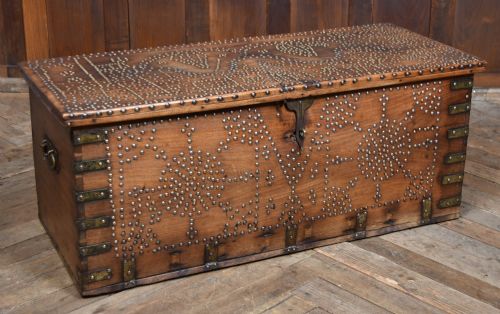
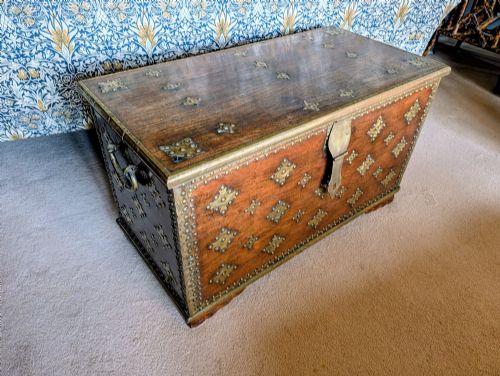
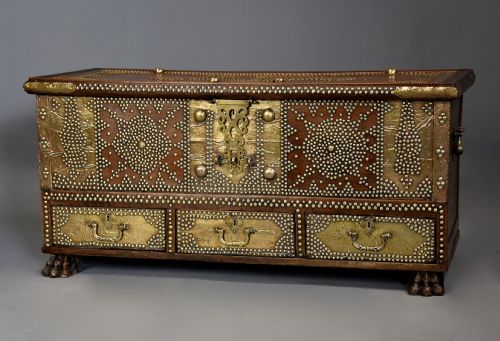
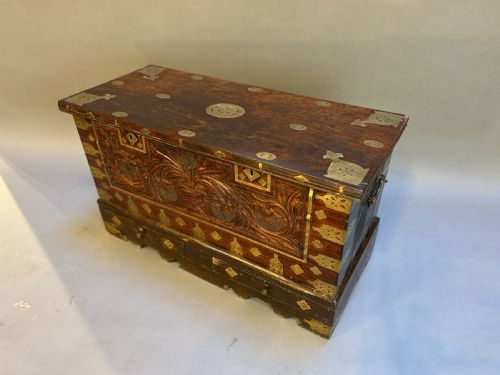
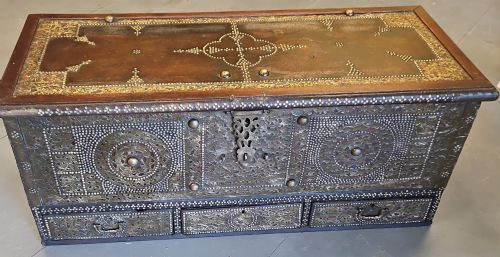
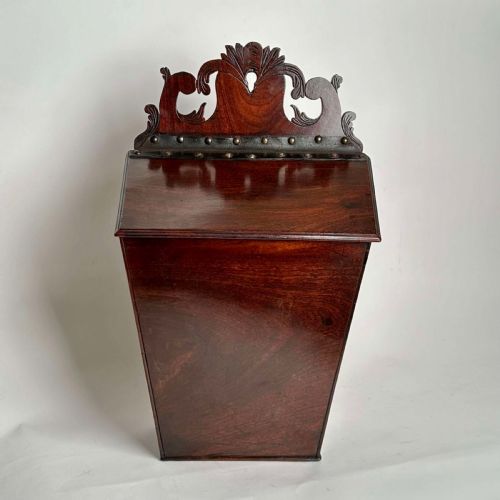
A studded wooden box encompasses utilitarian storage forms ranging from compact table desks and tea caddies to large Zanzibar blanket chests and travelling trunks. These pieces serve practical needs while displaying surface enrichment through metal studs, brass banding, and iron mounts.
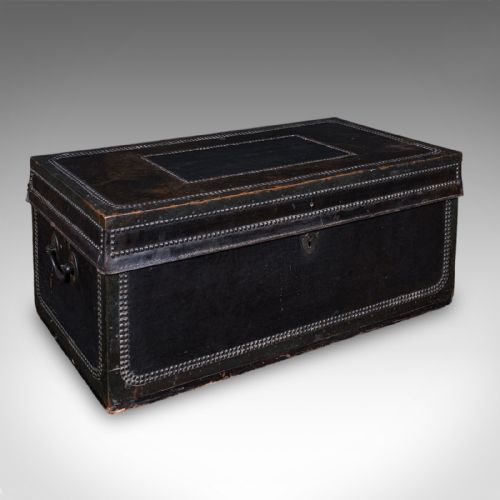
The selection on this page draws heavily from the nineteenth century, featuring Victorian examples alongside Anglo-Indian colonial pieces and regional European boxes. Hardwoods predominate, joined by leather-bound trunks and painted Scandinavian strong boxes.
Buyers encounter everything from small cutlery and jewellery boxes to substantial coffers and trunk chests. Each item reflects the specific domestic or travel requirements of its period.
Materials and construction
Construction relies on durable timbers such as teak, padouk, oak, pine, and camphorwood, selected for strength and stability. Cabinetmakers and traders utilised these dense woods to withstand long journeys and heavy daily handling.
Surface decoration integrates functional hardware, attaching brass studs, iron bindings, and cut steel details directly to wood or leather. These metal elements reinforce corners and lids while creating geometric patterns across the exterior.
Camphorwood chests retain their aromatic scent across the centuries, silently repelling moths from your modern knitwear.
Evaluating quality
Quality rests on the integrity of the timber selection and the precision of the metalwork applied to the surface. Dense tropical hardwoods and heavy native oaks provide structural permanence that lighter pine alternatives lack.
The refinement of the studwork and brass binding distinguishes standard storage from finer decorative examples. Original fixings, intact leather linings, and well-preserved surface patination elevate a piece.
Seabrook of St Pauls London
The Studded Wooden Box Glossary
- Padouk
- A heavy, durable tropical hardwood with a reddish brown tone, commonly found in Zanzibar chests. It resists weathering and provides a stable carcass for brass studding.
- Zanzibar chest
- A distinct form of trading chest featuring elaborate brass stud decoration and heavy hardwood construction. These pieces originated through maritime trade routes linking India, Africa, and the Middle East.
- Coffer
- A large, sturdy chest traditionally used for storing valuables or textiles. They typically feature hinged lids and robust iron or brass bindings.
- Camphorwood
- An aromatic timber utilised in trunk interiors to deter insects. Its distinctive scent helps protect stored garments and textiles.
- Strong box
- A secure container reinforced with metal bands or plates designed for money and documents. Strong boxes often include specialised internal locking mechanisms.
Studded Wooden Box: Frequently Asked Questions
What were studded wooden boxes used for?
These boxes served multiple purposes, from domestic storage of linens and cutlery to secure maritime transport for traders.
Larger trunk forms travelled across trade routes, while smaller boxes remained in European homes to hold tea, jewellery, or letters.
How do I identify a Zanzibar chest?
Zanzibar chests feature dense tropical hardwoods like padouk or teak paired with distinctive brass stud work and strapwork. They often incorporate compartments inside and heavy carrying handles on the sides.
Maritime trade connected these pieces to East African ports, distinguishing them from standard English domestic oak boxes.
Are these boxes suitable for daily home use?
Sturdy construction makes these pieces practical for storing blankets, shoes, or household items in living spaces. Their durable timbers handle regular opening and closing without structural strain.
Placing a chest at the foot of a bed or utilising a smaller box on a table combines storage with display.
How do I distinguish 17th-century from Victorian pieces?
Earlier pieces from the seventeenth and eighteenth centuries typically exhibit simpler hand-cut joinery in native oak or walnut. Their construction reflects regional British cabinetmaking traditions rather than global trade.
Nineteenth-century examples frequently show machine assistance, exotic imported timbers, and dense decorative brass studding associated with colonial expansion.