



Studded Leather Box
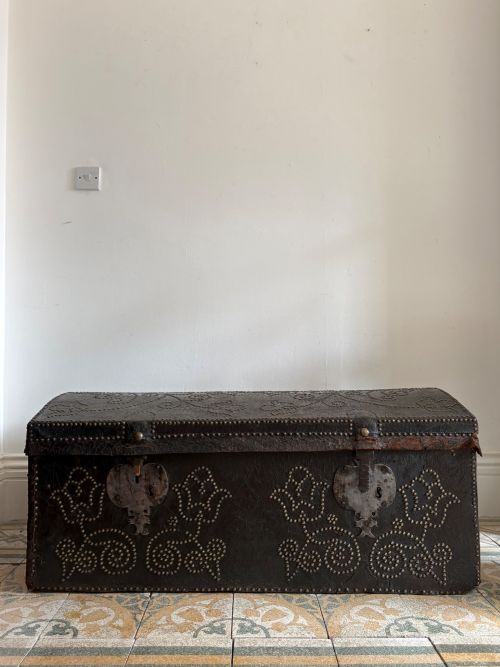
A studded leather box delivers robust storage with centuries of travelled character, offering brass studwork and hide bindings that suit any room.
Studded Leather Box
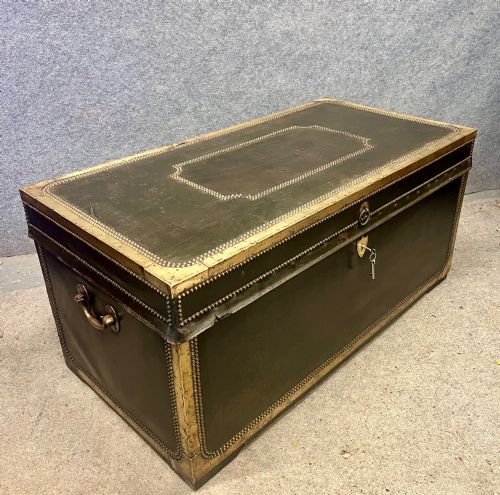
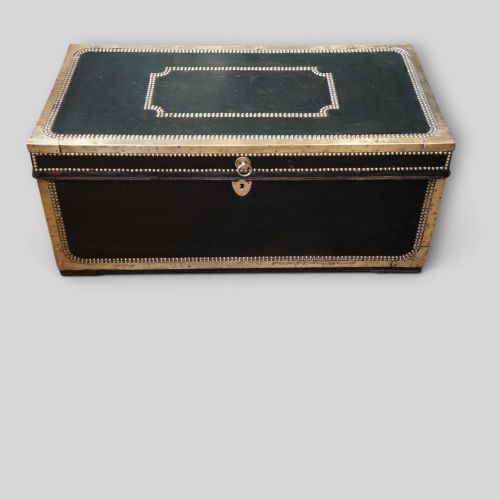
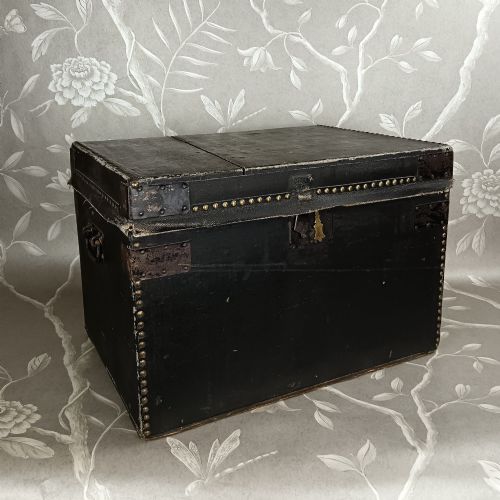
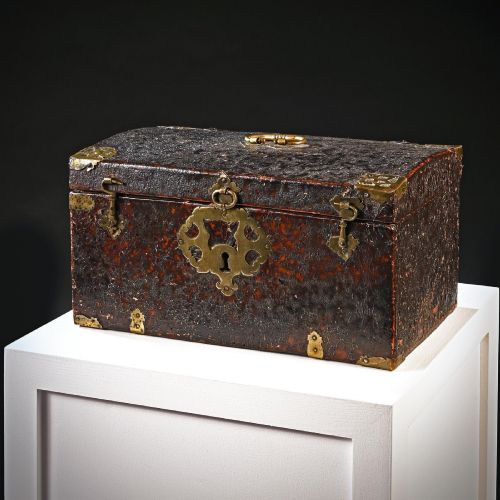
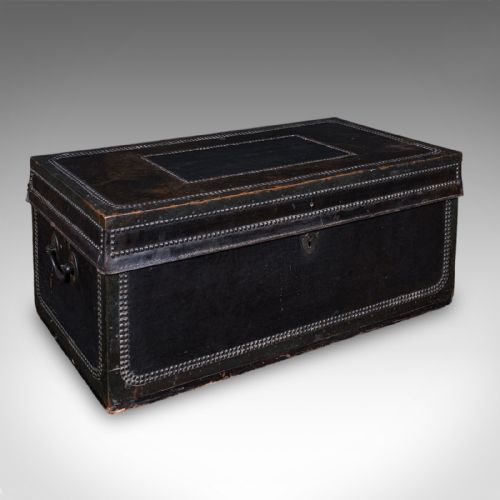
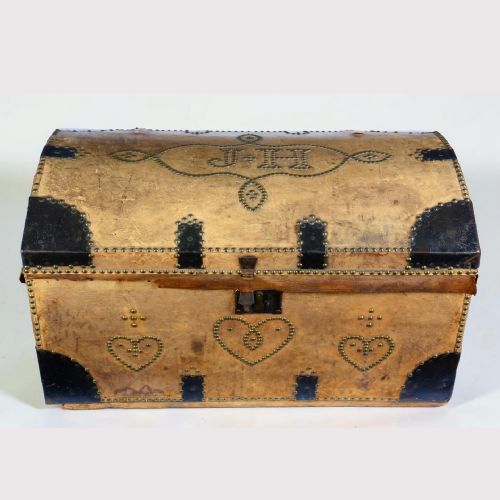
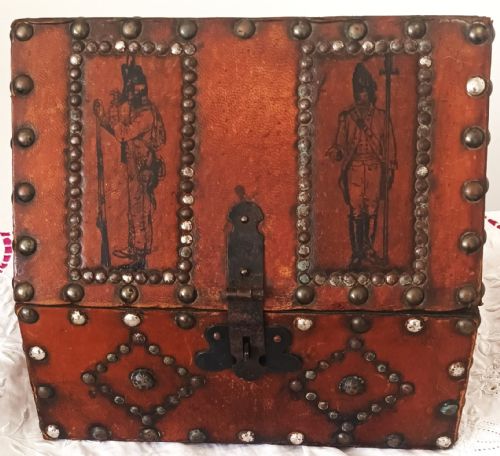
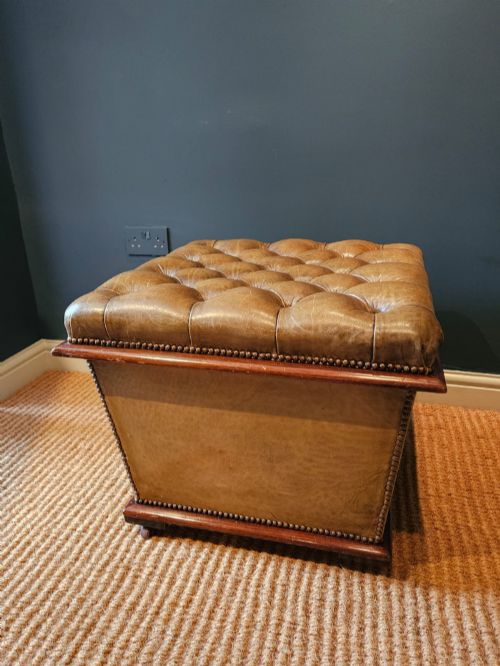
When you search for a studded leather box, you encounter practical storage pieces designed for travel and domestic utility across multiple centuries. These items range from small caskets and travelling boxes to large camphor wood campaign trunks, domed coffers, and footstools.
The pieces on this page span the seventeenth, eighteenth, and nineteenth centuries, taking in Regency, Victorian, and Chinese Export styles. You will find items clad in green, red, black, or hand-dyed hide, often secured with brass nailhead details and metal bindings.
Materials and Construction
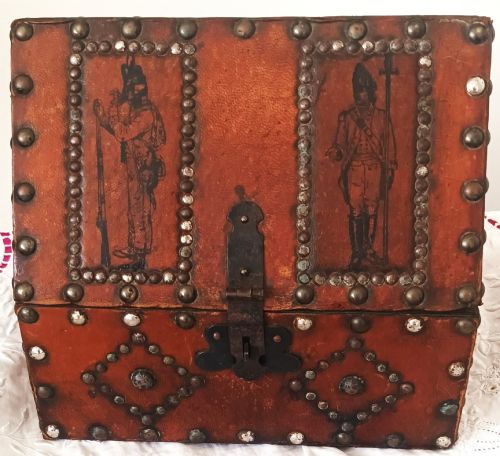
Makers built these trunks and boxes around internal wooden carcasses of pine, mahogany, birch, or camphor wood. They then clad the exterior in leather, hide, or painted leather before securing the surface with heavy brass studs and iron or brass bindings.
Craftsmen applied individual brass nailheads to fasten the leather tightly to the wood, creating decorative geometric patterns along the edges and lids. Iron carry handles and sturdy locks completed pieces intended to withstand long journeys by coach or ship.
Several travel trunks bear the original handwritten initials of nineteenth-century owners, proving that baggage tags are not a modern invention.
Distinctions in Quality
Quality rests in the integrity of the underlying timber frame and the precision of the brass studwork. Finer examples display meticulous hand-pounded stud patterns and robust original iron or brass hardware that remains firmly fixed to the hide.
The choice of secondary woods, such as fragrant camphor or rich mahogany, alongside signed maker's labels or high-end retail stamps, elevates an item. The suppleness of the surviving leather and the survival of original interior linings also define the better specimens.
Samuel Pratt·Wm Insall of Bristol·Arthur Wannop·Chapple & Sons·Seabrook of St Pauls London·W Insall
The Studded Leather Box Glossary
- Camphor wood
- A fragrant timber native to Asia, frequently utilised for campaign trunks to deter insects during maritime transport. It is naturally resistant to pests.
- Campaign trunk
- A portable storage chest made for military officers or travellers, built in sections or with robust carrying handles. These pieces were engineered for frequent movement.
- Casket
- A small decorative box or chest intended for valuables, jewellery, or documents. They often feature intricate metal mounts and velvet or silk linings.
- Coffer
- A heavy box or chest with a domed or flat lid, traditionally used for storing high-value goods. Early examples frequently utilise heavy iron bindings.
- Nailhead
- A decorative brass or iron tack driven through the leather exterior to secure the hide to the wooden frame. These studs form linear or geometric ornamentation.
Studded Leather Box: Frequently Asked Questions
What were studded leather boxes used for?
These boxes served primarily as secure containers for transporting clothing, documents, and valuables during long journeys by coach or ship. Their sturdy wooden frames and metal reinforcements protected contents from the rigours of travel.
In domestic settings, smaller versions sat on tables for personal items, while larger trunks provided bedroom and hallway storage for bulky textiles.
How do I date a leather trunk?
Dating relies on examining the construction methods of the internal wood, the style of the brass studwork, and the type of lock mechanism. Earlier seventeenth and eighteenth-century examples often feature heavy iron bindings and domed wooden lids covered in Spanish or Dutch hide.
Nineteenth-century campaign pieces typically incorporate camphor wood, sophisticated brass corner brackets, and maker's labels associated with Victorian manufacturers.
Are these boxes suitable for daily home use?
These pieces function exceptionally well as living room coffee tables, blanket chests, or bedside storage units. Their durable hide exteriors and robust wooden carcasses easily withstand everyday domestic demands.
Placing them in a room introduces texture, warmth, and historical utility without requiring delicate handling.
What is a China Trade trunk?
China Trade trunks were manufactured in Asia during the nineteenth century specifically for Western export markets. They frequently combine fragrant camphor wood interiors with painted or plain leather exteriors and brass hardware.
These items reflect the cross-cultural exchange of goods during the Regency and Victorian periods, often brought back by merchants and naval officers.