

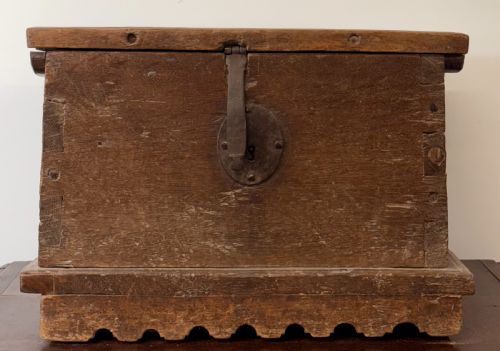


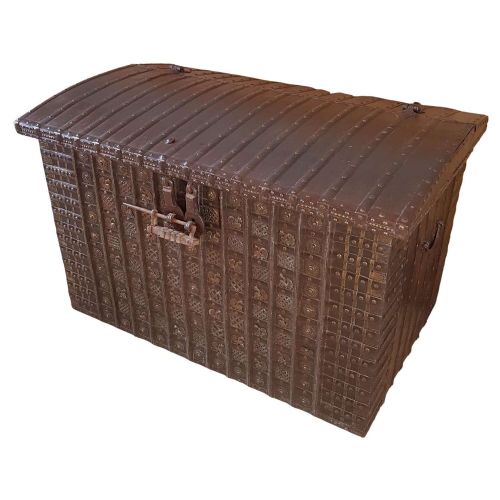


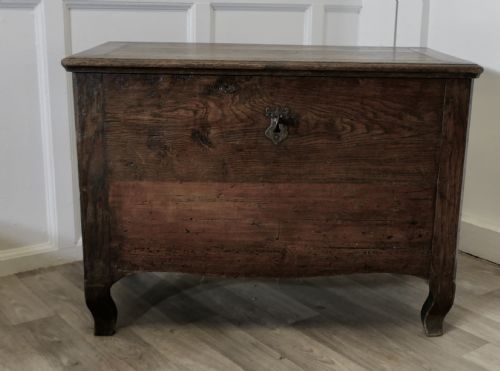


Antique Iron Lock Trunk
An antique iron lock trunk is a heavy storage chest built for security and travel, forged from timber and banded in metal.
Antique Iron Lock Trunk
An antique iron lock trunk is a robust storage piece designed for security and transport, bringing centuries of utility into a home. These vessels range from sturdy domestic coffers to banded travelling chests.
The pieces listed on this page encompass various forms such as coffers, blanket chests, and toolboxes. They originate from diverse traditions including Spanish Colonial, Charles II, and vernacular country styles.
Makers utilised resilient timbers like oak, elm, pine, and walnut, frequently mounting them with heavy ironwork and complex locking mechanisms. Surviving examples demonstrate the enduring practicality of early security furniture.
How they were made
Construction relies heavily on durable hardwoods and softwoods such as oak, elm, pine, and walnut, sometimes clad in leather or painted. Carpenters and joiners utilised traditional plank and panel techniques to build the primary carcass.
Metalworkers forged wrought iron into heavy bands, hinges, and intricate lock plates to secure the contents. These metallic elements were fastened to the timber bodies using hand-forged nails and rivets.
Antique Iron Lock Trunk Retail Price Guide 2026
Typical asking prices for iron lock trunk among the pieces listed under this phrase on Sellingantiques today, from the lower quarter to the upper quarter. They describe what is for sale here now, not the wider market.
Listings feature periods spanning from the sixteenth century through to the early twentieth century, incorporating oak, elm, pine, leather, and wrought iron.
What varies in quality
The standard of an antique iron lock trunk depends upon the integrity of its timber construction and the sophistication of its metalwork. Original complex steel locks and intact decorative strapwork elevate a piece significantly.
Proportions, surface patination, and the survival of original keys or mounting plates dictate desirability among collectors. Simpler vernacular items contrast with highly decorated continental and colonial examples.
The Antique Iron Lock Trunk Glossary
- Armada chest
- A heavy iron-banded storage box of continental origin, typically fitted with a complex multi-bolt locking mechanism beneath the lid.
- Damchiya
- A traditional dowry chest originating from Rajasthan, characterised by heavy wooden construction and iron banding.
- Six-plank coffer
- A primitive form of chest constructed from six individual boards joined edge-to-edge, representing early joined furniture.
- Strapwork
- Decorative or reinforcing bands of metal, usually iron, applied across the exterior surfaces of trunks and chests for added strength.
Antique Iron Lock Trunk: Frequently Asked Questions
What is an antique iron lock trunk?
An antique iron lock trunk is a secure storage chest made from timber and reinforced with iron bands and complex locking mechanisms. These pieces were historically used for safeguarding valuables during travel and in the home.
They combine utilitarian strength with period craftsmanship, utilising materials like oak, elm, and wrought iron. Surviving examples reflect the design traditions of specific centuries and regions.
How were these trunks used historically?
These chests served primarily for the safe transport and storage of money, documents, and precious household goods. Their heavy construction and intricate locks deterred theft in both domestic and institutional settings.
Over time, many transitioned into domestic furniture for blankets, tools, or general household storage. Their robust build ensured they survived centuries of practical use.
How do I care for an antique wooden trunk?
Maintain these pieces by keeping them away from direct heat sources and excessive moisture to protect the timber. Regular dusting with a dry cloth helps preserve the natural surface patination.
Avoid harsh chemical cleaners on both the wood and the iron elements. Treating metalwork with specialist wax can prevent surface corrosion without altering the original finish.