





Studded Blanket Box
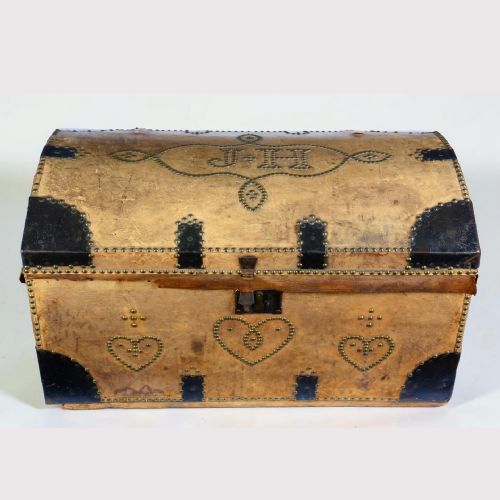
A studded blanket box is a robust wooden chest covered in hide or leather and secured with metal pins, prized for both practical storage and distinctive decorative presence.
Studded Blanket Box
When you search for a studded blanket box, you encounter heavy storage chests designed for travel, trade, and domestic use across multiple centuries. These pieces combine utilitarian wooden framing with decorative surface work.
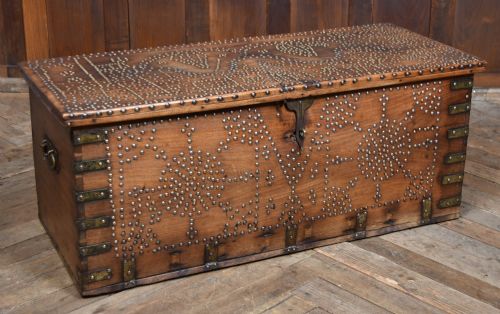
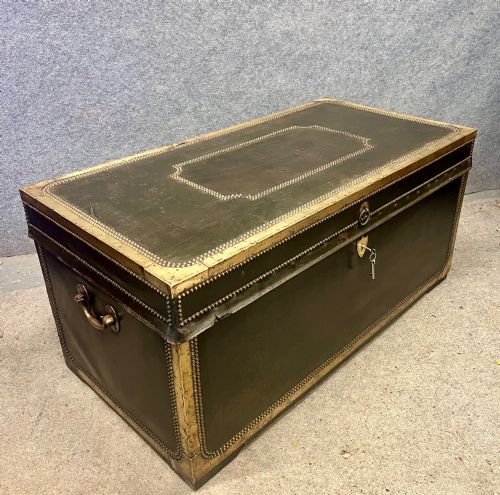
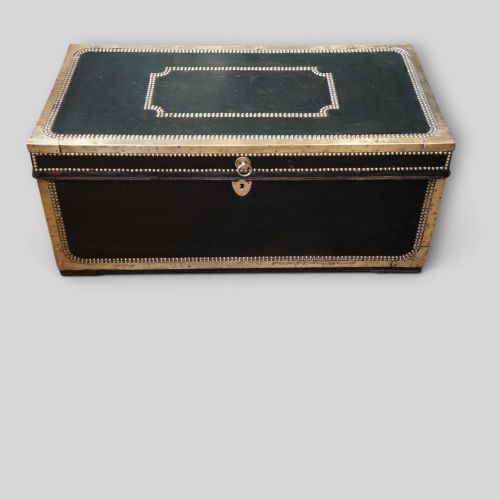
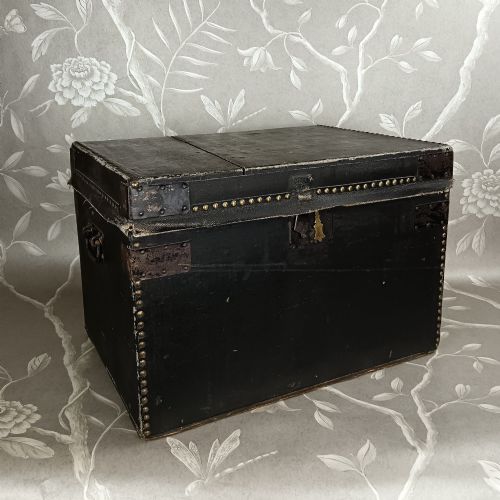
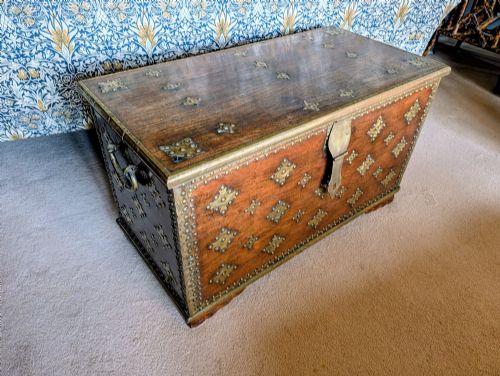
The most common versions on this page originate from the nineteenth and eighteenth centuries, taking forms such as Zanzibar chests, campaign trunks, and leather-clad ottomans. They serve as substantial accent furniture in contemporary interiors.
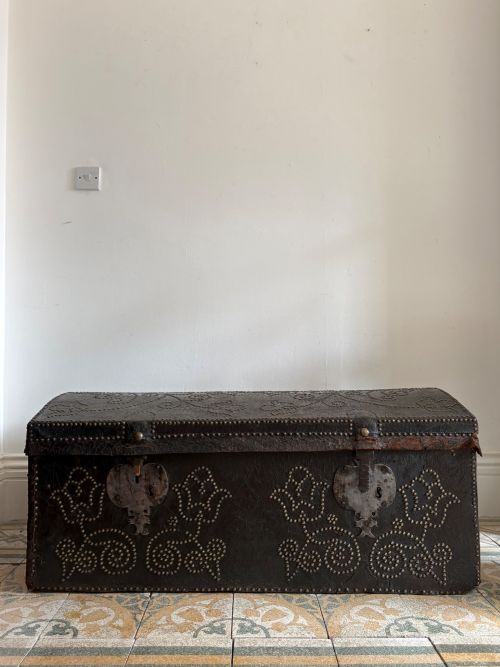
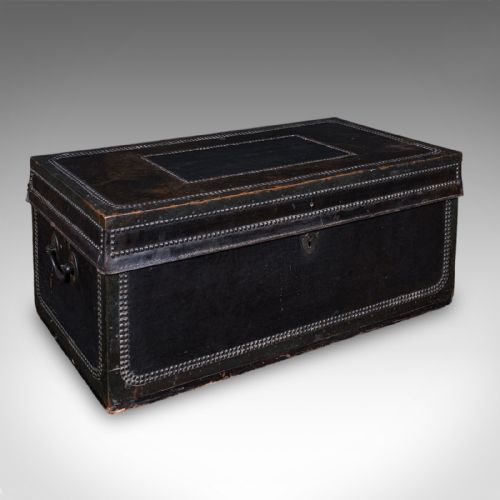
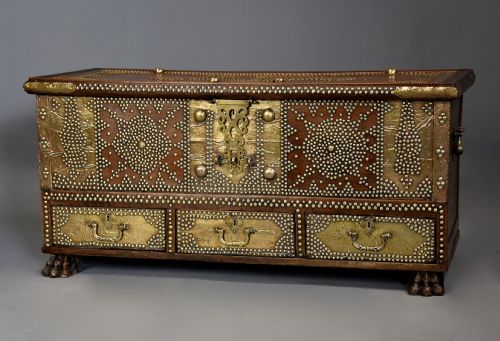
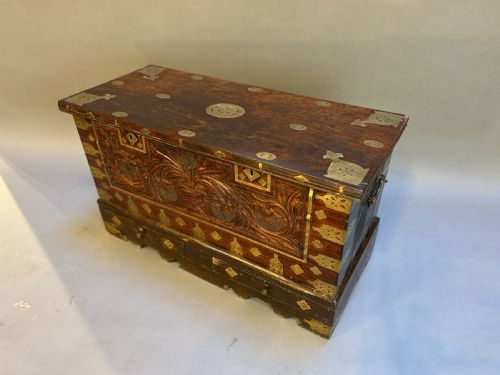
Makers and traders built these boxes from woods like teak, padouk, and camphorwood, covering them in hide, leather, or iron and brass bindings. Each regional style, from Anglo-Indian to Spanish Baroque, brings a distinct character to the surface decoration.
How they were made
Carpenters constructed the structural carcasses using hardwoods like mahogany, oak, teak, and camphorwood, often housing them in sturdy frames to withstand heavy travel and transit. These timbers provided a stable foundation for exterior coverings.
Craftsmen applied outer layers of leather, hide, or metal sheeting, securing the materials with rows of brass or iron studs and nailhead details. These metal fastenings doubled as structural reinforcement and intricate surface decoration.
Makers integrated sturdy carry handles in metal or leather on the sides, alongside complex locking mechanisms and bound edges. This combination of materials ensured the chests survived long journeys by coach, ship, and carriage.
Listings feature various woods including mahogany, oak, teak, camphorwood, birch, and padouk across multiple centuries.
What varies in quality
The integrity of the internal timber framing and the original condition of the outer leather or hide dictate the baseline quality of each chest. Finer pieces retain their original linings, structural bracing, and functional hardware without extensive timber replacement.
The density and precision of the brass studwork or metal binding separate standard utilitarian trunks from exceptional decorative examples. Hand-punched nailhead patterns and intricate brass-bound motifs require considerable skill from the maker.
Provenance and maker attribution elevate certain pieces significantly, particularly those bearing maker labels or specific regional trading routes like Zanzibar or China Trade workshops. The harmony between the original timber, such as padouk or camphorwood, and the exterior metalwork defines the upper tier.
Samuel Pratt·Wm Insall of Bristol·Arthur Wannop·Seabrook of St Pauls London
The Studded Blanket Box Glossary
- Zanzibar chest
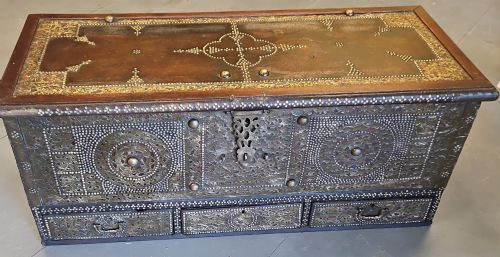
- A heavy wooden storage chest originating from East trade routes, typically constructed from hardwoods and decorated with elaborate brass studwork and strapping. These pieces often feature internal till compartments and complex locking mechanisms.
- Campaign trunk
- A portable storage chest designed for military officers and travellers, built in sections or fitted with robust carry handles for frequent transit. They utilise durable woods and reinforced corners to endure harsh journeys.
- Coffer
- A large wooden chest traditionally used for holding valuables, clothes, or documents, often featuring a dome top and heavy metal bindings. Earlier examples display deep panel carving and hand-forged ironwork.
- Ottoman
- An upholstered or leather-clad storage seat without a back or arms, functioning as both furniture and a blanket box. They appear frequently in nineteenth-century country house interiors.
- Camphorwood
- An aromatic hardwood frequently used for interior chests and trunks to protect textiles from insects. The wood emits a distinctive scent and resists moisture effectively.
Studded Blanket Box: Frequently Asked Questions
What were studded blanket boxes used for originally?
These chests served primarily as durable luggage and secure storage for clothing and valuables during long journeys by sea and coach. Their sturdy wooden carcasses and metal bindings protected contents from moisture and rough handling.
In domestic settings, families used them to store household textiles, heavy blankets, and winter garments. Over time, their decorative studwork made them prominent fixtures in bedrooms and hallways.
How do I care for the leather and studwork?
Maintain the leather or hide exterior by keeping the pieces away from direct sunlight and excessive heat sources to prevent cracking. Regular, gentle dusting keeps particulate matter out of the recesses around the metal studs.
Apply a neutral, microcrystalline wax sparingly to nourish older leather surfaces if they appear dry. Avoid harsh chemical cleaners that might discolour the brass or iron fastenings.
Where should I place an antique trunk at home?
These boxes function exceptionally well as coffee tables in living spaces, offering both a sturdy surface and internal storage for books or extra throws. Their decorative studwork and rich timber tones anchor a room's seating arrangement.
They also sit comfortably at the foot of a bed as traditional blanket storage or serve as standalone statement pieces in hallways. Ensure the floor can support the substantial weight of hardwood and metal construction.
How can I tell a Zanzibar chest from other trunks?
Zanzibar chests stand out through their dense brass stud decoration, geometric brass strapwork, and heavy tropical hardwoods like padouk, teak, or rosewood. They frequently feature prominent front hasps and concealed interior compartments.
Unlike standard European travel trunks, these trading chests reflect distinct East African and Indian Ocean maritime influences. Their robust proportions and ornate metalwork distinguish them from domestic British blanket boxes.