
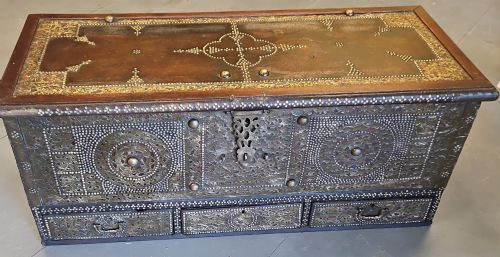


Antique Zanzibar Trunk
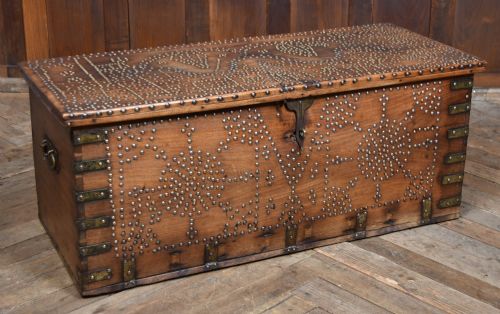
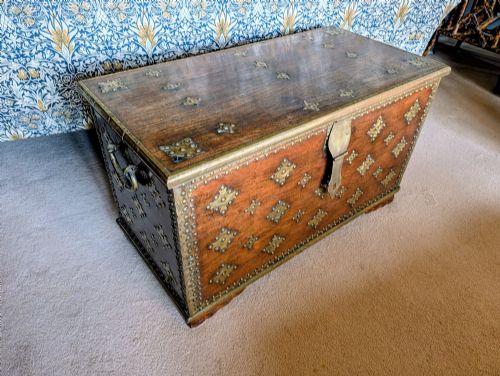
An antique zanzibar trunk brings heavy hardwood, brass strapwork, and studded detail straight from East African and colonial trade routes into the home.
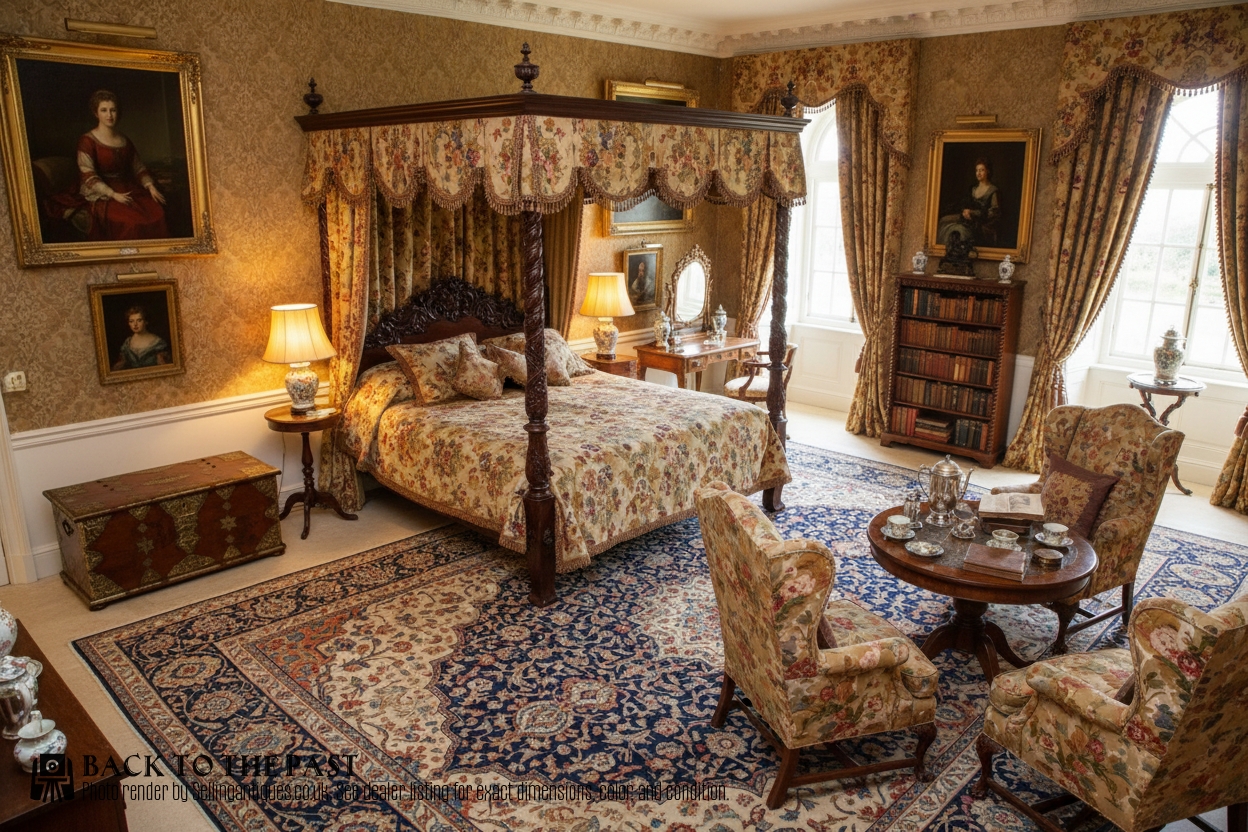
Antique Zanzibar Trunk
An antique zanzibar trunk functions primarily as a heavy storage chest, blanket box, or travel carriage trunk. These pieces emerge predominantly from nineteenth-century production, spanning Victorian, eighteen-nineties, and nineteen-twenties periods, with colonial and Anglo-Indian styles.
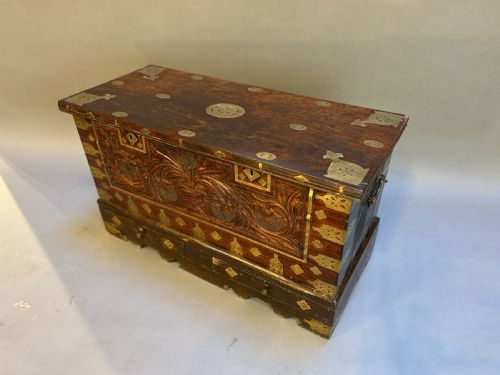
The most common forms on this page include blanket boxes and storage chests constructed for utility and travel. Buyers encounter regional variations described variously as Zanzibar chests, Omani carved dowry chests, and carriage trunks.
These items originate from trading routes connecting East Africa with Indian and British colonial influences. They serve modern interiors effectively as living room coffee tables or functional bedroom storage.
How these trunks were constructed
Construction relies heavily on dense tropical hardwoods including teak, padouk, padouk wood, rosewood, and general hardwood. These durable timbers provide the structural strength required for long-distance maritime and land travel.
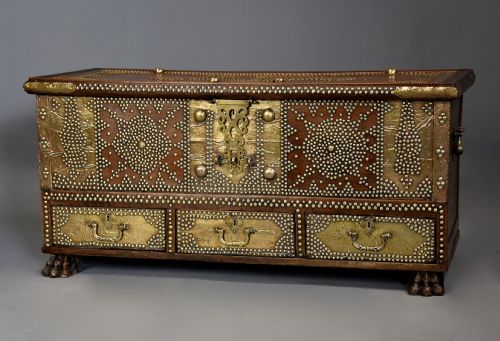
Craftsmen reinforce the wooden bodies using extensive brass and copper work, alongside iron components and studded detailing. Many examples feature brass binding and inlaid designs that protect the corners and edges from heavy handling.
Travel trunks occasionally retain the dents and marks of nineteenth-century carriage journeys across continents.
What separates examples of quality
Quality rests upon the choice of timber and the complexity of the metalwork. Dense woods like padouk and teak provide superior durability compared to softer hardwoods.
The fineness of the brass studding, corner mounts, and any carved Omani ornamentation define the upper tier of pieces. Intricate brass inlay and complete locks with keys distinguish finer dowry chests from plain blanket boxes.
The Antique Zanzibar Trunk Glossary
- Padouk
- A dense tropical hardwood prized for its reddish-brown colour and durability in furniture making. It forms the primary material for several boxes listed here.
- Dowry chest
- A specialised storage chest traditionally commissioned for a bride's household goods. These often feature more elaborate carving and brass inlay than standard blanket boxes.
- Carriage trunk
- A sturdy chest designed to withstand the rigours of nineteenth-century travel. These pieces typically incorporate robust metal strapping to protect against transit damage.
- Anglo-Indian
- A stylistic term describing furniture made in India under British colonial rule. It combines local craftsmanship and materials with European forms.
Antique Zanzibar Trunk: Frequently Asked Questions
What is a zanzibar trunk used for today?
These chests function well as living room coffee tables, hallway storage, or bedroom blanket boxes. Their robust build handles daily domestic use easily.
They offer generous internal capacity while adding strong textural contrast to modern or traditional interiors.
How do I date a zanzibar chest?
Dating relies on examining the timber species, construction methods, and hardware styles. Most examples date from the nineteenth century and the Victorian era.
Look for hand-hammered brass work, specific hardwood varieties like padouk or teak, and traditional joinery details.
Are all these trunks from Zanzibar?
While associated with Zanzibar, these pieces reflect wider Omani, East African, and Anglo-Indian trade routes. Makers across these regions produced similar forms for travel and domestic storage.
Style descriptions often encompass colonial, Victorian, and East African influences combined.
How do I care for teak and padouk wood?
Maintain the timber by keeping the trunk away from direct heat sources and sudden humidity changes. Occasional light conditioning preserves the natural oils in the hardwood.
Polish the brass components gently to retain their finish without disturbing the surrounding wood.