
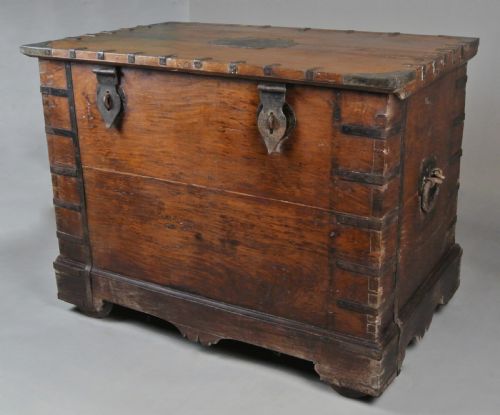
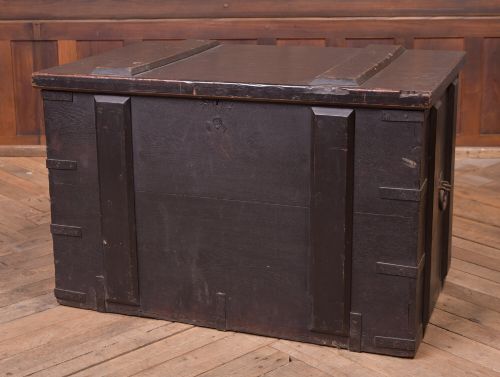


19th Century Teak Coffer
These heavy 19th century teak coffer pieces offer robust storage and distinct historical character for traditional and eclectic interiors.
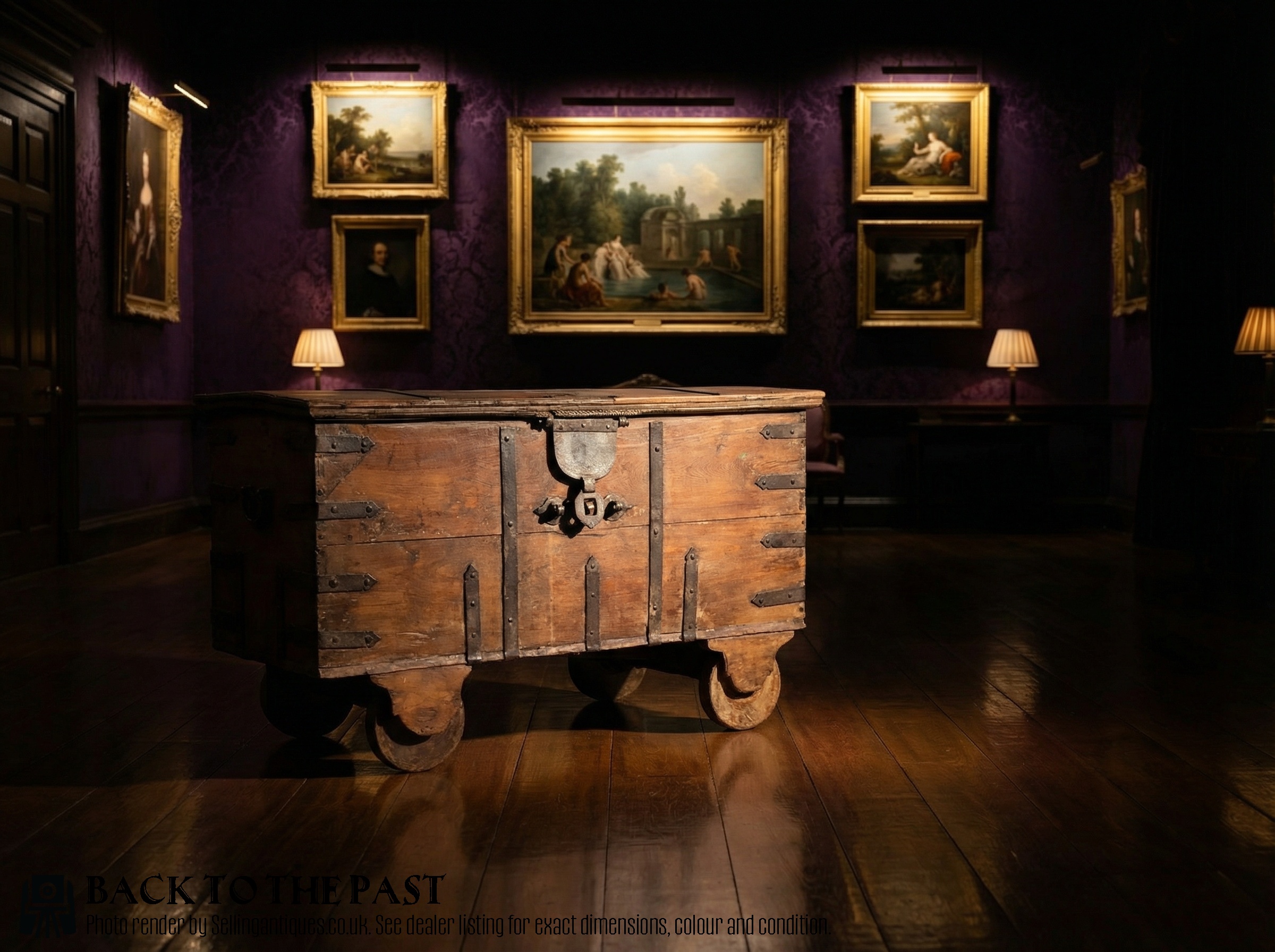
19th Century Teak Coffer
A 19th century teak coffer serves as a durable storage chest, blanket box, or strong box. The examples gathered here span styles from Anglo-Indian and Colonial to military campaign and Victorian designs.
Most pieces date across the nineteenth century, including specific periods around 1850 and 1890. Alongside standard chests, the selection occasionally encompasses related forms such as armchairs and trunks on stands.
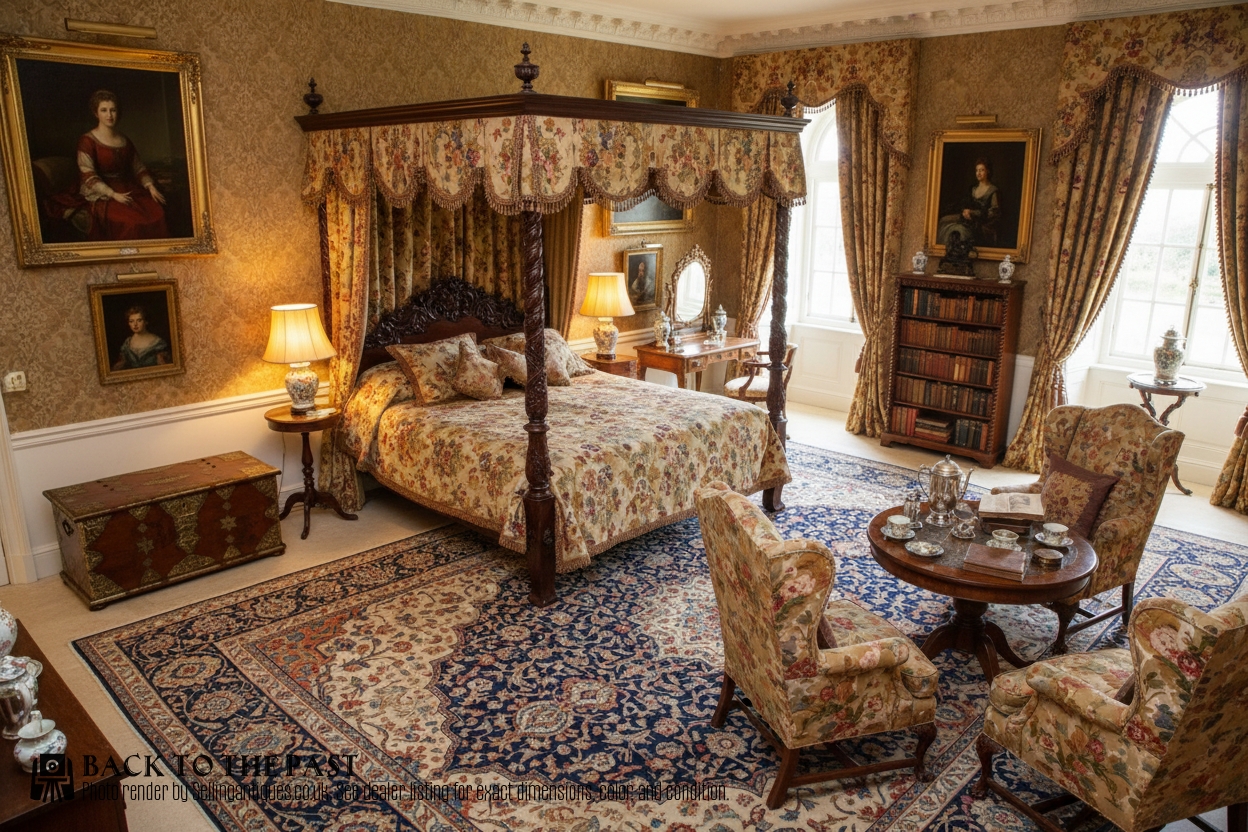
Materials and construction methods
Makers built these pieces primarily using dense teak and hardwood. Brass, iron, and wrought iron provide structural reinforcement and decorative corner straps.
Surface treatments range from plain polished wood to intricate carving, lacquer finishes, ebony mounts, and studded brass detailing.
Several trunks feature heavy brass studding designed to deter tropical pests as much as to look impressive in a hallway.
Judging quality in a coffer
Quality rests upon the integrity of the timber joints and the precision of the metal mounts. Heavy brass or iron bound edges show deliberate craftsmanship intended for travel and secure storage.
The refinement of decorative elements, such as ripple moulding, carved ceremonial details, or specialised stands, separates standard utility boxes from superior examples.
The 19th Century Teak Coffer Glossary
- Teak
- A durable tropical hardwood known for its resistance to moisture and decay. It forms the primary structural body of these coffers.
- Campaign chest
- A portable storage trunk designed for military officers on the move, typically featuring brass corners and recessed handles.
- Zanzibar chest
- An ornate storage chest characterised by brass studding and strapwork, reflecting East African and Indian trade routes.
- Ripple moulding
- A decorative, undulating profile carved into the wood frame, adding textural depth to the exterior.
19th Century Teak Coffer: Frequently Asked Questions
What are these coffers made of?
The primary material across these pieces is teak, often paired with secondary hardwoods like ebony.
Metal components typically consist of brass or iron used for binding, locks, and decorative studs.
How were campaign chests used?
Campaign chests served as practical luggage and storage for British military officers travelling abroad.
Their modular design allowed them to be easily packed and transported on ships and horseback.
Where do Anglo-Indian coffers come from?
Anglo-Indian pieces reflect the stylistic exchange between British design tastes and Indian craftsmanship during the nineteenth century.
Local artisans utilised native teak to build furniture tailored for colonial officials and export markets.
How do I care for antique teak?
Antique teak requires minimal maintenance beyond regular dusting with a dry cloth.
Avoid placing the wood in direct sunlight or near heat sources to prevent drying and cracking.