


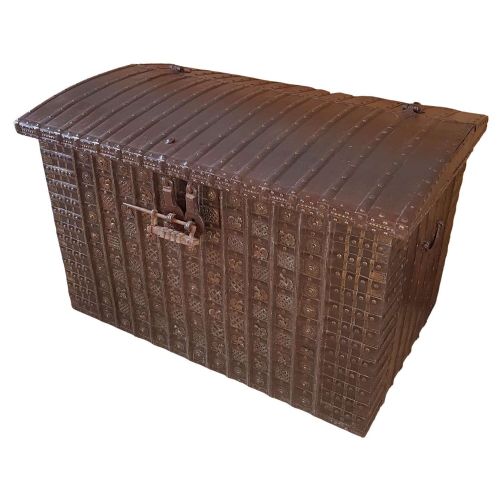


Vintage Iron Strapped Chest
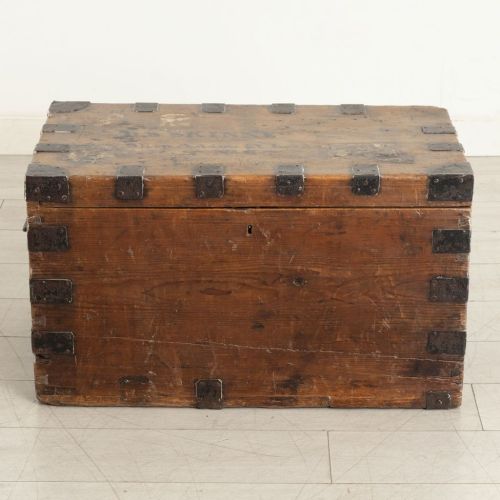
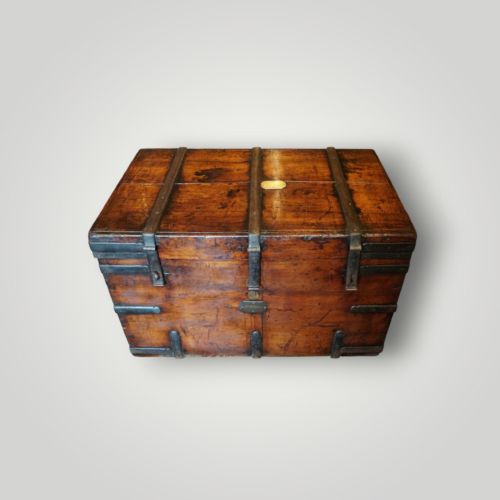
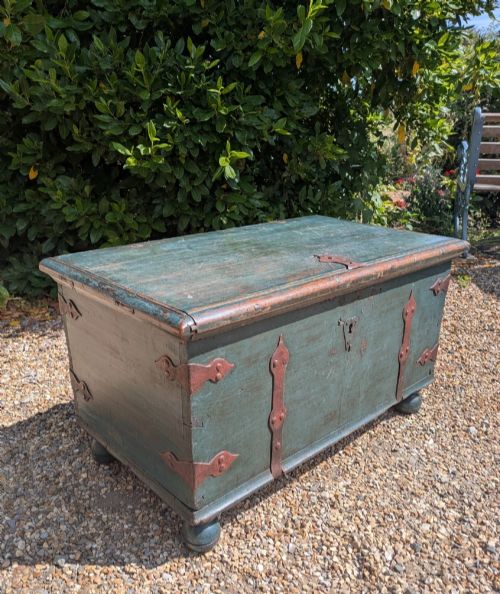
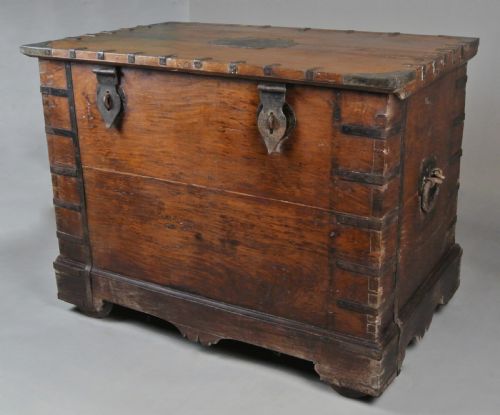
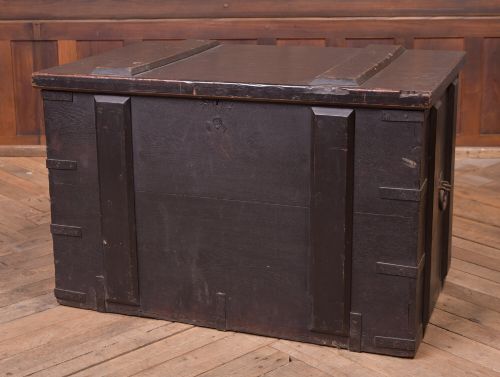
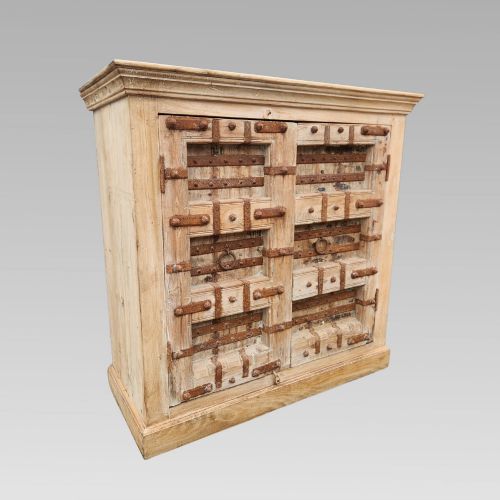
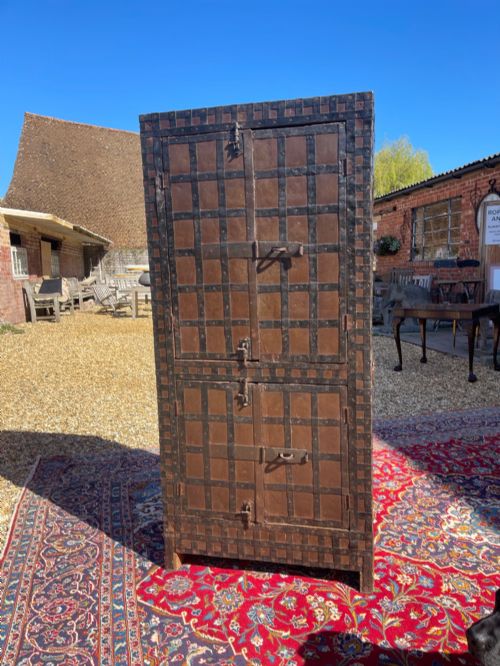
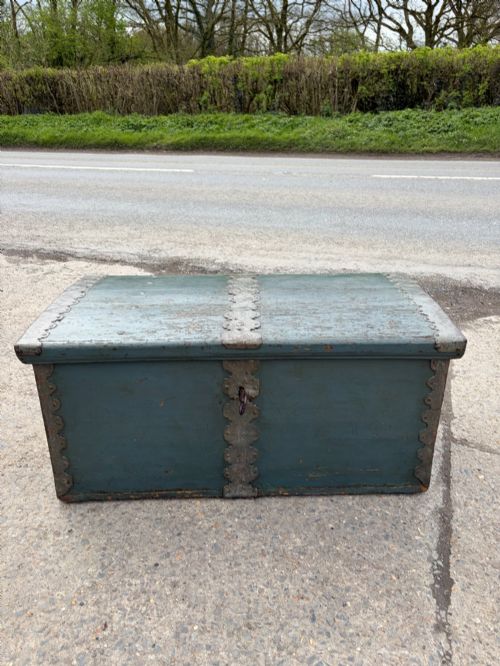
A vintage iron strapped chest brings heavy structural metalwork and sturdy timber together, offering robust storage with genuine age.
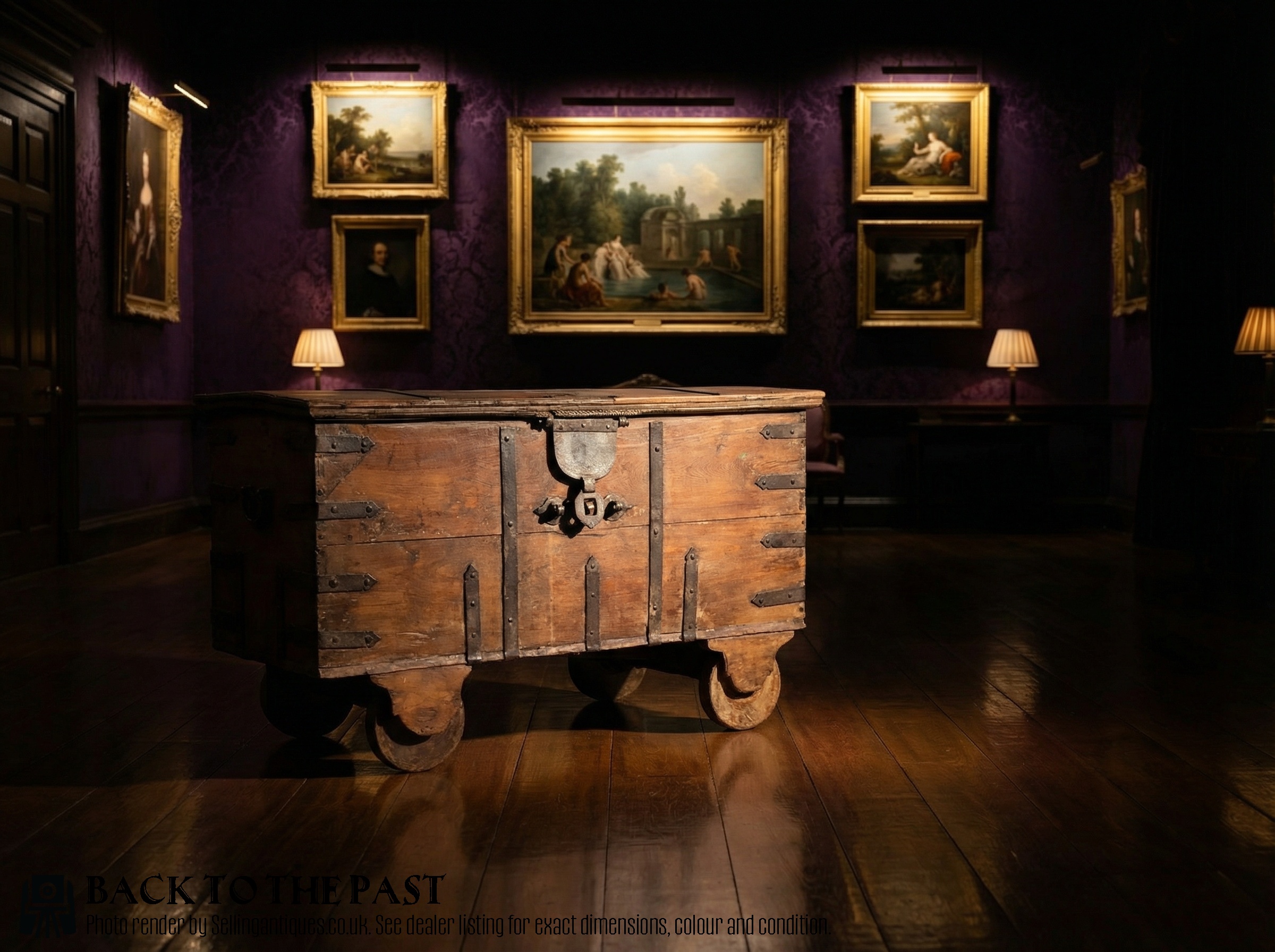
Vintage Iron Strapped Chest
A vintage iron strapped chest serves as a practical storage receptacle, emerging across multiple periods from the seventeenth century through to the early twentieth century. When exploring this selection, buyers encounter formats ranging from dome-top travel trunks and silver chests to dowry chests and strong boxes.
Origin points span widely across regions such as England, Scandinavia, France, America, Japan, and India, reflecting diverse domestic and travel utility. Pine and teak represent the most frequent timbers, alongside oak, walnut, elm, and mahogany.
Stylistic expressions vary from rustic farmhouse and colonial pieces to Victorian and Georgian formal designs, as well as traditional Indian and Scandinavian country forms.
Materials and construction methods
Construction relies upon solid timbers such as pine, oak, teak, and walnut, often finished with original paint or left in natural grain. Carcasses take the form of strong boxes, dome-top coffers, and rectangular storage chests.
Structural reinforcement is achieved through hand-forged iron straps, bands, and hasps, secured with heavy rivets. Brass fittings and side lifting handles frequently supplement the primary iron work to facilitate transport and daily use.
Periods represented span from the seventeenth century through the Georgian and Victorian eras up to the early twentieth century.
Factors of distinction
Quality rests in the integrity of the timber framework and the substantial nature of the iron strapping. Original surface treatments, such as early paint or untouched patination, elevate the standing of a piece.
The sophistication of internal fittings, including fitted trays or specific storage compartments, alongside functional locks and original hardware, defines the upper tier of these examples.
The Vintage Iron Strapped Chest Glossary
- Strapwork
- Metal bands fixed across the exterior of a chest to reinforce the wooden panels. These straps add significant structural rigidity.
- Dome top
- A curved lid construction designed to shed water during travel and increase internal storage capacity. This profile appears frequently on nineteenth-century Scandinavian and American trunks.
- Silver chest
- A heavy-duty storage box lined to protect table silverware. These examples typically feature robust oak construction with secure iron bindings.
- Dowry chest
- A traditional trunk created for a bride's household possessions, often featuring ornate metal banding or regional painting. Examples are particularly prevalent in Indian and Scandinavian contexts.
- Strong box
- A compact, highly secure chest utilised for valuables and documents. They rely on thick timber and heavy iron straps to deter unauthorised access.
Vintage Iron Strapped Chest: Frequently Asked Questions
What were these chests originally used for?
These pieces served multiple purposes, from transporting personal belongings on long journeys to safeguarding valuables, silver, and dowry items within the home.
Sturdy construction allowed them to withstand the rigours of travel by sea and land while keeping contents secure.
How do I care for the iron straps?
Maintain the metalwork by keeping it dry and occasionally applying a light protective wax to prevent oxidation.
Avoid harsh chemical cleaners that might strip the historic patina from the iron or surrounding timber.
Are the locks typically in working order?
Many examples retain their original locks, though functionality varies due to age and the absence of matching keys.
Specialist locksmiths can sometimes service historical mechanisms if operational security is required.
How can I distinguish a travel trunk from a stationary chest?
Travel trunks frequently incorporate side lifting handles, reinforced corners, and robust iron straps designed to endure transit.
Stationary pieces, such as dowry chests or strong boxes, often rely on heavy timber thickness and elaborate front-facing hardware.