


Antique Brass Coffer
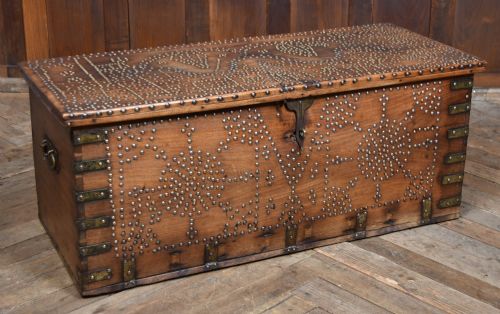
An antique brass coffer offers heavy corner mounts, strapwork, and studding that turn a simple storage box into a secure travelling piece.
Antique Brass Coffer
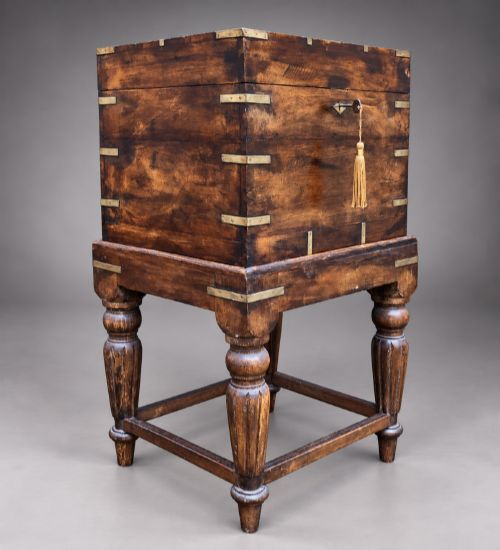
When you search for an antique brass coffer, you encounter sturdy timber storage boxes reinforced with metal strapping, corner brackets, and studding. The pieces span centuries from the seventeenth through the nineteenth, taking forms that include campaign trunks, blanket boxes, strong boxes, and travel chests.
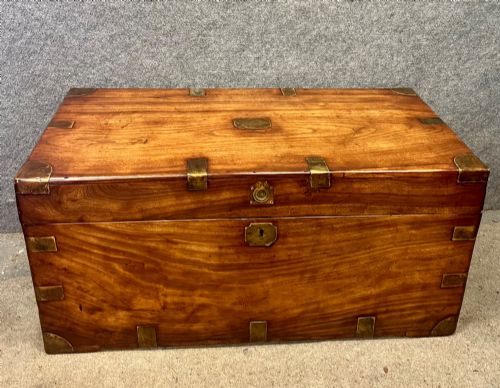
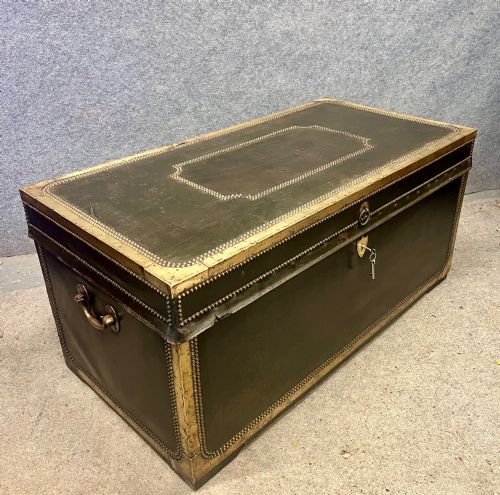
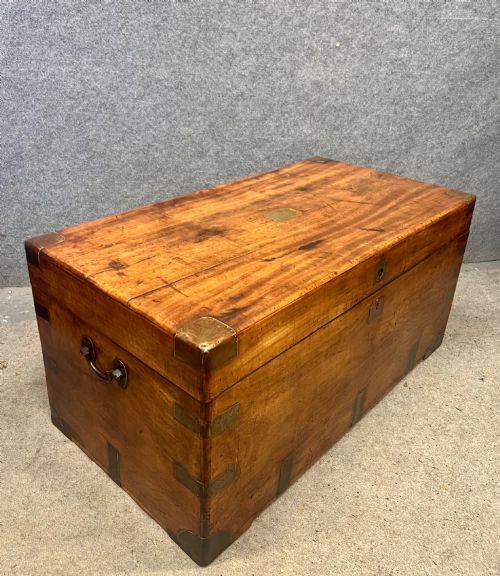
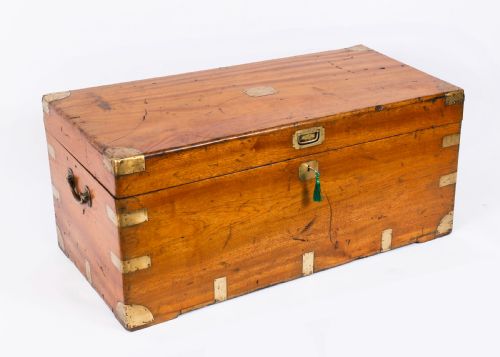
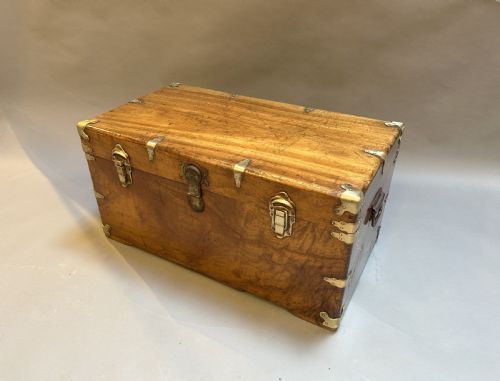
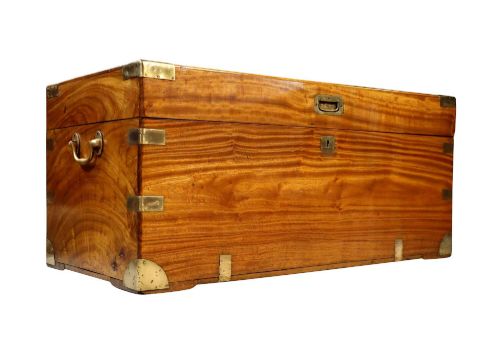
The version you meet most often on this page is the nineteenth century camphor wood or mahogany campaign trunk, heavily bound in brass and fitted with carrying handles. These durable chests served officers on the move, combining regional hardwoods with protective metalwork.
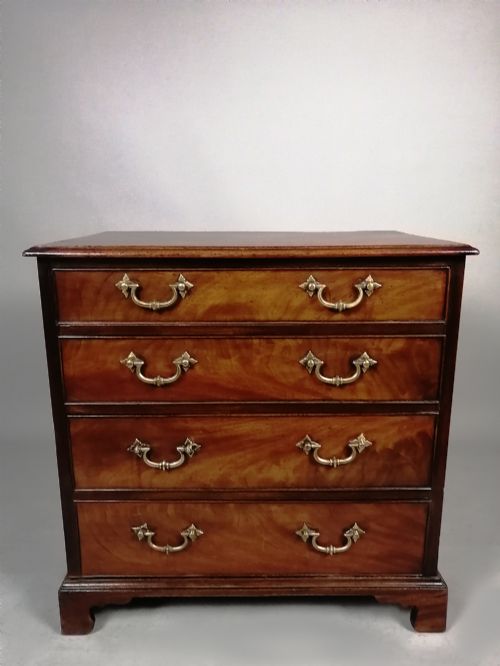
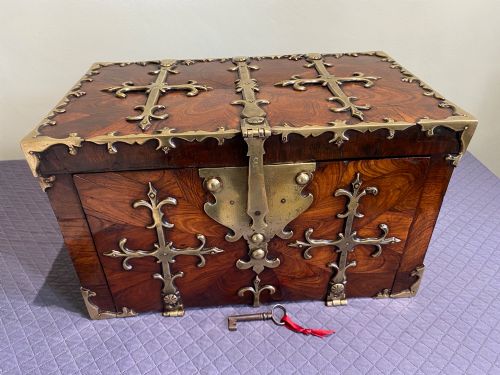
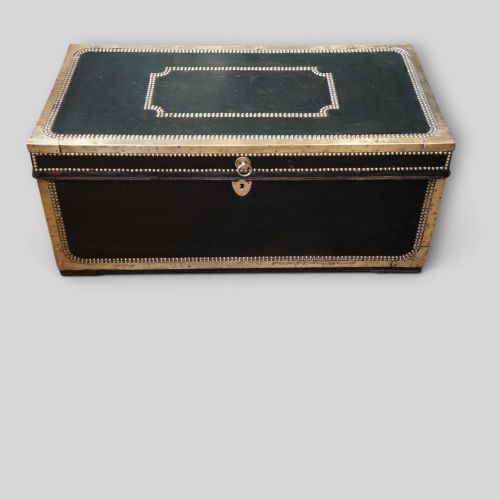
Earlier examples reach back to the seventeenth century in oak, walnut, or leather-covered timber, alongside colonial productions in padouk and teak. Alongside standard coffers, the selection includes related storage forms such as mule chests, deed boxes, and caskets.
Materials and construction
The construction relies on dense timbers such as camphor wood, oak, mahogany, walnut, and padouk, joined to withstand long journeys and heavy use. Camphor wood was selected for campaign trunks to deter insects, while native oaks and exotic hardwoods formed domestic coffers and mule chests.
Brass provides the structural reinforcement through corner plates, strapwork, hinges, and decorative studding, secured by countless small pins. Leather and iron also appear as protective outer coverings and bindings, paired with flush-fitting drop handles for transport.
Listings feature periods spanning from the seventeenth century through the Victorian era, utilising materials including brass, iron, camphor wood, mahogany, oak, and leather.
The markers of quality
Quality rests in the integrity of the timber framing and the weight and finish of the brass mounts. Heavy gauge brass hand-beaten or cast and cleanly fitted tells of a superior maker, whereas thin stamped metal sheets indicate a later or more utilitarian production.
The sophistication of the internal compartments, dovetail joints, and retention of original locks and keys distinguish standard campaign boxes from bespoke travel chests commissioned from notable makers. The crispness of the leather work or the figure of the mahogany and kingwood veneer further separate everyday pieces from exceptional survivals.
Samuel Pratt·J Moorcroft·Wm. Insall of Bristol
The Antique Brass Coffer Glossary
- Campaign trunk
- A sectional or reinforced timber chest designed for military officers on active service abroad, fitted with recessed brass handles and corner brackets to endure rough transport.
- Padouk
- A heavy, durable tropical hardwood with a reddish hue, frequently utilised in Anglo-Indian and colonial furniture and chests.
- Mule chest
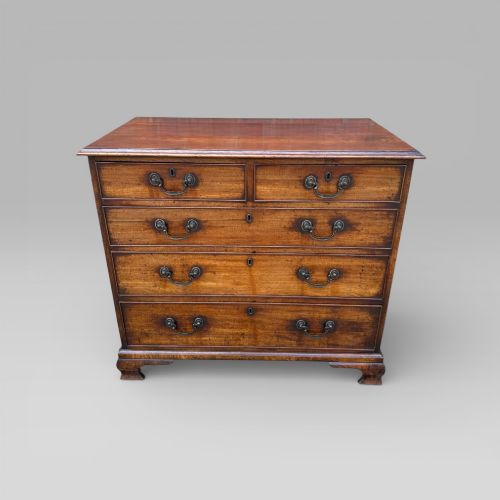
- A storage box featuring one or two drawers beneath the main lift-top compartment, combining the functions of a coffer and a chest of drawers.
- Coffre forte
- A French term for a strong box or secure coffer, often heavily iron-bound or brass-mounted for safeguarding valuables.
Antique Brass Coffer: Frequently Asked Questions
What is an antique brass coffer?
An antique brass coffer is a timber storage chest strengthened with brass corners, straps, and studs for security and travel.
These pieces range from seventeenth-century oak and leather boxes to nineteenth-century campaign chests built in tropical hardwoods.
How were these chests used?
Owners used them to pack clothing, documents, and valuables securely during long journeys by sea and land.
Military officers relied on brass-bound camphor wood trunks for active service, while households used mule chests and blanket boxes for storage.
How do I identify the period?
Dating relies on timber choices, construction methods like dovetailing, and the style of the brass mounts and locks.
Seventeenth-century pieces often use oak or leather-covered pine, whereas nineteenth-century campaign trunks frequently employ camphor wood with recessed brass hardware.
Are campaign trunks different from coffers?
Campaign trunks are a specific form of travel chest built for portability with flush handles and protective brass corners.
Standard coffers and blanket boxes are generally stationary domestic pieces designed for fixed positions in a room.