

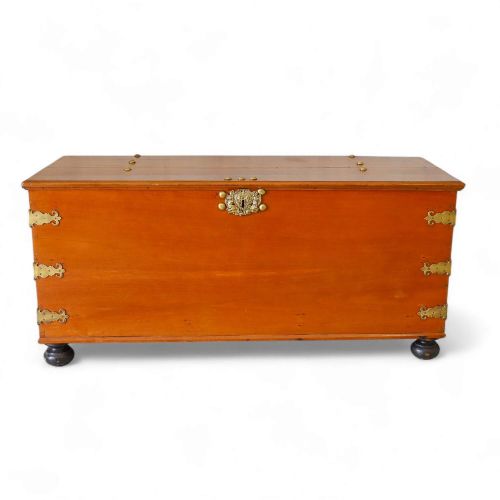
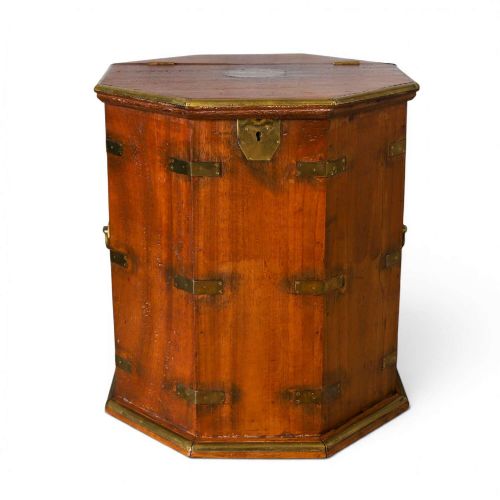


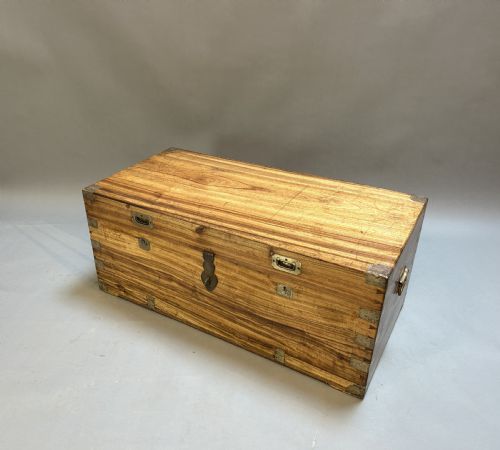


Brass Corner Trunk
A brass corner trunk delivers robust travel hardware and exotic timber, offering functional storage with distinct military heritage.
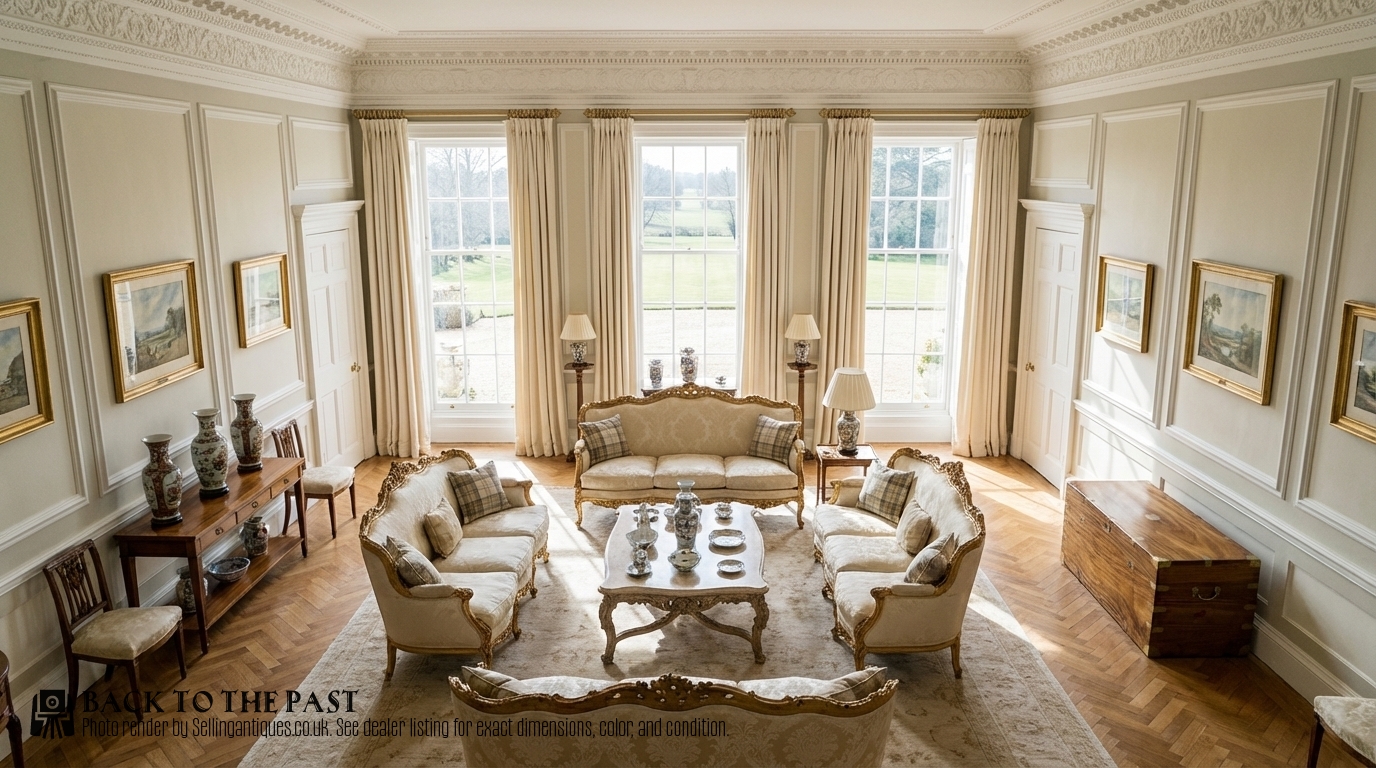
Brass Corner Trunk
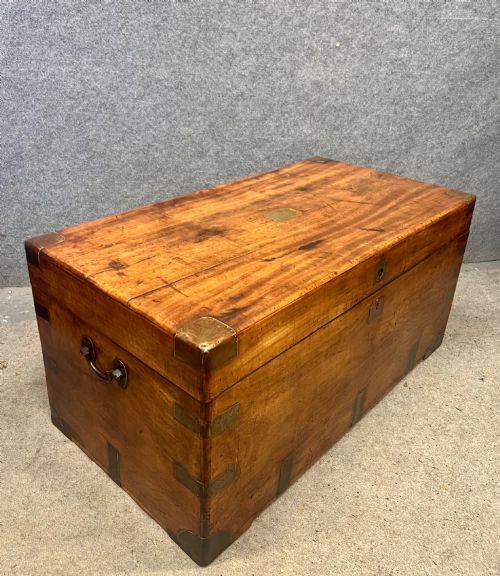
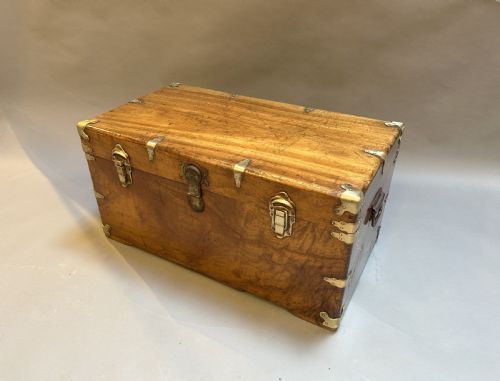
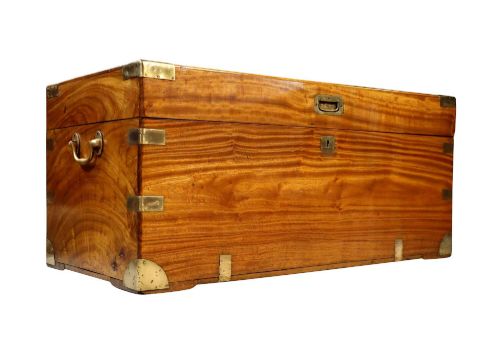
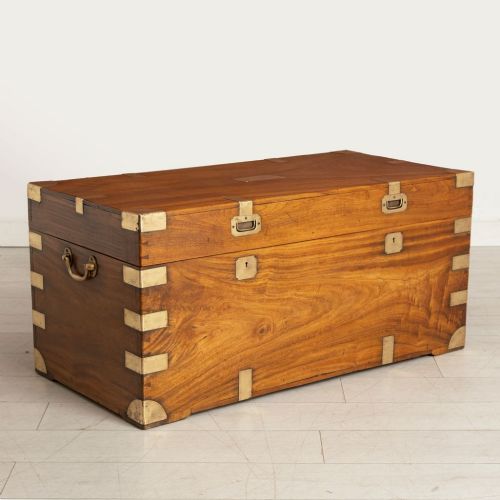
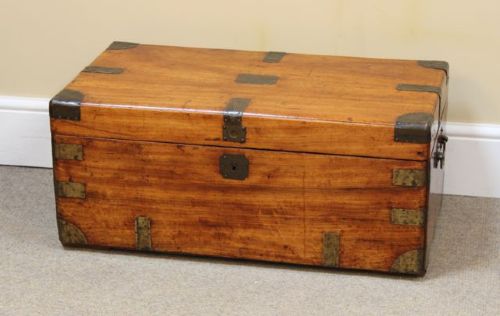
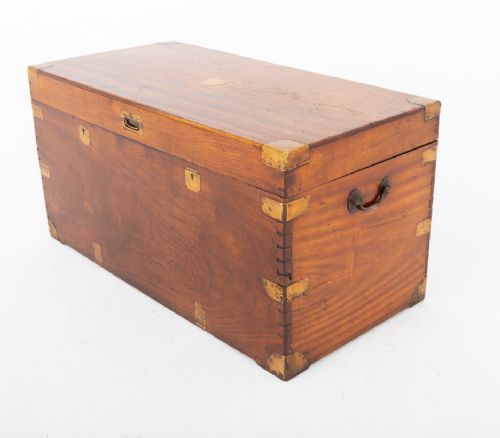
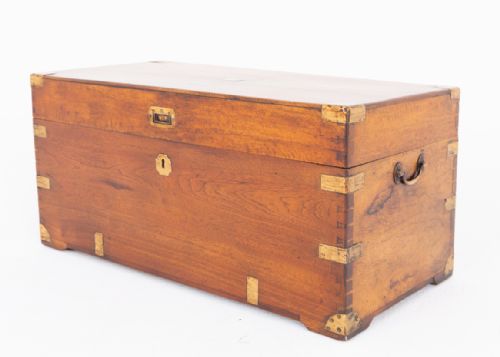
A brass corner trunk combines heavy timber construction with protective metal brackets designed to withstand arduous travel. These pieces emerge predominantly from the nineteenth century, reflecting periods of British military expansion and colonial trade. Buyers encounter sturdy chests fashioned for officers on the move, engineered for durability in distant stations.
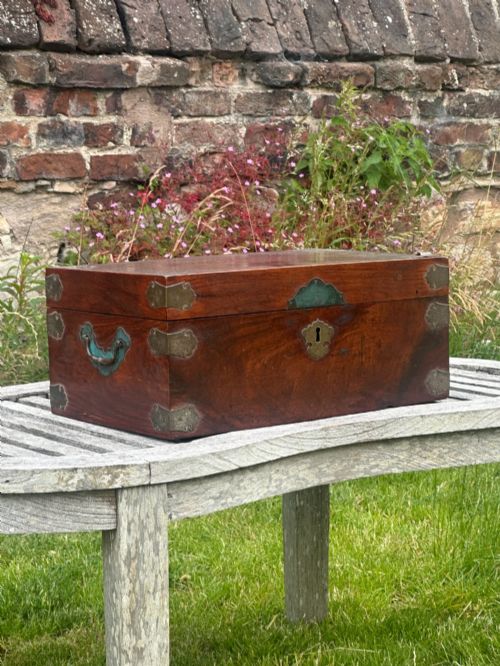
Camphor wood, teak and mahogany dominate the offerings, selected for their resilience against humidity and insects. The aesthetic links directly to campaign styles, where inset brass handles and reinforced edges protect the corners from heavy impact. Most examples date from the Victorian era, showcasing utilitarian design transformed into domestic furniture.
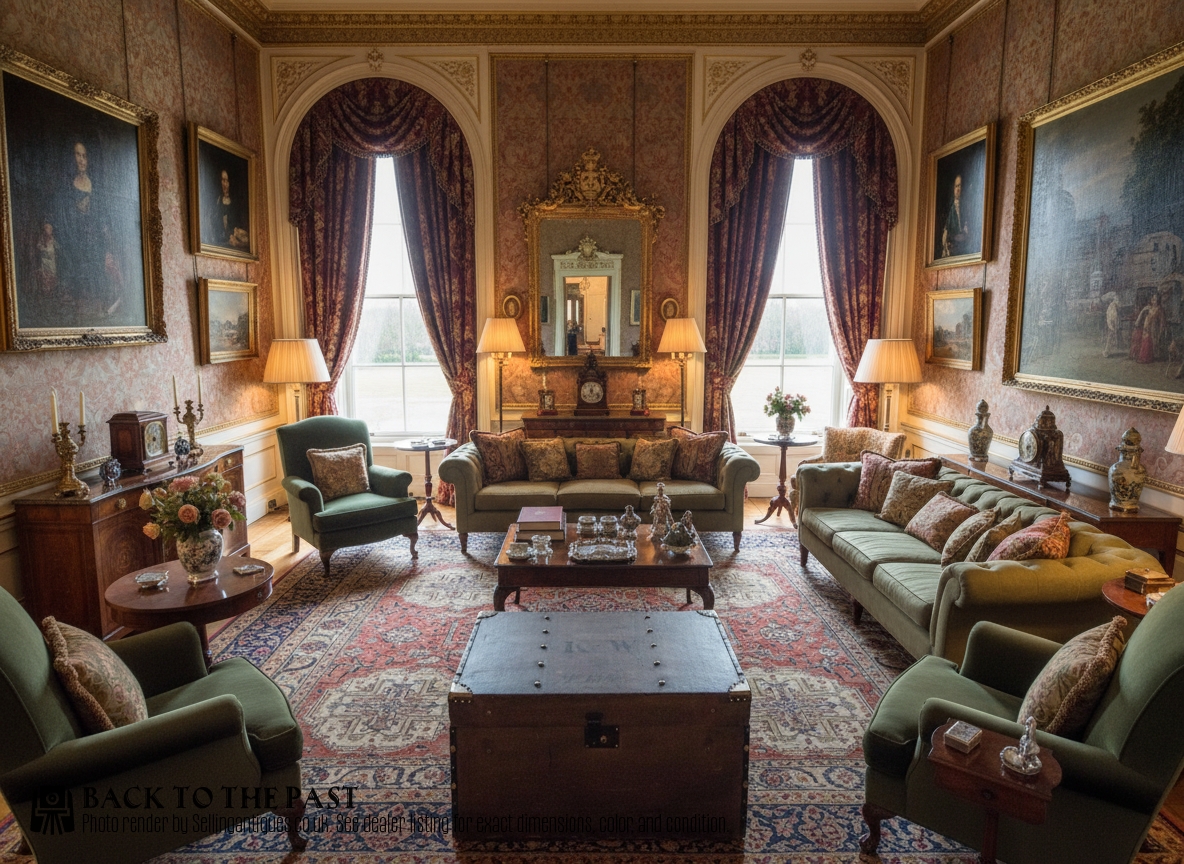
What varies in quality
The integrity of the original brass hardware and flush mountings dictates the primary tier of craftsmanship. Pieces retaining all their original corner brackets, strapwork and inset drop handles without later replacements command greater respect among collectors. Furthermore, the grain figure and selection of solid timber, particularly well-matched camphor wood or richly figured teak, separate utilitarian supply pieces from officers' bespoke commissions.
Structural alterations, such as added bases or modern interior linings, shift examples away from their original military configuration. The precision with which the brass work integrates into the timber surface indicates the skill of the original workshop.
Listings feature nineteen-century camphor wood and teak constructed with brass corner brackets and campaign styling.
The Brass Corner Trunk Glossary
- Campaign trunk
- A portable chest built in sections or with robust exterior hardware designed for military officers on active service. These trunks feature recessed handles and reinforced corners to endure frequent transport.
- Camphor wood
- An aromatic hardwood native to Asia, utilised extensively for campaign furniture because its natural scent repels insects. The timber displays a warm reddish-brown hue and varied grain patterns.
- Brass bound
- A construction method where metal straps and corner pieces encircle the wooden body to add structural strength. This reinforcement protects the edges from splitting during travel.
- Padouk
- A heavy, durable exotic timber with a distinctive reddish colour, sometimes employed in high-status colonial furniture. It offers exceptional stability and resistance to decay.
- Dovetail
- A traditional joint formed by interlocking wedge-shaped fingers, prized for its tensile strength in box construction. This joint holds corner assemblies together securely without relying entirely on metal fasteners.
Brass Corner Trunk: Frequently Asked Questions
How were these trunks used?
British military officers and colonial administrators utilised these trunks to transport uniforms, maps and personal belongings across the empire. The sturdy construction allowed them to endure harsh overland journeys and sea voyages.
Upon reaching a posting, the chests doubled as bedside tables or desk storage in temporary quarters. Their durable design ensured contents remained protected from dust, dampness and pests.
How do I clean camphor wood?
Maintenance requires only a soft cloth and occasional application of natural beeswax to nourish the dry timber. Avoid modern chemical polishes that can damage the antique surface.
Keep the chest away from direct heat sources and strong sunlight to prevent the wood from splitting or fading. Proper humidity levels preserve both the timber and the brass fittings.
Are all these trunks Victorian?
While the majority date from the nineteenth century and Victorian period, examples span from the late eighteenth century into the early twentieth century. Variations in construction details help distinguish earlier Georgian pieces from later colonial iterations.
Makers continued producing military styles long after campaigns ended, driven by the enduring popularity of campaign furniture in domestic interiors.
Why do they smell of camphor?
The distinct aroma originates from the natural oils inherent in the Cinnamomum camphora tree, which was chosen specifically for its insect-repellent properties. This natural fragrance protects stored textiles from moths and silverfish.
Over decades, the scent softens but often remains noticeable, particularly when opening the interior compartment. Many owners consider this persistent aroma an authentic characteristic of genuine camphor chests.