

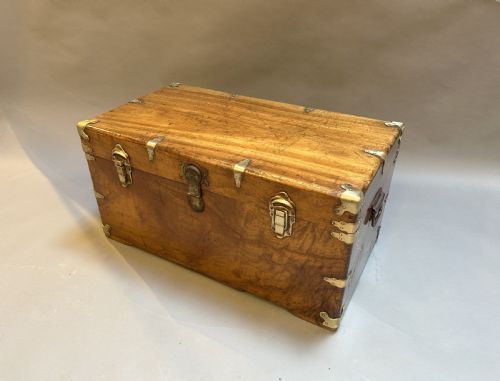
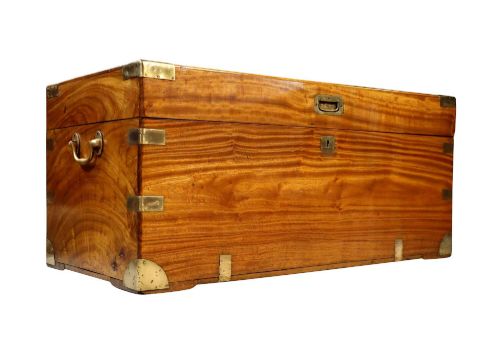
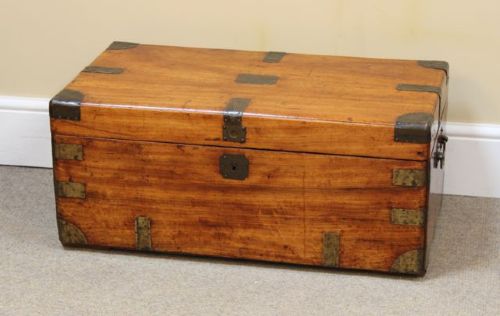
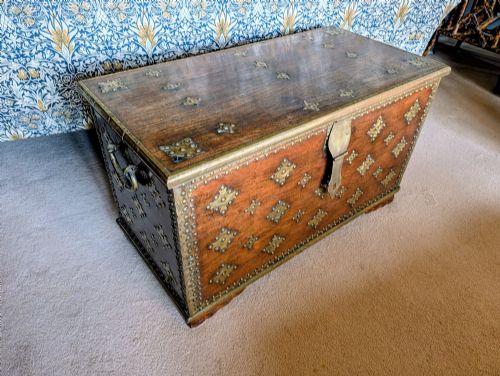
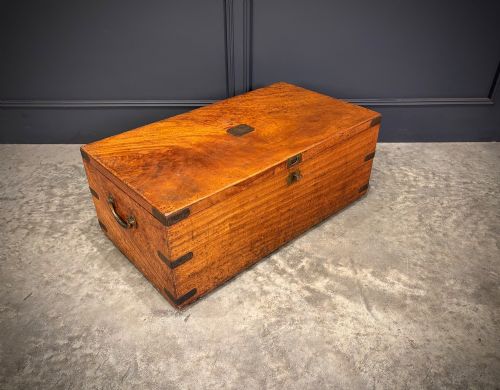


Maritime Wooden Coffer
A maritime wooden coffer is a robust transport chest built for life at sea, prized for its enduring storage utility and travel history.
Maritime Wooden Coffer
A maritime wooden coffer serves as a sturdy receptacle designed for voyages, combining practical storage with portable construction. These items range from plain utility storage to decorative campaign trunks used by officers and merchants.
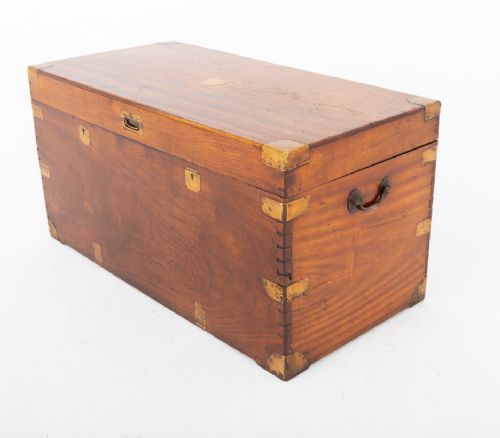
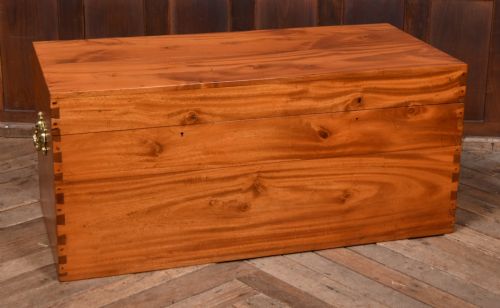
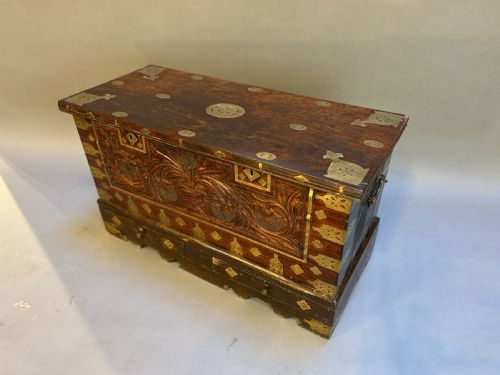
Camphor wood and teak form the core of what a buyer meets on this page, often reinforced with brass mounts or iron bindings. The pieces span Georgian and Victorian periods, alongside later twentieth-century examples.
Formats include sea chests, campaign trunks, blanket boxes, and specialised travel cases. Many retain original rope handles, metal studs, and key escutcheons suited for maritime transit.
How They Were Made
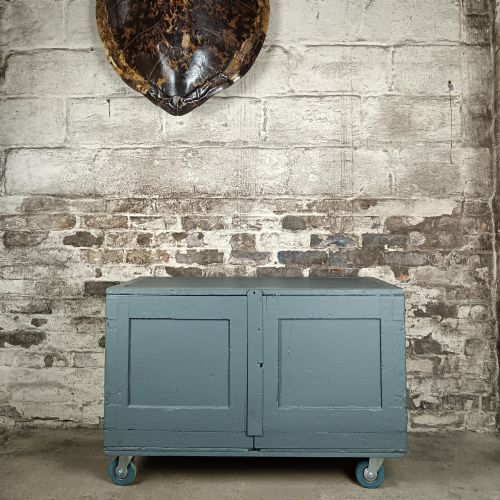
Joiners utilised dense hardwoods like camphor wood, teak, and padouk to withstand moisture and insect damage during long voyages. Pine appears in painted seaman chests and travel trunks intended for lighter duty.
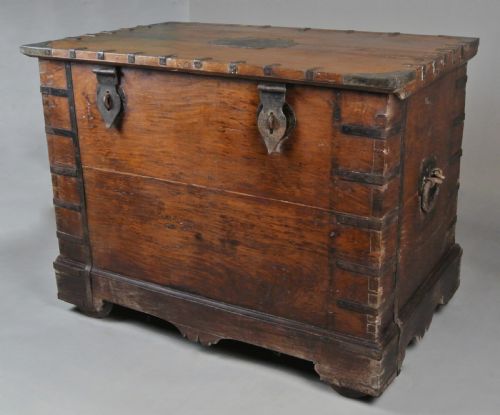
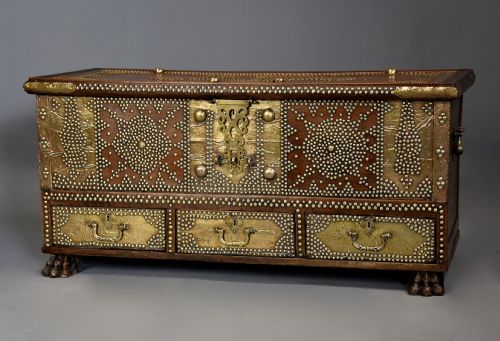
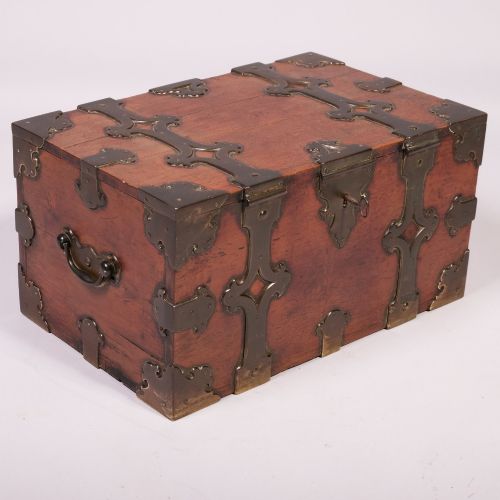
Metalwork played a critical structural role, employing brass banding, brass stud decoration, and iron bindings to protect corners and edges from heavy handling. Rope handles and recessed hardware allowed efficient stowage aboard ships.
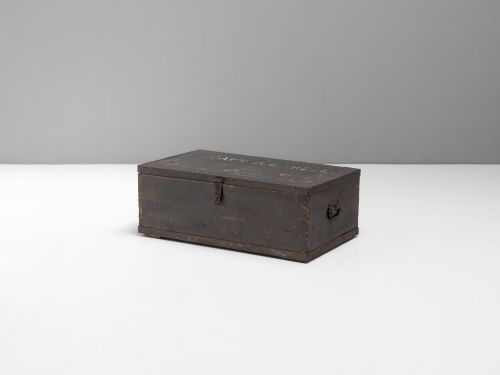
Several seafaring chests retain hand-painted patriotic mottos like Emblem of Liberty alongside robust brass studding.
What Varies in Quality
The choice of timber and the complexity of metal reinforcement dictate the standing of an individual coffer. Pieces utilising solid camphor wood or dense teak with extensive brass binding represent the upper echelon of campaign and merchant equipment.
Execution of decorative detailing, such as intricate brass studwork and hand-painted maritime motifs, separates standard utilitarian boxes from finer commissioned pieces. The presence of original working locks, keys, and integrated interior compartments adds further distinction.
The Maritime Wooden Coffer Glossary
- Campaign trunk
- A portable chest constructed for military officers or travellers on the move, typically fitted with recessed brass handles and corner brackets.
- Camphor wood
- An aromatic timber frequently utilised for maritime chests because its natural scent repels insects and protects stored textiles.
- Zanzibar chest
- A distinct form of trade chest characterised by heavy brass studding, strapwork, and elaborate hardware reflecting overseas maritime commerce.
- Seaman's chest
- A utilitarian storage box built for individual sailors, often featuring painted decoration or the owner's name and vessel details.
- Dowry chest
- A large storage receptacle traditionally used to hold household linens and personal goods accumulated for marriage.
Maritime Wooden Coffer: Frequently Asked Questions
What is a maritime wooden coffer?
A maritime wooden coffer is a heavy-duty storage chest built from durable timbers like teak or camphor wood to withstand transport at sea.
These pieces were utilised by sailors, officers, and merchants to protect personal belongings and provisions during long voyages.
How were these chests used at sea?
Sailors and officers packed clothing, navigational tools, and personal valuables inside these chests for life aboard ship.
Their robust construction and integrated rope or metal handles allowed the boxes to be stacked, secured, and moved easily during transit.
Why use camphor wood for chests?
Camphor wood emits a natural fragrance that repels moths and insects, making it an ideal timber for storing blankets and uniforms.
Its resistance to moisture also helped protect contents from the damp conditions encountered on nineteenth-century vessels.
How do I identify a campaign trunk?
Campaign trunks feature practical adaptations for travel, such as brass corner brackets, flush-fitting handles, and durable hardwood construction.
Many examples separate into modular sections or include reinforced edges to endure repeated loading onto ships and carriages.