

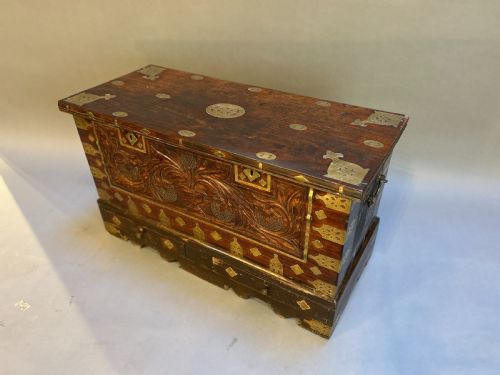
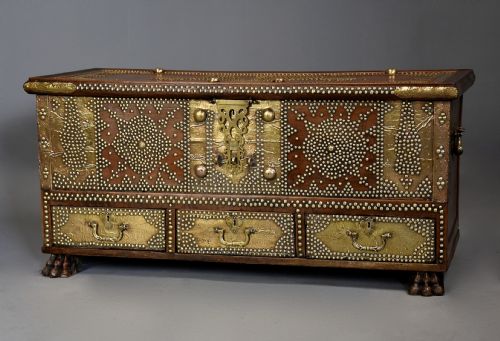
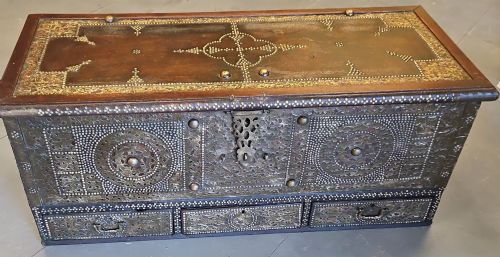


Carved Zanzibar Box
A carved zanzibar box brings heavy tropical timber and meticulous metalwork straight into a room, offering both storage and historical depth.
Carved Zanzibar Box
A carved zanzibar box, also known in the listings as a trader chest, blanket box, or coffer, serves as a robust storage container rooted in East African maritime trade. These pieces appear primarily in nineteenth-century contexts, including Victorian and Anglo-Indian colonial periods.
The inventory demonstrates forms ranging from small travel trunks to large storage chests. These items combine utility with ornamental presence, often functioning as central furniture pieces in contemporary spaces.
Makers fashioned these trunks from dense timbers designed to withstand long journeys. Buyers encounter variations labelled simply as Zanzibar chests or more broadly as storage boxes.
Materials and construction
Craftsmen utilised heavy hardwoods such as teak, rosewood, and padouk to build the primary structure of each trunk. These durable timbers provide the solid foundation necessary for extensive decorative carving and metal reinforcement.
Builders fastened the wooden panels with iron and copper elements, then applied brass stud decoration across the surfaces. This combination of timber and metal creates the distinctive pattern characteristic of nineteenth-century pieces.
Carved Zanzibar Box Retail Price Guide 2026
Typical asking prices for carved zanzibar box among the pieces listed under this phrase on Sellingantiques today, from the lower quarter to the upper quarter. They describe what is for sale here now, not the wider market.
One trunk carries the specific spelling 'Zinibar', proving that nineteenth-century label makers enjoyed occasional creative spelling.
Distinctions in quality
Quality rests in the density of the chosen timber and the crispness of the applied metalwork. Pieces constructed from solid teak or rosewood demonstrate greater longevity than simpler utility boxes.
The intricacy of the brass stud decoration and the precision of the overall assembly define the better examples. Finer trunks display careful integration of iron mounts alongside decorative brass elements.
The Carved Zanzibar Box Glossary
- Coffer
- A large wooden chest used for holding valuables or textiles. These sturdy receptacles often feature reinforced corners.
- Padouk
- A heavy tropical hardwood valued for its durability and rich colour. Artisans selected this timber for items requiring strength.
- Brass stud
- A small metal fastener driven into timber surfaces in decorative geometric patterns. These studs reinforce structural joints while providing visual contrast against dark wood.
- Anglo-Indian
- A descriptive term for items produced during British rule in India, reflecting a blend of Eastern and Western design influences. Such pieces often incorporate traditional local craftsmanship with British furniture forms.
Carved Zanzibar Box: Frequently Asked Questions
Where should I place a carved zanzibar box?
These chests function well as living room coffee tables or at the foot of a bed for blanket storage. Their flat lids and sturdy construction support everyday use.
Keep them away from direct heat sources to protect the dense hardwoods and prevent timber movement over time.
How do I clean the brass studs?
Dust the metal gently with a soft, dry cloth to remove surface particles. Avoid harsh chemical polishes that might stain the surrounding timber.
Allow the natural ageing process to maintain the character of the metalwork without stripping its history.
Are these trunks heavy?
Constructed from solid tropical hardwoods, these boxes possess substantial weight. Two people are typically required to move them safely.
This mass reflects the robust materials used for maritime travel and long-term storage.
What periods do these pieces represent?
The available selection dates from the nineteenth century, including Victorian eras and the year 1920. Most examples reflect nineteenth-century trade routes and colonial craftsmanship.
Stylistic markers such as brass studding help identify this specific era of production.