


Sterling Silver Water Jug
A sterling silver water jug brings weight and polish to the table, uniting practical service with solid metal craftsmanship across centuries.
Sterling Silver Water Jug
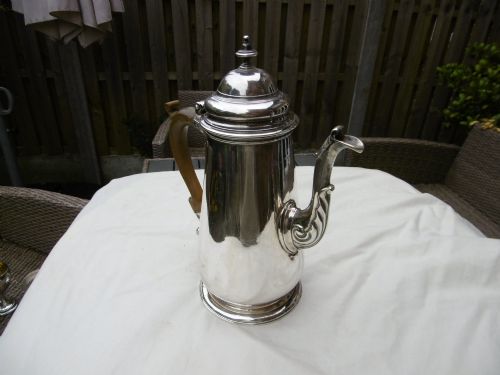
A sterling silver water jug takes several distinct forms across the periods, appearing alongside related vessels such as coffee pots, ewers, and pitchers. Buyers exploring this category encounter pieces spanning from the mid-eighteenth century through the Georgian, Victorian, and Edwardian eras into the twentieth century, including Art Deco designs.
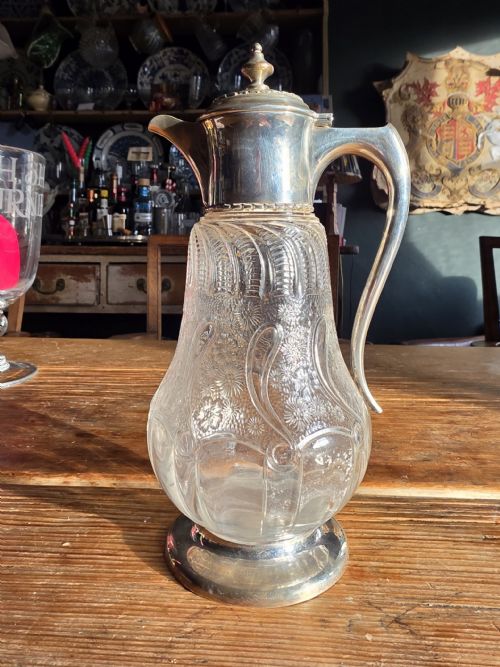
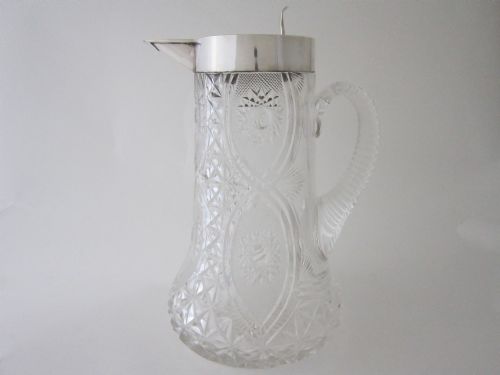
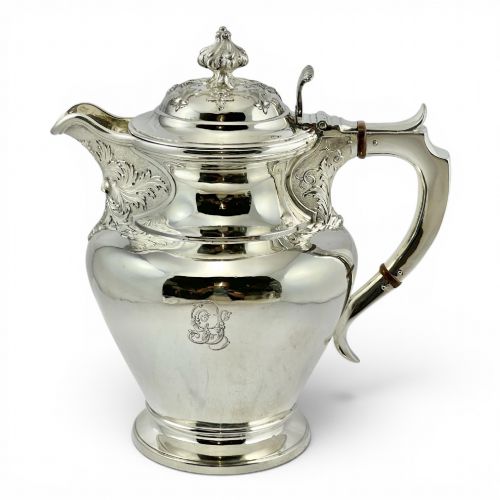
The selection ranges from tall, slender ewers to robust, chunky pitchers fitted with lids or side handles. Many examples combine the heavy metal with cut glass bodies or incorporate wooden elements like ebony, reflecting the functional shifts in table service over time.
Materials and construction
Makers shaped these vessels primarily from solid sterling silver, often pairing the gleaming metal with contrasting materials such as cut glass and wood. Handles and finials occasionally utilised organic elements like ebony to provide a comfortable grip against the heat of liquid contents.
Craftsmen employed traditional silversmithing techniques to raise the bodies, apply decorative cast mounts, and cut complex geometric patterns into the glass inserts. Hallmarks stamped into the silver record the assay office, date letter, and maker's mark, documenting the origins of each piece.
One cheerful Victorian water jug arrives complete with an animal motif on the lid, ready to pour drinks with character.
Craftsmanship and distinction
The calibre of a sterling silver water jug rests upon the thickness of the metal sheet, the crispness of chased or embossed decoration, and the balance of the handle. Superior examples display substantial weight, clean lines, and securely fitted hinges that hold the lid firm during pouring.
Artistic execution sets individual makers apart, where hand-formed scrollwork, custom cast mounts, and integrated cut glass bodies demonstrate advanced skill. Pieces by noted makers or those bearing complete, legible hallmarks command attention for their historical integrity.
William Comyns·Richard Gurney·Edward Power·Harrison Brothers And Howson·John Scofield·Gorham
The Sterling Silver Water Jug Glossary
- Sterling silver
- An alloy containing a high proportion of pure silver combined with other metals to ensure durability in functional tableware.
- Hallmark
- A series of official marks stamped into precious metal objects indicating the standard of purity, the assay office, and the year of manufacture.
- Ewer
- A large pitcher with a wide spout and a curved handle, traditionally used for holding and pouring water.
- Chased
- Decorated by hammering or pressing a design into the front surface of the metal without removing material.
- Finial
- A small decorative knob or ornament fixed to the top of a lid for lifting.
Sterling Silver Water Jug: Frequently Asked Questions
How do I clean a sterling silver water jug?
Wash the vessel in warm, soapy water using a soft cloth, then dry it thoroughly with a lint-free towel to prevent water spots. Avoid abrasive pads or harsh chemical dips that strip the natural patina accumulated over the years.
Store the jug in a dry environment away from direct sunlight, and polish it only occasionally with a specialist silver cloth to maintain the shine without wearing down the engraved details.
Can I use an antique silver jug for serving water?
Most solid silver jugs remain entirely functional for serving water or wine at the table, provided the interior is clean and free from old residues. Inspect the piece to ensure any soldered joints and lid hinges remain secure before filling.
Glass-bodied hybrids with silver mounts require similar care, checking that the collar seals tightly against the cut crystal body. Hand washing is essential for preserving both the metal finish and any delicate glass elements.
How do I read the hallmarks on my jug?
British hallmarks typically feature a standard mark indicating sterling grade, a city mark for the assay office, and a date letter that reveals the exact year of manufacture. Additional marks often include a sovereign's head during specific periods and the punch of the maker.
Matching these symbols against standard reference tables allows collectors to date the piece and trace its workshop origin with precision.