
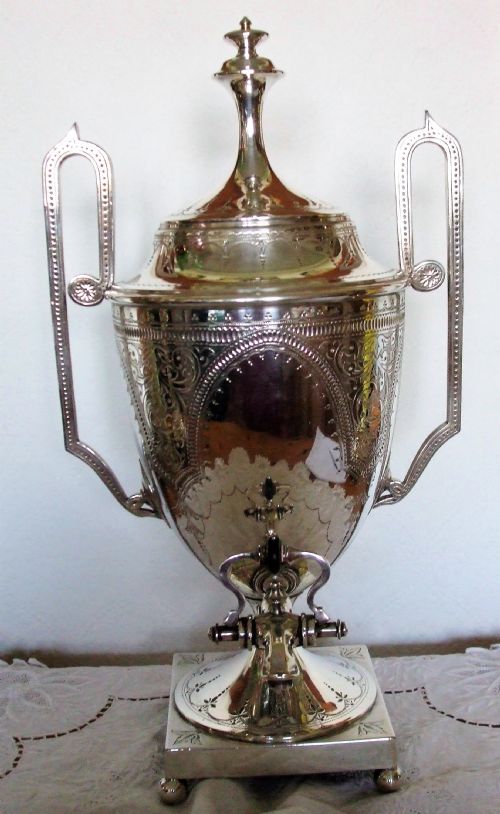


Silver Water Vessel
These silver water vessel examples span centuries of metalwork, offering both functional service and historic craft that collectors prize.
Silver Water Vessel
A silver water vessel encompasses a diverse range of historic utilitarian and ceremonial forms, from Georgian and Victorian coffee pots to earlier ewers and watering cans. Buyers seeking a silver water vessel will find pieces spanning from the twelfth century up through the Edwardian era and the twentieth century.
The selection on this page includes pitchered jugs, tea urns, samovars, and tankards fashioned in various regional traditions including English, Persian, and Indo-Tibetan workshops. These objects reflect domestic service, ritual use, and hospitality across multiple centuries.
Craftsmanship and distinction
Quality in a silver water vessel rests upon the integrity of the metalwork, the crispness of chased or engraved decoration, and the preservation of original makers' marks or early hallmarks. Pieces displaying sophisticated surface inlay, balanced proportions, and careful integration of insulating handle materials demonstrate superior workshop standards.
The distinction between standard domestic items and exceptional pieces also involves the weight of the metal, the execution of spouts and handles, and how well the vessel maintains its structural form across centuries of use.
Listings include items spanning from the twelfth century to the 1930s, incorporating materials such as bone, cane, and pewter alongside silver.
Walker And Hall·Boardman Glossop And Co·John Scofield
The Silver Water Vessel Glossary
- Old Sheffield plate
- A composite material made by fusing a thin sheet of silver to a thicker copper base, commonly used before electroplating became widespread. This technique creates a distinctive edge where the base metal is subtly revealed.
- Ewer
- A large pitcher or jug with a wide spout and a curved handle, traditionally used for holding and pouring water. Many historical examples served ceremonial or ritual functions rather than everyday table use.
- Samovar
- A heated metal container traditionally used to boil and heat water for tea, often featuring an internal vertical pipe. These large vessels are central to hospitality traditions in various cultures.
- Hallmark
- An official stamp applied to precious metals to indicate the standard of purity, the maker, and the year of assay. These marks provide crucial evidence for dating British silver and pewter items.
Silver Water Vessel: Frequently Asked Questions
How do I clean an antique silver water vessel?
Gentle washing with warm water and mild soap is usually sufficient for historic metal surfaces. Avoid harsh chemical dips that can strip desirable patinas from older silver and plated items.
Patina accumulation demonstrates the age and history of the piece. Regular soft cloth dusting preserves the finish without compromising the underlying metal.
Can I use these vessels for serving water today?
Many of these historical vessels remain structurally sound and capable of holding liquids. However, older plated items and pieces containing lead solder require caution if intended for daily consumption.
Collectors generally treat these objects as display pieces or decorative table elements rather than active kitchenware. Assessing the interior condition is essential prior to any liquid use.
What is the difference between sterling and silver plate?
Sterling silver consists of a high purity alloy, typically containing ninety-two and a half percent silver throughout the object. Silver plate involves a thin layer of silver bonded to a base metal core such as copper or Britannia metal.
Old Sheffield plate represents an early fusion method distinct from later electroplating processes. Examining edges and wear points often reveals the underlying base metal on plated examples.
How do I identify the date of my vessel?
British pieces often bear assay office marks, maker stamps, and date letters that pinpoint the exact year of manufacture. Stylistic indicators such as Neoclassical handles or Regency body forms also help narrow down the period.
Comparing construction methods and decorative motifs against documented examples provides further chronological context. Researching specific silversmith punch marks remains a reliable method for dating.