


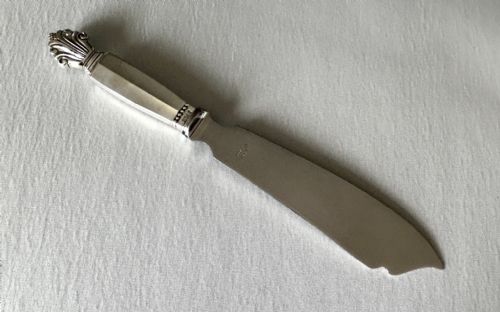

Sterling Silver Server
A sterling silver server handles delicate pastries, substantial fish slices, or leafy salads with the weight and balance only solid metal provides.

Sterling Silver Server
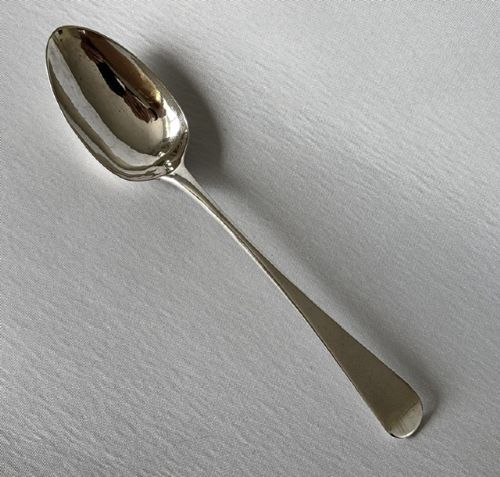
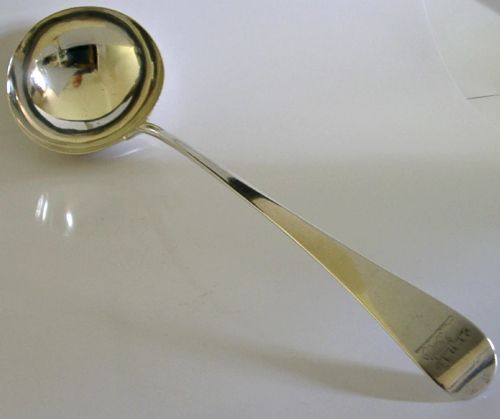
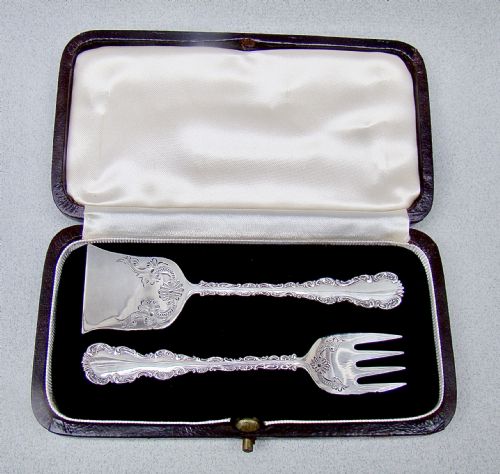
A sterling silver server spans specialised dining implements from the Georgian, Victorian, and Edwardian eras, encompassing fish slices, pastry servers, and salad sets.
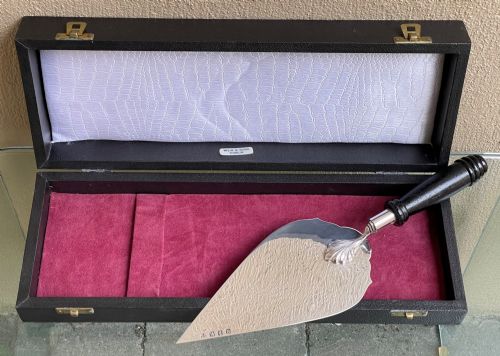
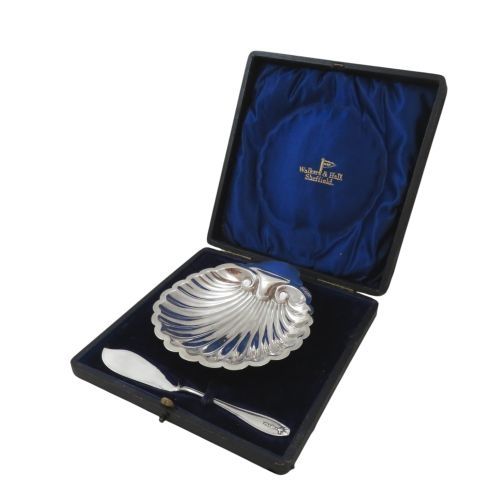
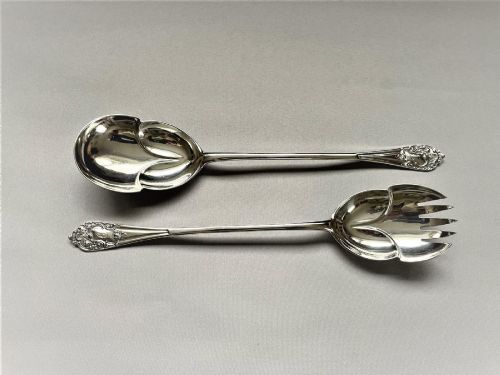
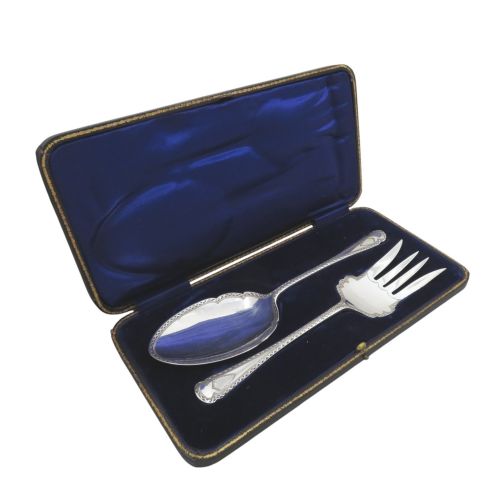
The buyer encounters items ranging from massive Georgian ladles and fish slices to cased Edwardian salad servers and Art Deco cake sets.
Originating predominantly from British workshops alongside continental and American makers, these pieces reflect the shifting dining habits and formal table settings of the nineteenth and early twentieth centuries.

Materials and technique
The pieces rely on solid sterling silver, occasionally augmented by silver gilt, glass inserts, or handles fashioned from mother-of-pearl, wood, and velvet.
Craftsmen employed traditional techniques including casting, piercing, and repoussé work to create functional blades and ornate pierced bowls.
Makers often combined silver with organic elements, pairing metal tines and bowls with carved handles for balanced service.
Sterling Silver Server Retail Price Guide 2026
Typical asking prices for sterling silver server among the pieces listed under this phrase on Sellingantiques today, from the lower quarter to the upper quarter. They describe what is for sale here now, not the wider market.
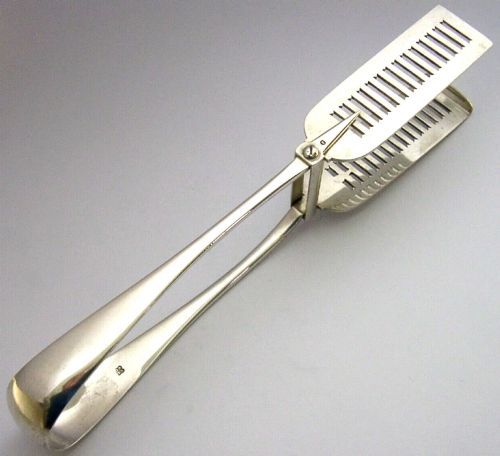
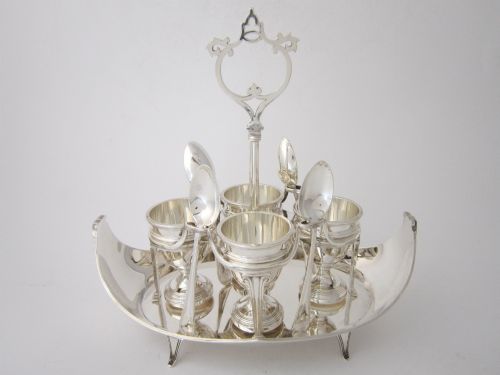
The inventory records specialised forms including asparagus tongs, haggis servers, sardine servers, and mustard pots alongside standard salad sets.
Assessing the pieces
Quality rests in the heft of the gauge and the crispness of chased or pierced decoration across the blade and handle.
Superior examples maintain original proportions and clear hallmarks, showing minimal wear on engraved family crests or monograms.
The integrity of the construction, whether a cast silver blade or a secure joint between handle and implement, dictates the piece's endurance.
Peter & Jonathan Bateman·Hester Bateman·Henry Wilkinson·Georg Jensen·Liberty & Co·Tiffany & Company·Charles & George Fox·William Comyns·William Burwash·S.C. Younge & Co·Elizabeth Eaton·Gorham·Thune
The Sterling Silver Server Glossary
- Hallmark
- Official stamp guaranteeing the purity of the silver, the assay office, and the year of production.
- Fish slice
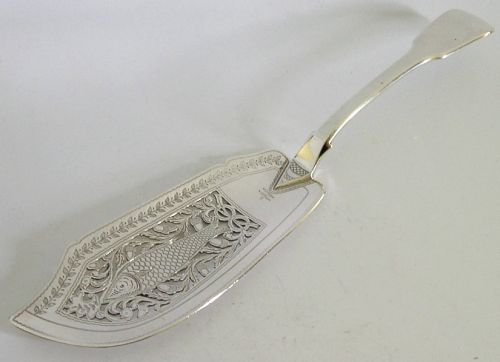
- A wide, flat server featuring a pierced blade designed to drain liquids while lifting fish portions.
- Repoussé
- A metalworking technique where the design is hammered into relief from the reverse side.
- Silver gilt
- Sterling silver coated with a thin layer of gold on the surface, sometimes called vermeil.
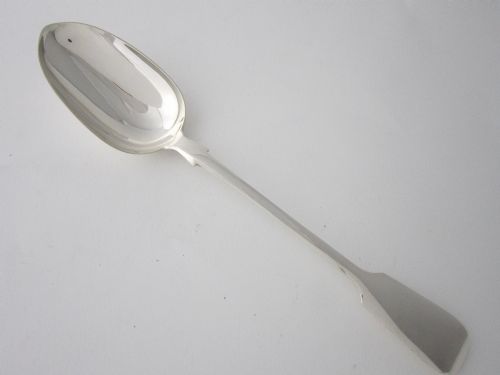
- Fiddle pattern
- A nineteenth-century cutlery handle design characterised by its tapered, shoulder-notched outline resembling a stringed instrument.
Sterling Silver Server: Frequently Asked Questions
What is a fish slice used for?
A fish slice serves as a wide spatula designed to lift and present whole fish or delicate fillets at the dining table. The pierced blade allows cooking juices or butter to drain away before plating.
Victorian and Georgian examples often feature elaborate engravings of marine life, birds, or scrollwork across the broad surface.
How do I clean antique silver servers?
Wash the silver gently in warm water with a mild, phosphate-free liquid soap, then dry thoroughly with a soft flannel cloth. Avoid harsh chemical dips that strip the natural patina accumulated over the decades.
Store pieces in tarnish-resistant wraps or lined cases if they are not part of regular table service.
Can I use these servers for modern dining?
Solid sterling silver servers remain entirely functional for modern dinner parties, holiday meals, and afternoon tea service. Their weight and balance often surpass contemporary manufactured equivalents.
Care should be taken with pieces featuring mother-of-pearl or hollow handles, which require hand washing rather than automated dishwashers.
How do I identify the date of a silver server?
British pieces carry a series of hallmarks that indicate the assay office, the standard mark, and a specific date letter corresponding to the year of manufacture. Consulting a standard hallmarking guide matches the stamped letter to the exact production year.
Stylistic cues such as Art Deco geometric lines or Georgian fiddle handles also help narrow down the era when hallmarks are rubbed.