




Silver Asparagus Tongs
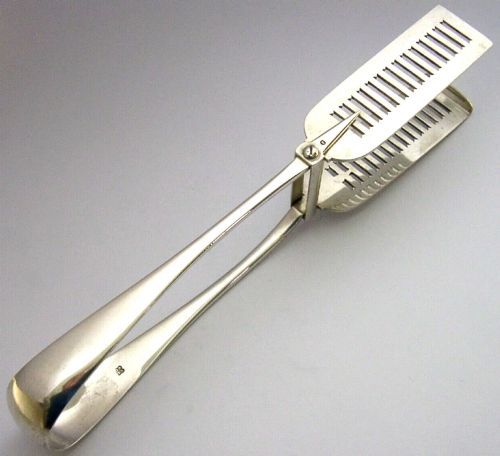
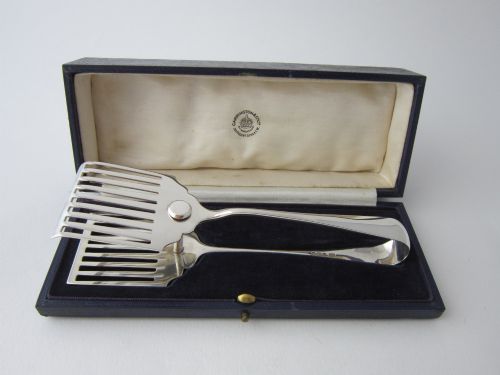
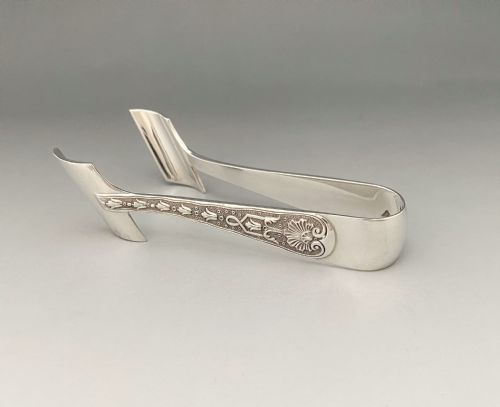
Silver asparagus tongs are specialist serving utensils designed to lift tender stalks without breaking them.
Understanding silver asparagus tongs
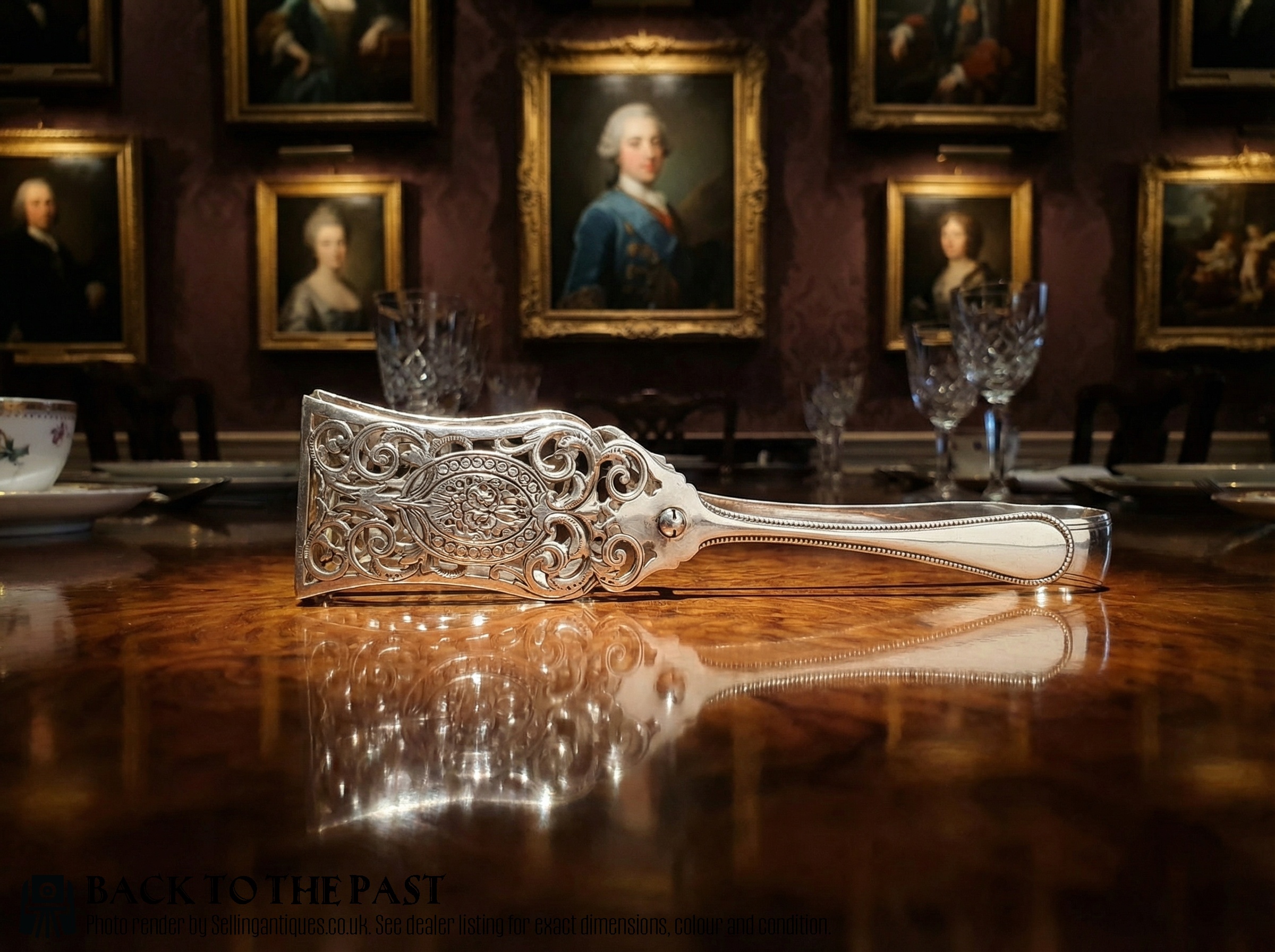
Silver asparagus tongs are specialised serving utensils designed specifically for handling delicate vegetable stalks at the dining table. When you search this phrase, you enter a distinct category of nineteenth- and twentieth-century dining silver intended for formal presentation.
The pieces appearing on this page span the Georgian, Victorian, Edwardian and later periods, capturing changes in dining habits across two centuries. You will find examples ranging from heavy sterling silver serving pieces to silver-plated designs.
The most common forms are spring-action tongs with broad, pierced blades designed to drain butter or water from the asparagus before it reaches the plate. These serveware items often feature family crests, engraved decoration or traditional patterns such as King's or Hanoverian.
Materials and construction
Silversmiths utilised sterling silver and silver plate, shaping the metal to create resilient spring mechanisms that withstand regular use. The blades are frequently pierced with geometric or bar patterns to reduce weight and release moisture from the vegetables.
Handles were often formed in established regional patterns, sometimes incorporating cast or engraved armorial crests belonging to the original owners. Construction methods combined hand-engraving, piercing and soldered joints to balance durability with decorative refinement.
Retail Price Guide 2026
Typical UK retail prices for silver asparagus tongs, calculated from the Sellingantiques database of over a million retail prices indexed since 2003. This retail price guide relies exclusively on Sellingantiques data; no external sources or auction records are used, so the figures do not describe the wider market.
The site's archive records silver asparagus tongs from the Georgian, Victorian and Edwardian eras, executed in both sterling silver and silver plate.
Evaluating quality and craftsmanship
Quality in silver asparagus tongs rests in the balance of the spring mechanism and the precision of the piercing on the blades. Heavier gauge sterling silver provides a more substantial feel in the hand compared to lighter plated alternatives.
Maker attribution and crispness of engraved family crests or decorative motifs elevate certain pieces above standard production. The integration of functional design with refined aesthetic proportion distinguishes master silversmith work from utilitarian service items.
Garrard & Co·Mappin and Webb·William Hutton & Sons·Hukin & Heath·Hilliard & Thomason
The Silver Asparagus Tongs Glossary
- Sterling silver
- A silver alloy containing 92.5 percent pure silver and 7.5 percent other metals, usually copper, ensuring structural durability for serving utensils.
- Silver plate
- A base metal coated with a thin layer of pure silver, offering the visual appeal of solid silver at a different cost point.
- Pierced blade
- A metal blade cut through with decorative or functional openings designed to drain liquids from food before serving.
- King's pattern
- A ornate, traditional silverware pattern featuring shell and scroll motifs along the handle edge.
- Hanoverian pattern
- A classic eighteenth-century silver handle design distinguished by a central ridge running down the shaft.
Frequently Asked Questions
What are silver asparagus tongs used for?
These utensils were created to lift individual portions of asparagus from a serving dish to a diner's plate without crushing the tender stalks.
The wide, flat blades supported the vegetable while the spring handle allowed precise control at the dining table.
How do I identify a Victorian pair?
Victorian examples often feature heavy gauge sterling silver construction combined with elaborate engraving or distinctive family crests.
Assay office marks and date letters stamped on the metal provide the exact year of manufacture and city of origin.
Are all asparagus tongs made of solid silver?
While many surviving examples are forged from solid sterling silver, you will also encounter silver-plated versions produced by major manufacturers.
Plated variants offer the same functional design and decorative style using a base metal core beneath a silver surface.
How should I clean antique silver tongs?
Maintenance requires gentle washing in warm soapy water followed by thorough drying with a soft cloth to preserve the finish.
Harsh chemical dips should be avoided to protect engraved crests, delicate piercing and original patination.