


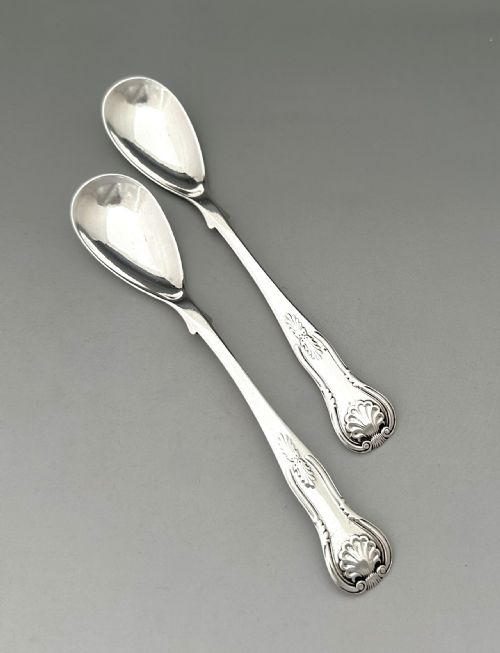
Sterling Silver Condiment Spoons
Sterling silver condiment spoons are small implements for table use, sought after for completing antique cruet sets and dressing formal dining tables.
Sterling Silver Condiment Spoons
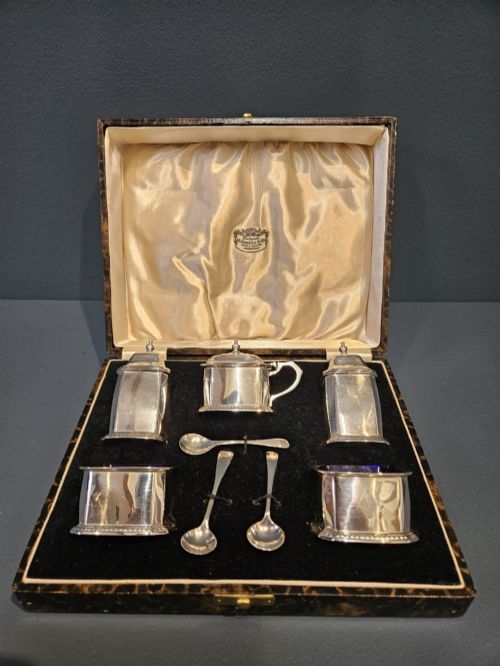
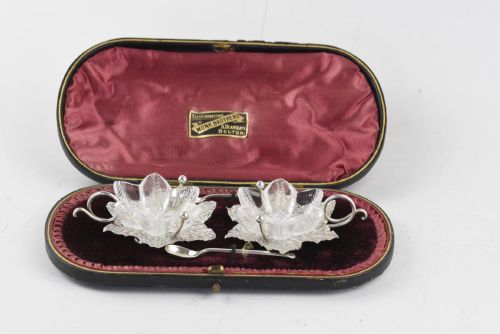
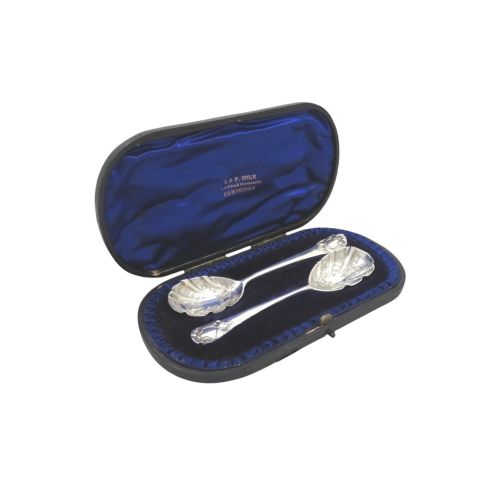
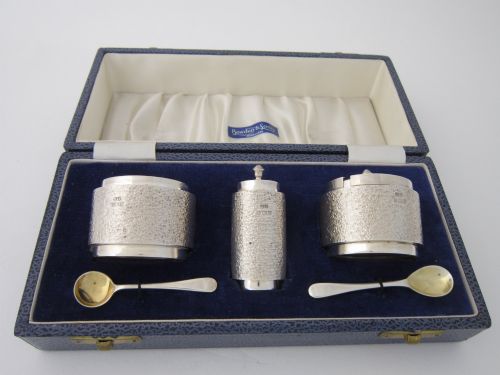
Sterling silver condiment spoons are small pieces of tableware designed for serving salt, mustard, and preserves from matching pots or cellars. When browsing this selection, buyers frequently encounter individual spoons, matched pairs, or implements housed within complete cased cruet sets dating from the Victorian and Edwardian periods.
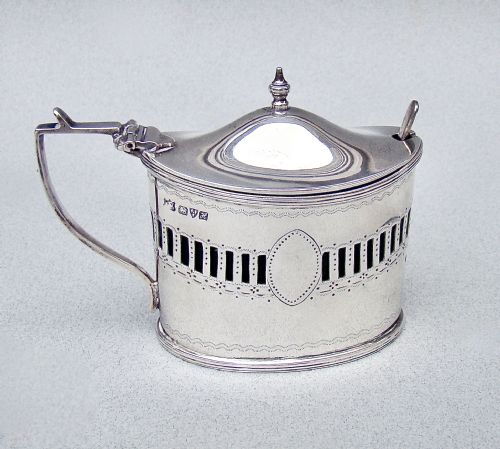
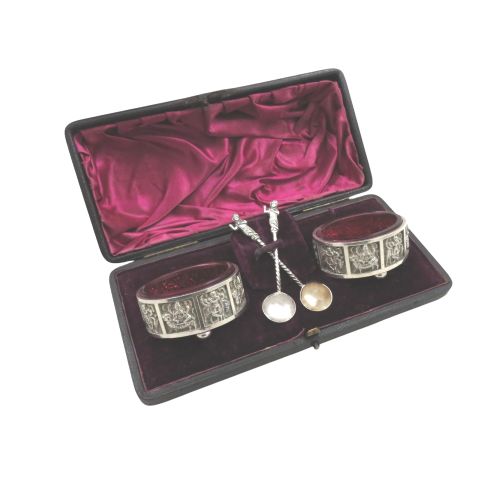
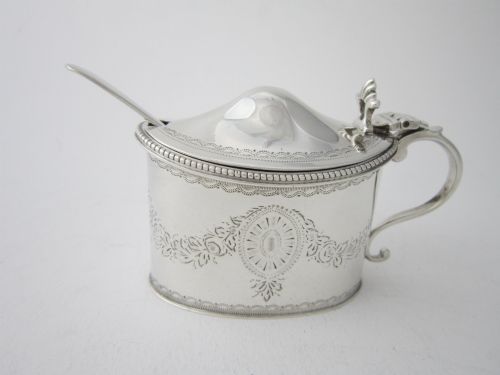
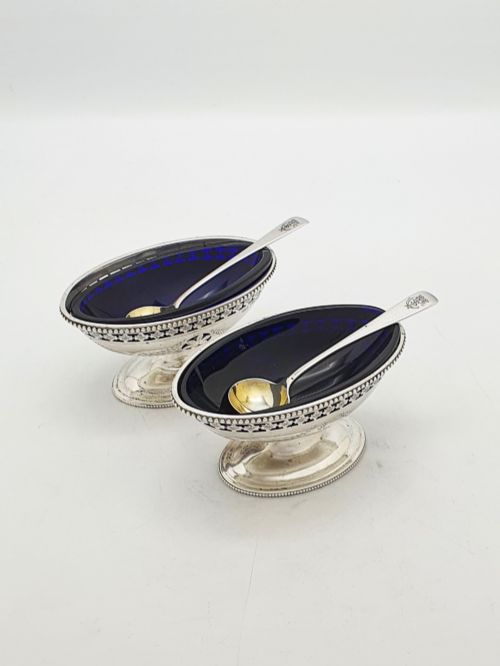
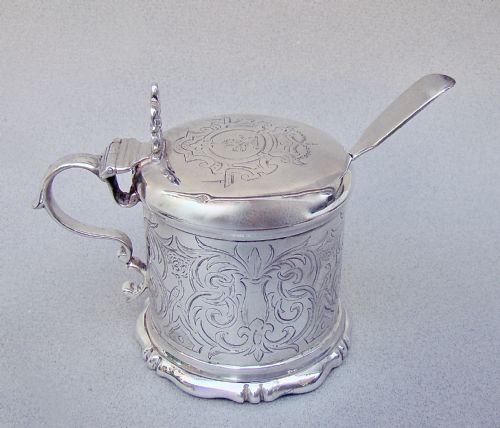
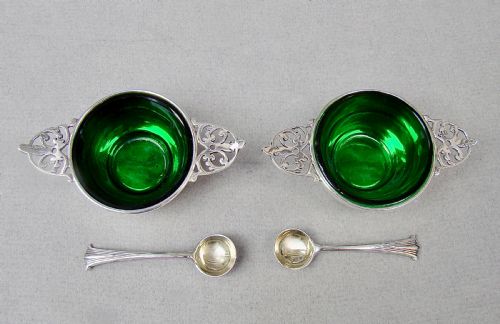
The inventory includes specialised designs such as mustard spoons, salt spoons, preserve spoons, and condiment ladles. These pieces appear alongside salt cellars, mustard pots, and multi-piece cruet sets made from sterling silver, often accompanied by glass liners in cobalt blue or ruby red.
Origins span the nineteenth and twentieth centuries, encompassing Victorian, Edwardian, George V, and Art Deco eras. Makers utilised traditional British assay offices in London, Birmingham, Chester, and Exeter to hallmark their silver items.
How they were made
Silversmiths formed sterling silver condiment spoons through casting, hammering, and hand-shaping metal alloys containing high proportions of pure silver. Bowls were often beaten to shape while handles received decorative patterns through piercing, engraving, or embossing.
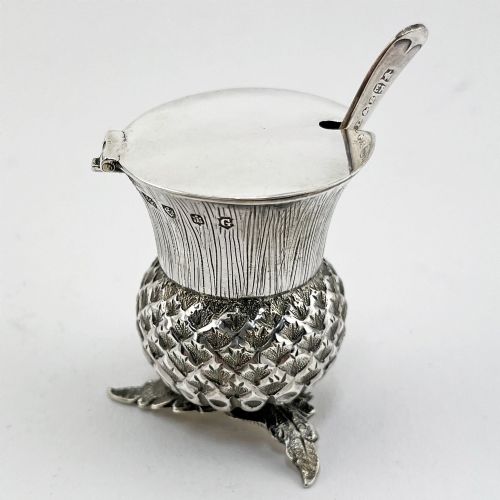
Manufacturing involved specialised techniques for different styles, such as cast novelty forms shaped like thistles, birds, or quaichs. Makers frequently paired the silver spoons with blown glass liners, velvet linings, and fitted leather or silk presentation cases.
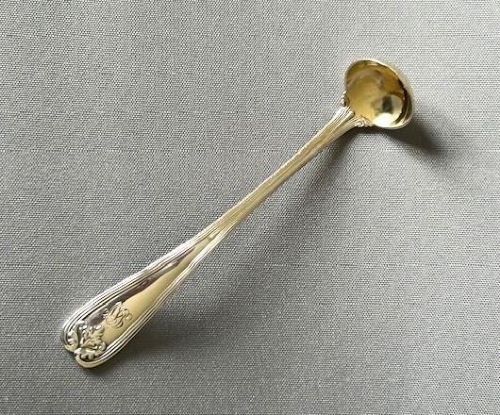
Some Victorian silversmiths fashioned tiny spoons with handles shaped like Hindu deities, birds, and thistles to delight Victorian diners.
What varies in quality
Quality in sterling silver condiment spoons is determined by the crispness of the original hallmarks, the depth of decorative chasing, and the retention of the maker's intended form. Pieces featuring detailed figural work, such as birds or cherubs, demonstrate superior silversmithing skill compared to plain utility items.
The integrity of matched sets and the presence of original components, including coloured glass liners and fitted presentation boxes, elevate the standing of a piece. Maker attribution to notable workshops also distinguishes finer examples within the range.
Alfred Marston·Charles and George Fox·Josiah Williams and Co·Hamilton and Inches·Charles Stuart Harris·Wilmot Manufacturing Co·Omar Ramsden
The Sterling Silver Condiment Spoons Glossary
- Condiment spoon
- A small utensil used for transferring salt, mustard, or relish from a container to a plate. These items match larger tableware collections.
- Cruet set
- A matched assembly of small bottles, jars, or pots holding condiments, typically housed in a frame or tray. Sets often include dedicated spoons and glass liners.
- Hallmark
- An official stamp applied to precious metals indicating the standard of purity, the assay office, and the year of manufacture. British silver bears these marks for identification.
- Salt cellar
- A small open bowl or vessel used to hold salt on the dining table before the invention of modern shakers. They frequently accompany small salt spoons.
- Novelty salt
- A salt cellar or condiment container shaped to resemble an animal, plant, or cultural object. Scottish novelty items often take traditional regional forms.
Sterling Silver Condiment Spoons: Frequently Asked Questions
What are sterling silver condiment spoons used for?
These small spoons serve mustard, salt, and preserves from open table pots during formal meals. They allow diners to transfer condiments cleanly onto individual plates.
Today, they function as decorative tableware and serve to complete antique cruet sets that have lost their original implements.
How do I identify the date of a condiment spoon?
Dating relies on the set of stamped hallmarks found on the reverse of the handle or bowl. These marks indicate the assay office, standard of silver, and a specific date letter.
Stylistic cues such as Victorian floral chasing or Art Deco geometric lines also help assign pieces to broad manufacturing periods.
Can I use antique silver spoons every day?
Solid silver utensils are durable enough for regular dining use provided they are washed by hand promptly after meals. Avoid putting antique silver through automated dishwashers.
Store them carefully in lined boxes or cloth rolls to prevent scratching when not in active service on the table.
What is the difference between a salt spoon and a mustard spoon?
Salt spoons generally feature a shallow, rounded bowl suited for dry grains of salt served in open cellars. Mustard spoons often have a slightly deeper or angled bowl designed for viscous condiments.
Both types are proportioned to fit inside small antique condiment pots and matching glass liners.