


Silver Salt Cellars Accessories
These silver salt cellars accessories bring character to the dining table through Georgian, Victorian, and Edwardian forms crafted in sterling silver, plate, and glass.
Silver Salt Cellars Accessories
When you search for silver salt cellars accessories, you encounter a range of tablewares designed to hold salt and other condiments during meals. The pieces listed under this phrase span from Georgian and Victorian items to Edwardian and mid-century examples.
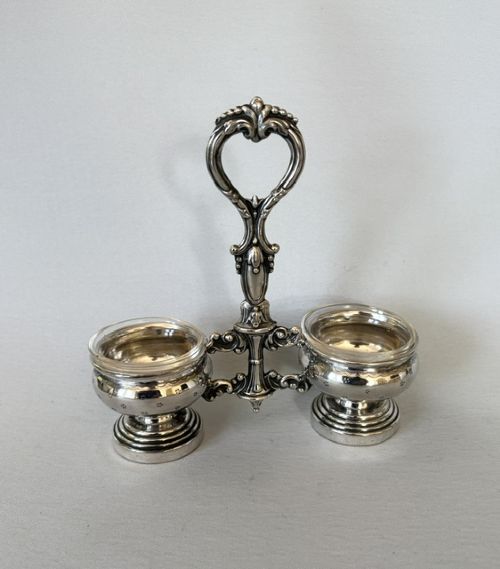
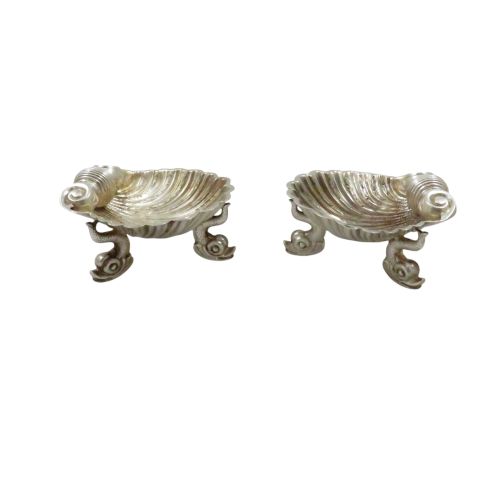
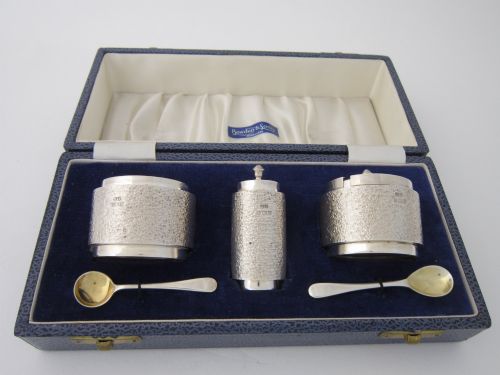
You meet open salt cellars, often paired with spoons, alongside covered mustard pots and complete condiment sets. Novelty forms such as swans, wheelbarrows, and farmyard animals appear frequently among the standard cauldron and shell shapes.
How they were made
The makers utilised sterling silver, silver plate, and gilt silver, often combining metalwork with cut glass or carved horn for contrast. Casting and chasing created intricate details such as dolphin feet, feathers, and wheelbarrow handles.
Workshops applied gold plate to the interiors of silver vessels to protect the metal from the corrosive nature of salt. Hallmarks stamped into the silver record the assay office, standard, and date of manufacture.
The listings on this page span from the Georgian era through Victorian and Edwardian periods into the mid-twentieth century.
What varies in quality
The standard of execution in the chasing and casting separates standard tablewares from more ambitious novelty designs. Crispness in the rendering of animal forms and architectural details indicates skilled silversmithing.
The presence of matching spoons, intact original gilding, and clear hallmarks elevate the standing of a set. Materials also shift the character, from solid sterling silver down to silver plate over base metal.
Paul Storr·Thomas Smily·Thomas Johnson
The Silver Salt Cellars Accessories Glossary
- Sterling silver
- A silver alloy containing 92.5 percent pure silver and 7.5 percent other metals, usually copper. This standard dominated British silver production for centuries.
- Silver plate
- A layer of silver fused to a base metal core such as copper or Britannia metal. This technique offered an accessible alternative to solid silver wares.
- Gilt silver
- Silver that has been coated with a thin layer of gold on its surface. This treatment protected the interior of salt cellars from corrosion.
- Cruet set
- A matched group of small bottles, jars, or open vessels for holding condiments at the table. These sets often sat within a dedicated silver frame or stand.
- Cauldron salt
- A small bowl shaped like a traditional cooking pot, typically raised on three feet. This form remained popular throughout the Victorian period.
Silver Salt Cellars Accessories: Frequently Asked Questions
How do I clean antique silver salts?
Clean silver components using a soft cloth and a specialised silver polish designed to remove tarnish without scratching the metal. Avoid abrasive materials that can wear away thin plating or fine chasing.
Keep moisture away from any glass or horn inserts during cleaning to prevent damage to adhesives or organic materials. Store the pieces in a dry environment to slow down future tarnishing.
Did Victorians use open salt cellars?
Victorians used open salt cellars extensively before the invention of free-flowing table salt and modern shakers. Diners used small spoons or pinches of fingers to take salt from the open vessel.
These open bowls often sat at each place setting or were shared between guests along the length of the dining table.
How do I identify a Victorian salt?
Examine the piece for British hallmarks, which typically include a lion passant, a date letter, and a maker's mark. Stylistic clues such as heavy floral chasing or naturalistic animal motifs also point to the period.
Consult reference books on silversmiths to match the maker's mark to specific decades in the nineteenth century.
Can I use antique salt cellars today?
You can use antique silver salt cellars for dining, provided you take care with corrosive contents like salt. Many collectors place small glass liners inside open salts to protect the historical silver from pitting.
Wash the vessels promptly after use and dry them thoroughly to maintain the condition of the metal and any interior gilding.