
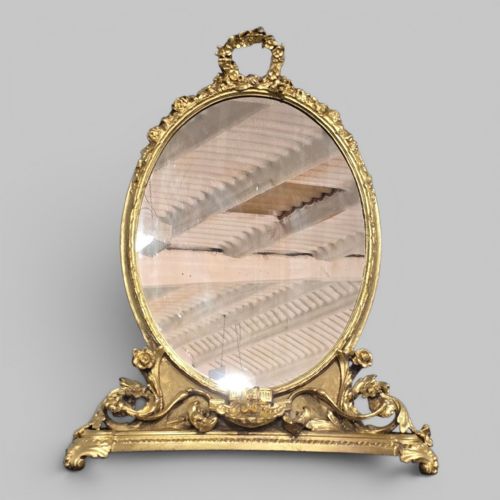
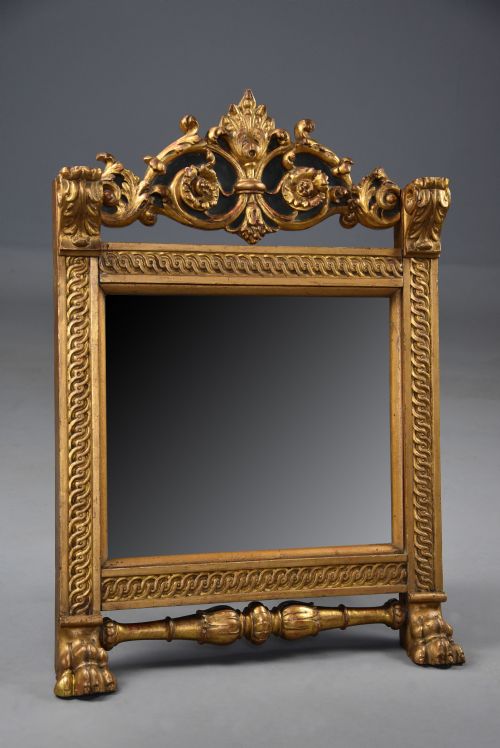
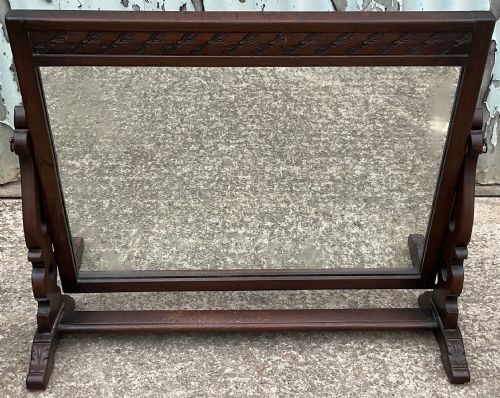

Standing Toilet Mirror
A standing toilet mirror sits on your chest of drawers or dressing table to catch the morning light while you dress.
Standing Toilet Mirror
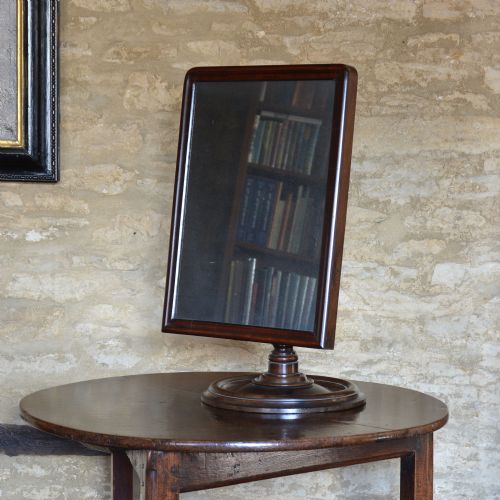
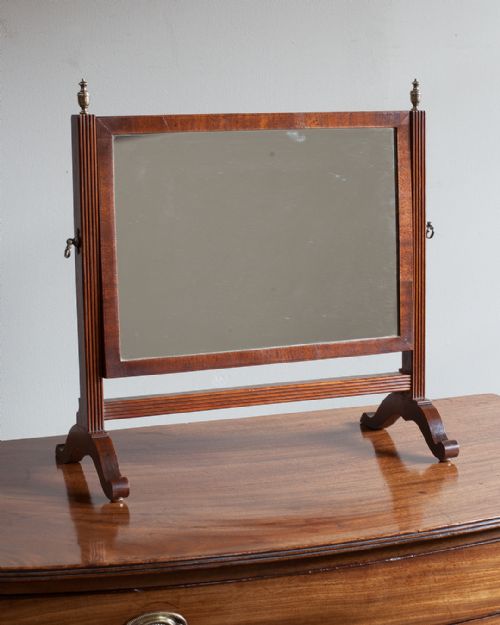
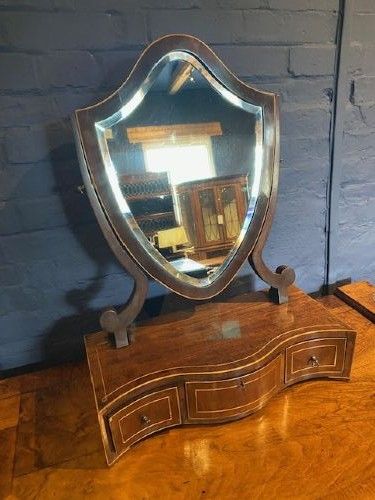
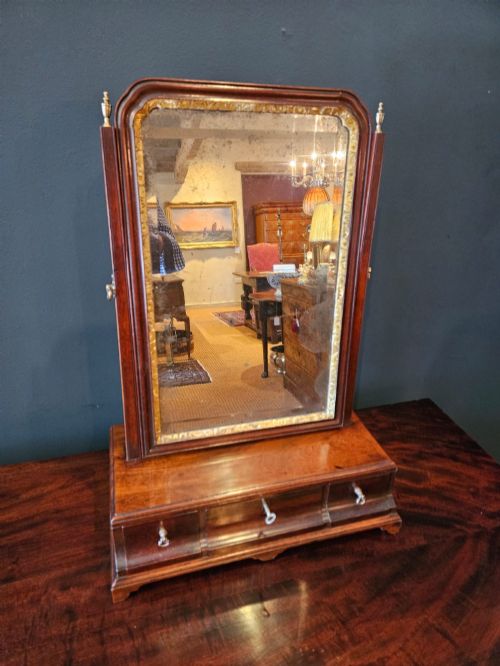
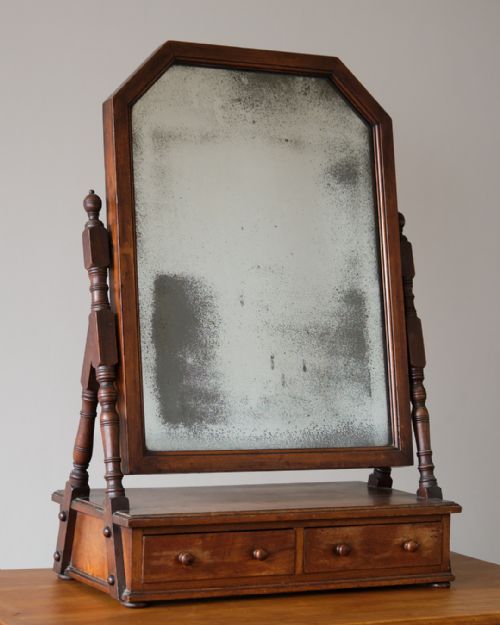
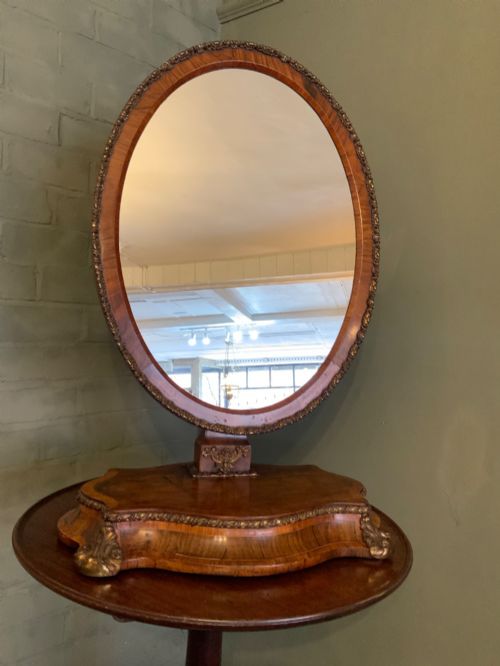
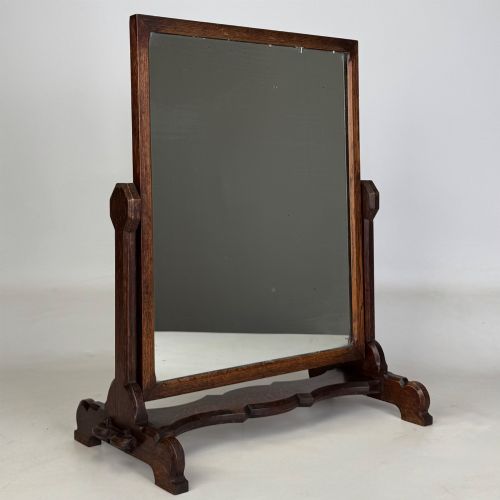
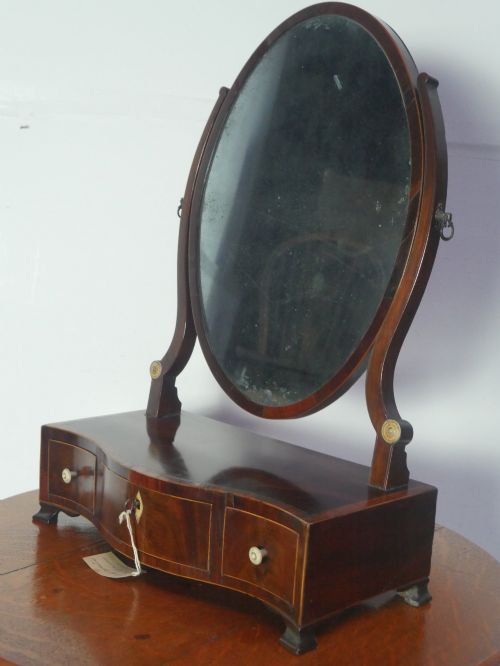
A standing toilet mirror combines a tilting glass plate with a small wooden or metal frame supported by feet or mounted on a set of miniature drawers. When you search for a standing toilet mirror, you encounter pieces designed for personal grooming that span several centuries of domestic life.
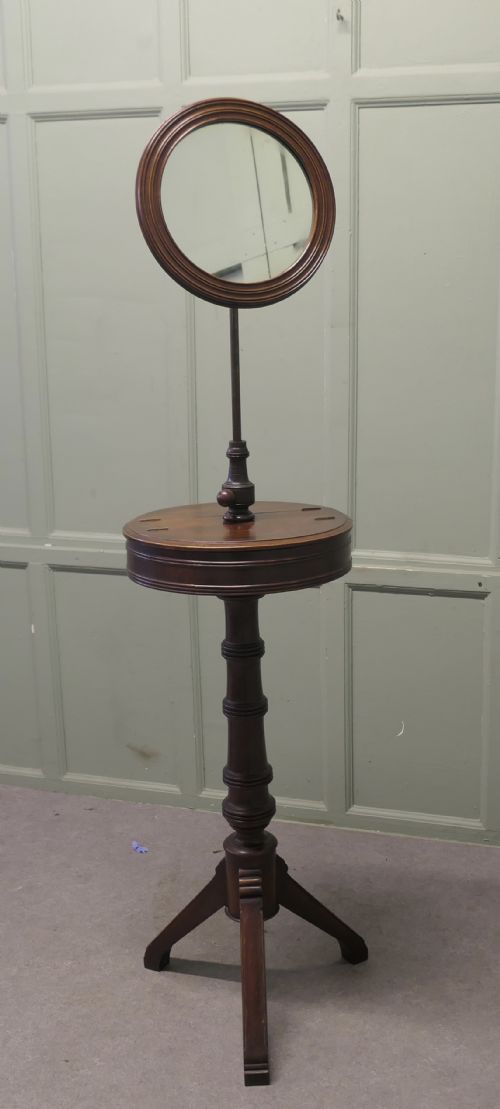
The selections on this page run from early eighteenth-century walnut examples to later Victorian and Edwardian variations in mahogany, oak, and brass. You will find compact table models alongside taller cheval glasses and specialised shaving stands meant for upright use.
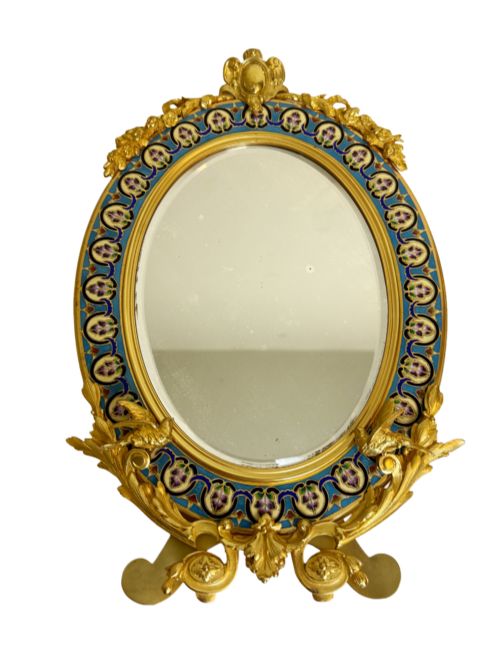
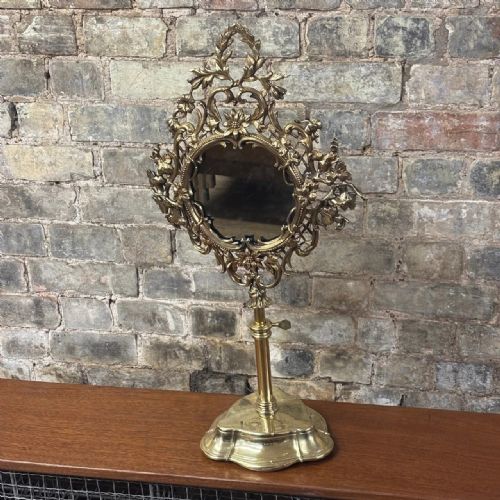
Earlier pieces often feature box bases fitted with tiny compartments for trinkets or documents, while later nineteenth-century iterations lean towards decorative metalwork, easel backs, and adjustable pedestal mounts.
Distinctions in craftsmanship and design
Quality rests in the choice of primary timber figure, the crispness of hand-carved mouldings, and the integration of secondary woods in hidden drawer linings. Fine examples display well-turned upright supports and original brass adjusting screws that hold the glass firmly at any angle without slipping.
At the simpler end, mass-produced twentieth-century iterations utilise plainer veneers and stamped metal brackets. Superior workmanship reveals itself in dovetailed drawer construction and the subtle bevel of the heavy mirror glass itself.
Several gentleman's shaving stands include integrated tripod frames and candle holders for early morning grooming before sunrise.
Heal & Sons
The Standing Toilet Mirror Glossary
- Swing mirror
- A glass plate mounted on pivots between two upright posts allowing the angle to alter. This arrangement forms the core mechanism of almost every toilet glass.
- Cheval mirror
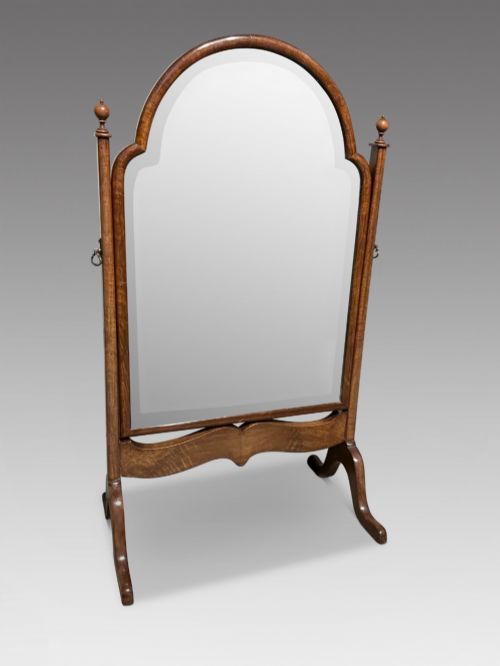
- A full-length standing floor mirror in a frame that pivots between four pillars. These tall glasses allow a complete view of attire.
- Box base
- A small set of drawers beneath the mirror frame designed to hold jewellery or shaving gear. They often stand on bracket feet.
- Ormolu
- Gilded bronze mounts applied to furniture frames during the eighteenth and nineteenth centuries. The technique produces a rich metallic lustre.
- Stringing
- Fine inlay lines of contrasting wood set into the surface of a panel. Cabinetmakers used boxwood and ebony to create geometric borders.
Standing Toilet Mirror: Frequently Asked Questions
Where did people put a standing toilet mirror?
These mirrors sat upon top of a separate dressing chest, sideboard, or table rather than standing directly on the floor. Owners positioned them near bedroom windows to catch daylight for shaving and hair dressing.
The box bases underneath provided secure storage for small personal items, rings, and letters away from the main household traffic.
How do I tell an 18th-century mirror from a Victorian one?
Eighteenth-century examples rely on figured walnut or mahogany with fine dovetailing in the drawer linings and simple horn-shaped brass adjusting nuts. The proportions tend to be more intimate and restrained.
Victorian and later pieces often introduce heavier mouldings, cast brass mounts, ebonised finishes, or easel stands. They frequently employ machine-sawn veneers and denser secondary woods.
What is the difference between a toilet mirror and a cheval mirror?
A toilet mirror sits on top of furniture at table height, designed primarily for upper body grooming while seated. Its frame is small enough to lift and reposition.
A cheval mirror is a tall floor-standing glass that permits a full-length view of an outfit. It requires its own dedicated floor space in a dressing room or bedroom.
Can I adjust the angle of the glass?
Yes, the frame pivots on brass or wooden screws set into the upright arms on either side. Tightening these thumbscrews holds the glass at the preferred viewing angle.
Over decades, these pivot points can wear down, but traditional repair methods restore the friction needed to keep the glass steady.