
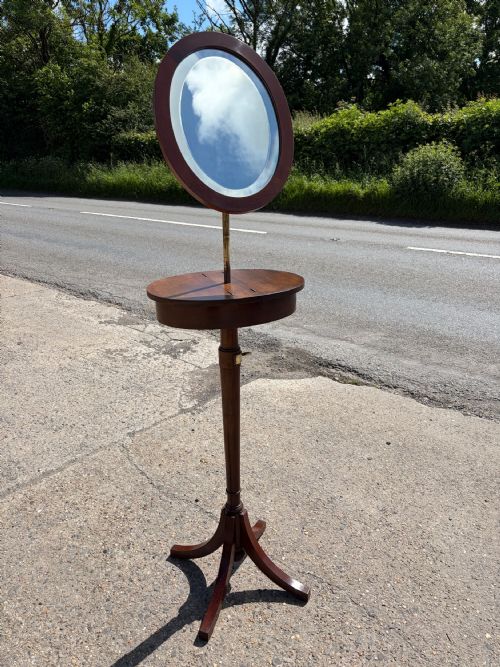


Antique Gentlemans Mirror
An antique gentlemans mirror offers adjustable glass and steady timber framework designed for daily grooming.
Antique Gentlemans Mirror
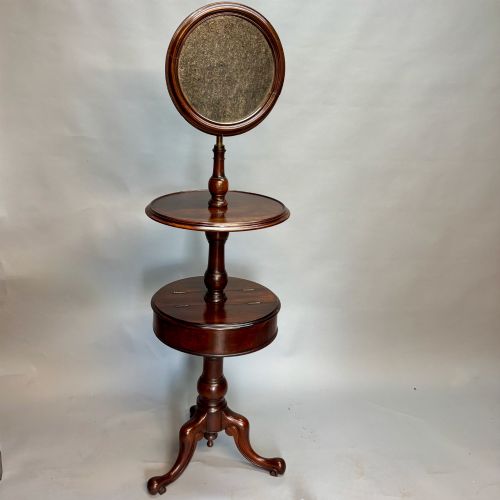
An antique gentlemans mirror serves as a functional piece for personal grooming, appearing primarily in formats such as shaving stands, table mirrors, and standing shaving mirrors. The pieces span Georgian, Victorian, and Edwardian periods, reflecting changing domestic habits across the nineteenth and early twentieth centuries.
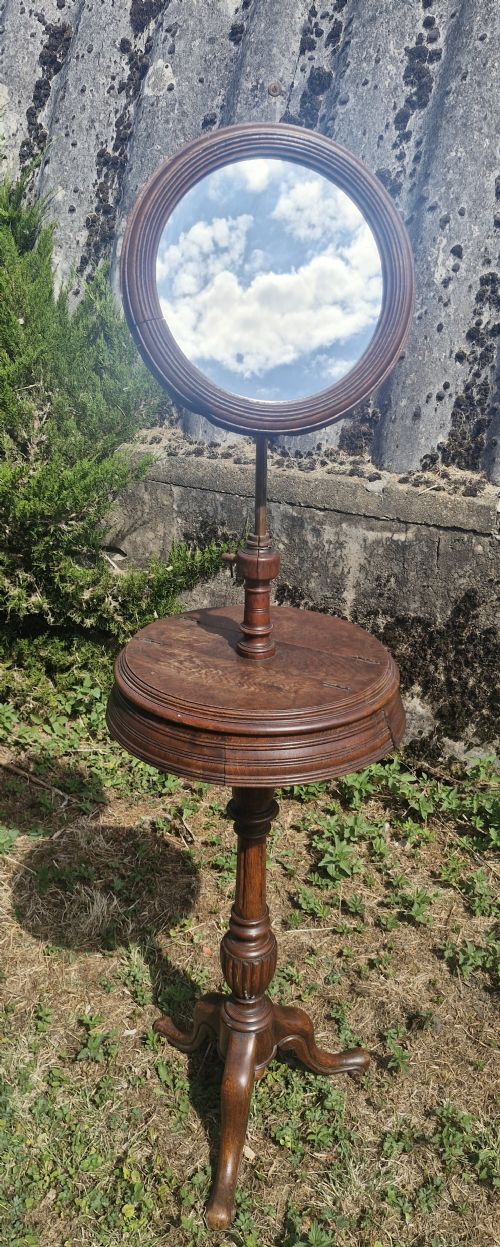
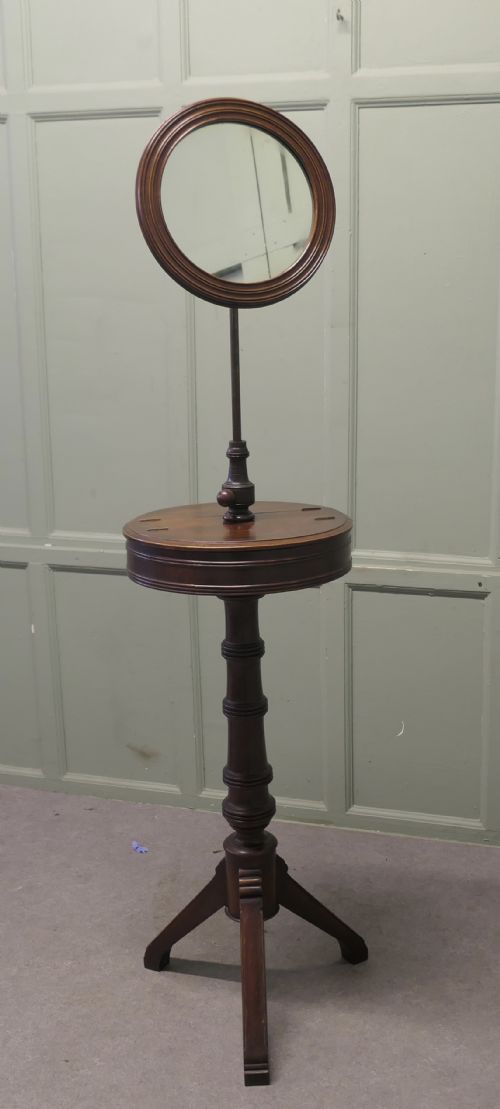
You are most likely to encounter Victorian and Edwardian examples on this page, often built as telescopic mirrors on tripod bases or integrated into larger shaving stands and washstands. These items combine polished glass with practical storage or adjustable mechanisms.
Origins range from English workshops to continental makers, incorporating materials suited to masculine dressing spaces. The selection includes dedicated shaving furniture alongside occasional travelling kits and dressing tables.
Materials and construction
Cabinet makers utilised dense hardwoods such as mahogany, walnut, oak, and satinwood to build the frames and stands, ensuring stability for the pivoting or telescopic glass. Inlays of lighter timbers and brass fittings added structural adjustment and decorative contrast.
Mirror glass was set into pivoting frames or mounted on brass extension rods, allowing the user to alter the height and angle for shaving and dressing. Joinery relied on traditional methods, while campaign versions featured portable folding elements.
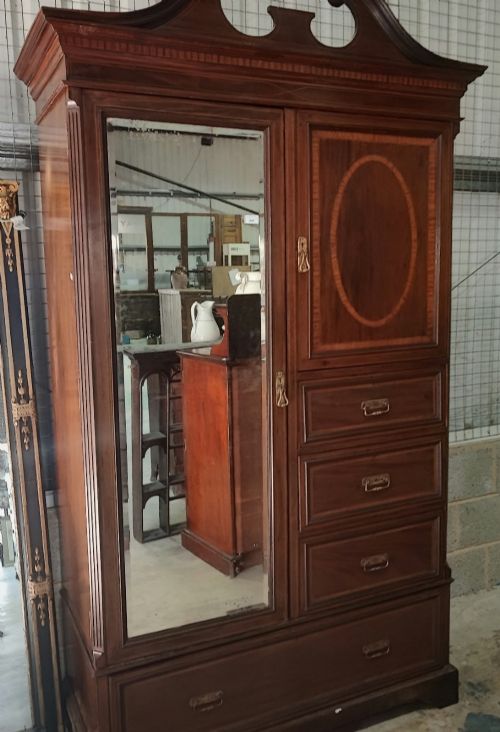
Object forms on this page range from simple table mirrors and campaign kits to elaborate shaving stands and triple wardrobes.
Assessing quality and craftsmanship
The distinction between standard utility items and superior pieces rests on the choice of timber and the precision of the mechanical adjustments. High-quality examples feature figured mahogany, burr walnut, or satinwood, paired with smooth-working brass ratchets and telescopic rods.
Refinement in carving, crispness of inlay, and the integration of storage cupboards or shaving cups separate workshop output. Original mirror glass and well-preserved turning on tripod bases indicate careful preservation of the original design.
Edwards and Roberts·Maple and Co.·James Shoolbred
The Antique Gentlemans Mirror Glossary
- Telescopic mirror
- A glass mounted on an adjustable vertical rod that raises and lowers. This mechanism allows the user to alter the height for sitting or standing positions.
- Shaving stand
- A dedicated piece of furniture combining a mirror, small surfaces, and storage for shaving equipment. These often feature tripod bases or small cabinets below.
- Campaign kit
- Portable furniture designed for travel, featuring folding elements or fitted compartments. These pieces were built for easy transport while maintaining rigid utility.
- Compactum
- A large fitted wardrobe combining hanging space, drawers, and shelves. They frequently incorporated mirrors and smaller compartments for gentleman's attire.
- Washstand
- A wooden table or cabinet designed to hold a basin, jug, and accessories, often fitted with an upright mirror and a marble or wooden top.
Antique Gentlemans Mirror: Frequently Asked Questions
What is an antique gentlemans mirror?
An antique gentlemans mirror is a specialised piece of grooming furniture, usually featuring an adjustable glass mounted on a stand, tripod, or dressing table.
These pieces date from the Georgian, Victorian, and Edwardian eras, combining practical mirror glass with timber frames and storage for shaving apparatus.
How were these mirrors used?
They were used primarily for daily shaving, grooming, and dressing in bedrooms, dressing rooms, or washstands.
The adjustable height and tilting mechanisms allowed users to catch the light precisely where needed during morning routines.
How do I date an antique mirror?
Dating relies on timber choices, construction techniques, and stylistic markers such as Victorian turning or Edwardian inlay.
Examining the bevel of the glass, the type of brass screws, and secondary woods helps place the piece within the nineteenth or early twentieth century.
Where do I place one at home?
These mirrors suit dressing rooms, bathrooms, or hallways where their compact footprint and functional storage prove useful.
Freestanding telescopic versions work well on tabletops or chests of drawers, while shaving stands function as standalone decorative items.