



Antique Pedestal Mirror
When you search for an antique pedestal mirror, you are looking at practical dressing glass and shaving stands mounted on solid timber supports.
Antique Pedestal Mirror
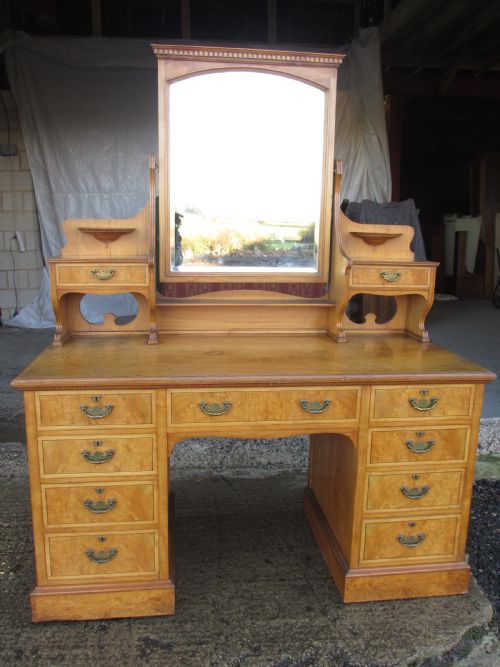
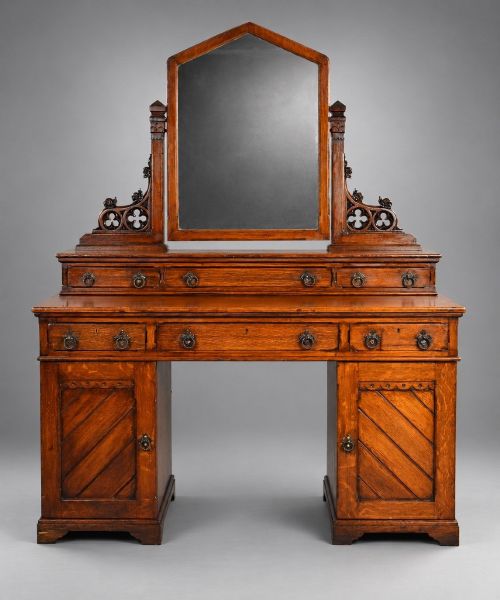
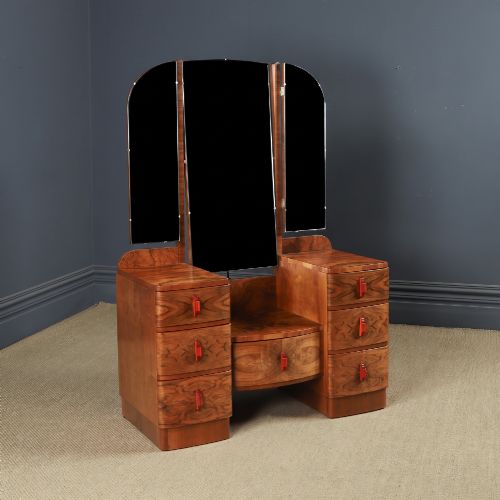
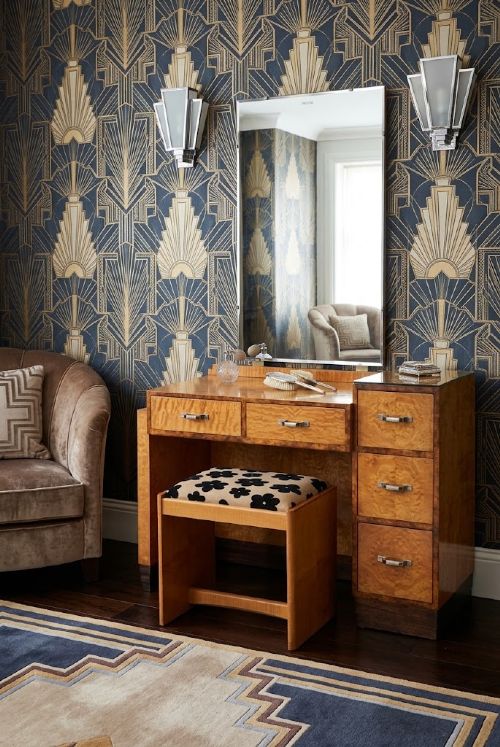
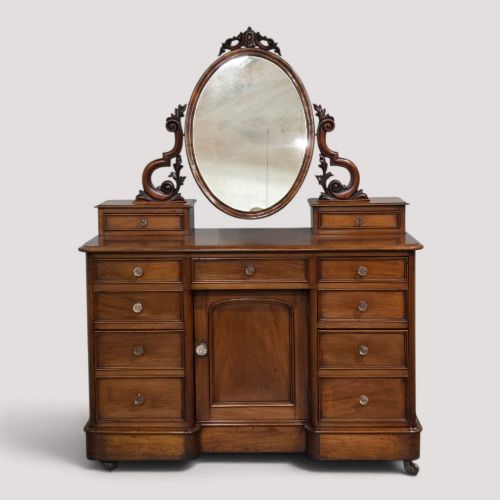
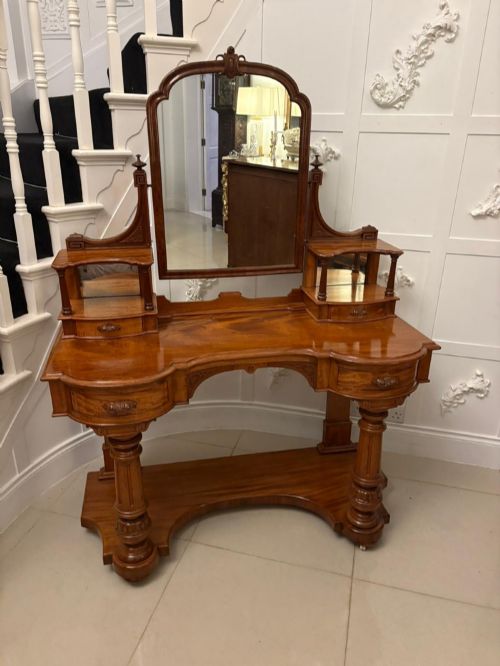
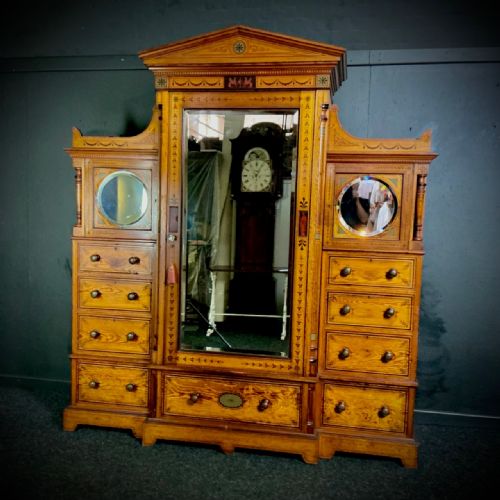
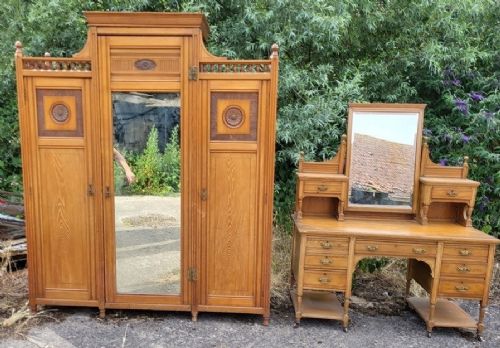
The search phrase antique pedestal mirror covers a range of Victorian and early twentieth-century dressing tables, shaving stands, and table mirrors where a pivoting glass is mounted above a sturdy base or pedestal. Most examples on this page date from the Victorian era and the 1930s Art Deco period, constructed in woods like mahogany and walnut.
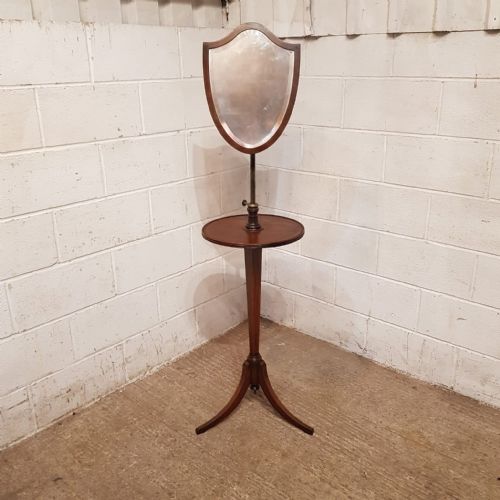
You will encounter pieces ranging from large kneehole dressing tables with fixed or swing mirrors to compact shaving stands and adjustable table mirrors. These objects were designed for bedrooms and dressing rooms to provide a stable, adjustable reflection for daily grooming.
The format combines functional mirror glass with supportive cabinetry, often incorporating small drawers, pedestals, or tripod legs. While many listings feature dressing tables with integrated mirrors, standalone table mirrors and shaving stands also appear frequently.
How they were made
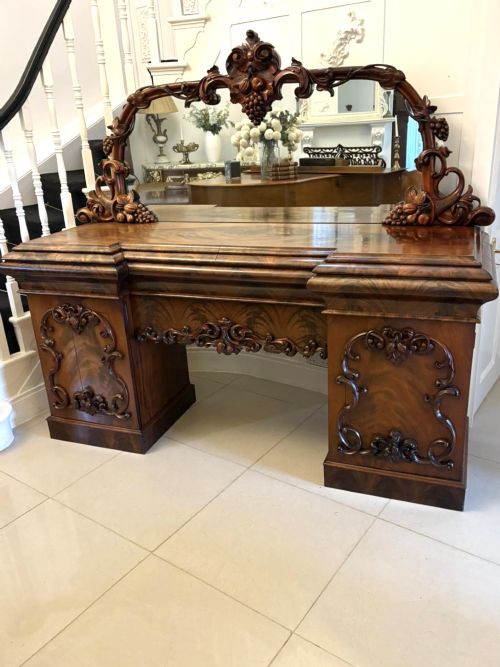
Cabinetmakers constructed these pieces using dense hardwoods such as mahogany, oak, and walnut, frequently applying figured or burr walnut veneers to principal surfaces. Marquetry inlay, satinwood details, and carved ornamentation appear on Victorian and Edwardian iterations.
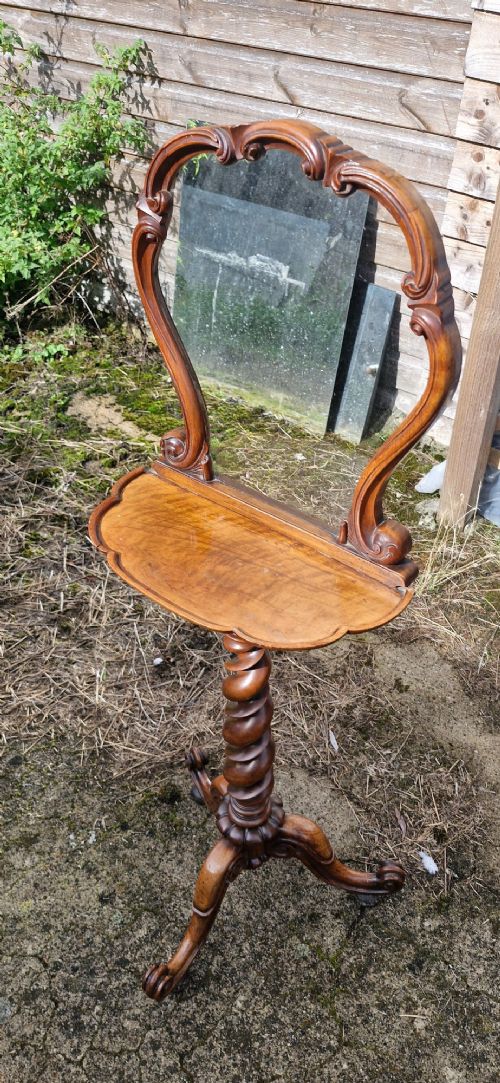
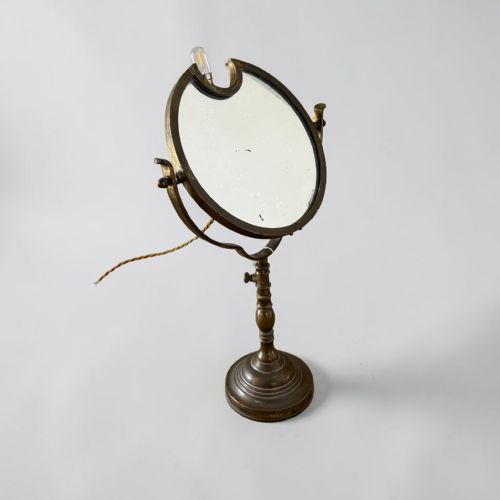
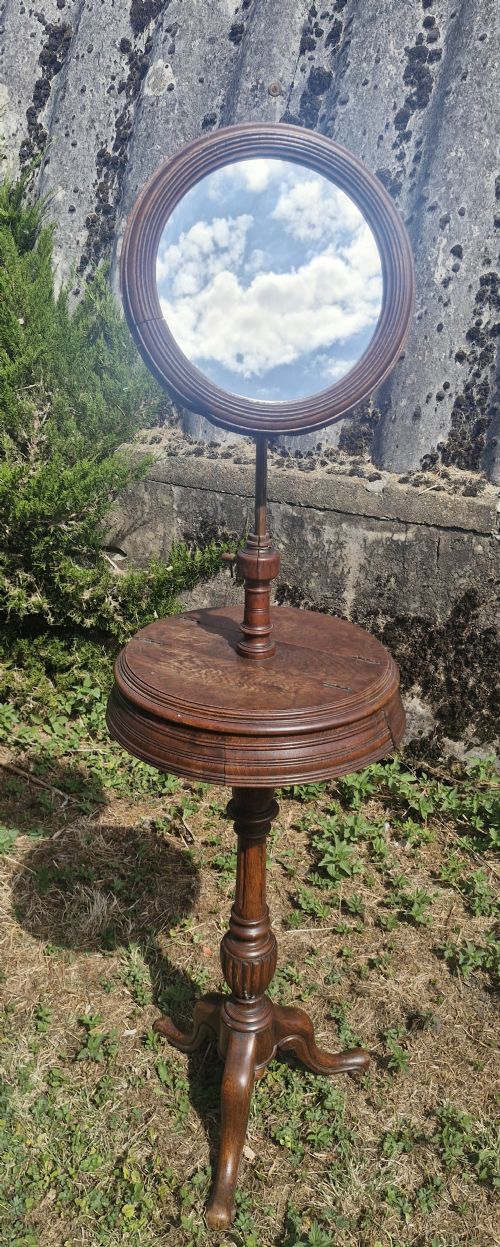
Mirror glass is held within pivoting frames supported by upright arms, allowing the user to tilt the reflection as needed. Shaving stands and table mirrors utilise brass adjustments, cast iron elements, or bronze and ormolu mounts depending on the period and style.
Antique Pedestal Mirror Retail Price Guide 2026
Typical asking prices for pedestal mirror among the pieces listed under this phrase on Sellingantiques today, from the lower quarter to the upper quarter. They describe what is for sale here now, not the wider market.
What varies in quality
Quality rests in the selection of timber veneers and the execution of structural joinery, where finely figured burr walnut or satinwood inlay distinguishes superior cabinet work from plain construction. The weight and clarity of the original mirror glass, alongside the precision of brass pivoting hardware, also signal standard of manufacture.
Maker attribution elevates certain pieces, with workshops such as Edwards & Roberts, Shapland & Petter, and Harry and Lou Epstein demonstrating higher levels of craftsmanship in their dressing tables and wardrobes.
Shapland & Petter·Edwards & Roberts·Harry and Lou Epstein·James Shoolbred
The Antique Pedestal Mirror Glossary
- Pedestal
- A supporting column or base structure that elevates a cabinet, table, or mirror frame. It provides stability and forms the foundation for dressing chests and shaving stands.
- Shaving stand
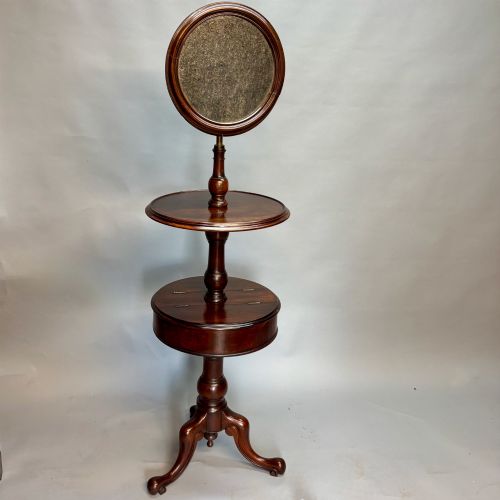
- A specialised piece of furniture featuring an adjustable mirror and a small table or tripod base designed for personal grooming. These often date to the Victorian and Edwardian periods.
- Burr walnut
- A prized timber veneer obtained from the gnarled growths of walnut trees, displaying intricate, swirling grain patterns. It was widely utilised on high-end Victorian and Art Deco dressing tables.
- Kneehole
- A configuration of a desk or dressing table with a central recess for the user's legs, flanked by pedestals of small drawers. This layout is common in Victorian pedestal dressing tables.
- Ormolu
- Gilded bronze mounts and decorative details applied to furniture, particularly French Empire and nineteenth-century pieces. It provides metallic contrast to dark woods and marble.
Antique Pedestal Mirror: Frequently Asked Questions
What is an antique pedestal mirror?
An antique pedestal mirror is a pivoting glass mounted on a supportive base, table, or column, designed primarily for dressing rooms and bedrooms. These pieces include standalone table mirrors, shaving stands, and mirrors attached to large dressing tables.
Most surviving examples date from the Victorian era through the Art Deco period of the 1930s. They combine functional mirror glass with timber cabinetry such as mahogany, walnut, and oak.
How do I date an antique mirror?
Dating relies on identifying the prevailing timber choices, construction techniques, and stylistic influences of the piece. Victorian examples frequently utilise solid mahogany or burr walnut with hand-carved details, while 1930s Art Deco pieces display streamlined forms and figured veneers.
Hardware such as brass pivots, locking mechanisms, and the bevelling or flatness of the glass plate also offer clues to the manufacturing decade. Maker stamps or labels, when present, provide definitive chronological reference.
Where were shaving stands used?
Shaving stands were utilised in Victorian and Edwardian bedrooms, dressing rooms, and gentleman's quarters for morning grooming routines. Their compact footprints allowed them to sit easily beside washing facilities or windows.
The inclusion of an adjustable mirror and small surfaces for water basins or shaving equipment made them essential personal furniture before fitted bathrooms became standard.
How do I care for wood and glass?
Preserving antique wood requires maintaining stable room humidity and avoiding direct sunlight to protect delicate veneers like burr walnut or satinwood. Periodic dusting with a dry, soft cloth keeps the polished surfaces clean without stripping historic finishes.
Mirror glass should be cleaned sparingly with a dry or lightly dampened microfiber cloth, taking care to prevent moisture from seeping behind the glass plate into the silvered backing.