


Gentlemans Vanity Stand
A gentlemans vanity stand combines practical grooming with refined period craftsmanship, offering adjustable mirrors and clever storage for the daily routine.
Gentlemans Vanity Stand
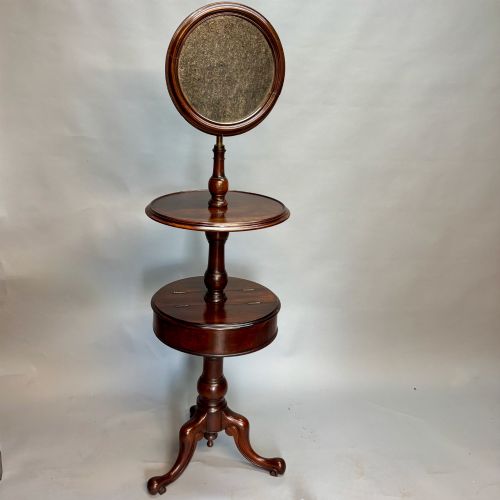
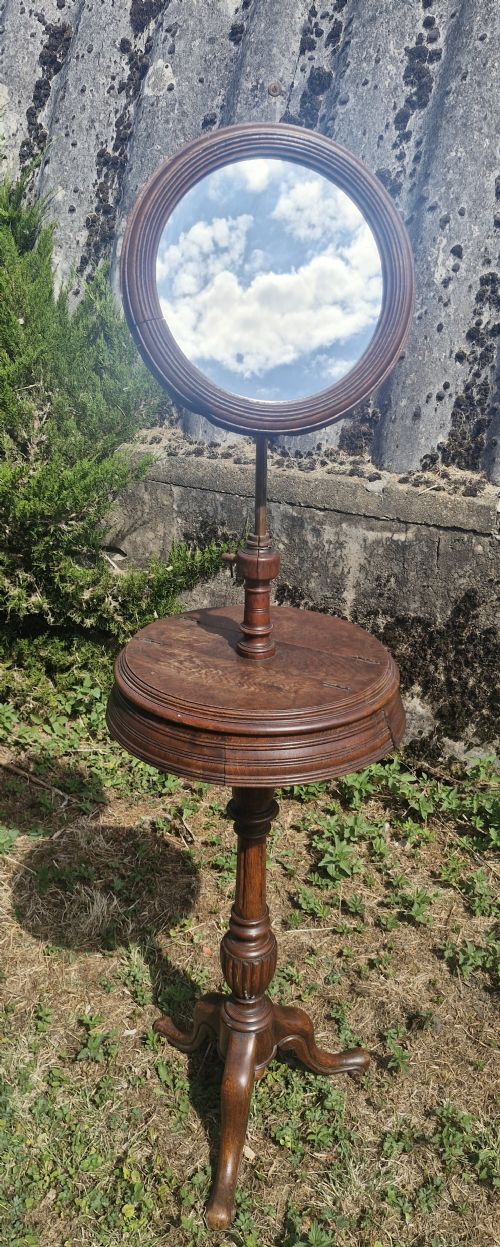
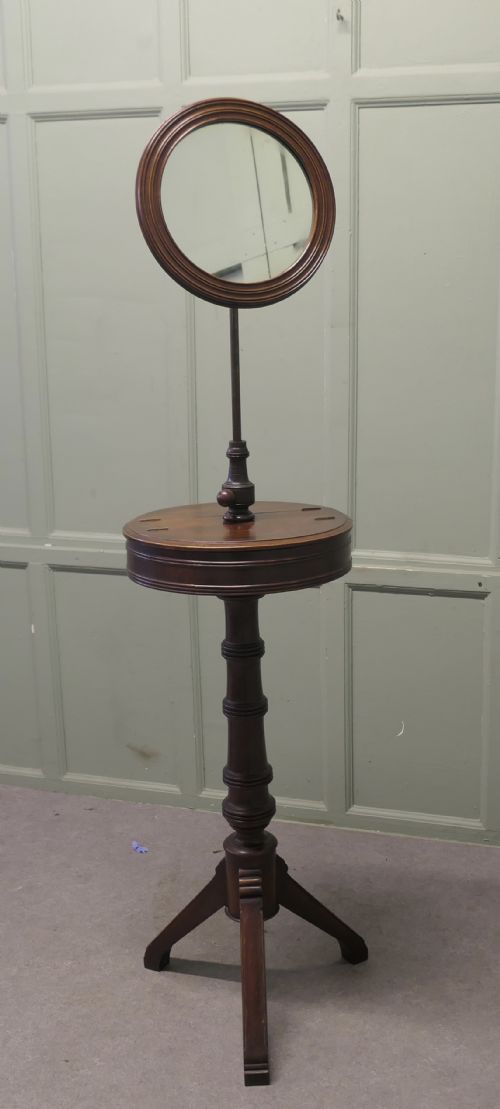
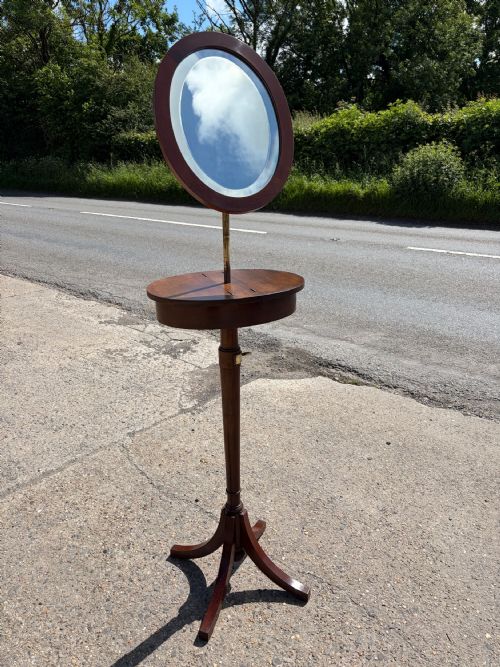
A gentlemans vanity stand is a dedicated piece of furniture designed for morning grooming, typically combining a mirror with a support structure for shaving utensils and washing. The pieces seen here span the Georgian, Victorian, and Edwardian eras, with a strong representation of Victorian mahogany and walnut examples.
Buyers will most frequently encounter standing mirrors, telescopic shaving mirrors on tripod bases, and dedicated washstands or vanity tables. These range from simple adjustable floor-standing glasses to more elaborate cupboards fitted with mirrors and brass hardware.
Materials and construction
Cabinetmakers relied heavily on rich timbers such as mahogany, walnut, oak, and satinwood, often enhanced with fine inlay work or brass fittings. Telescopic mechanisms and adjustable mirror frames required precise metalwork alongside traditional cabinet carpentry.
Surface finishes include polished wood veneers and solid timber constructions paired with original mirror glass and painted metal elements. Structural variations include tripod bases for mirrors and enclosed cupboard spaces for storage.
Listings span multiple eras from Georgian through to Edwardian, encompassing materials like brass, glass, mahogany, oak, walnut, satinwood, and painted metal.
Distinctions in quality
Quality rests upon the integrity of the adjustable mechanisms, the weight and grain of the timber, and the retention of original brass and mirror glass components. Finer examples display superior timber selection, such as figured mahogany or detailed satinwood inlay.
The sophistication of the joinery and the smoothness of the telescopic action distinguish standard workshop production from pieces of higher craftsmanship. Surviving original fittings and unblemished mirror plates further elevate the standing of an individual piece.
James Shoolbred
The Gentlemans Vanity Stand Glossary
- Telescopic
- Describing a shaft or stem designed to slide vertically to adjust the height of an attached mirror. This mechanical feature allows the user to alter the mirror level for seated or standing use.
- Tripod Base
- A three-legged support structure commonly found beneath freestanding shaving mirrors. This design provides stable footing on uneven period floorboards.
- Washstand
- A piece of furniture designed for bodily washing and grooming, often preceding or overlapping with dedicated shaving stands. These frequently incorporate spaces for basins, jugs, and shaving cups.
- Satinwood
- A durable, lustrous timber with a yellowish sheen used for decorative veneers and inlay work. It appears on higher-end Georgian and Edwardian furniture.
- Vienna Secession
- An early twentieth-century artistic movement that influenced furniture design towards cleaner lines and geometric forms. Pieces from this style exhibit distinct continental detailing compared to traditional British furniture.
Gentlemans Vanity Stand: Frequently Asked Questions
How do I adjust the mirror height?
Many period examples utilise a telescopic brass or wooden stem with a thumbscrew mechanism to lock the glass at the desired level. Simply loosen the collar, slide the mirror to the correct height, and tighten gently.
Care should be taken with older brass threads and wooden friction fits to avoid applying excessive force during adjustment.
Where were these placed in a period home?
These stands were typically kept in bedrooms, dressing rooms, or adjacent private chambers where morning grooming took place. Their portable nature allowed them to be positioned near natural light from windows.
They function equally well in modern bedrooms or bathrooms as decorative and practical accent furniture.
How do I tell Victorian from Georgian pieces?
Georgian pieces, dating from the eighteenth and early nineteenth centuries, often feature lighter satinwood inlay and restrained classical proportions. Victorian examples tend to be heavier in build, frequently utilising solid mahogany or walnut with more robust turned supports.
Examining the secondary timbers, screw types, and overall construction style helps clarify the manufacturing period.
Can I use the original mirror glass daily?
Original mirror glass often exhibits light foxing or age spots, which reflect its authentic period manufacture. While usable for daily routines, many owners choose to handle the historical glass with care.
Replacements are rarely necessary unless the silvering has deteriorated beyond practical reflection.