
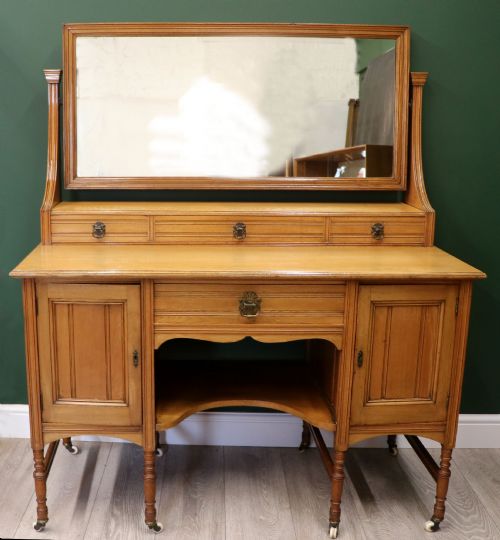


Pedestal Vanity Mirror
A pedestal vanity mirror brings practical reflection and sculptural form together on a dressing surface, offering adjustable glass framed in period timbers and metals.
Pedestal Vanity Mirror
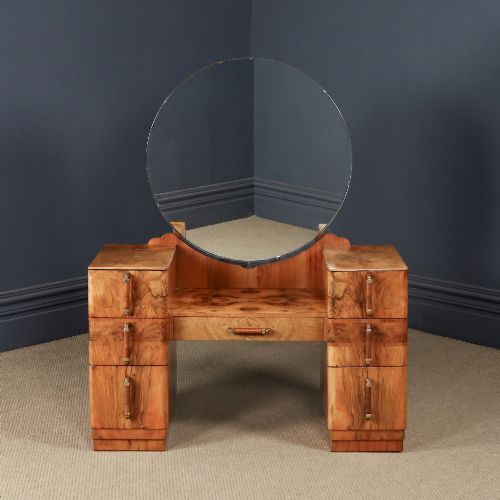
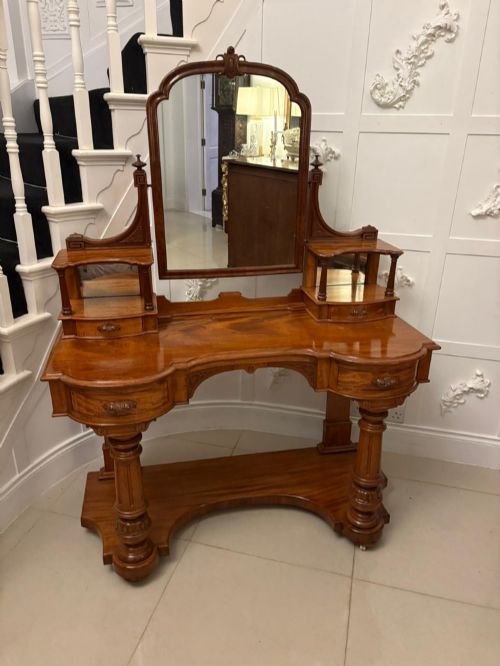
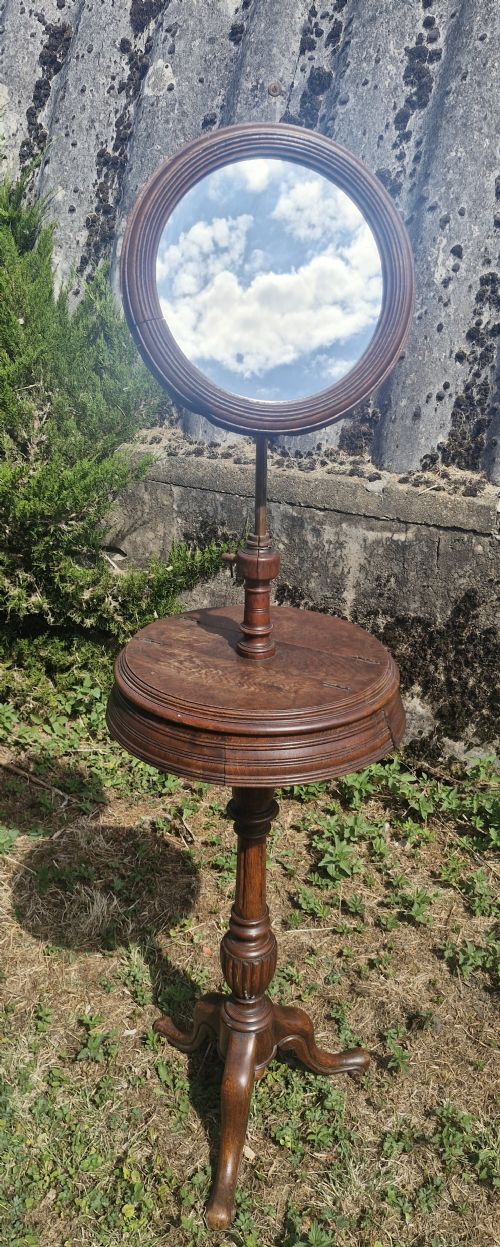
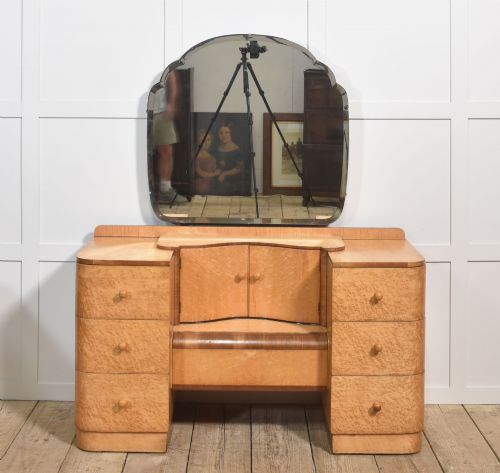
A pedestal vanity mirror is primarily found in Victorian and Art Deco iterations, serving as an adjustable looking glass mounted on a supportive stand or pedestal base. These pieces range from compact tabletop shaving stands to substantial dressing chest attachments designed for personal grooming.
The selections span distinct periods, including Edwardian satinwood pieces, French Empire bronze examples, and 1930s modernist walnut designs. Most items combine the pivoting mirror plate with a tiered or columned base, creating a functional focal point for a bedroom or dressing room.
How they were made
Craftsmen utilised dense hardwoods like mahogany, walnut, and oak, frequently applying figured burr veneers and satinwood inlay to create decorative surfaces on the pedestals and frames. Bronze, ormolu, brass, and chrome provided structural support and pivoting mechanisms for the glass plates.
Joinery methods relied on traditional dovetails and turned columns, while metal components were cast, plated, or gilt. The reflective plates themselves consisted of traditional mirror glass secured within adjustable brass screws or wooden side arms.
A gentleman could once shave by the light of a pivoting bronze Empire glass before rushing off to buy a railway share.
What varies in quality
Quality rests in the crispness of the carving, the selection of timber veneers such as figured walnut, and the structural integrity of the pivoting mechanism. Finer examples display meticulous marquetry inlay, heavy cast bronze mounts, and substantial timber frames that remain stable when adjusted.
The sophistication of the design dictates distinction, moving from utilitarian oak shaving stands to sculptural Art Deco creations by notable makers or refined French Empire bronze pieces. Original mirror glass and uncompromised surface patination elevate the standing of any individual piece.
Harry and Lou Epstein·Edwards and Roberts·James Shoolbred
The Pedestal Vanity Mirror Glossary
- Pedestal mirror
- A looking glass mounted upon a central pillar, column, or raised stand that permits elevation above a tabletop.
- Shaving stand
- A specialised form incorporating an adjustable mirror alongside surfaces or drawers intended for grooming equipment.
- Burr walnut
- A highly figured timber grain derived from the growths of walnut trees, prized for decorative veneer work on Victorian and Art Deco furniture.
- Ormolu
- Gilt bronze ornamentation applied to mounts and frames, frequently seen in French Empire period pieces.
- Marquetry
- Decorative patterns formed by fitting together contrasting veneer timbers on a structural surface.
Pedestal Vanity Mirror: Frequently Asked Questions
How do I adjust the mirror?
Most pedestal vanity mirrors utilise brass thumbscrews or pivot pins set into the upright supports. Tightening or loosening these fixtures allows the glass plate to tilt to the desired angle.
Care should be taken to support the glass with one hand while adjusting the fittings to prevent undue stress on the antique timber or metal frame.
Where should I place a pedestal mirror?
These pieces function best on dressing tables, chests of drawers, or dedicated shaving stands where the height complements seated use. Placing them near a natural light source enhances their reflective utility.
Ensure the supporting surface is level and deep enough to bear the weight distribution of the pedestal base.
How do I date a Victorian piece?
Victorian examples typically exhibit dense timbers like mahogany or walnut, often featuring hand-cut dovetails in the small drawers of the base. Stylistic clues range from heavy carving to Aesthetic movement inlay.
Consulting the construction techniques and secondary woods inside the drawers helps clarify whether a piece originates from the early or late decades of the nineteenth century.
What is the difference between an Art Deco and a Victorian mirror?
Art Deco versions from the 1930s favour streamlined geometry, chrome, maple, and figured walnut with minimal ornamentation. Victorian pieces lean toward carved mahogany, brass details, and traditional period revival styles.
The overall silhouette defines the era, moving from ornate, turned supports to sleek, planar pedestal designs.