
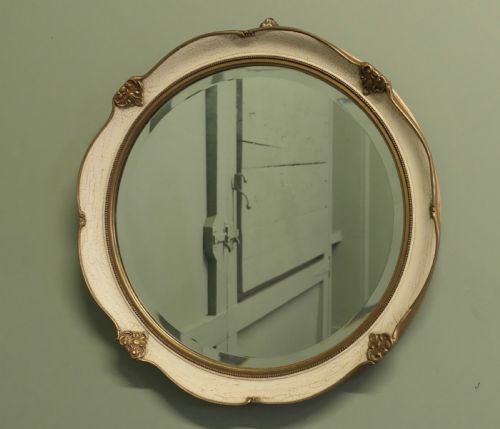
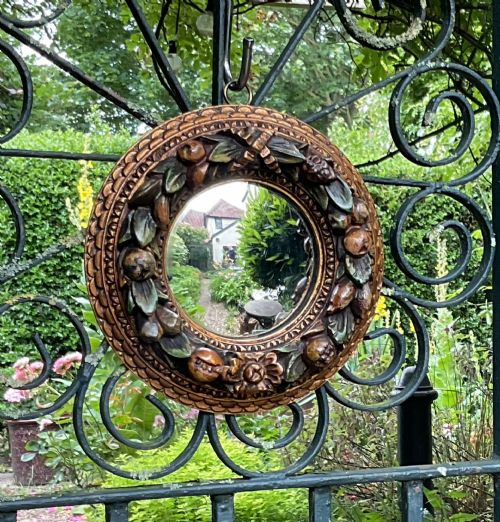
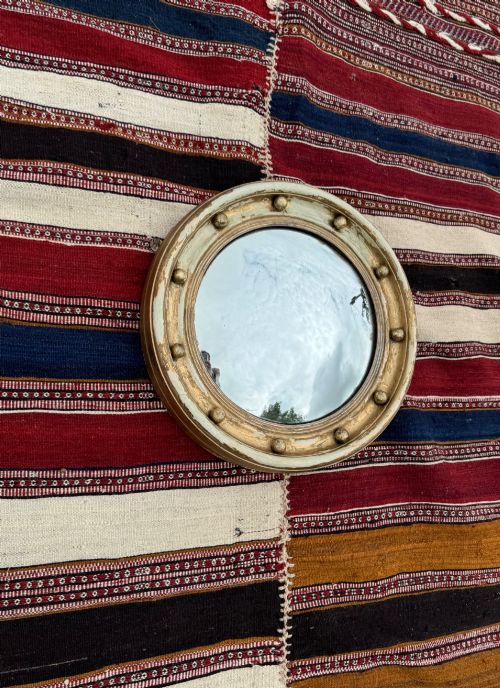
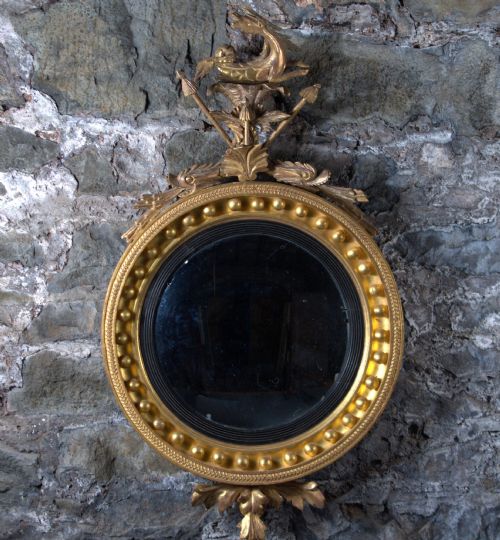


Carved Circular Mirror
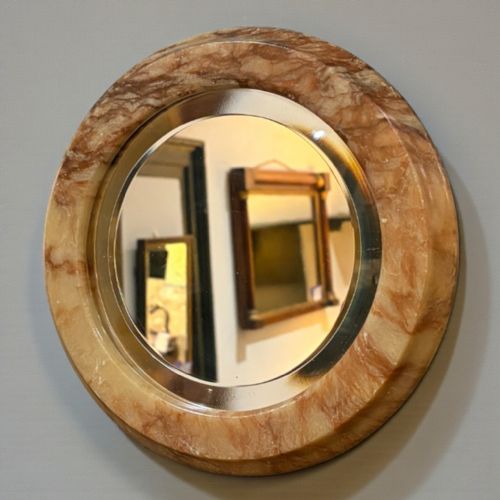
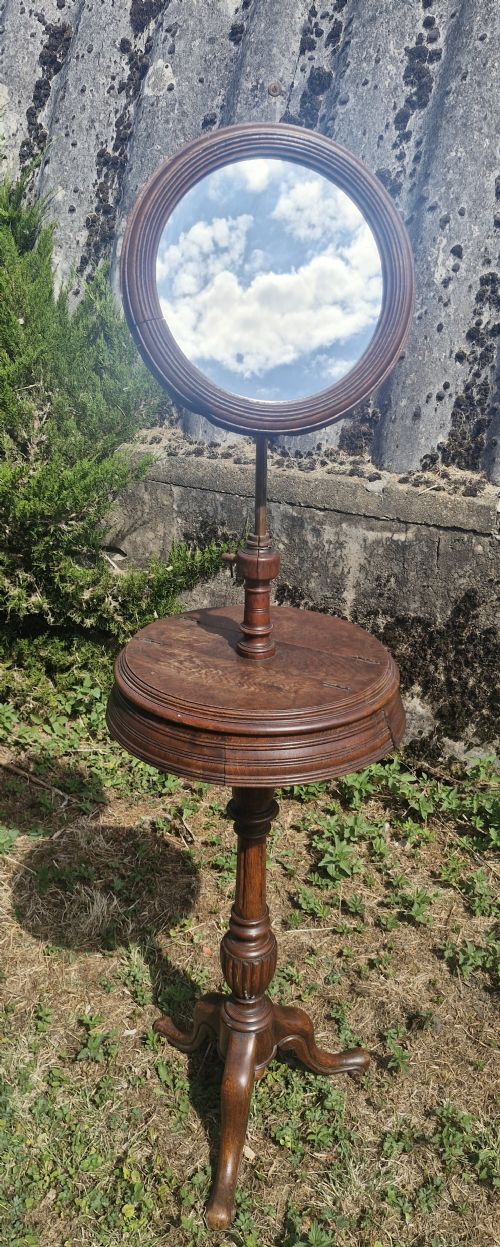
These carved circular mirror examples range from Regency convex plates with eagle surmounts to Victorian oak shaving stands, offering remarkable optical depth.
Carved Circular Mirror
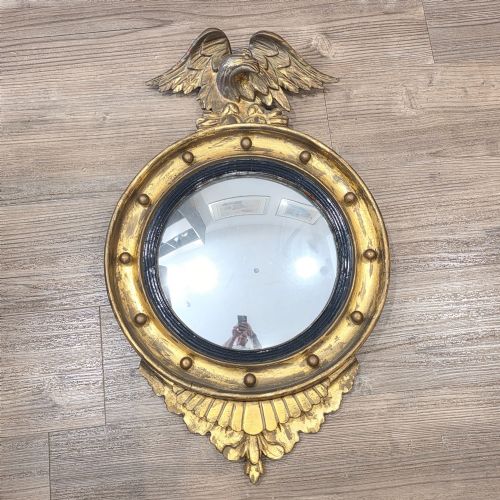
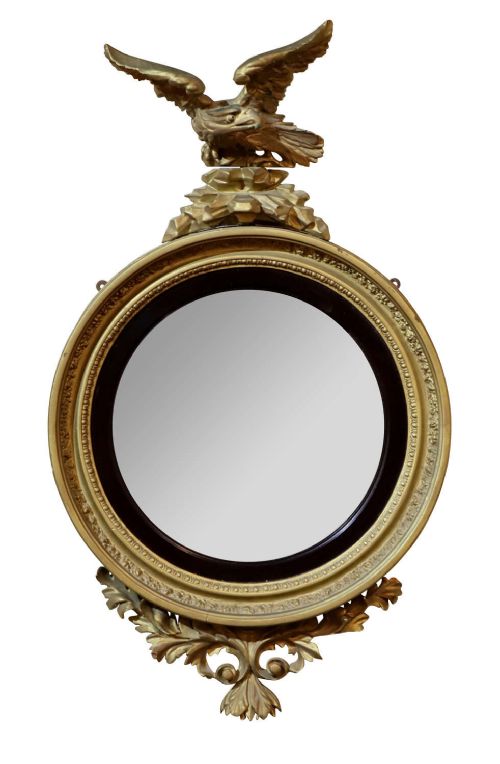
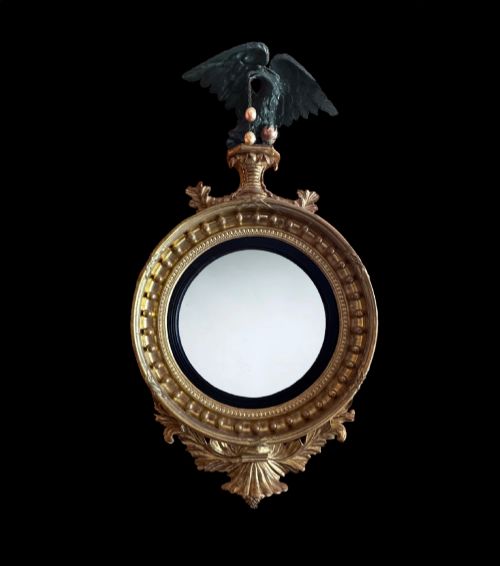
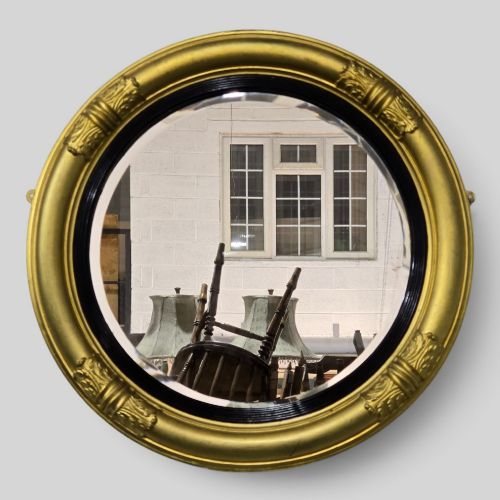
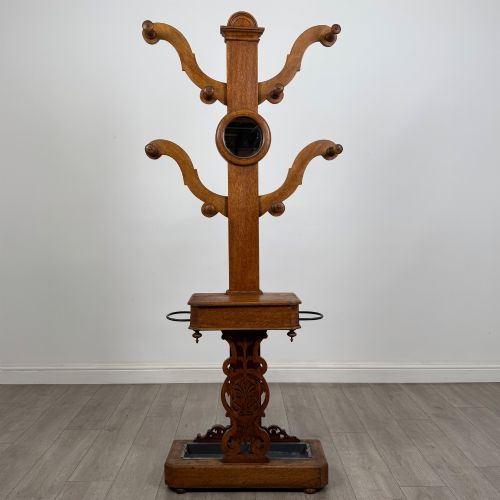
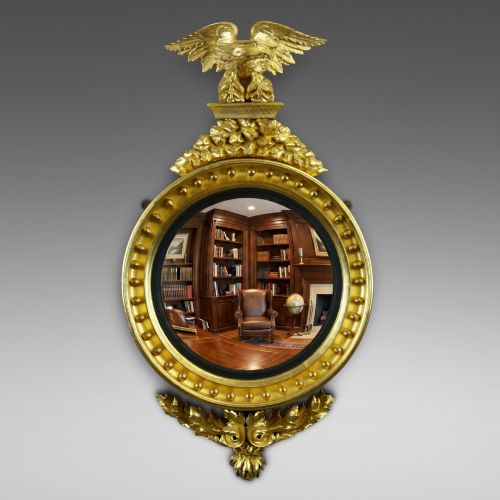
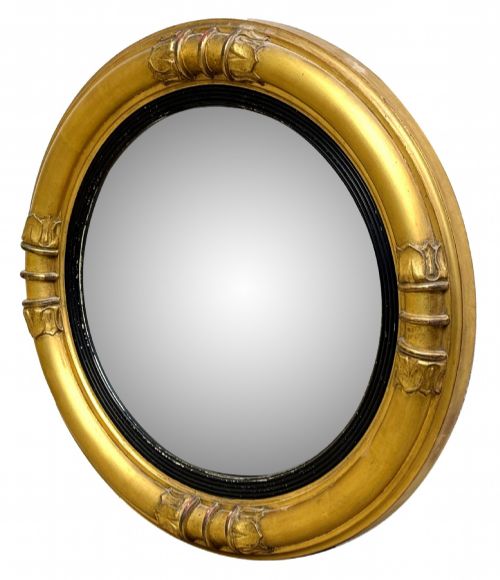
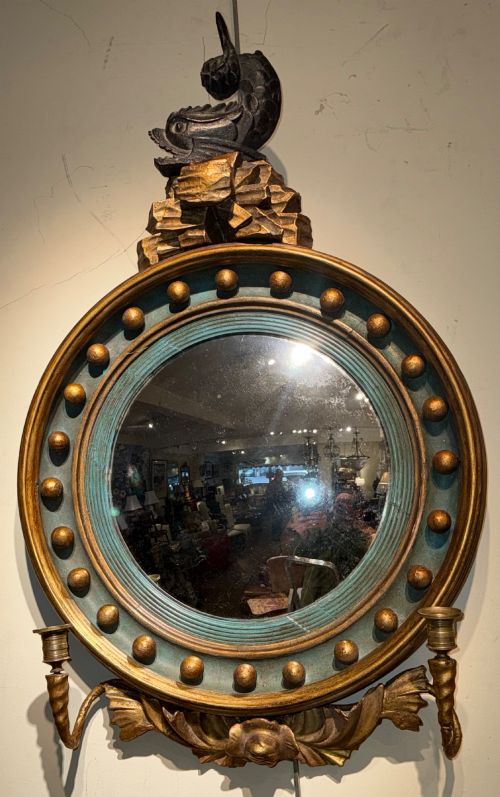
A carved circular mirror takes many forms across the centuries, appearing most frequently on this page as a Regency convex wall mirror set in a giltwood frame. These pieces also emerge in Victorian oak, Edwardian gesso, and French Art Deco variants.
The selection includes wall mirrors alongside shaving stands and dressing table mirrors in mahogany and ebonised wood. Period styles span the Georgian era, the 1920s, and the 1930s alongside grand Regency revivals.
How they were made
Frames rely on carved wood, particularly giltwood, oak, and mahogany, shaped into circular profiles with applied gesso and gold leaf finish. Glass plates are fitted into these heavy surrounds, often taking a convex or curved form to bend the light.
Detailing involves elaborate hand-carved motifs such as spread eagles, dragons, and sunburst patterns fixed directly to the wooden or gesso structure.
Listings feature periods spanning Georgian, Regency, Victorian, Edwardian, and the 1930s, using materials including giltwood, oak, mahogany, and ebonised wood.
What varies in quality
The refinement of the hand carving dictates the visual strength of the piece, separating standard turnings from detailed works featuring eagles and mythical creatures. The preservation of the original gold leaf and giltwood surface directly influences the optical warmth of the reflection.
Scale and proportion matter significantly, as larger frames require exact joinery to support heavy convex glass plates securely over centuries of hanging.
The Carved Circular Mirror Glossary
- Convex mirror
- A round mirror with a curved outward glass plate that reflects a wide, distorted field of view. These pieces are frequently called witch's mirrors or sorcerer's mirrors.
- Giltwood
- Timber coated with gold leaf or a gold-coloured finish applied over a prepared gesso layer. This technique creates a bright metallic sheen on the frame.
- Gesso
- A plaster-like mixture applied to wood frames to provide a smooth base for gilding and fine carving. It allows artisans to shape intricate decorative relief details.
- Surmount
- An ornamental feature placed at the very top of a mirror frame, such as a carved eagle or floral crest. These elements balance the circular composition.
Carved Circular Mirror: Frequently Asked Questions
What is a convex mirror?
A convex mirror uses a curved glass plate that bulges outward toward the viewer. This shape captures a wide panoramic reflection of the room.
Such pieces were historically placed in homes to monitor activity across a space from a single vantage point.
How do I hang a heavy mirror?
Heavy carved wood and gilt frames require secure wall fixings anchored directly into structural masonry or studwork. Weight distribution across the frame backing is essential for safety.
Professional mirror hangers utilise brackets rated well above the actual mass of the timber and glass.
Are these mirrors all from the Regency period?
While many examples date from the Regency era and its subsequent revivals, the inventory includes Victorian, Edwardian, and 1930s pieces. Materials and framing styles change across these decades.
Examination of the timber backing and the construction methods helps determine the precise period of manufacture.
How do I clean a giltwood frame?
Giltwood and gold leaf surfaces demand gentle dusting with a soft, dry brush to prevent damage to the delicate metallic layer. Moisture and chemical cleaners must be avoided entirely.
Preserving the original surface retains the historical character of the antique timber beneath.