
Swivel Table Mirror
A swivel table mirror sits on a chest or dressing table, offering an adjustable reflection for daily grooming.
Swivel Table Mirror
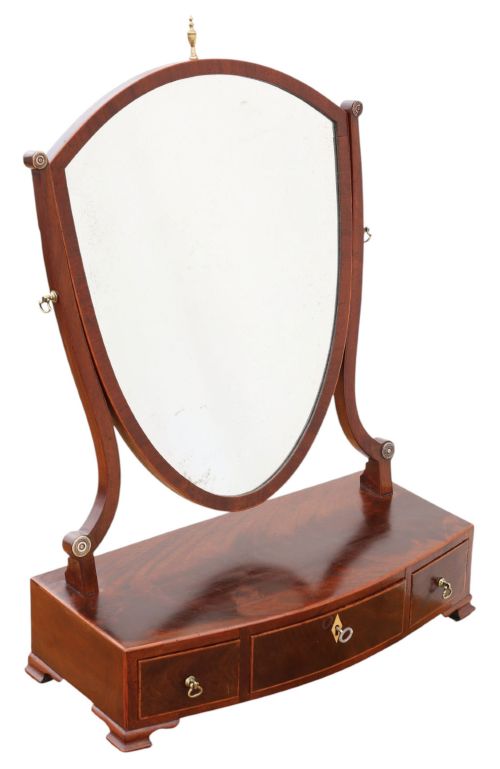
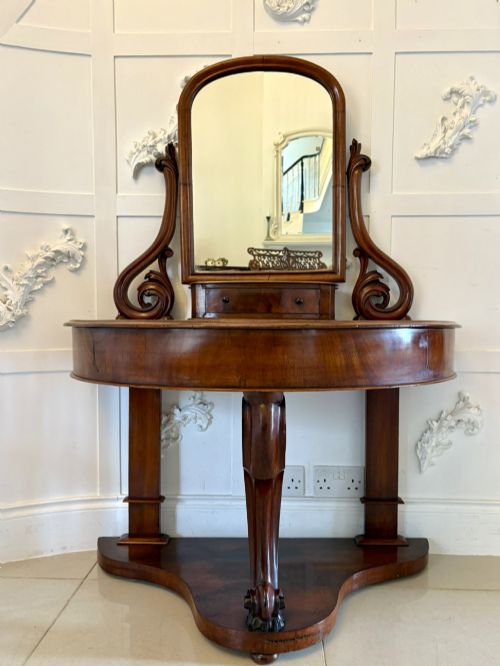
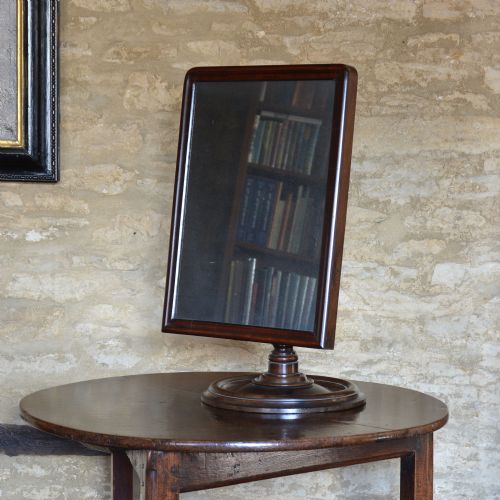
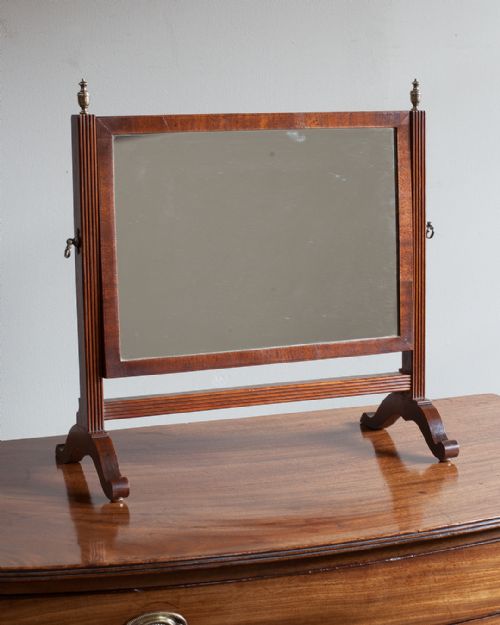
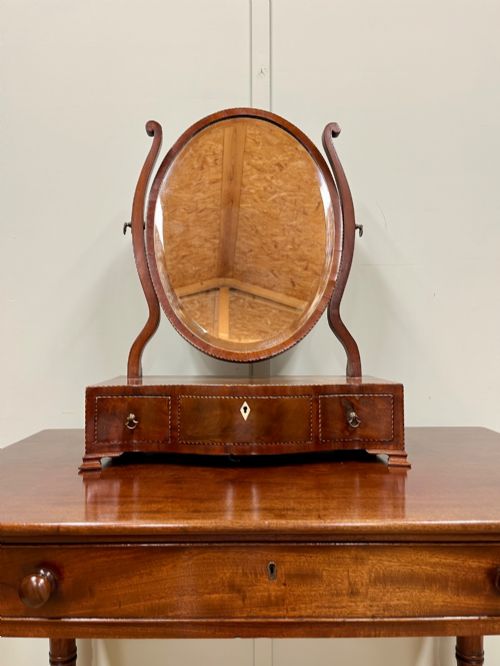
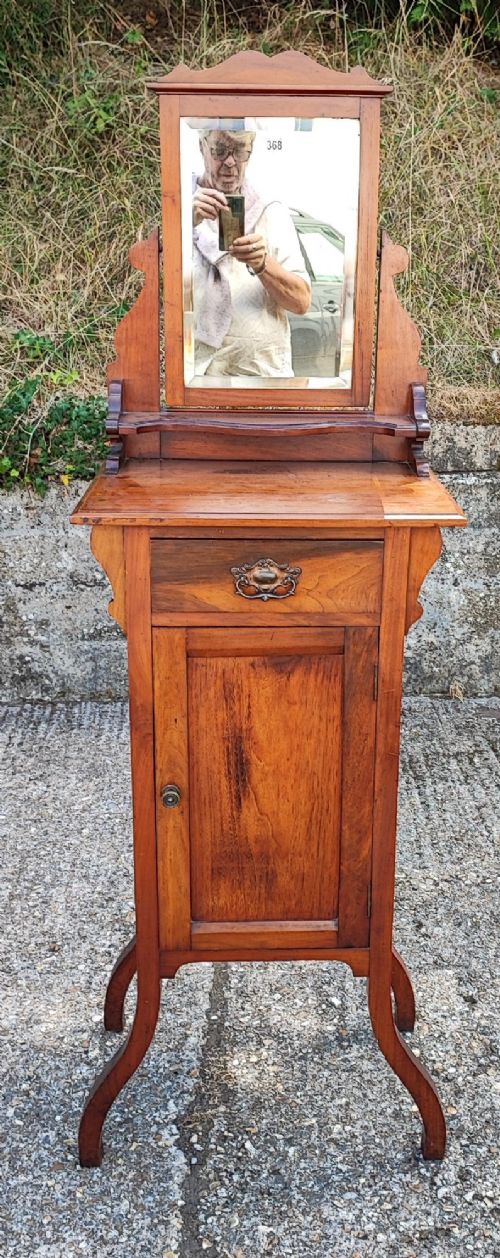
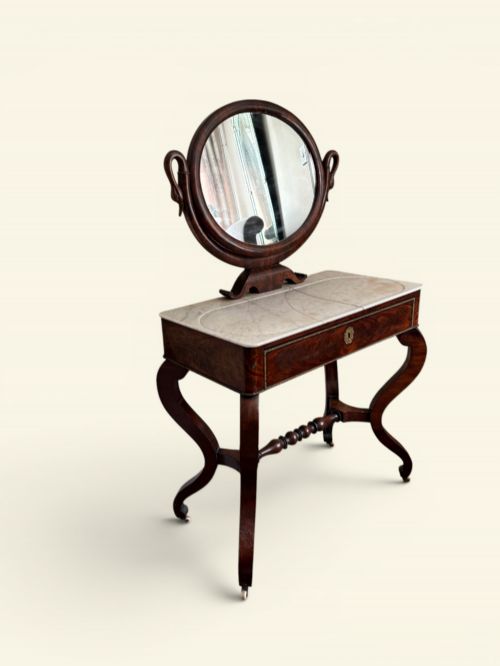
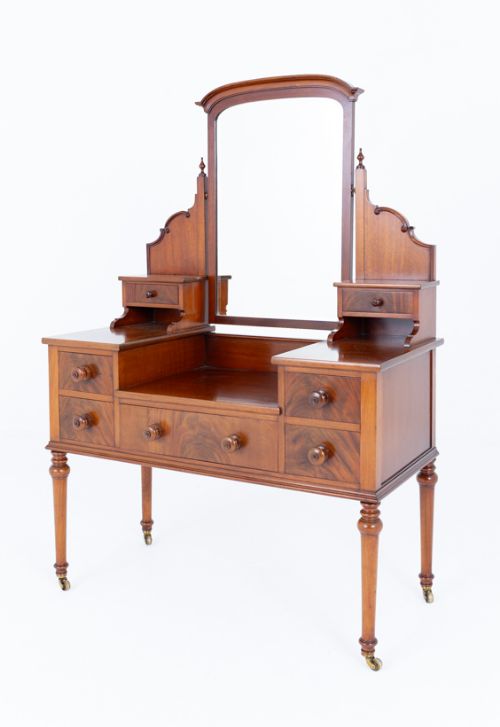
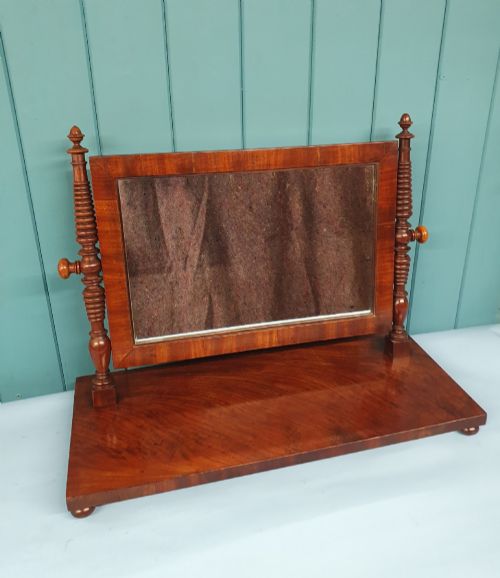
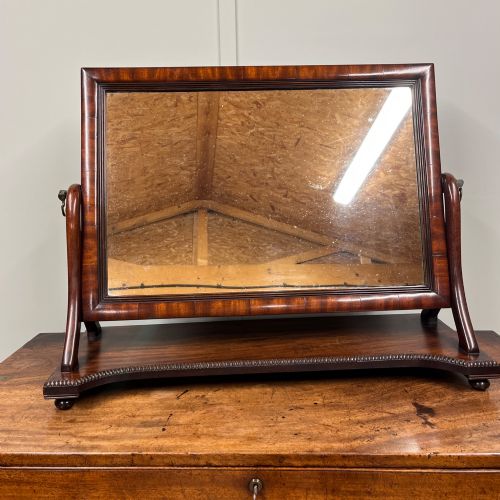
A swivel table mirror is a compact glass plate mounted within a pivoting frame, designed to rest upon a surface rather than hang upon a wall. When you explore this selection, you encounter forms designated as dressing table mirrors, toilet mirrors, and swing mirrors spanning the Georgian, Victorian, and Edwardian periods.
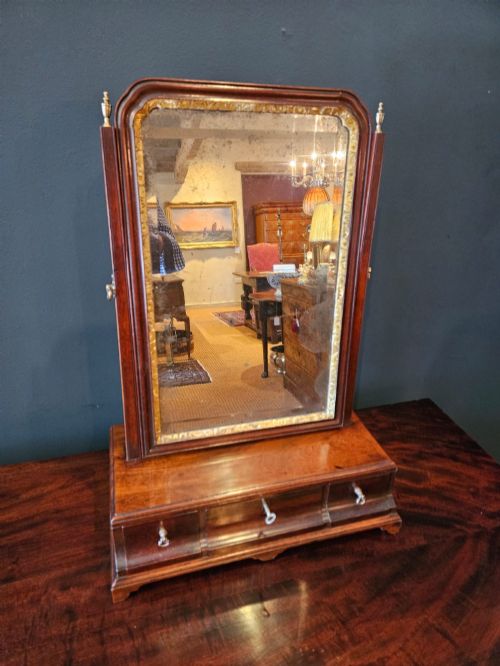
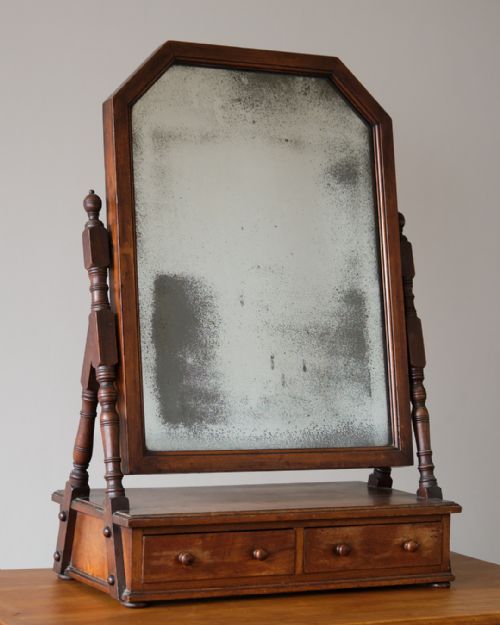
The prevailing examples on this page utilise mahogany and walnut frames, frequently incorporating small box bases fitted with drawers. These pieces served practical dressing functions in bedrooms and dressing rooms, developing from simple 18th-century toilet mirrors into larger Victorian and Edwardian iterations.
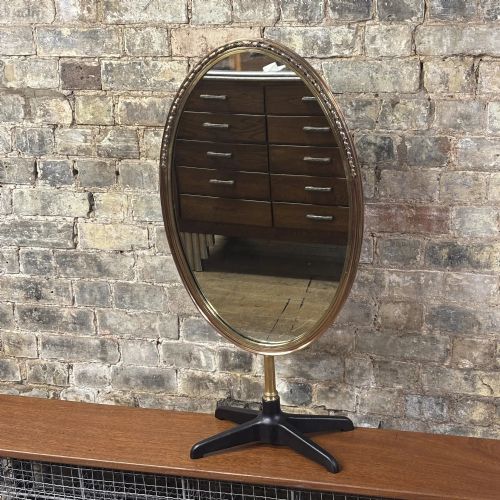
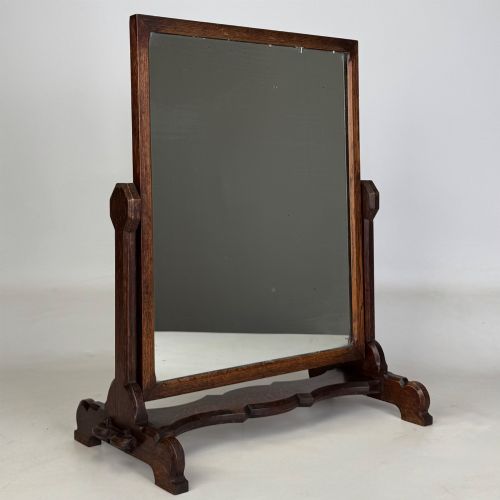
Beyond standard wooden swing frames, the selection includes specialised forms such as shaving mirrors, cheval table tops, and scientific optical mirrors. The glass pivots between upright arms, allowing the user to tilt the reflection as required.
How they were made
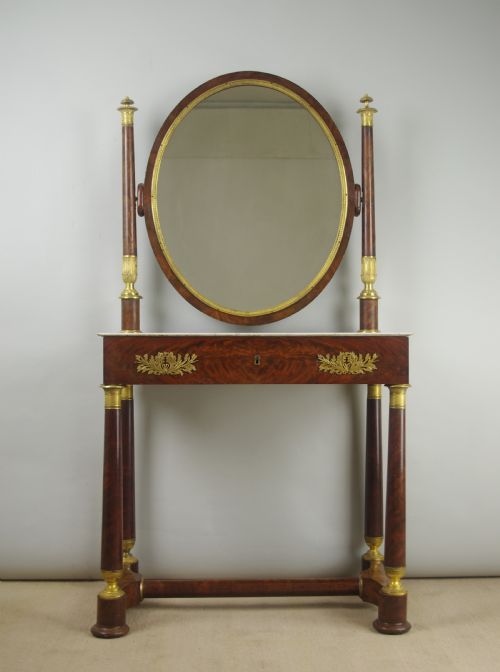
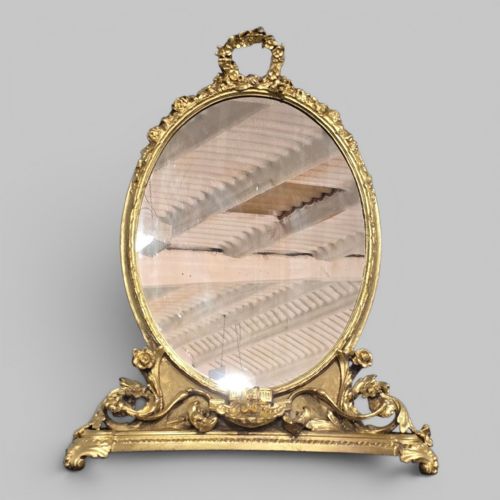
Cabinetmakers constructed the frames and supportive stands predominantly from dense timbers like mahogany, walnut, and oak, occasionally incorporating boxwood stringing or bone details. Selected pieces feature giltwood or cast bronze elements, whilst French Empire examples display ormolu mounts alongside mahogany.
The mirror glass itself is held within a pivoted wooden or metal frame attached to upright side posts, which rise from a stable base or tabletop stand. Drawers within the base utilise traditional dovetail joints, and brass screw knobs or pins secure the pivoting angle of the swing frame.
Swivel Table Mirror Retail Price Guide 2026
Typical asking prices for swivel table mirror among the pieces listed under this phrase on Sellingantiques today, from the lower quarter to the upper quarter. They describe what is for sale here now, not the wider market.
Object forms span simple swing mirrors, toilet mirrors with drawers, and scientific optical mirrors from the mid-19th century.
What varies in quality
The distinction between standard examples and superior pieces rests upon the crispness of the cabinetwork and the selection of timber veneers. Finely figured mahogany or burr walnut grains, balanced proportions in the shield or rectangular frames, and original cast brass hardware elevate the standing of a mirror.
Construction details such as secondary woods in the drawer linings, the retention of the original mirror glass, and integrated serpentine or ogee-moulded base boxes demonstrate superior workshop execution. Greater refinement appears where decorative accents like parcel-gilding or marquetry inlay remain crisp and undisturbed.
Heal & Sons·Thomas Rubergall of London
The Swivel Table Mirror Glossary
- Swing mirror
- A glass plate hung on pivoting pins within a frame that tilts back and forth. This mechanism forms the defining characteristic of the table mirror group.
- Toilet mirror
- A historical term for a small dressing table mirror used during the Georgian and Victorian eras. These typically incorporate small drawers beneath the swinging plate.
- Shield mirror
- A dressing glass shaped like a heraldic shield, popular during the late 18th and 19th centuries. The curved wooden perimeter frames the upright glass plate.
- Parcel-gilt
- Partially gilded with thin gold leaf over gesso or wood, highlighting specific carved details. This treatment frequently appears on George II mahogany mirrors.
- Cheval mirror
- A large standing mirror, though the term also describes larger table-top versions found in Edwardian listings. They allow a full-length or half-length view.
Swivel Table Mirror: Frequently Asked Questions
How do I date a swivel mirror?
Dating relies on observing the timber species, frame shape, and construction methods of the base. Georgian examples often feature mahogany shield frames and ogee bracket feet.
Victorian and Edwardian versions tend to be heavier, sometimes utilising burr walnut, cast brass, or oak with simpler box drawers beneath the pivoting glass.
Were these mirrors used for shaving?
Certain smaller iterations functioned as shaving mirrors, designed to sit on a washstand or chest for close facial grooming. These frequently date to the 17th or 18th centuries.
They provided a stable, adjustable reflection before modern wall-mounted bathroom cabinets became standard in domestic interiors.
How do I care for antique mirror glass?
Antique mirror glass requires gentle cleaning with a soft, dry cloth to prevent moisture seeping behind the silvering. Avoid harsh chemical sprays that can damage aged glass plates.
Keep the piece away from direct sunlight and excessive humidity to preserve both the wooden frame and the stability of the pivoting joints.