



1920s Carved Mirror
These 1920s carved mirror pieces bring period character to a room through carved wood frames and bevelled glass.
1920s Carved Mirror
A 1920s carved mirror encompasses wall-hanging and overmantel formats produced during the 1920 and 1930 decades, drawing heavily on revivalism and modernism. Buyers exploring this category encounter large giltwood overmantels alongside smaller convex and rectangular wall variants.
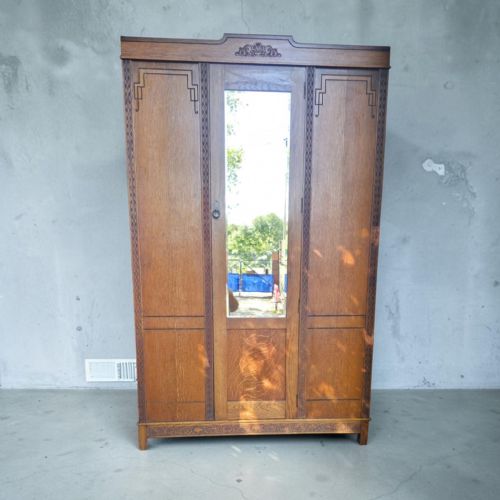
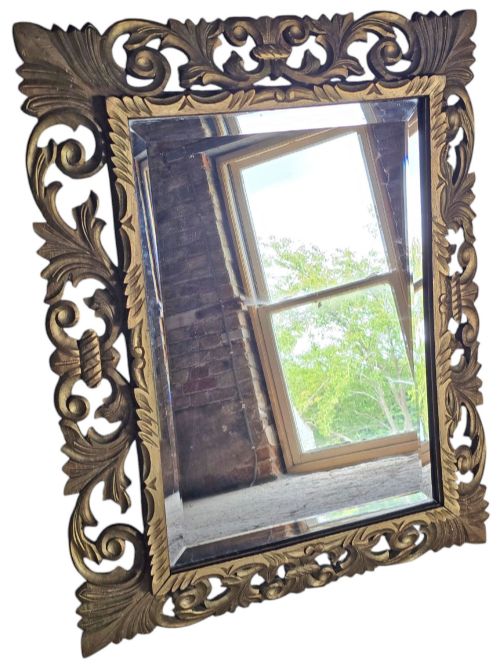
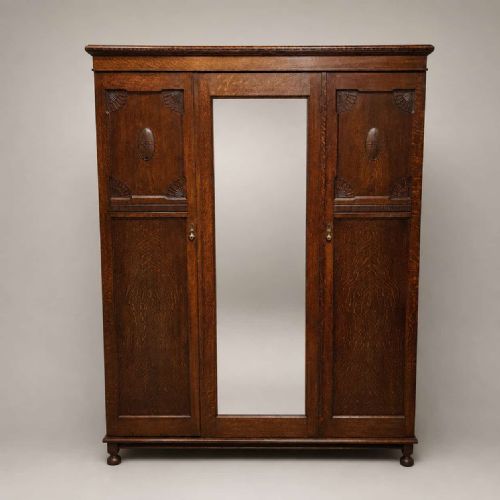
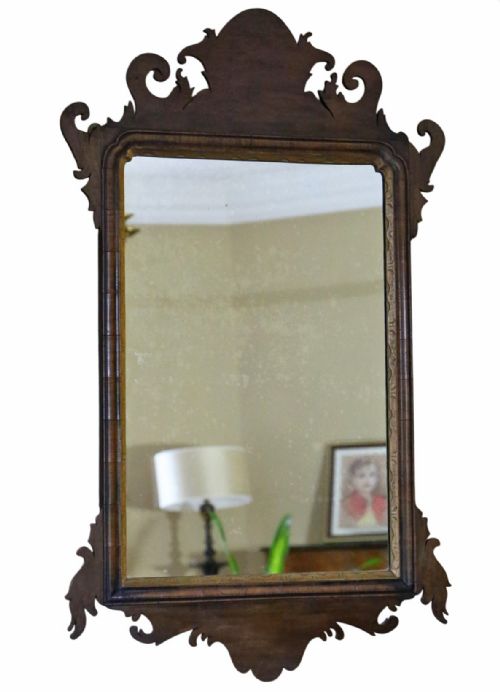
The selection ranges from elaborate Florentine gilt frames to restrained Art Deco oak designs and Georgian Revival walnut fret-cut pieces. Alongside dedicated wall mirrors, the category occasionally includes dressing tables and wardrobes featuring integrated carved mirrors.
Originating in an era of stylistic transition, these pieces blend traditional hand-carving techniques with early twentieth-century domestic requirements. They function primarily as statement wall pieces or architectural focal points above fireplaces.
Materials and construction
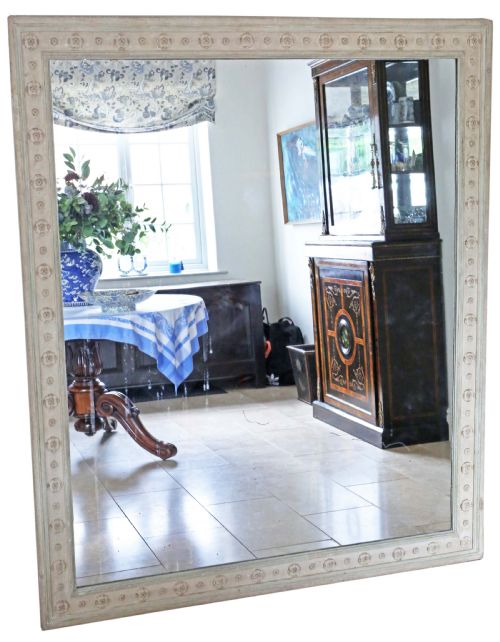
Frames are constructed from timber foundations including oak, walnut, and mahogany veneer, shaped through traditional joinery and hand-carving. Many examples receive surface enrichment through gesso floral decoration, paint, and gold leaf gilding.
Giltwood and gilt frames utilise layered applications of gold leaf or paint over gesso and wood substrates to create reflective decorative surfaces. Glass elements comprise flat mirror plates and convex lenses fitted securely into rebated wooden frames.
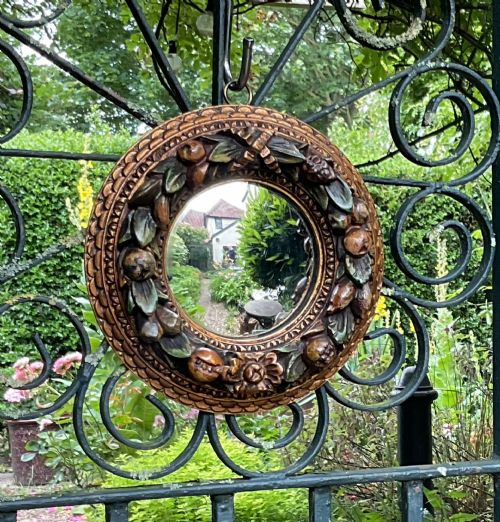
Convex mirrors were historically nicknamed banker's mirrors because their wide field of view supposedly allowed shopkeepers to monitor customers.
Assessing quality and craftsmanship
Quality reveals itself in the depth and crispness of the hand-carved ornament, where sharp undercut details distinguish superior frames from soft or mechanical mouldings. The integrity of the underlying timber frame and the smoothness of the gilded or painted finish dictate the overall standard.
The choice of materials, such as figured walnut veneer or substantial oak, elevates the piece beyond standard production. Preservation of the original mirror plate and the stability of the frame construction mark the division between standard utility items and finer examples.
The 1920s Carved Mirror Glossary
- Giltwood
- Wood that has been coated with gold leaf or a gold-coloured metallic finish. This technique was frequently utilised on Florentine and revival frames.
- Overmantel
- A large mirror designed specifically to hang on the wall directly above a fireplace mantelpiece. These pieces often feature horizontal proportions to span the width of the fireplace.
- Fret-cut
- Woodwork shaped by cutting intricate patterns through a flat board using a fretsaw. This method defines many Georgian Revival wall mirrors.
- Convex mirror
- A round mirror with a curved, outward-bulging glass surface that provides a wide-angle reflection of the room. Small versions appear frequently in early twentieth-century interiors.
- Gesso
- A plaster-like mixture applied to wood frames to create a smooth surface for gilding or painting. Artisans often moulded this material into relief decorations.
1920s Carved Mirror: Frequently Asked Questions
How do I hang a heavy overmantel mirror?
Heavy overmantel mirrors require secure fixings attached directly to structural wall studs or masonry using appropriate heavy-duty wall plugs and screws.
Because these frames possess substantial weight due to their timber and glass composition, professional installation is strongly recommended to ensure safety.
Are Art Deco and revival mirrors from the same decade?
Art Deco and revival mirrors were produced concurrently during the interwar period, reflecting a split between modern geometric trends and traditional historicism.
While Art Deco designs favoured clean rectangular lines, revival pieces copied Georgian, Jacobean, and Florentine aesthetics.
What is a convex mirror used for?
Convex mirrors were traditionally placed in rooms to distribute ambient light and provide a panoramic view of the interior space.
Their curved glass creates a distinct fish-eye perspective that functions both as a decorative focal point and an optical tool.
How do I clean an antique carved frame?
Antique carved frames require gentle dusting with a soft, dry brush to remove particles from the intricate recesses without disturbing the finish.
Moisture and chemical cleaners should be avoided, particularly on giltwood and painted gesso surfaces, to prevent lifting or flaking.