
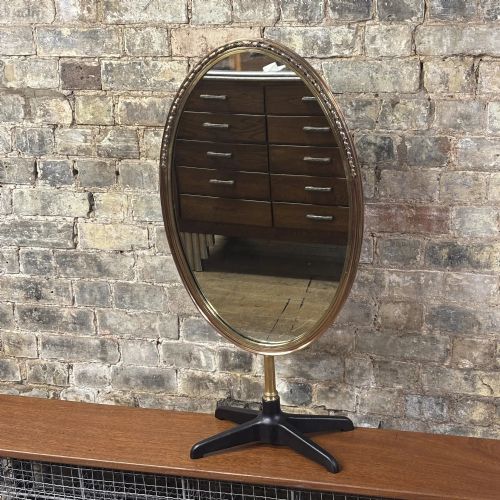
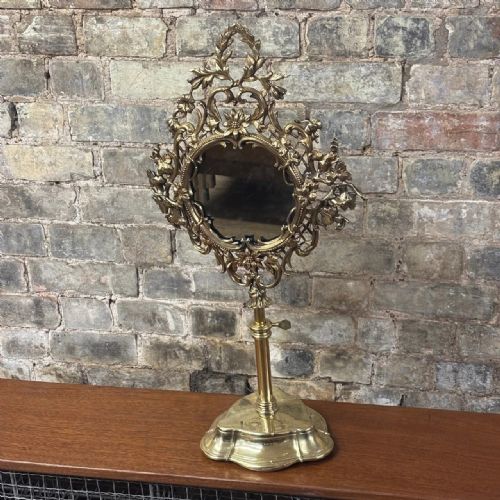
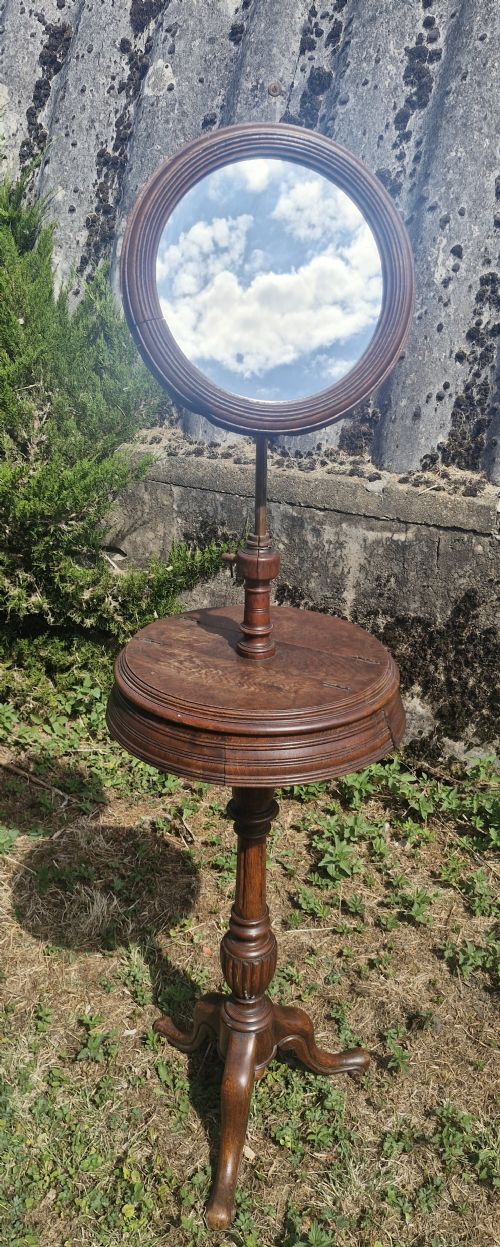
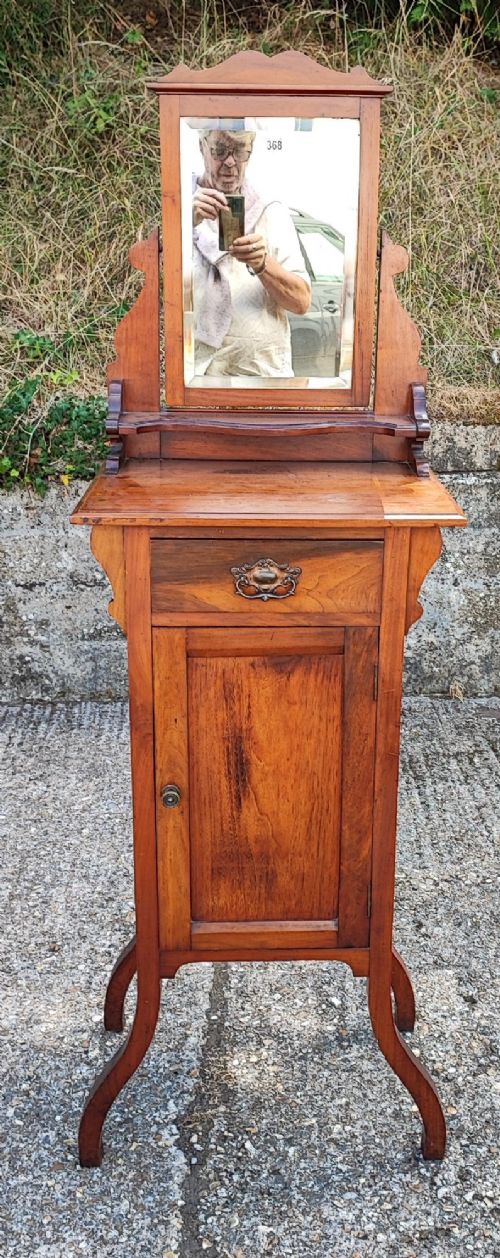
Standing Table Mirror
A standing table mirror brings focus to a dressing surface, offering a movable reflection framed in period timber or metal.
Standing Table Mirror
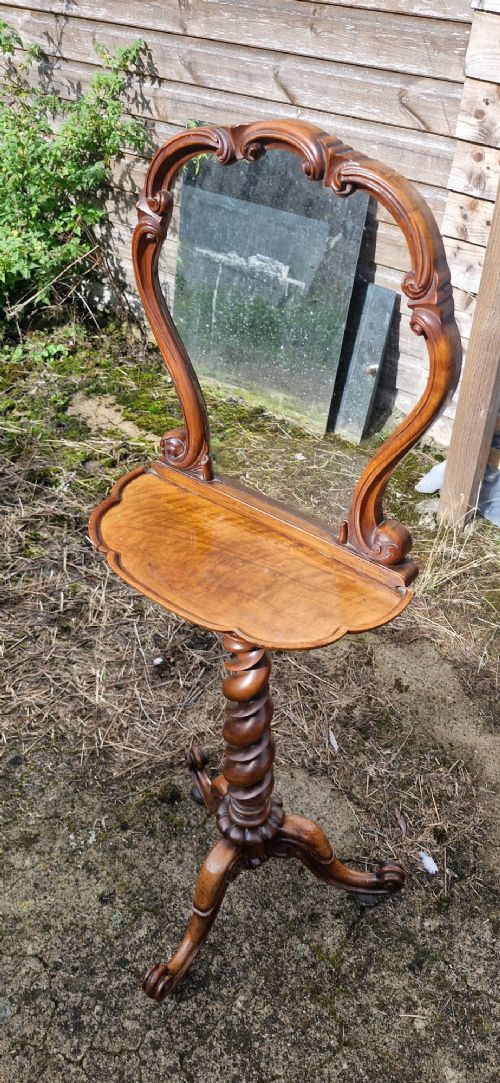
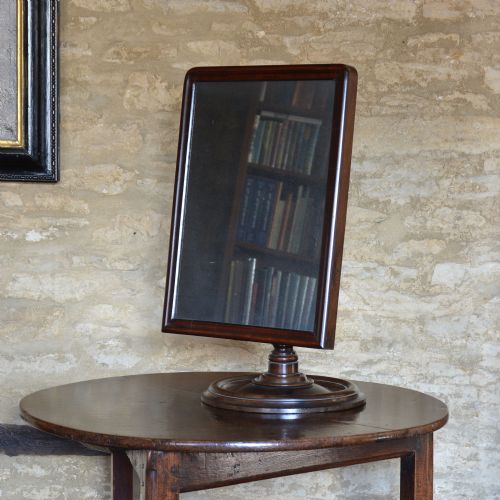
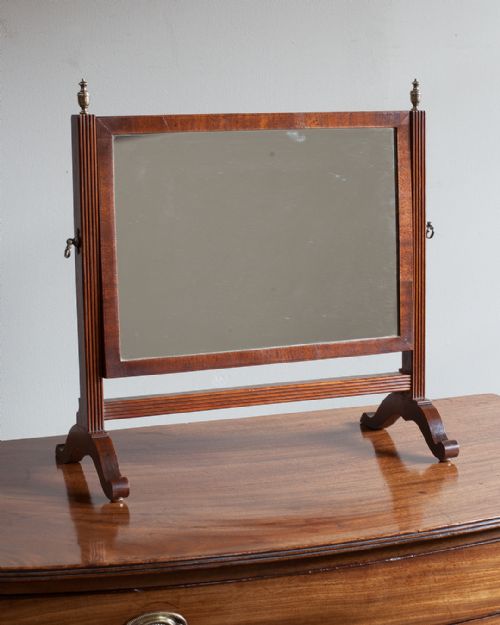
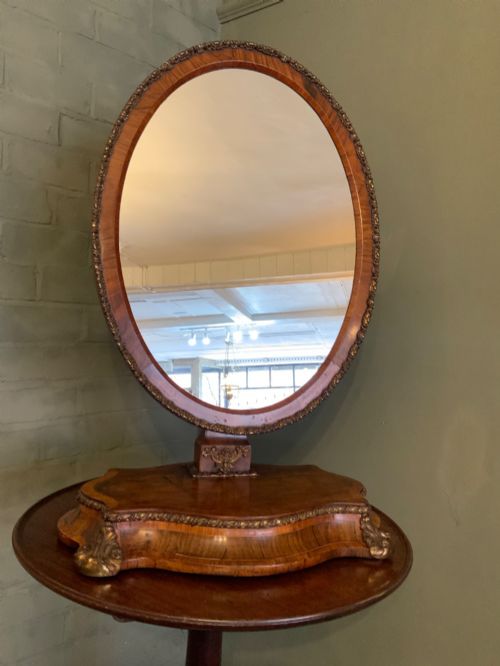
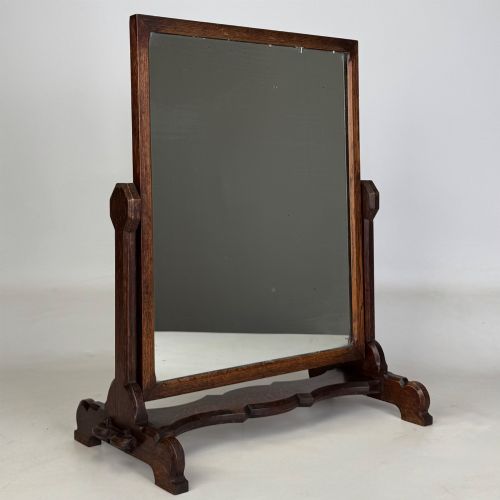
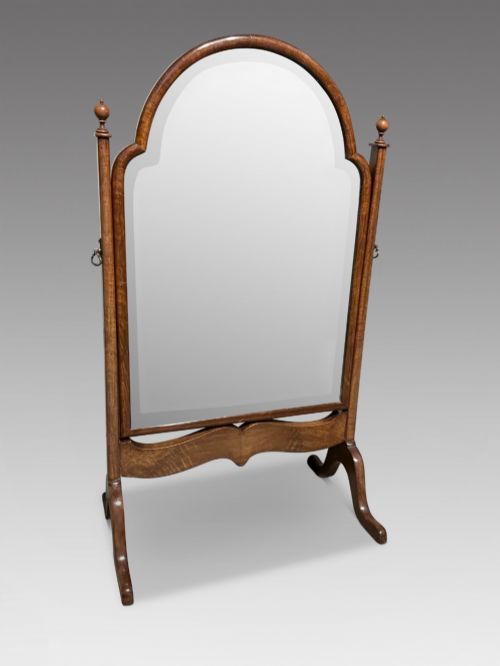
A standing table mirror serves as a movable looking glass for a dressing surface, chest, or console. These pieces appear across Victorian, Edwardian, and earlier periods, taking forms such as toilet mirrors, dressing table mirrors, and shaving stands. Buyers encounter various formats, including swing frames, easel backs, and adjustable pedestal designs.
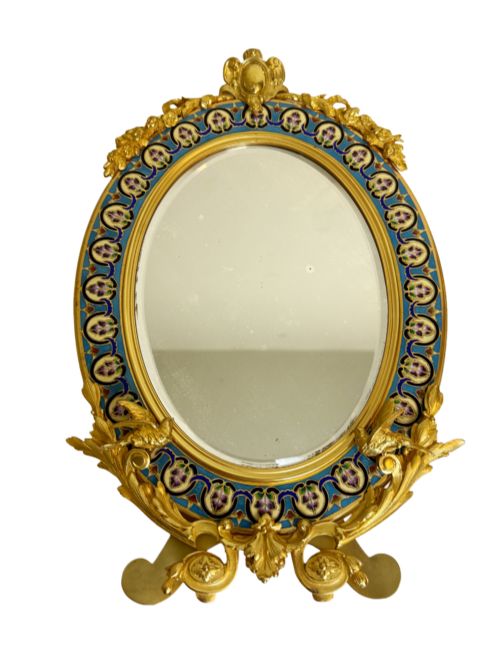
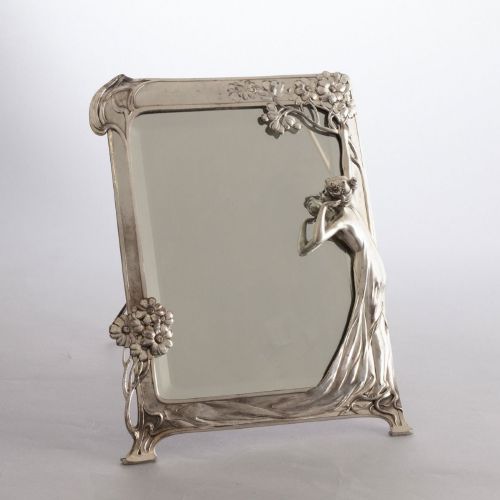
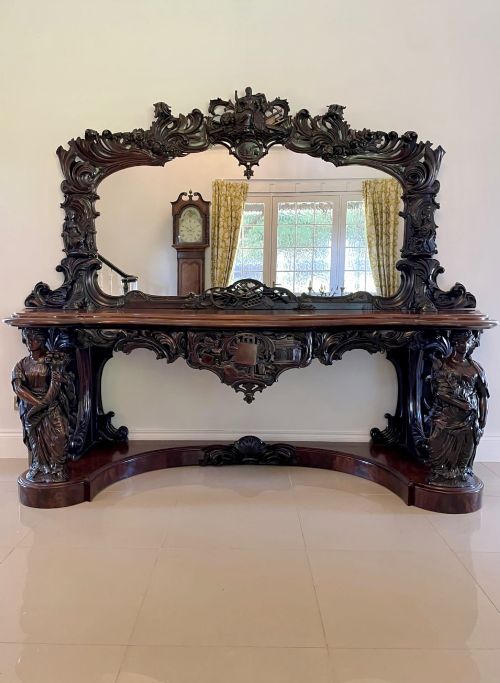
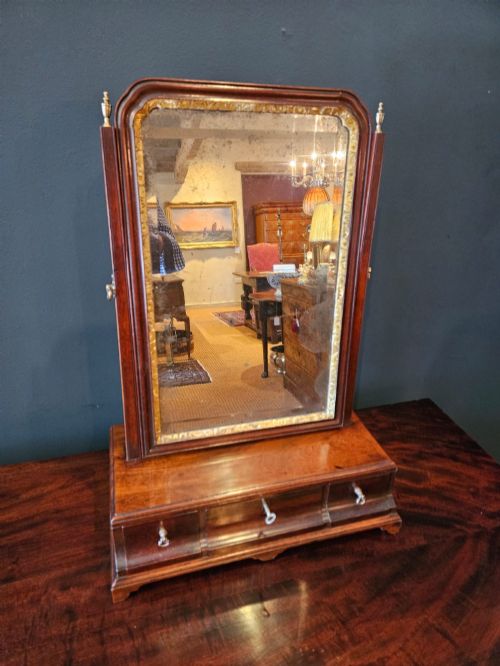
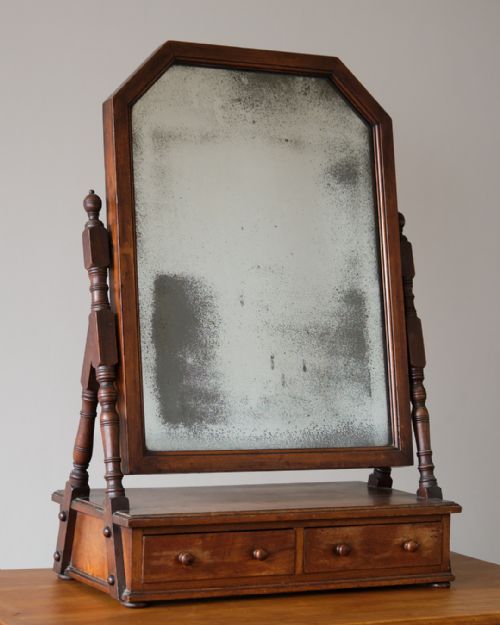
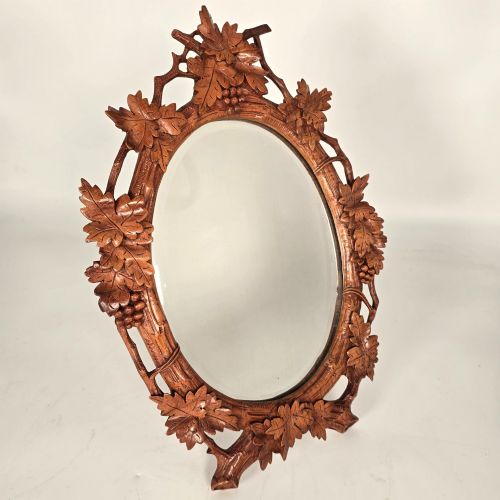
The evidence shows examples ranging from compact silver strut mirrors to large carved mahogany and walnut swing mirrors. Many incorporate tilting mechanisms, drawers within the base, or architectural pediments derived from Georgian and revival styles. Simpler oak, brass, and mahogany versions sit alongside elaborate champleve bronze and giltwood pieces.
How they were made
Cabinetmakers constructed the frames using native and imported timbers like mahogany, walnut, oak, and satinwood, frequently employing boxwood stringing or fine veneer work. Metal examples utilise cast brass, gilt bronze, pewter, and sterling silver, often decorated with repousse or champleve enamel techniques. Supporting structures rely on sturdy dovetail joints, turned brass pivots, and weighted easel struts.
Mirrors utilise genuine silvered glass plates, sometimes held within carved lime wood, ebonised Chinoiserie, or heavy giltwood surrounds. Adjustable models depend on functional brass screws, telescopic columns, or tripod bases to alter the viewing angle. Carved details range from Rococo scrolls and Gothic tracery to organic Art Nouveau plant and animal motifs.
Listings feature standing table mirrors spanning the Georgian, Victorian, and Edwardian periods, constructed in mahogany, walnut, brass, and silver.
What varies in quality
Quality rests in the crispness of the carving, the selection of timber grain, and the integrity of the original mirror plate. Superior examples exhibit hand-carved details, well-matched wood veneers, and robust pivot mechanisms that hold the glass firmly at any angle without slipping. Inferior pieces may show clumsy timber repairs, replacement mirror glass without proper bevels, or worn plating on base metals.
The weight and balance of the stand indicate the standard of production, particularly on tall telescopic shaving stands or large oval toilet mirrors. Maker attribution, such as signed silver or stamped pewter, elevates a piece, as does the survival of original integrated small drawers and brass fittings.
Heal And Sons·Thomas Rubergall
The Standing Table Mirror Glossary
- Toilet mirror
- A small mirror designed to sit upon a dressing table or chest of drawers, often featuring a small base fitted with tiny drawers.
- Swing mirror
- A looking glass hung within a movable frame on vertical uprights, allowing the user to tilt the reflection forward or backward.
- Strut mirror
- A mirror supported by a hinged prop or leg attached to the back, enabling it to stand upright on a flat surface.
- Shaving stand
- An adjustable mirror mounted on a pillar, tripod base, or cabinet, historically created for grooming.
- Champleve
- An enamelling technique where troughs are dug into a metal surface and filled with coloured vitreous paste before firing.
Standing Table Mirror: Frequently Asked Questions
How do I date a standing table mirror?
Dating relies on timber choices, construction methods, and decorative styles visible in the frame and base. Earlier pieces often display walnut or mahogany with hand-cut dovetails, while later Edwardian and Art Deco examples introduce machine-stamped brass, silver, or light oak.
Hardware offers another clue, as handmade brass butterfly screws give way to standardised machine threads by the late nineteenth century. Comparing the mirror plate bevelling and the backing boards helps confirm the production era.
What is the difference between a toilet mirror and a dressing mirror?
A toilet mirror typically sits on top of a separate piece of furniture, such as a chest of drawers or a dressing table, and often includes a box base with small compartments. A dressing mirror generally refers to a larger, standalone table glass or a full-length cheval glass.
Both terms appear across historical listings to describe movable looking glasses used for personal grooming. The physical scale and the presence of storage drawers usually separate the two forms in daily use.
Can I adjust the angle of the glass safely?
Most period swing mirrors utilise side pivot screws or threaded brass nuts that can be gently tightened to hold the glass at the desired tilt. Care must be taken not to force older wooden arms or strip the vintage metal threads within the upright supports.
If the glass slips, checking the tension of the side fittings usually restores proper function. Support the frame with one hand while adjusting the screws with the other to protect the antique joints.