


Standing Marble Plinth
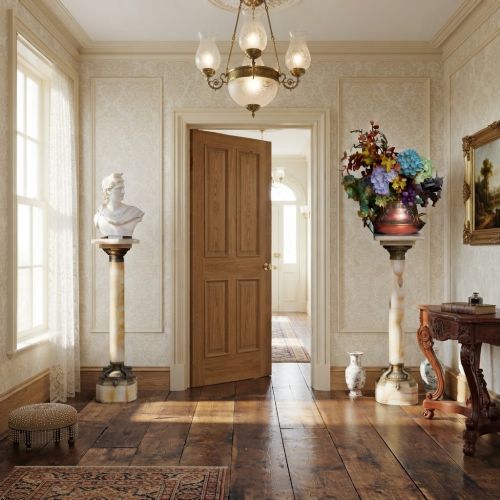
A standing marble plinth elevates statuary and urns with classical weight, bringing proportion and presence to a room.
Standing Marble Plinth
A standing marble plinth serves as a pedestal, column, or display stand designed to elevate sculptures, busts, lamps, and plants. When searching for a standing marble plinth, buyers encounter tall cylindrical or square supports that carry centuries of decorative history.
The pieces appearing here span from the 18th century through the Victorian era and into the early decades of the 20th century. Many examples originate from France and Italy, reflecting classical revival tastes, Grand Tour souvenirs, and Neoclassical design principles.
Most options take the form of columns, torcheres, or urn stands rather than simple flat blocks. They appear in balanced pairs or as single statements, often paired with matching capitals and bases.
Materials and Techniques
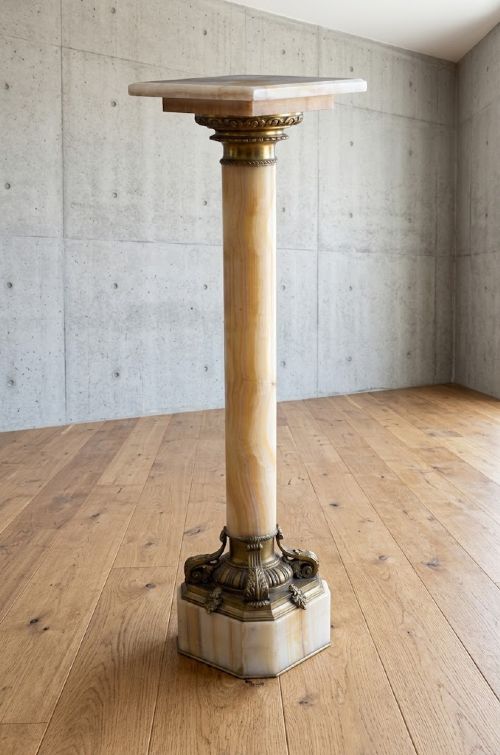
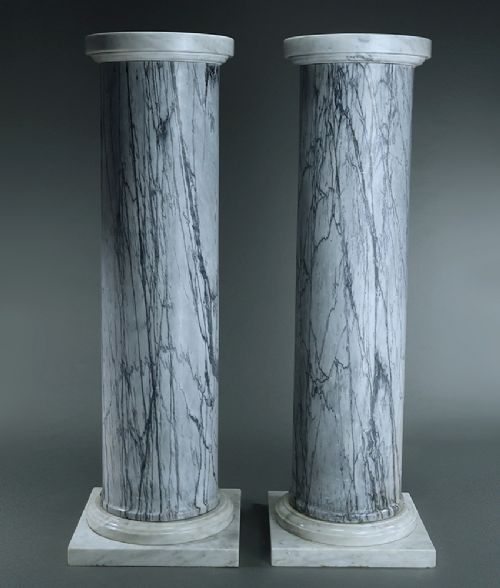
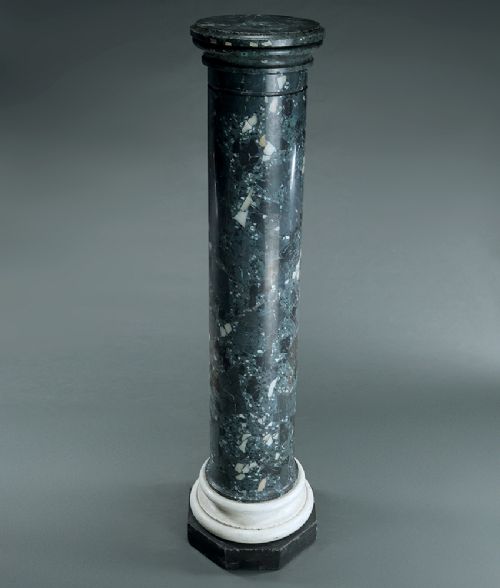
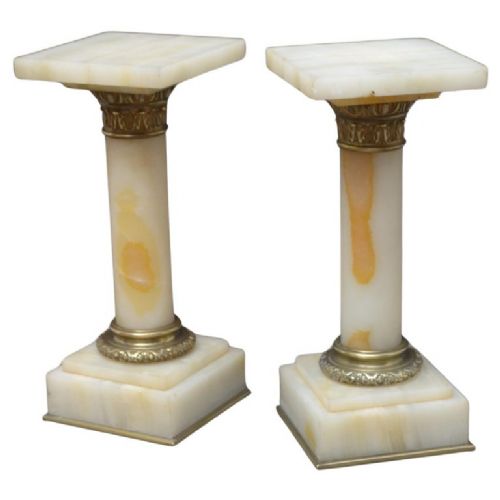
Makers utilised a range of natural stones including onyx, bardiglio, carrara, verde antico, arabescato, and serpentine marble, frequently selected for their dramatic veining and honeyed or green tones. Alabaster also appears for carved figures and plant stands.
Metalwork played a key role in embellishment, with ormolu and gilt bronze collars, mounts, and socles added to frame the stone. Scagliola and painted faux marble techniques provided alternative methods to achieve rich decorative surfaces without solid stone throughout.
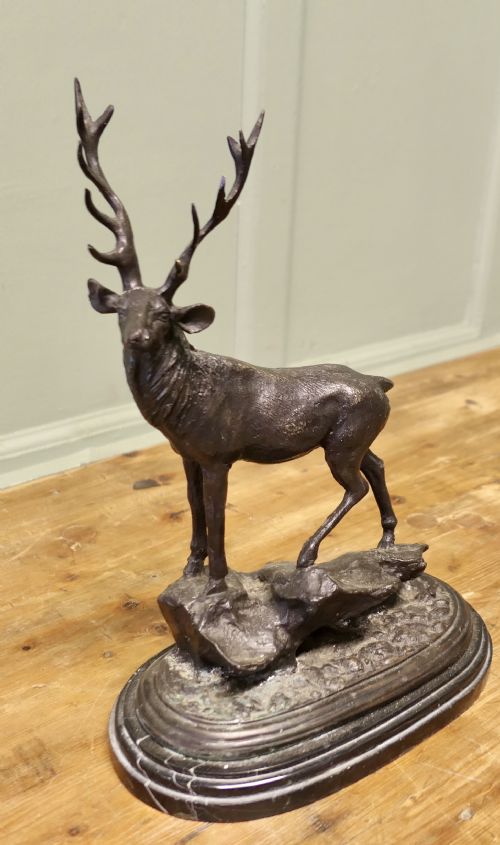
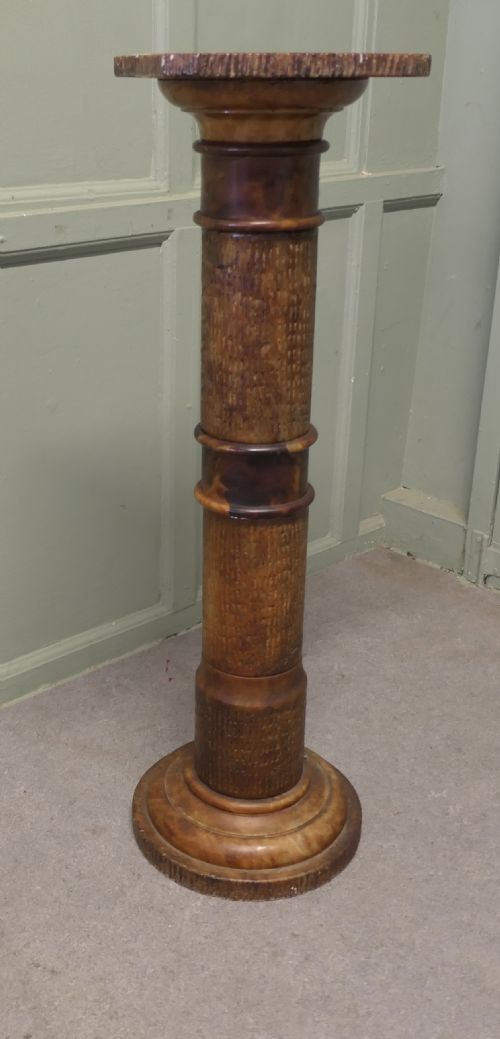
Listings feature 19th century and Victorian pedestal columns in verde antico, onyx, and scagliola alongside bronze sculptures and painted plaster.
Evaluating the Workmanship
Quality rests in the selection of the stone and the crispness of any applied bronze or ormolu mounts. Superior pieces display harmonious natural veining across the shaft and capital, avoiding awkward patchwork joins.
The stability and weight distribution determine a column's utility for holding heavy bronze figures or marble busts. Precision in the turning of the stone and the secure fit of metal collars separate standard utility stands from finer display pieces.
Fritz Kochendorfer
The Standing Marble Plinth Glossary
- Ormolu
- Gilt bronze mounts applied to furniture and stone supports. This French technique involved mercury gilding on bronze.
- Scagliola
- A composite material made from selenite, glue, and pigments, mimicking natural marble. Artisans applied and polished it by hand.
- Torchere
- A tall stand designed to hold a light source or a decorative object. They often take slender columnar forms.
- Neoclassical
- A style reviving classical antiquity, prevalent in the 18th and 19th centuries. It emphasises symmetry, columns, and restraint.
- Verde Antico
- A dark green serpentine marble breccia prized in classical architecture and Italian columns. Its mottled surface resembles ancient greens.
Standing Marble Plinth: Frequently Asked Questions
What fits on a standing marble plinth?
These supports hold bronze sculptures, marble busts, porcelain urns, lamps, and heavy potted plants. Their flat tops and sturdy internal construction distribute weight safely.
Larger columns easily carry life-size figures, while smaller pedestals suit tabletop bronzes and decorative vases.
How do I spot scagliola from marble?
Scagliola feels warmer to the touch than natural stone and lacks crystalline depth under magnification. It relies on a plaster and glue matrix rather than quarried mineral.
Close inspection reveals hand-painted veining beneath a polished surface rather than natural geological fissures.
Are these columns solid stone?
Many 19th-century columns utilise hollow stone construction or a slate core wrapped in thin marble veneer to reduce weight. Others employ painted plaster or scagliola over a timber or metal armature.
Solid monolithic shafts remain less common due to the immense weight required for transport and placement.
How do I date a marble pedestal?
Dating relies on the stone type, turning technique, mounting style, and overall aesthetic. Victorian and Neoclassical examples often feature cast ormolu collars and specific regional marbles.
Documentation of regional workshops and stylistic shifts from the 18th to the early 20th century provides reliable chronological markers.