

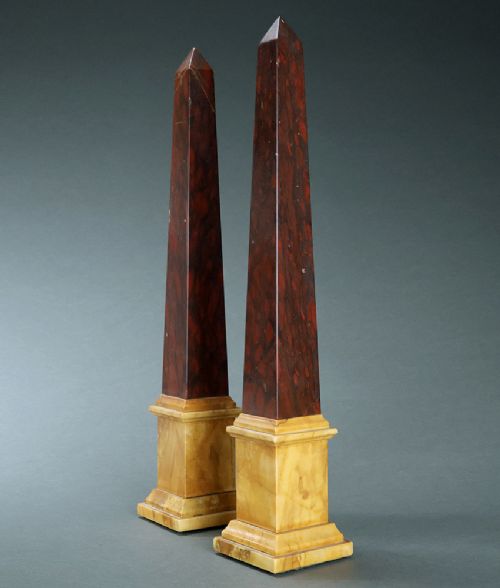


Yellow Marble Column
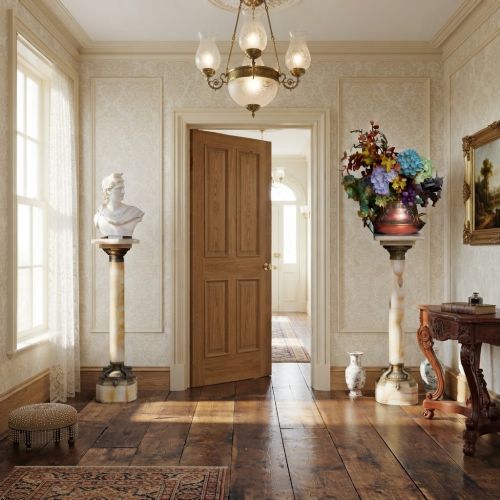
A yellow marble column brings classical warmth and architectural dignity to a room, functioning as a pedestal or display stand.
Yellow Marble Column
When searching for a yellow marble column, a buyer encounters a selection of pedestals, torcheres, and architectural models from the nineteenth century onward. These furnishings serve to elevate sculptures, lamps, or decorative objects within an interior scheme.
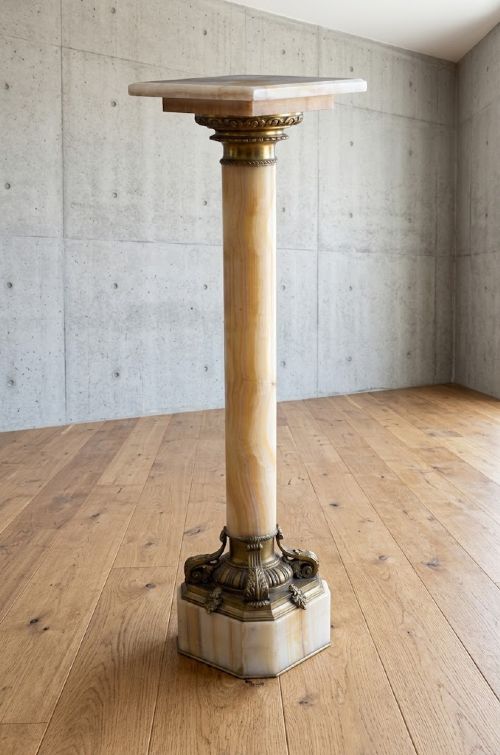
The versions most commonly met on this page include nineteenth-century pedestals in Siena marble and honey-coloured stone, alongside Victorian and later interpretations using faux marble painted wood and scagliola.
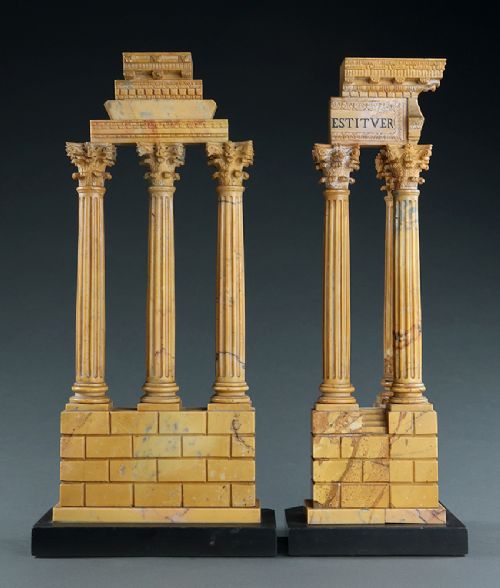
Makers and craftsmen drew upon Neoclassical, French Chateau, and Classical Revival traditions to produce columns and pedestals that echo ancient architectural forms. Grand Tour items also appear, bringing miniature classical ruins and obelisks into the domestic interior.
How they were made
Natural stone columns utilise solid marble and onyx, often turned on a lathe to achieve smooth cylindrical shafts and classical proportions. Workshops frequently added cast or chased ormolu collars and mounts to enhance the capitals and bases.
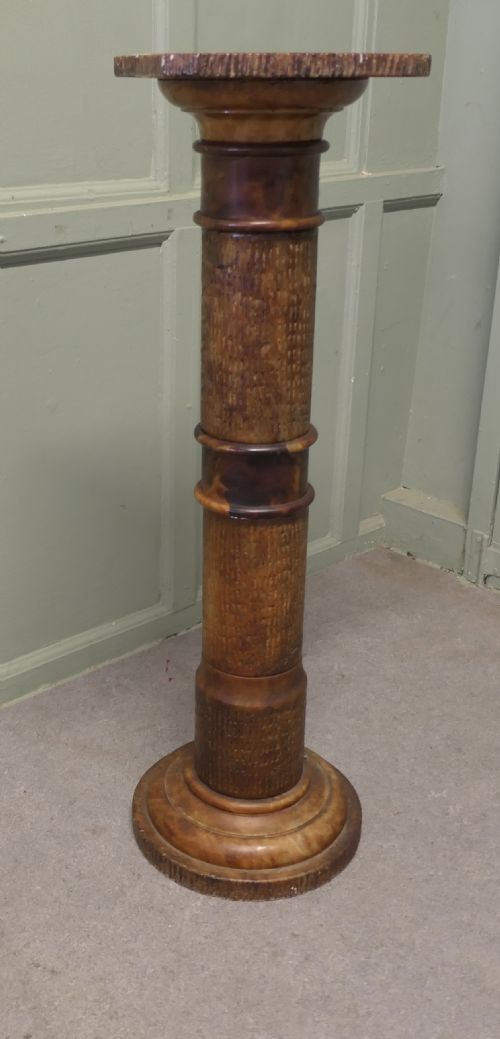
Alternative pieces employ simulated techniques such as faux marble painted pine and scagliola, where plaster and pigments are worked to replicate the complex veining of natural stone. These painted and composite surfaces require careful layering and polishing to mimic genuine mineral specimens.
Some nineteenth-century makers painted ordinary pine to look so convincingly like expensive Italian marble that visitors still try to tap the grain.
What varies in quality
The distinction between tiers of work rests upon the selection of the mineral material and the precision of the turning. Richly figured Siena marble and genuine honey-coloured onyx command attention through depth of colour and natural crystalline structure.
In painted and composite examples, quality depends upon the skill of the artisan in executing convincing faux marble graining that deceives the eye. Ormolu mounts further differentiate pieces, where crisp chasing and heavy gilding elevate a standard pedestal into a decorative work of art.
The Yellow Marble Column Glossary
- Siena marble
- A natural yellow limestone quarried in Italy, prized for its deep golden tone and dark grey or purple veining. It was especially popular during the Neoclassical period and the Grand Tour.
- Ormolu
- Gilt bronze mounted onto furniture and decorative objects, created by applying a mercury and gold amalgam to cast bronze. The finish adds a bright metallic contrast to stone and marble columns.
- Scagliola
- A composite material made from pigmented gypsum, glue, and crushed marble, applied to imitate genuine stone. Artisans can shape and polish it to achieve complex decorative architectural forms.
- Torchere
- A tall stand or pedestal designed specifically to support a lamp or candleholder. These pieces often feature slender columns and elevated platforms for interior illumination.
- Grand Tour
- A cultural journey undertaken by wealthy young Europeans in the eighteenth and nineteenth centuries, returning with classical souvenirs such as marble obelisks and architectural models.
Yellow Marble Column: Frequently Asked Questions
How do I use a column at home?
These pieces function primarily as pedestals to display sculptures, large vases, or table lamps in a hallway or reception room. Placing an object on top allows you to elevate decorative items and introduce vertical lines to an interior scheme.
Heavier marble and onyx versions require a stable, level floor surface to support their weight safely. Lighter painted wood or scagliola columns offer similar visual presence while remaining easier to reposition.
Are these columns from the nineteenth century?
Many examples date from the nineteenth century, reflecting the strong Victorian and Neoclassical interest in classical antiquity and Grand Tour souvenirs. These period pieces often feature hand-turned stone shafts and traditional joinery.
How do I care for a marble column?
Natural stone surfaces benefit from gentle dusting with a dry, soft cloth to prevent the accumulation of grit in the carved details. Avoid using acidic cleaning products or excessive water, which can etch marble or damage painted faux finishes.
For pieces with ormolu collars, use a dry brush to clear crevices rather than liquid polishes that might stain the surrounding stone or composite material.