

Standing Glass Cabinet
A standing glass cabinet holds china and books behind glazed doors, bringing proportion and light to a room.
Standing Glass Cabinet
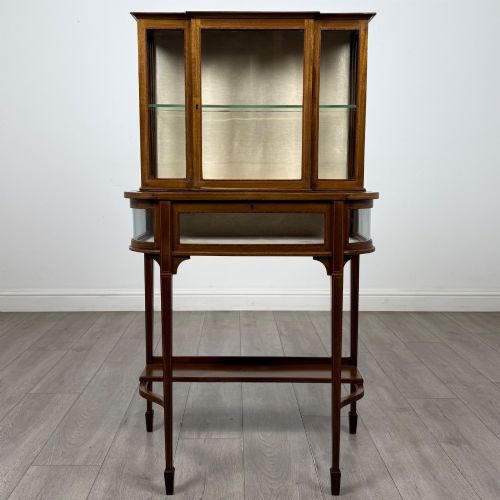
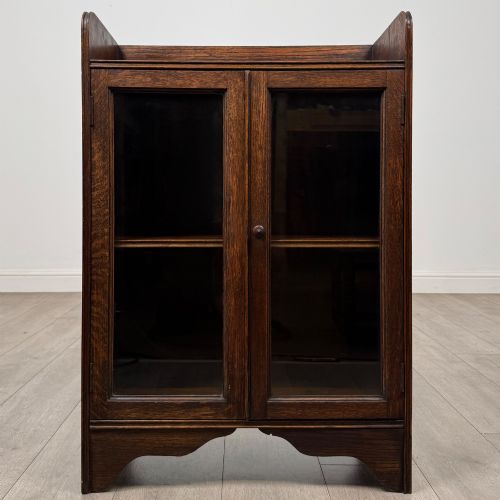
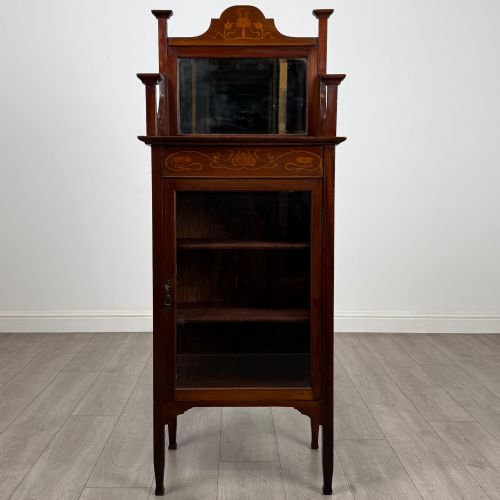
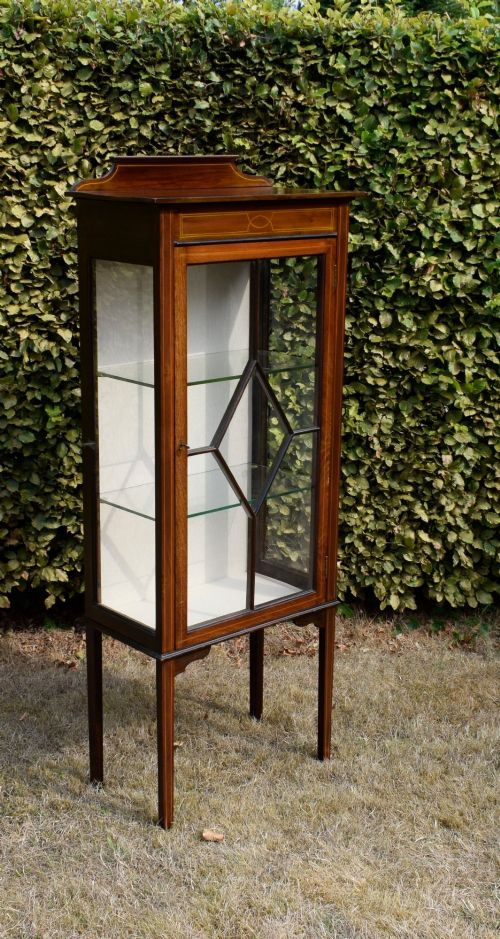
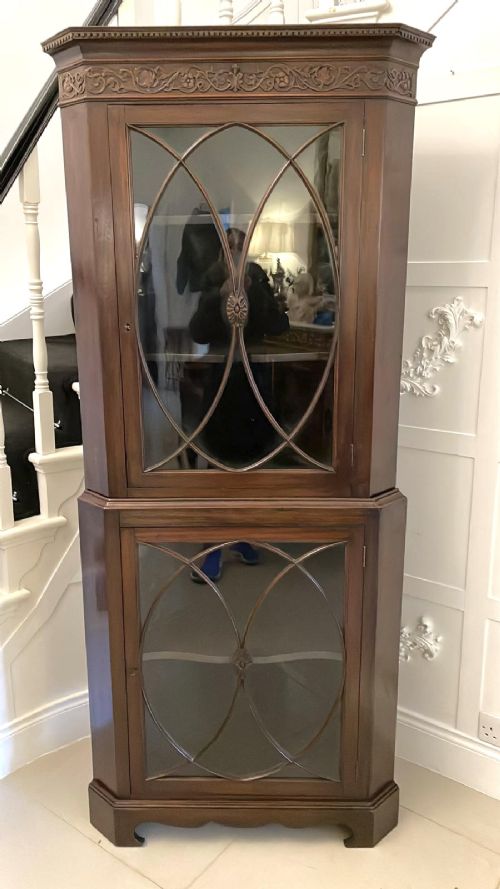
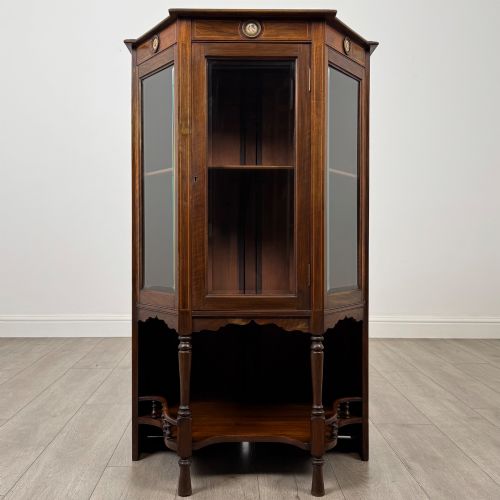
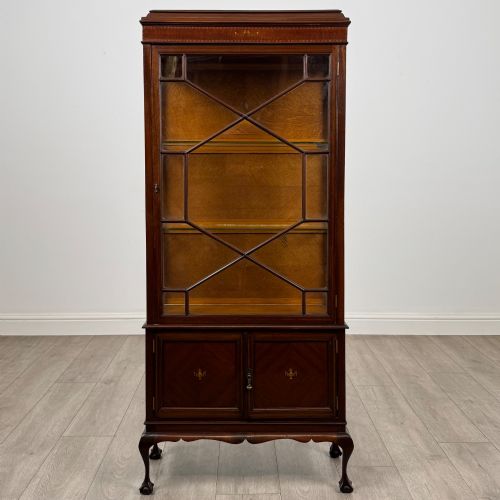
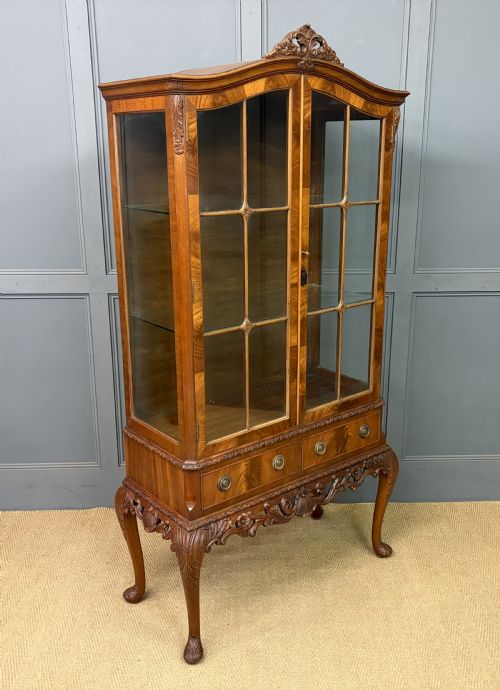
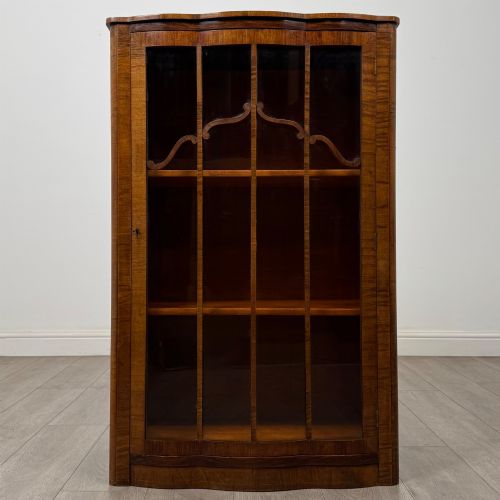
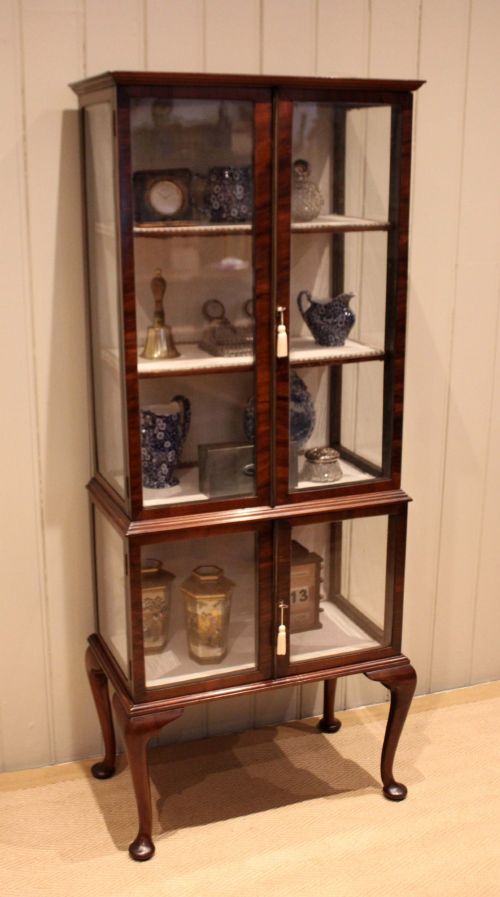
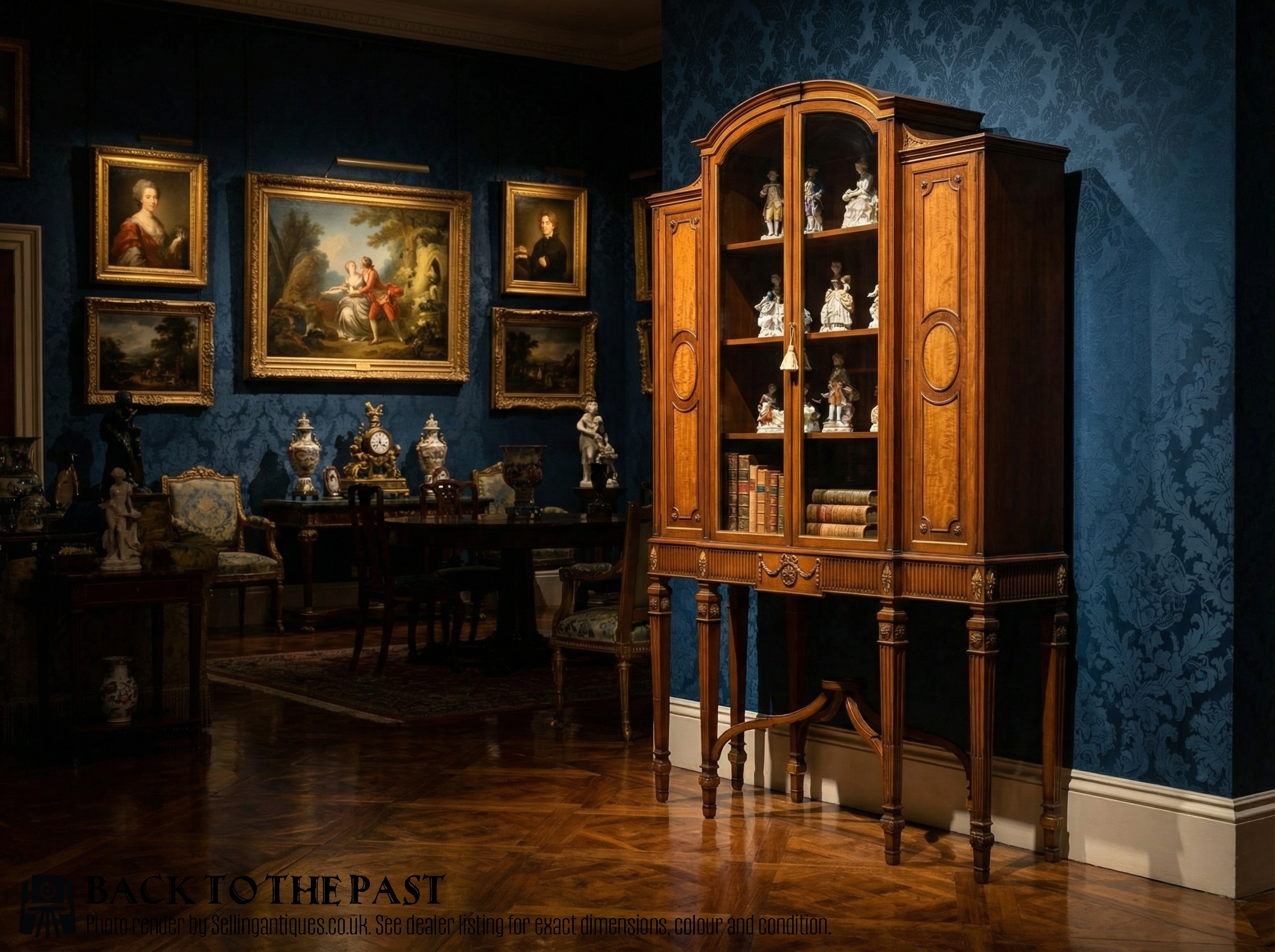
A standing glass cabinet takes several distinct forms across the periods represented on this page, appearing as tall display pieces, corner cupboards, and bookcase combinations. Most examples you encounter here date from the Edwardian era and the nineteenth century, built to showcase valued possessions in domestic interiors.
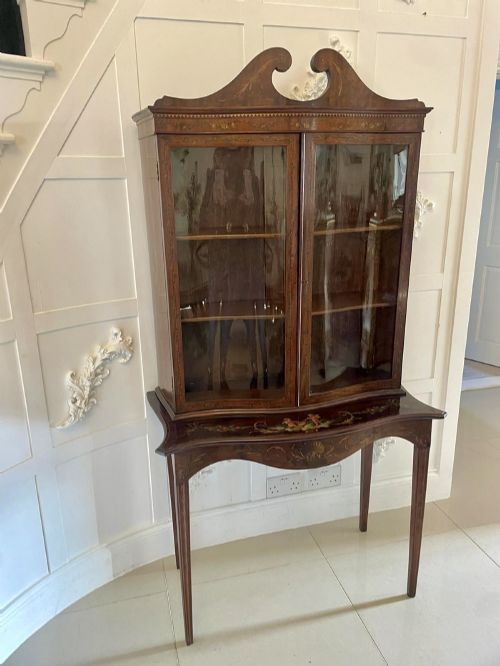
Makers adapted these cabinets into various shapes, including slim pedestal formats, two-part pine cupboards, and broad side units. The design leans heavily on Georgian and Sheraton Revival vocabulary, translating earlier architectural motifs into domestic display furniture.
Materials and Construction
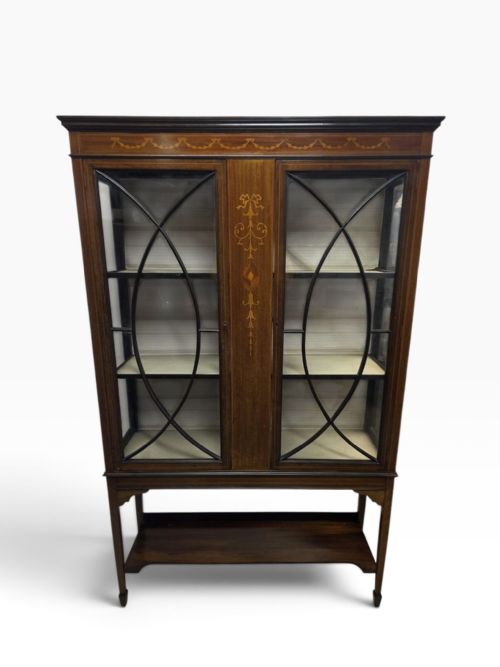
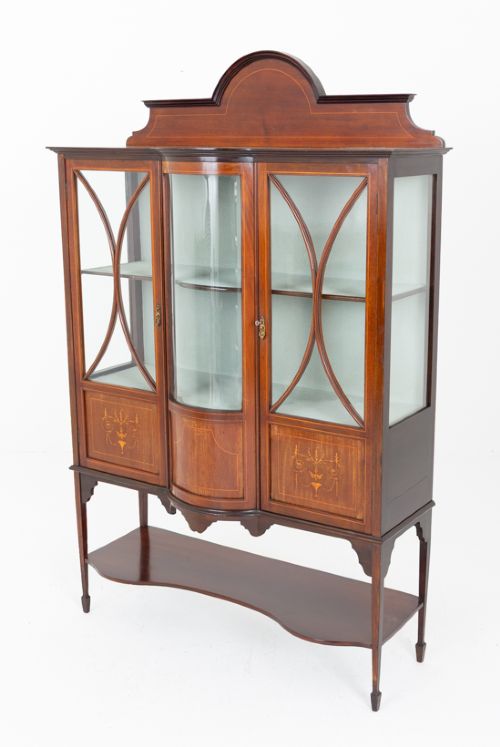
Cabinet makers relied primarily on mahogany, walnut, and oak as structural timbers, frequently pairing them with contrasting satinwood inlay and brass hardware. Glazing takes the form of transparent glass panes set into wooden frames or held behind astragal bars.
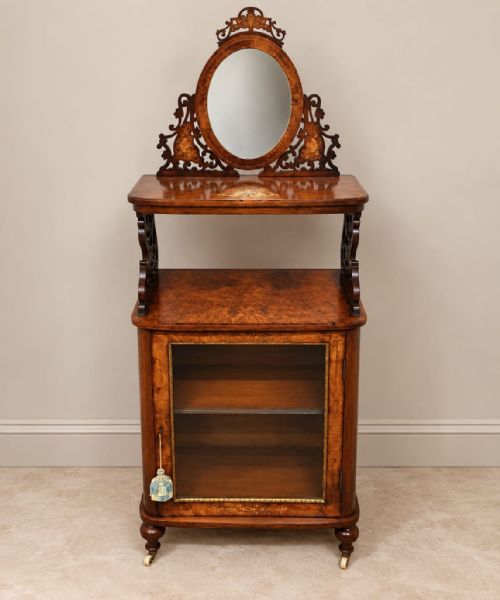
Surfaces receive decorative treatment through hand-painted details, figured veneers, and carved wooden elements. Pine versions often present a simpler waxed finish, while finer pieces utilise delicate stringing and marquetry across the doors and cornices.
Several cabinets double as music cabinets or stationery stands, proving that past generations needed specialised storage for sheet music and ink.
Gradations in Execution
The distinction between standard and superior pieces rests on the selection of timber and the crispness of the cabinet work. Figured grain, intricate inlay, and well-proportioned carved mouldings separate simpler utility furniture from master cabinet maker output.
Attention to secondary details, such as original brass fittings, intact glass, and refined interior linings, elevates an example. The harmony of proportions and the precision of the glazed door assembly dictate the overall standing of the piece.
Gabriel Viardot·Maple & Co.·Liberty & Co.·James Winter & Sons
The Standing Glass Cabinet Glossary
- Astragal glazed
- Glass secured within a framework of slender wooden mouldings dividing the door into smaller panes. This technique derives from eighteenth-century bookcase design.
- Vitrine
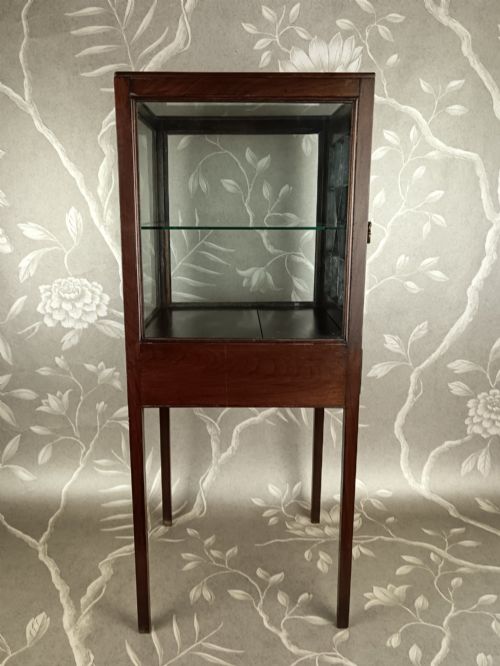
- A glass-sided cabinet designed specifically for the display of porcelain and small objects. These pieces prioritise all-around visibility.
- Satinwood inlay
- Contrasting blonde timber inserted into a darker primary wood to form geometric or floral patterns. It defines much of the Sheraton Revival style.
- Corner cabinet
- A triangular form constructed to fit snugly into the angle of a room. These units make efficient use of difficult architectural spaces.
- Pedestal display cabinet
- A tall, narrow freestanding unit raised on a column or plinth base. This format suits confined wall spaces while offering vertical storage.
Standing Glass Cabinet: Frequently Asked Questions
How do I clean the glass safely?
Use a soft microfibre cloth and a mild glass cleaning solution sprayed onto the cloth rather than directly onto the wood. Avoid getting moisture on antique timber or painted decorations.
Take care around old glazing putty and delicate astragal bars, as these can loosen over time with vigorous rubbing.
Where should I place a standing glass cabinet?
Position the cabinet away from direct sunlight and radiators to prevent the timber from drying out, warping, or cracking. Stable room temperatures protect both the structure and any internal contents.
Ensure the floor is level so the doors hang true and latch correctly without straining the frame.
Can I adjust the internal shelves?
Most antique cabinets feature fixed wooden or glass shelves supported on stationary wooden fillets rather than modern adjustable metal brackets. Altering them requires professional joinery work.
Plan the height of your display items around the existing shelf clearances before arranging your collection.
How do I distinguish Edwardian from Victorian cabinets?
Victorian examples tend to use heavier timbers, darker finishes, and more robust carving, reflecting mid-nineteenth-century taste. Edwardian pieces often exhibit lighter satinwood inlays, painted decoration, and influences from the Sheraton Revival.
Examining the construction of the backboards and drawer linings helps confirm the period of manufacture.