





Black Glass Display Cabinet
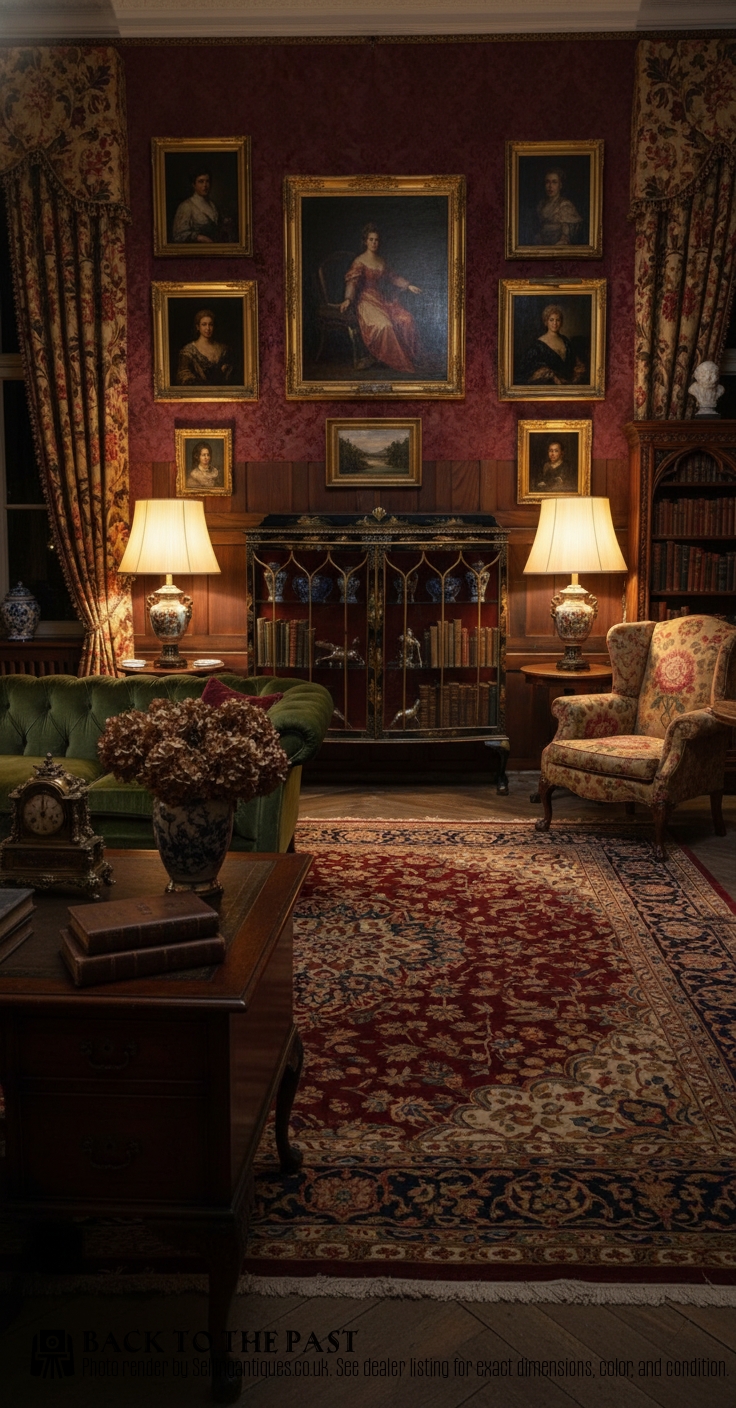
A black glass display cabinet brings dark timber and clear glazing together to show off precious objects with quiet authority.
Black Glass Display Cabinet
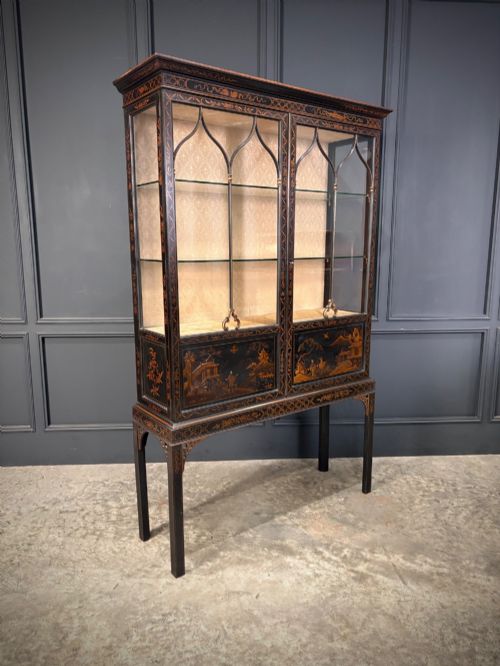
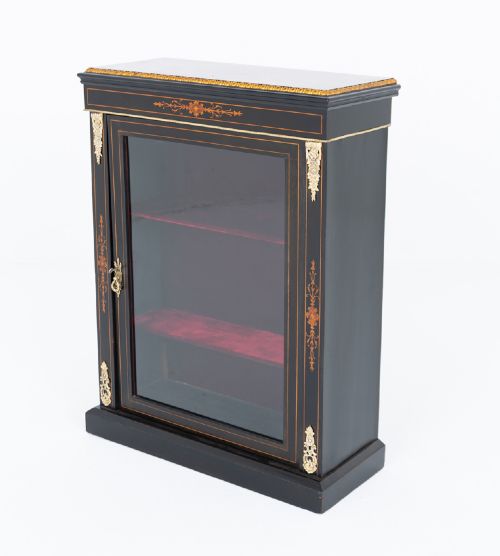
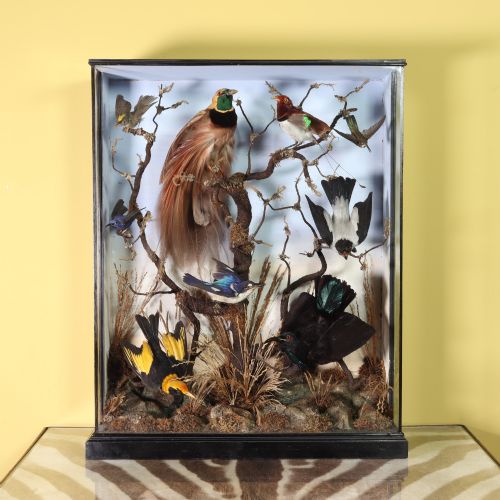
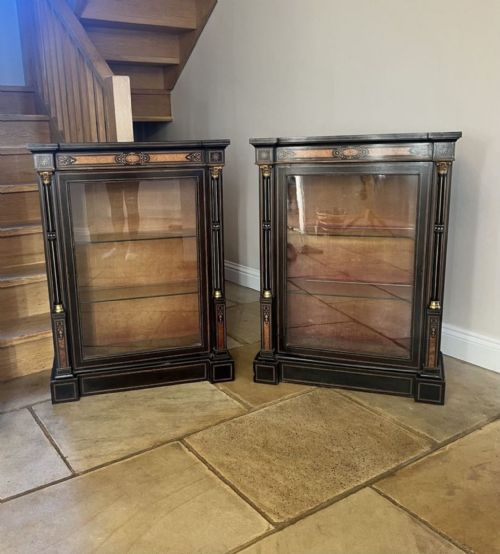
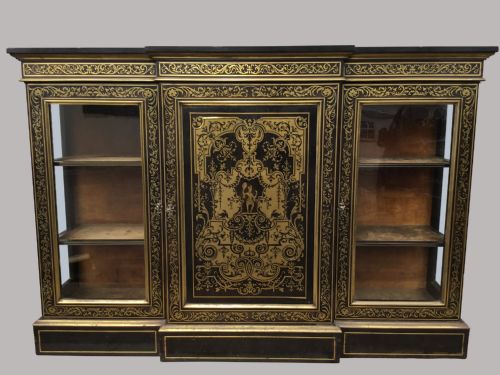
A black glass display cabinet encompasses diverse forms ranging from Victorian ebonised credenzas and pier cabinets to towering shop counters and delicate taxidermy domes. The selection relies heavily on nineteenth-century pieces alongside early twentieth-century shop fittings, uniting dark surfaces with transparent enclosures. Buyers encounter everything from French Boulle work and Dutch vitrines to practical countertop cases designed for commercial or domestic display.
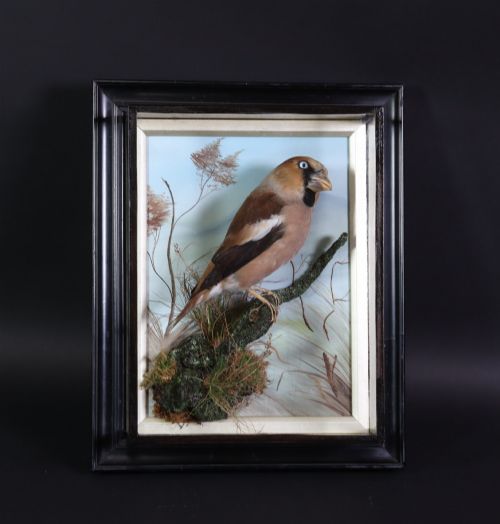
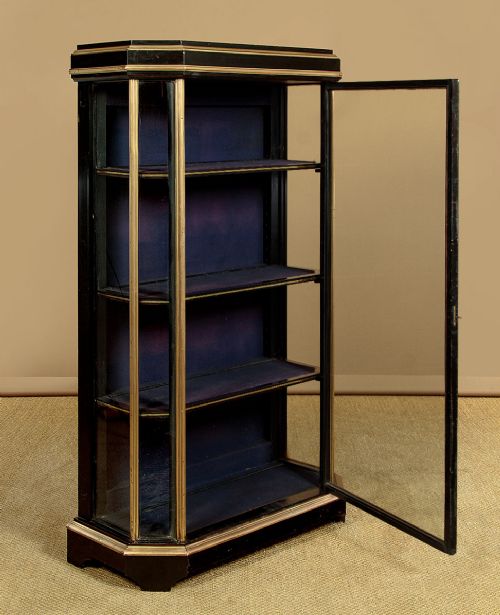
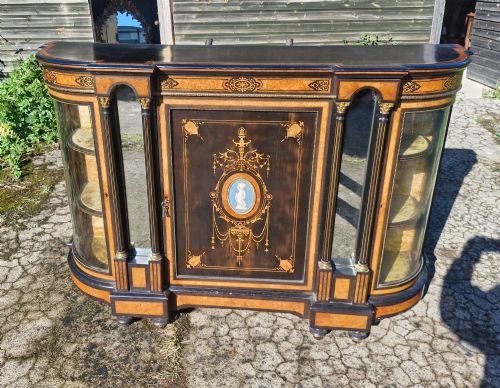
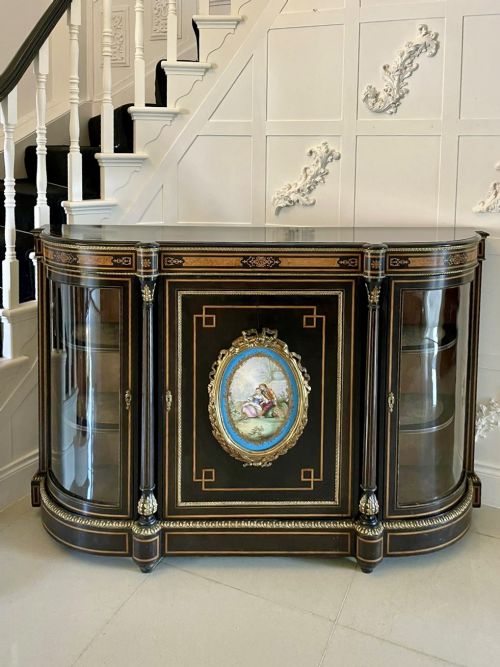
The dominant aesthetic draws on ebonised wood, dark paint, and contrasting brass or ormolu mounts to frame glass panels. Credenzas and side cabinets offer wide shelving beneath glazed doors, whereas pier cabinets and tower cases rise vertically to save floor space. Specimen domes and taxidermy cases provide smaller, intimate enclosures specifically proportioned for natural history collections and curiosities.
Materials and Construction
Makers achieved the characteristic dark finish by ebonising timber or applying black paint to woods like walnut, amboyna, and burr walnut. These deep surfaces frequently received intricate marquetry in contrasting lighter woods, alongside porcelain plaques and pietra dura panels inset into the structure.
Structural embellishment relied on cast brass and ormolu mounts, corner brackets, and gilt bronze details that punctuate the dark woodwork. Glazing ranged from single large door panels to curved bow ends and mirrored backs designed to reflect light through the displayed contents.
Black Glass Display Cabinet Retail Price Guide 2026
Typical asking prices for black glass display cabinet among the pieces listed under this phrase on Sellingantiques today, from the lower quarter to the upper quarter. They describe what is for sale here now, not the wider market.
Listings span the nineteenth and twentieth centuries, incorporating Victorian ebonised wood, Edwardian lacquered finishes, and Art Deco steel structures.
Execution and Detail
The division between standard production and exceptional work rests on the precision of the cabinetmaking and the richness of the applied ornament. Finer pieces integrate complex floral marquetry, hand-chased ormolu mounts, and specialised inserts such as Sevres porcelain plaques rather than relying purely on painted finishes.
Structural integrity and glass selection further separate grades, visible in the tightness of mitred joints, the weight of the timber used for carcases, and the clarity of the original window glass. Cabinets retaining integrated mirrored backs and undamaged brass detailing demonstrate superior original workshops.
Sage And Co·Quincy Showcase Works
The Black Glass Display Cabinet Glossary
- Ebonised
- Timber treated with stain or chemical processes to imitate costly ebony wood. This finish defines the predominant dark appearance of Victorian display furniture.
- Credenza
- A low sideboard or cabinet featuring central glazed doors flanked by matching cupboards. These pieces originated in domestic dining rooms and formal drawing rooms.
- Ormolu
- Gilded bronze used for decorative mounts and architectural highlights on nineteenth-century furniture. It provides bright metallic contrast against black wooden surfaces.
- Marquetry
- Inlay work using thin pieces of wood veneers to create pictorial or geometric patterns. Elaborate floral designs frequently adorn the panels of Victorian cabinets.
- Pier Cabinet
- A narrow upright display cabinet built to stand against the wall space between windows. These pieces maximise vertical display capacity in compact rooms.
Black Glass Display Cabinet: Frequently Asked Questions
How do I date a black display cabinet?
Dating relies on combining the stylistic evidence of the mounts, timber treatments, and overall construction methods. Victorian examples frequently feature ebonised wood with marquetry inlay or ormolu, while twentieth-century shop fittings show simpler steel and glass integration.
Examining the interior woodwork, hinges, and glass manufacturing characteristics helps narrow the decade of production. Retailer labels or workshop stamps inside the carcase provide the clearest chronological anchors.
Where should I place a heavy credenza?
These substantial cabinets require solid wall support and level flooring to ensure the heavy glazed doors hang true and open smoothly. Placing them away from direct sunlight protects both the ebonised finish and any sensitive interior contents like textiles or taxidermy.
Because many examples feature mirrored backs, positioning them opposite a light source maximises the interior illumination of displayed collections.
Can I use a shop display counter at home?
Commercial countertop cases and tower cabinets from the early twentieth century adapt exceptionally well to domestic settings for showing collections. Their robust glass panels and practical access doors offer superior visibility for small artefacts and curios.
These pieces bring an industrial or utilitarian contrast to traditional domestic interiors while maintaining secure enclosure for fragile items.