
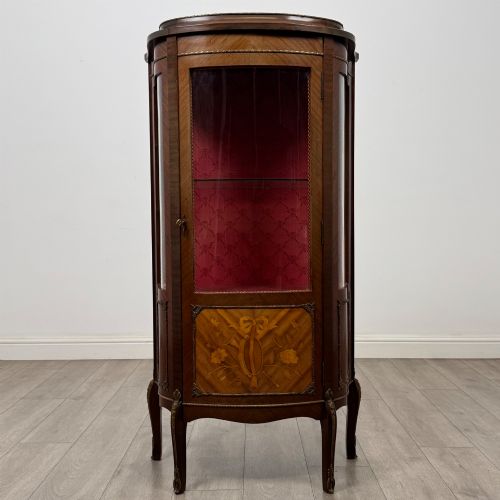
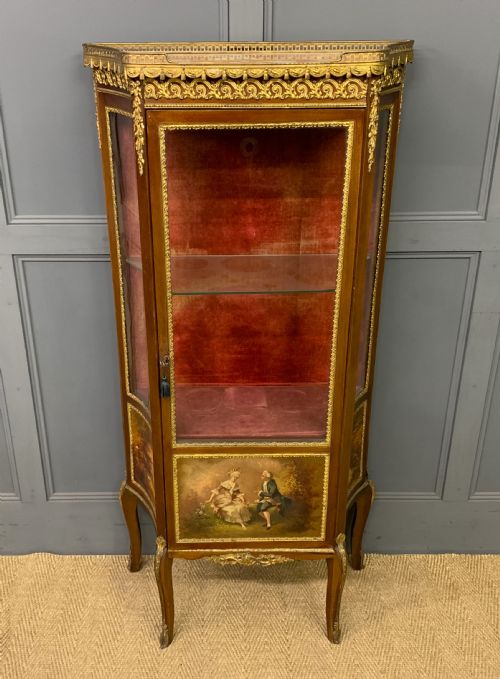


Antique Red Lined Cabinet
An antique red lined cabinet brings a rich flash of crimson velvet or silk into a room, framing your collected objects with period elegance.
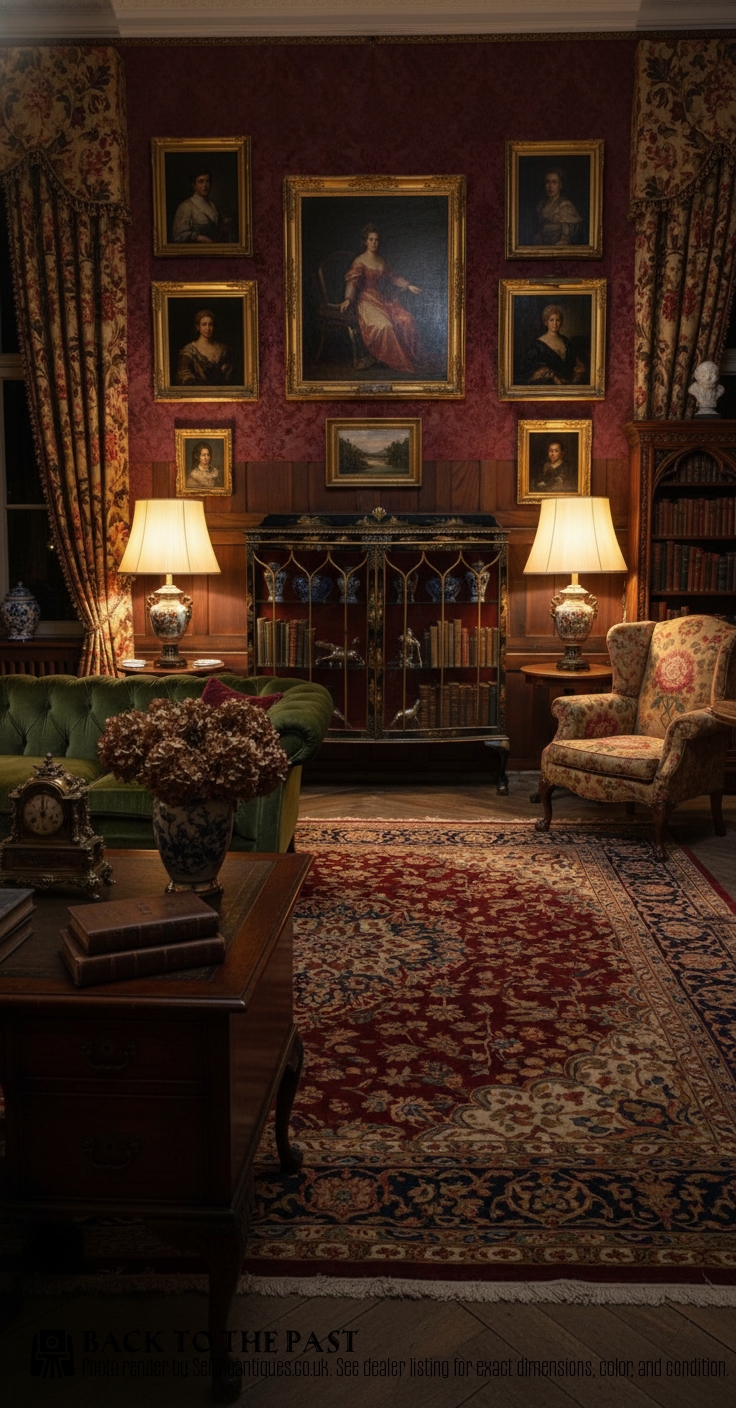
Antique Red Lined Cabinet
An antique red lined cabinet comprises display furniture designed to showcase small treasures against a contrasting textile interior. The selections available on this page span the nineteenth century through the Edwardian era and into the early twentieth century.
How they were made
Cabinetmakers utilised timber carcasses of mahogany, kingwood, and cedar, often applying rich lacquer or ebonised finishes to the exterior surfaces. Glass panels are integrated into doors and lids to permit clear viewing of the interior.
Interiors are lined with textiles such as velvet or fabric, creating a soft backdrop for objects. Metalwork details including brass mounts, ormolu, and glass components complete the construction of these refined display pieces.
Listings feature woods such as mahogany, kingwood, and cedar, paired with textiles like velvet and fabric across nineteenth and twentieth-century periods.
What varies in quality
The standard of timber selection and the crispness of cabinetmaking define the upper tier of these pieces. Finely figured mahogany veneers and well-balanced proportions indicate careful workshop execution.
The integration of decorative elements like ormolu mounts, hand-painted lacquer, and well-fitted glass distinguishes finer examples. The condition and quality of the internal textile lining also influence the overall character of the cabinet.
The Antique Red Lined Cabinet Glossary
- Vitrine
- A glass-fronted display cabinet used for showcasing porcelain, curiosities, and small decorative objects. These pieces often feature glazed sides to maximise light exposure.
- Ormolu
- Gilt bronze ornamentation applied to furniture, popular in French and revival designs. This decorative metalwork adds bright metallic contrast to dark timber surfaces.
- Bijouterie table
- A glass-topped display table specifically designed for holding jewellery, medals, and small precious items. The internal well is typically lined with velvet or fabric.
Antique Red Lined Cabinet: Frequently Asked Questions
What fits inside an antique red lined cabinet?
These cabinets are suited for displaying small collections such as porcelain figurines, pocket watches, medals, and glassware. The internal glass shelves and fabric backing help to organise and protect delicate items.
Larger pieces like secretaire chests or cupboards also incorporate writing surfaces or enclosed storage alongside their display functions.
How do I care for the fabric lining?
The velvet or fabric lining benefits from gentle dusting using a soft brush or low-suction attachment to remove settled debris. Direct sunlight should be avoided to prevent fading of the red textile.
Maintaining stable indoor humidity levels also protects both the timber carcass and the internal fabric from deterioration over time.
How do I identify the period of the cabinet?
Stylistic markers such as Regency restraint, Louis XV curves, or Edwardian Chinoiserie decoration provide initial clues to the date of manufacture. Construction methods, timber choices, and secondary woods on the interior help confirm the era.
Examining the hinges, locks, and glass clarity offers further evidence regarding when the piece was constructed in the nineteenth or twentieth century.
Are these cabinets difficult to place in a modern room?
Many examples are built to modest proportions, making them adaptable for placement in sitting rooms, hallways, or studies. The contrasting red interior adds a warm focal point to neutral contemporary interiors.
Freestanding vitrines require only a stable floor surface and adequate clearance for door swings to function effectively.