





Hand Painted Chinoiserie Cabinet
A hand painted chinoiserie cabinet brings rich lacquered colour and narrative scenes into a room, spanning styles from Georgian to Art Deco.
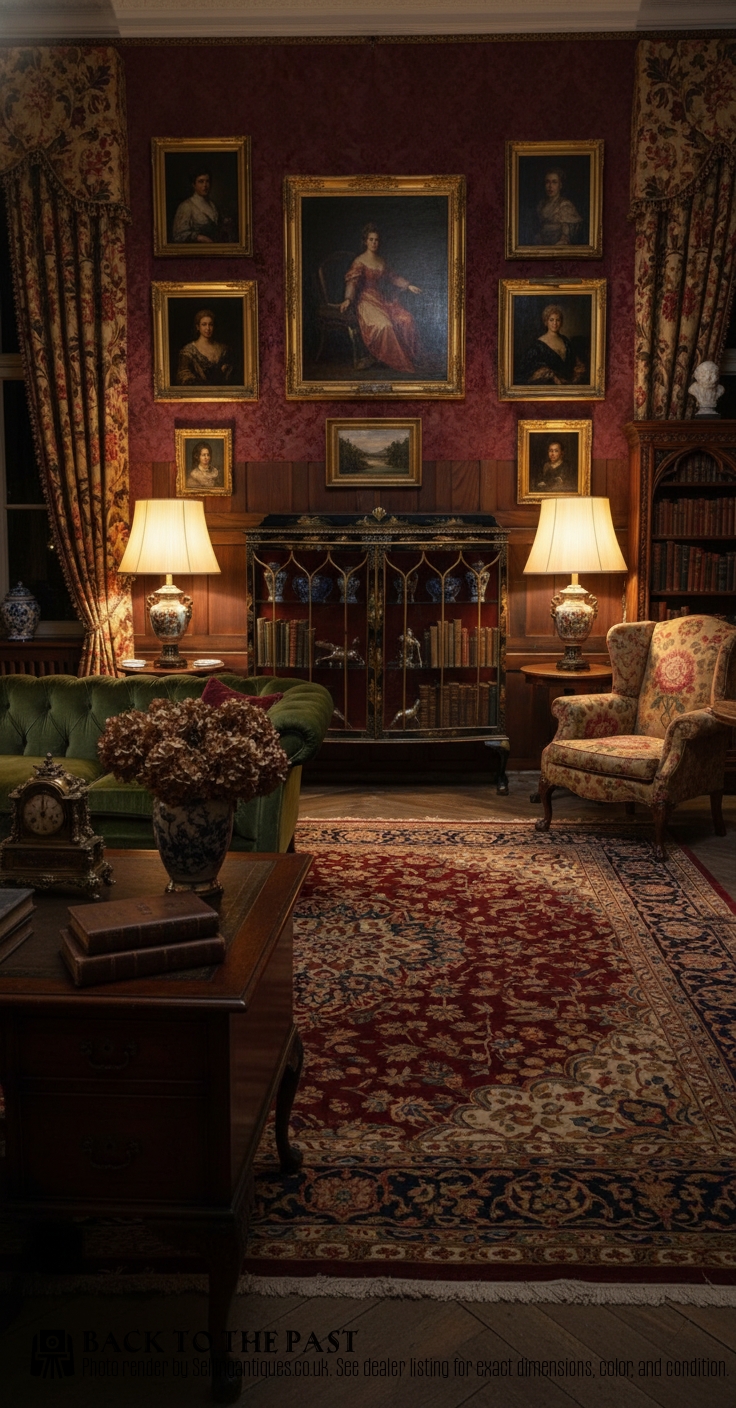
Hand Painted Chinoiserie Cabinet
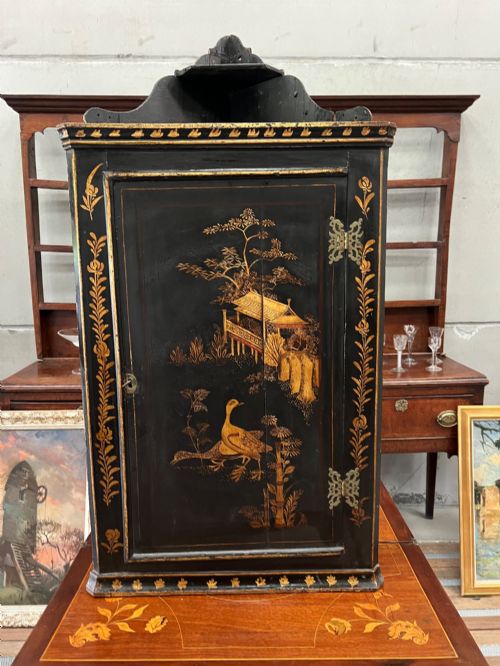
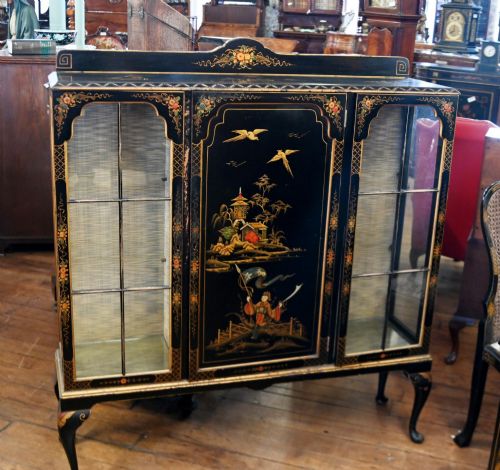
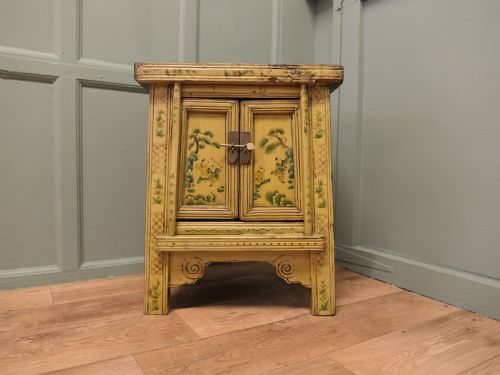
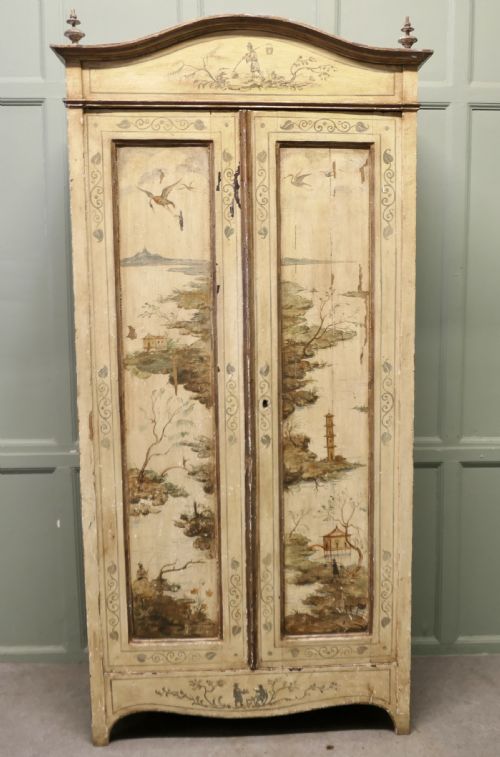
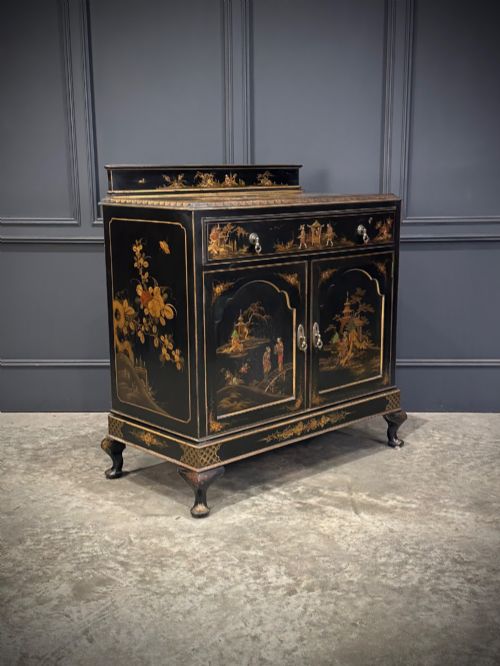
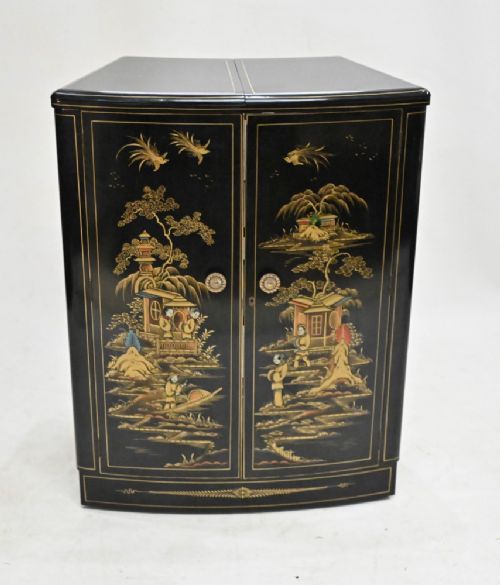
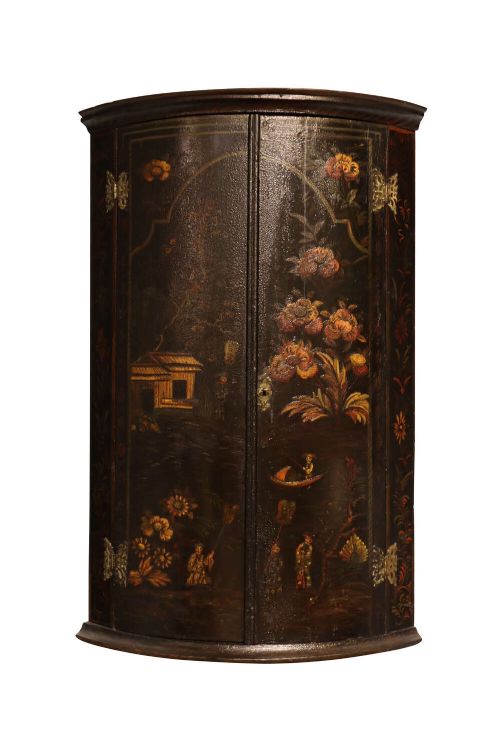
A hand painted chinoiserie cabinet is a storage piece finished with decorative motifs inspired by traditional Chinese art, taking forms such as side cabinets, corner cupboards, drinks cabinets and large marriage armoires. The pieces found here range from eighteenth century black lacquer to nineteen thirties cocktail cabinets and cream japanned chests.
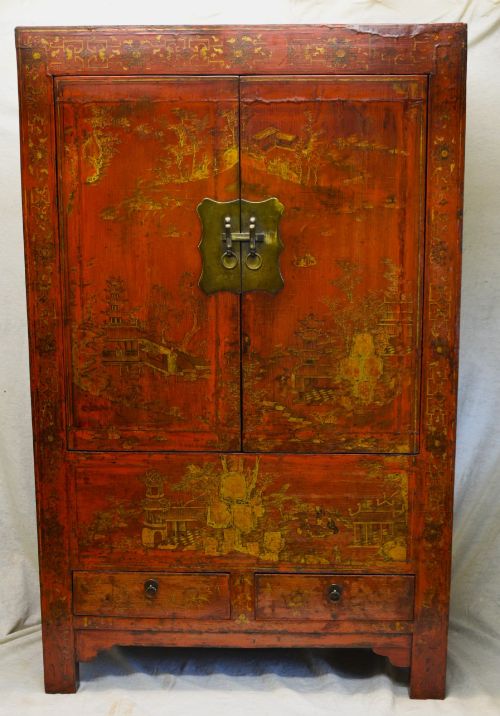
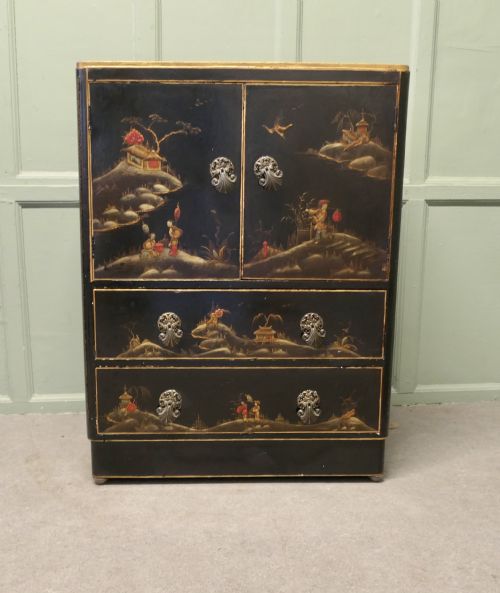
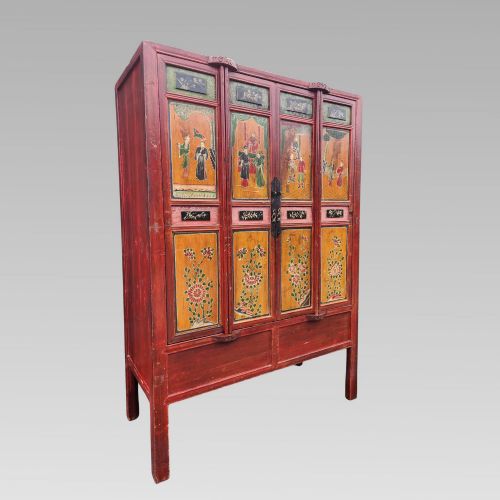
Buyers most frequently encounter nineteenth and early twentieth century examples, including red lacquered wedding cabinets, black japanned side cupboards and green lacquered cocktail cabinets on stands. These pieces function as focal points in a room while offering practical enclosed storage for drinks, tableware or linens.
How they were made
These cabinets are constructed from timber, often utilising wood carcasses built as side cabinets, corner units or chests on stands. The surfaces are then prepared for decorative finishing through the application of lacquer and paint.
Gilt, gold leaf and detailed paintwork are applied over the lacquered wood to create outdoor scenes, figures and oriental motifs. Brass hardware such as hinges and escutcheons frequently complement the painted surfaces.
Hand Painted Chinoiserie Cabinet Retail Price Guide 2026
Typical asking prices for hand painted chinoiserie cabinet among the pieces listed under this phrase on Sellingantiques today, from the lower quarter to the upper quarter. They describe what is for sale here now, not the wider market.
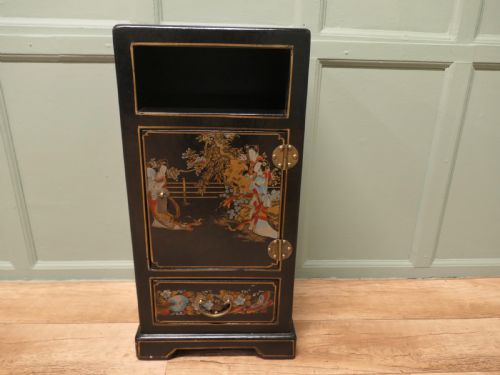
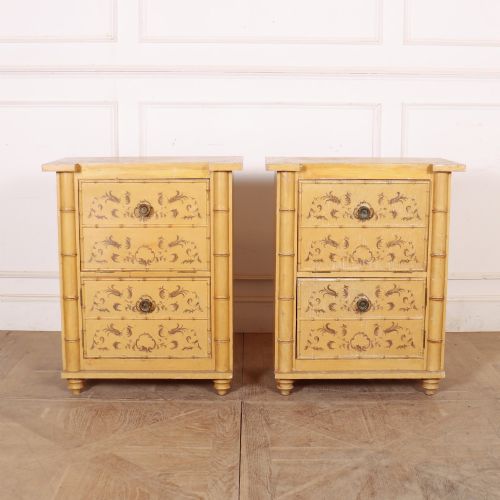
Even the bedside table gets the oriental treatment here, appearing as a charming pair of nineteenth century faux bamboo cabinets.
What varies in quality
The distinction between tiers of quality rests in the depth of the lacquering process and the precision of the hand painted detail. Superior examples show intricate layering in the lacquer and finely rendered figures within the outdoor scenes, whereas simpler pieces feature broader brushwork and flatter surface finishes.
The architectural integrity of the cabinet carcass and the preservation of the original gilt and paint layers also determine the standing of a piece. Cabinets that retain their original stands, such as those supporting cocktail units or marriage cabinets, hold greater visual and structural coherence.
Harrods
The Hand Painted Chinoiserie Cabinet Glossary
- Chinoiserie
- European decorative style reflecting Chinese artistic influences. It employs motifs of figures, pavilions and landscapes applied to furniture and objects.
- Japanning
- European imitation of East London and Japanese lacquerwork. This technique involves layering varnish and paint, often cured by heat and decorated with gilt details.
- Marriage cabinet
- Large traditional Chinese storage cupboard used for household linens or garments. These pieces frequently feature striking red lacquer and brass hardware.
- Cocktail cabinet
- Form of drinks furniture popular in the twentieth century. It provides specialised interior storage for bottles, glassware and mixing surfaces behind decorated doors.
Hand Painted Chinoiserie Cabinet: Frequently Asked Questions
How do I date a chinoiserie cabinet?
Dating relies on examining the timber construction, the formulation of the lacquer and the prevailing decorative style. Pieces range from eighteenth century black lacquer corner cupboards to nineteen thirties Art Deco cocktail cabinets.
Hardware styles, internal fittings and the specific pigment choices also provide clear indicators of period production, distinguishing early export pieces from later twentieth century interpretations.
Where should I place a drinks cabinet?
A chinoiserie drinks or cocktail cabinet serves well as a standalone focal point in a living room, dining room or reception space. Its decorated doors and internal storage make it both a practical station and a decorative asset.
Ensure the piece sits away from direct heat sources and strong sunlight to protect the lacquered wood and gilt paintwork over time.
What is the difference between japanning and lacquer?
Traditional lacquer utilises natural tree sap applied in numerous thin, polished layers, a technique rooted in Asian traditions. Japanning is the European adaptation developed to mimic these oriental finishes using shellac and varnish.
Both methods produce a glossy, hardwearing surface that supports intricate hand painted or gilt decoration, though their underlying material structures differ.
How do I care for a painted lacquer finish?
Maintenance requires gentle dusting with a soft, dry cloth and the avoidance of chemical polishes or abrasive cleaners. Keeping the cabinet in stable humidity prevents the timber substrate from moving and stressing the lacquer.
Careful placement away from direct sunlight preserves the vibrancy of the hand painted pigments and the gleam of the gold leaf.