
Bow Front Tallboy Chest
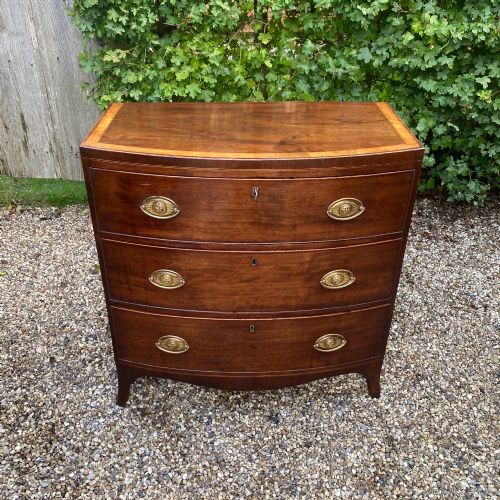
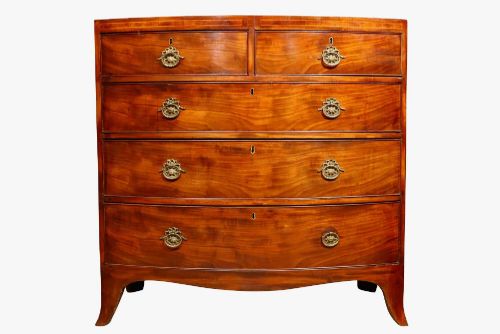
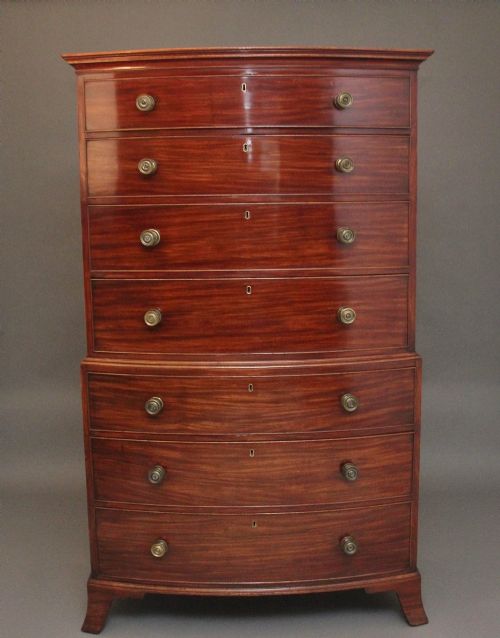
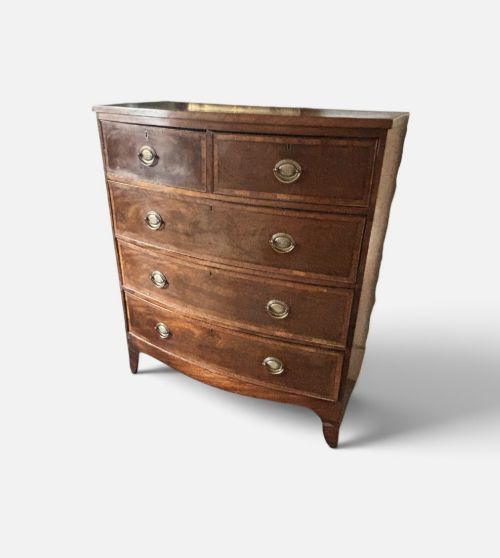
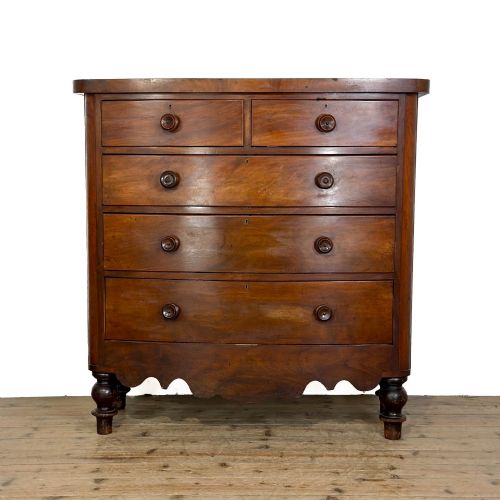
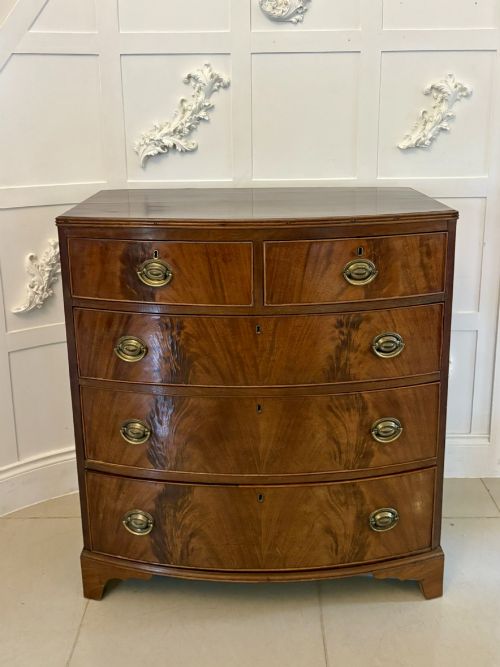
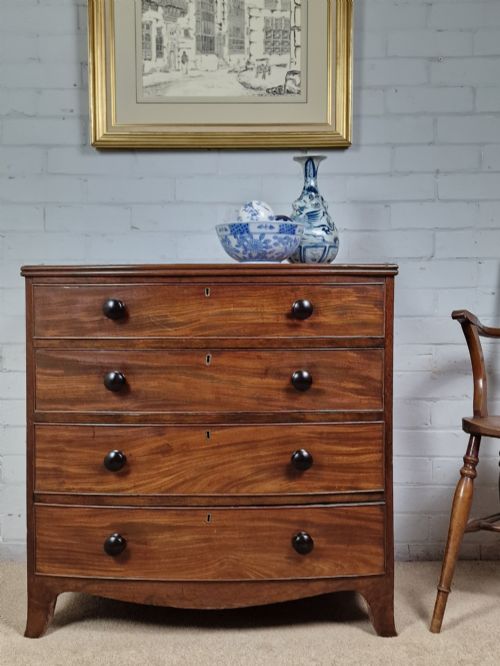
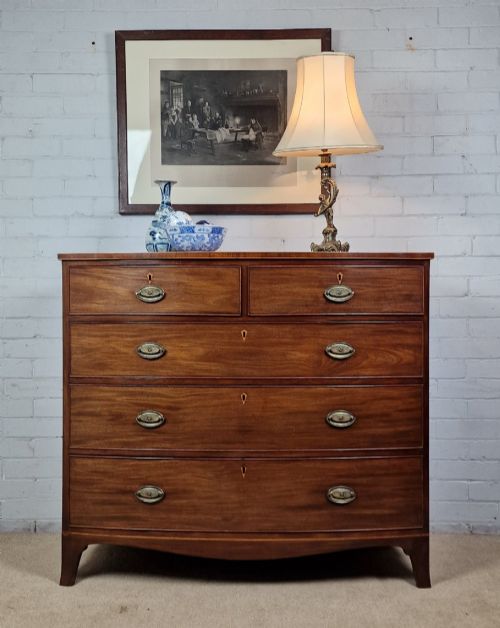
A bow front tallboy chest brings together a slender vertical presence and a curved projecting drawer line.
Bow Front Tallboy Chest
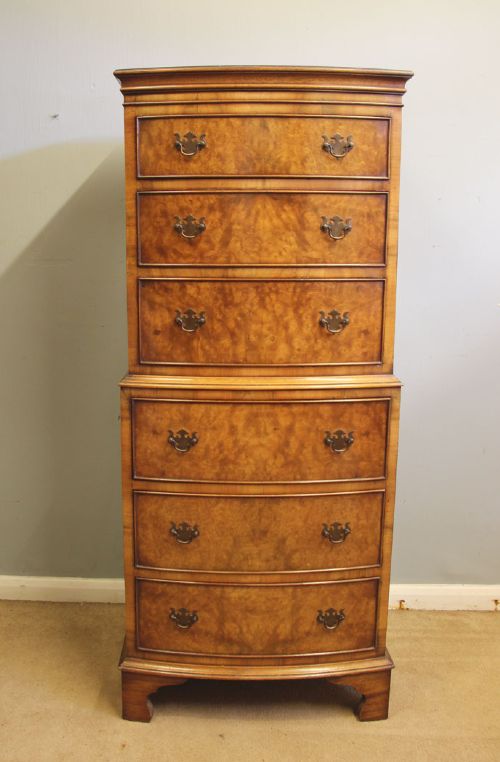
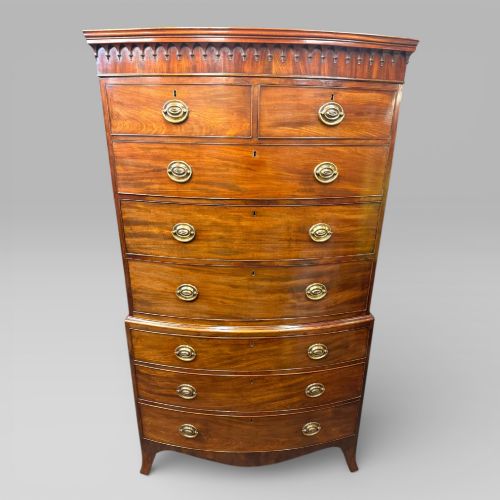
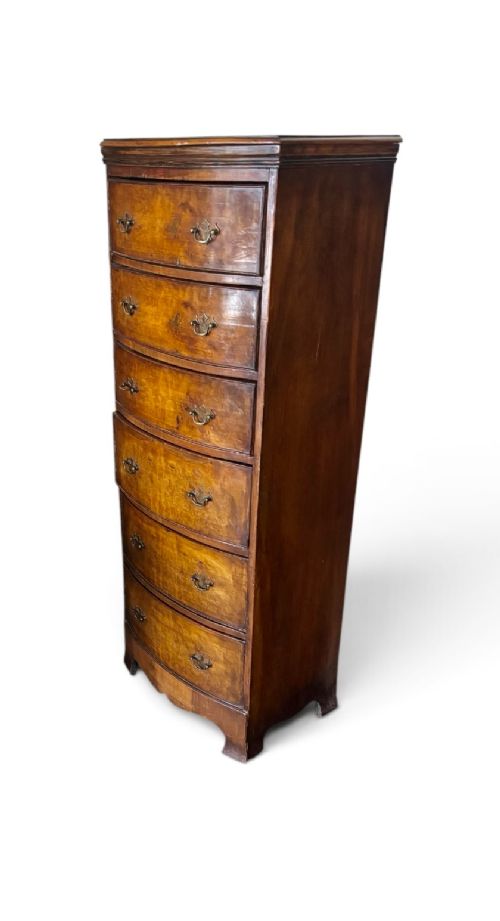
A bow front tallboy chest combines the towering stature of a chest on chest or high cabinet with a convex curved front profile that softens the vertical line. These pieces provide substantial storage capacity while occupying a relatively modest floor footprint compared to wider furniture forms.
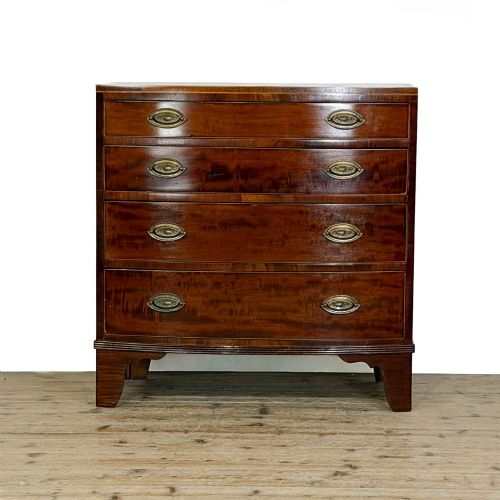
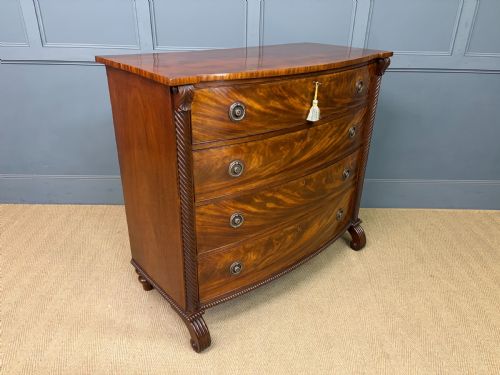
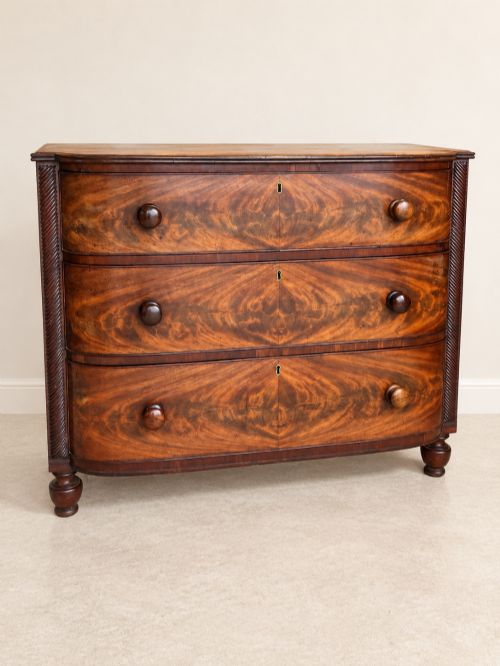
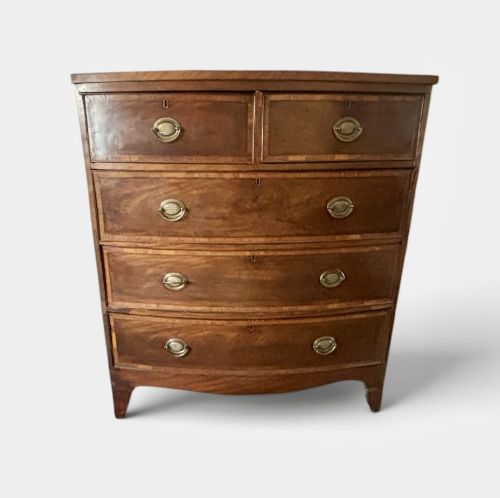
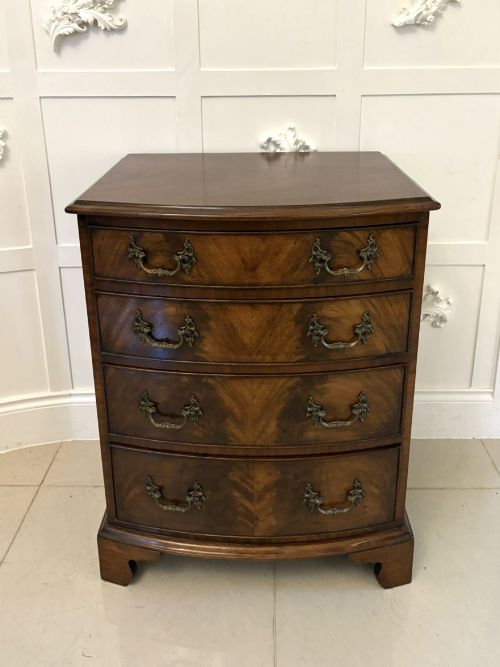
The versions met most frequently on this page originate in the Georgian, Regency, and Victorian periods, alongside later twentieth century walnut interpretations. They appear primarily in figured mahogany, flame mahogany veneer, and burr walnut, often standing on bracket feet or short legs.
Materials and construction
Cabinetmakers constructed these carcases using solid secondary woods like pine, which they then faced with choice veneers such as flame mahogany or burr walnut to create striking grain patterns across the curved drawer fronts. Satinwood banding frequently frames these drawer edges, adding linear contrast to the figured timber surfaces.
The curved drawer fronts required precise timber selection and joinery to ensure the wood maintained its convex shape without warping over time. Brass hardware, including drop handles and escutcheons, was fitted to secure and operate the graduated drawers.
Listings feature mahogany, burr walnut, and satinwood across Georgian, Regency, Victorian, and 1930s periods.
Judging quality and proportion
The distinction between standard examples and the finest pieces rests upon the choice of veneer and the harmony of proportion across the stacked sections. Master cabinetmakers selected highly figured timbers that mirrored symmetrically across the curved drawer fronts, creating a cohesive visual rhythm.
Construction fidelity also defines the upper tier, visible in the precision of the dovetailed drawer box joints and the retention of original brass fixtures. Superior pieces maintain crisp moulding details and seamless joins where the upper and lower sections meet on chest-on-chest forms.
The Bow Front Tallboy Chest Glossary
- Tallboy
- A tall chest of drawers, often built in two stacked sections as a chest on chest to maximise vertical storage.
- Bow front
- A convex curved cabinet or drawer front that projects outward from the centre.
- Flame mahogany
- A veneer cut from timber fork joints that produces a distinctive flickering flame pattern.
- Burr walnut
- A prized wood veneer harvested from tree growths, featuring intricate swirling knot clusters.
- Satinwood
- A pale, durable exotic hardwood frequently utilised for contrasting inlay banding and stringing.
Bow Front Tallboy Chest: Frequently Asked Questions
Where should I place a tallboy?
These tall cabinets suit bedrooms and dressing rooms where vertical storage is required without consuming excessive floor space.
Their slender proportions also allow them to sit effectively within high-ceilinged hallways or alcoves.
How do I date a mahogany chest?
Dating relies on examining the secondary woods inside the drawers, the style of the brass hardware, and the construction methods used on the drawer linings.
Georgian and Regency pieces typically show hand-cut dovetails and native secondary timbers beneath the polished primary veneers.
What is a chest on chest?
A chest on chest is a specific form of tallboy constructed as two separate cabinets stacked vertically, with a smaller upper section resting on a wider base.
This two-piece construction made large wardrobes easier to transport up narrow staircases historically.
How do I care for walnut veneer?
Walnut veneer benefits from placement away from direct sunlight and sudden temperature shifts to prevent the timber from drying or splitting.
Regular dusting with a dry cloth preserves the polished finish without requiring heavy wax applications.