

Vintage Painted Chest Drawers
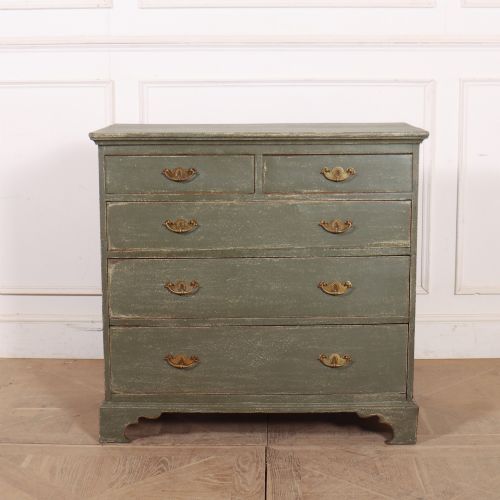
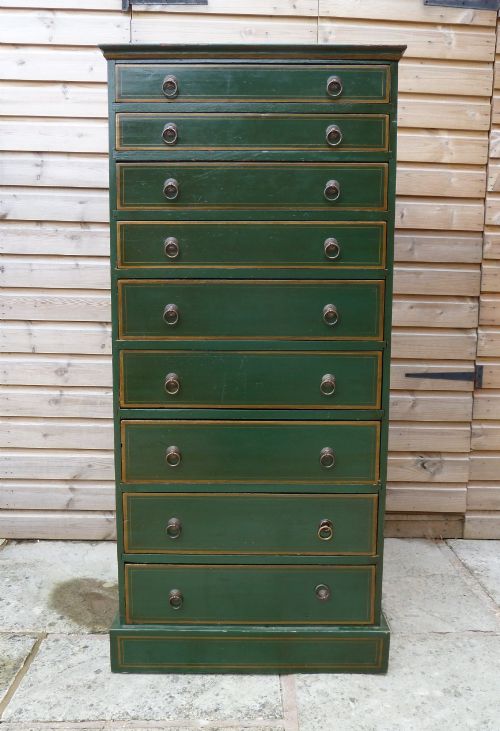
These vintage painted chest drawers bring surface colour and practical storage from the eighteenth, nineteenth, and early twentieth centuries into modern rooms.
Vintage Painted Chest Drawers
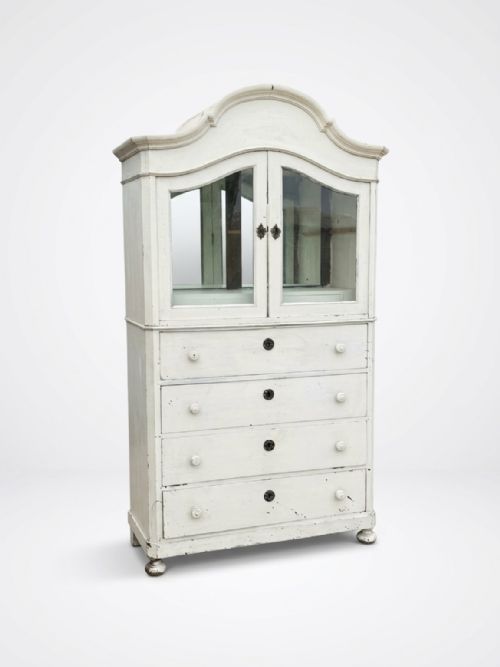
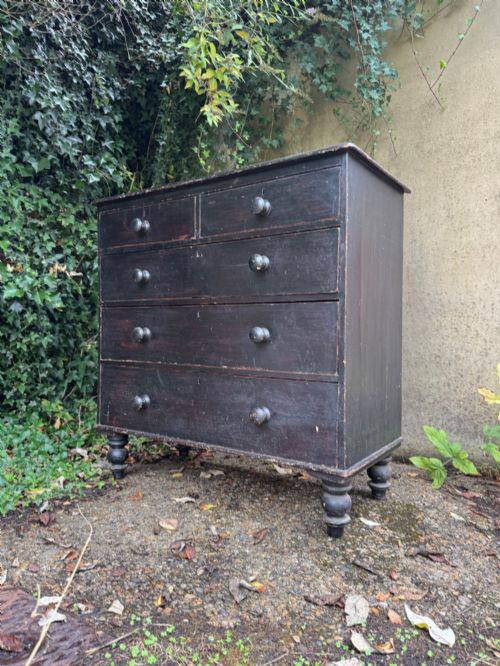
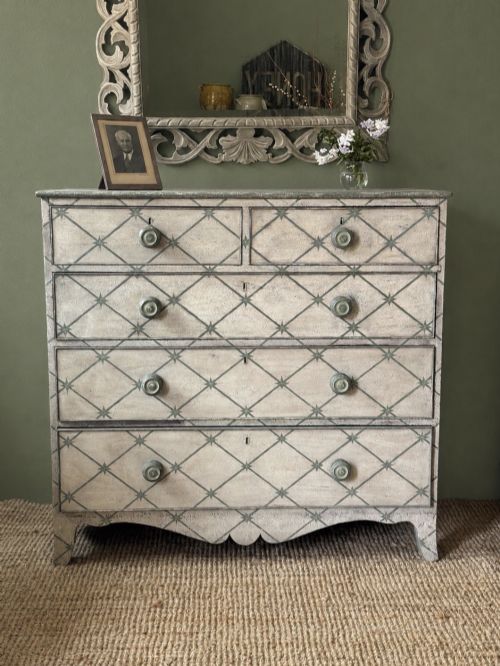
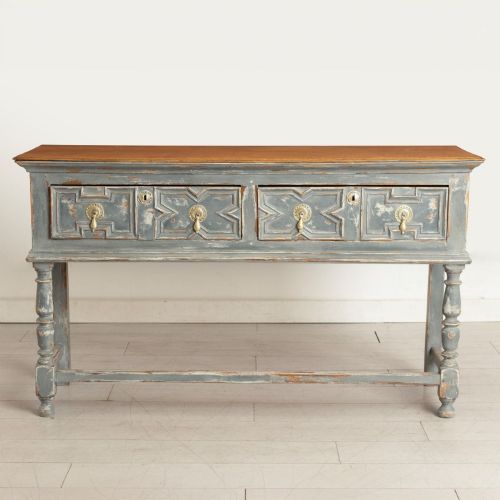
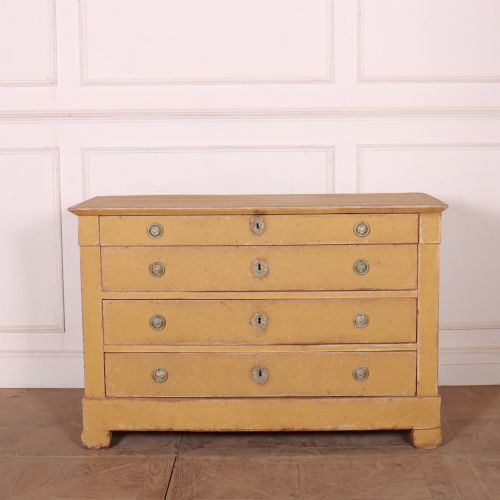
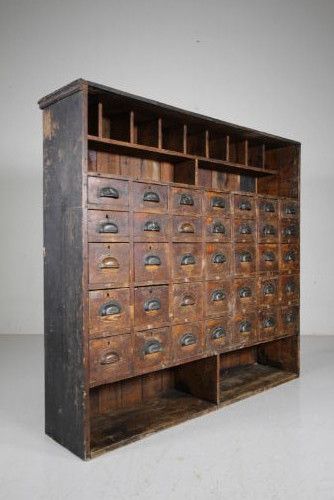
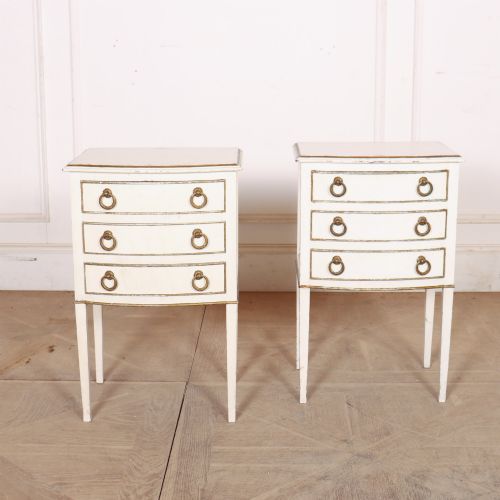
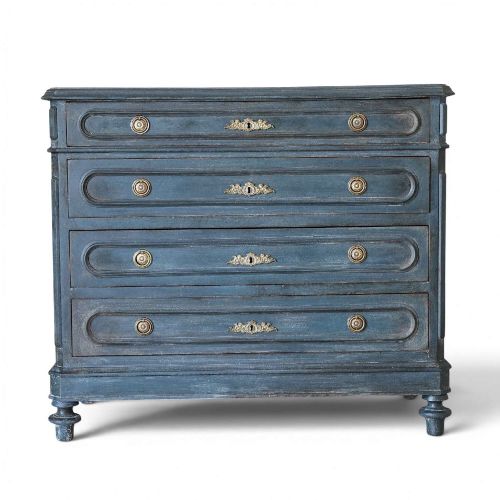
A vintage painted chest drawers search brings up nineteenth century and Victorian pieces alongside Regency, Edwardian, and eighteenth century examples. Pine and painted wood dominate these listings, appearing across styles such as Victorian Country, French Provincial, Chinoiserie, and Gustavian. Most pieces you meet here function as chests of drawers, commodes, or banks of drawers, while others take the form of bedside chests, linen presses, and dresser bases.
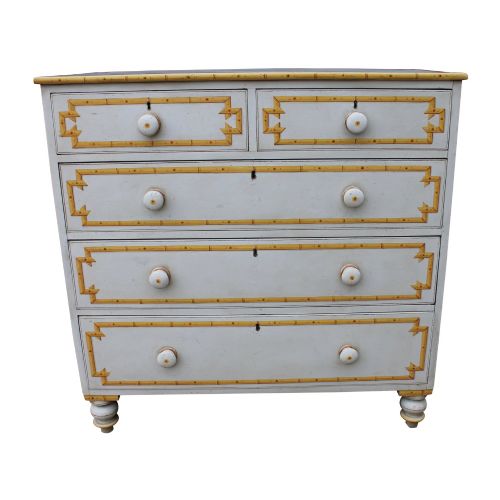
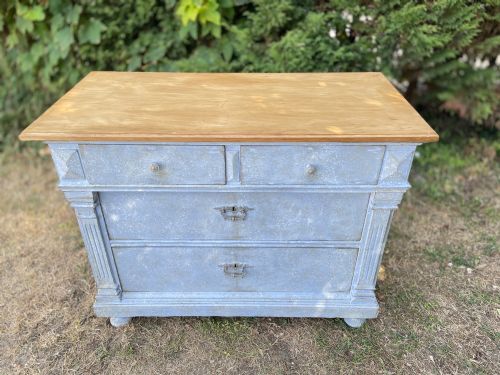
The regional variety runs from English country pine to French commodes and Swedish painted pine pieces with serpentine or fluted fronts. Surviving examples often display original paint finishes, ranging from muted blues and greys to black lacquer and decorative faux bamboo. Buyers find both simple domestic pine storage and elaborate Revival commodes bearing distinct regional characteristics.
How they were made
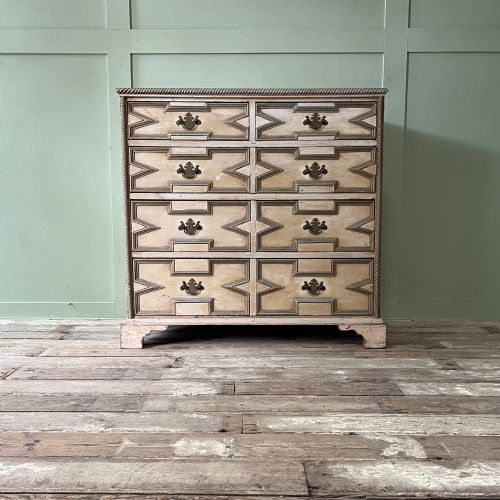
Makers constructed these carcases primarily from pine, oak, and general wood, incorporating brass, iron, and ceramic details on handles and key escutcheons. Surfaces received layers of paint, lacquer, or decorative finishes applied directly over the timber, sometimes featuring specialised techniques like faux bamboo moulding or diamond-point carving.
Joinery relied on traditional hand-cut joints suited to the period, with drawer boxes built to hold domestic linens, clothing, or shop goods. Paint was applied by hand, meaning surviving pieces often retain the brush marks and layered patination of their original workshop creation.
Listings feature pine and painted wood constructions alongside brass, iron, and ceramic hardware across the nineteenth and early twentieth centuries.
What varies in quality
The integrity of the original paint surface determines much of the distinction between pieces, as untouched historic pigment carries greater character than later overpainting. Fineness in timber preparation and the crispness of decorative carving, such as fluted drawer fronts or serpentine shaping, separate standard utility furniture from high workshop output.
Structural soundness in the drawer runners, carcase joints, and timber stability dictate everyday utility. Pieces that retain their original brass or iron hardware without major alterations sit higher in the range than those with heavily replaced elements.
Sir Clough Williams-Ellis·Edwards and Roberts
The Vintage Painted Chest Drawers Glossary
- Commode
- A low decorative chest of drawers or cabinet, frequently associated with French and Continental eighteenth and nineteenth century design. These pieces often feature serpentine fronts or elaborate painted decoration.
- Faux bamboo
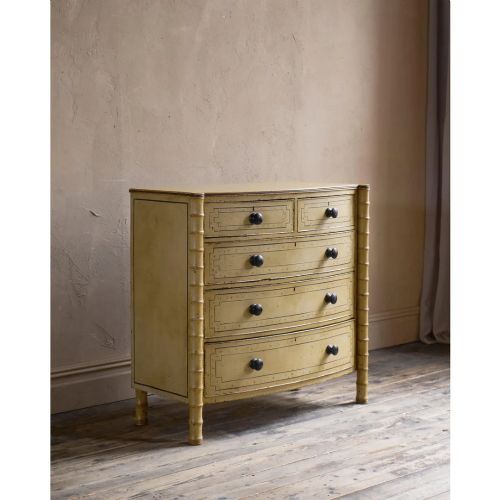
- Wood turned and carved to imitate natural bamboo stalks. This decorative technique appears frequently on nineteenth century English and Regency furniture.
- Serpentine
- A furniture front curved with a convex centre flanked by concave ends. It creates a flowing, undulating line across the drawer faces of high-style commodes.
- Linen press
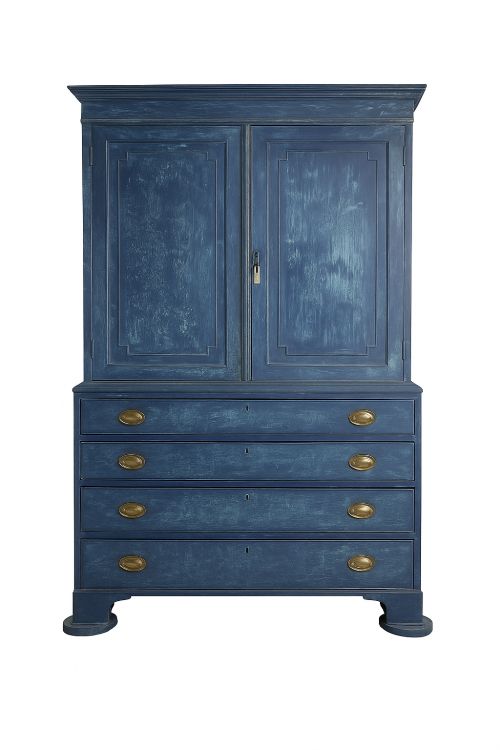
- A tall piece of furniture combining upper cupboard doors for storing textiles with lower sliding drawers. They are frequently constructed from pine and finished in paint.
- Chinoiserie
- European decorative style inspired by Chinese art and craftsmanship, characterised by lacquerwork and painted motifs. It appears on early twentieth century cupboards and cabinets.
Vintage Painted Chest Drawers: Frequently Asked Questions
How do I care for original paint?
Keep painted timber surfaces away from direct sunlight and excessive moisture to prevent the historic finish from lifting or fading.
Dust gently with a dry, soft cloth and avoid chemical polishes that can soften fragile historic paint layers.
Are these drawers suitable for daily use?
Period drawer carcases function well for modern storage provided the internal runners and timber frames remain stable and aligned.
Check that the drawers slide smoothly without excessive friction against the interior framing before loading them.
What does original paint mean?
Original paint refers to the earliest decorative coating applied to the timber during the piece's initial period of manufacture.
Surviving historic paint layers display natural wear and patination accumulated over centuries of domestic use.
How do I identify a Gustavian piece?
Gustavian pieces typically display Swedish neoclassical design influences, featuring lighter painted finishes, fluted drawer fronts, and restrained carving.
These items often present a paler colour palette compared to heavier dark wood or ornate French provincial furniture.