
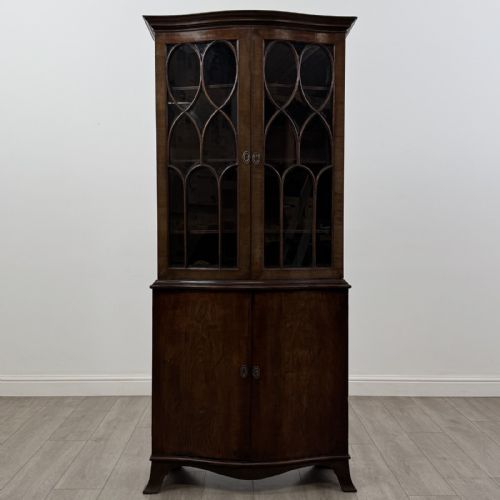
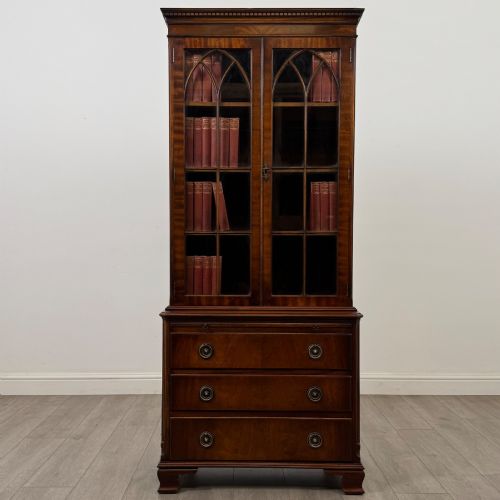
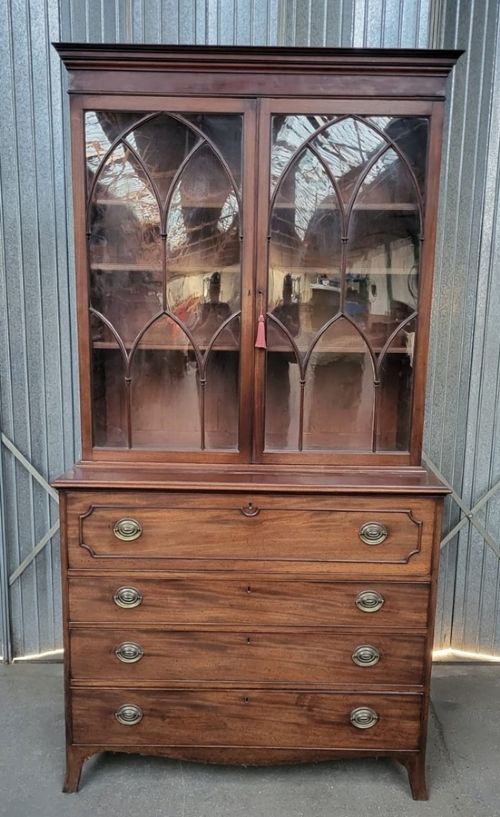
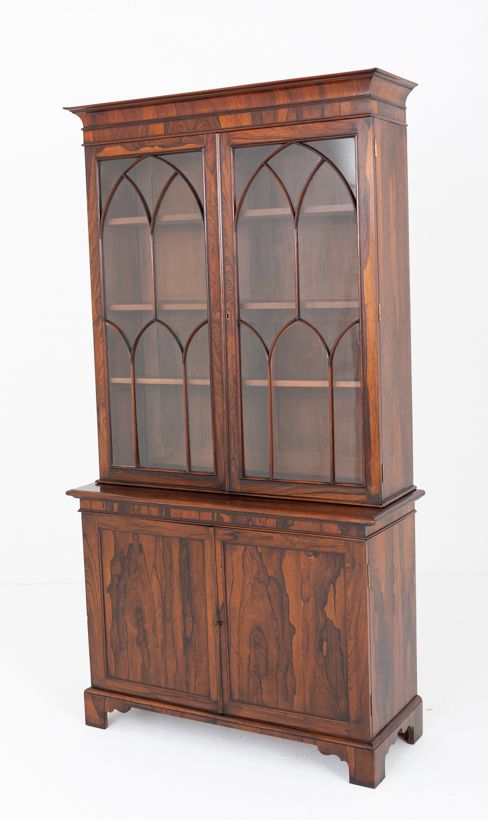

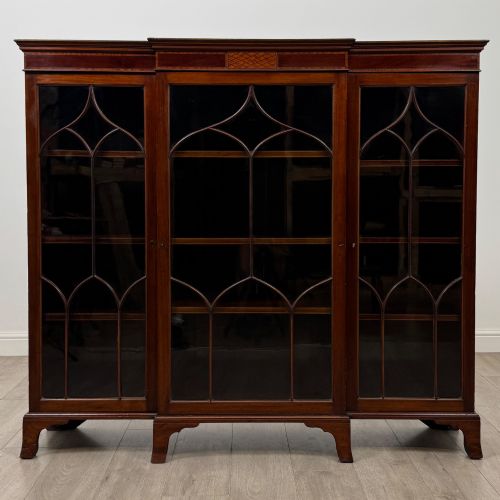
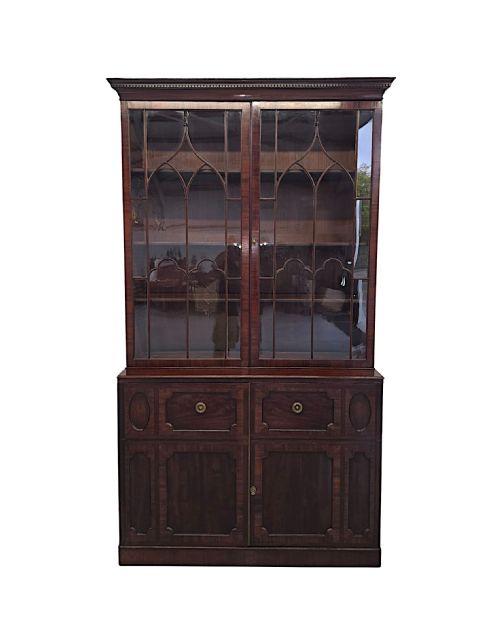
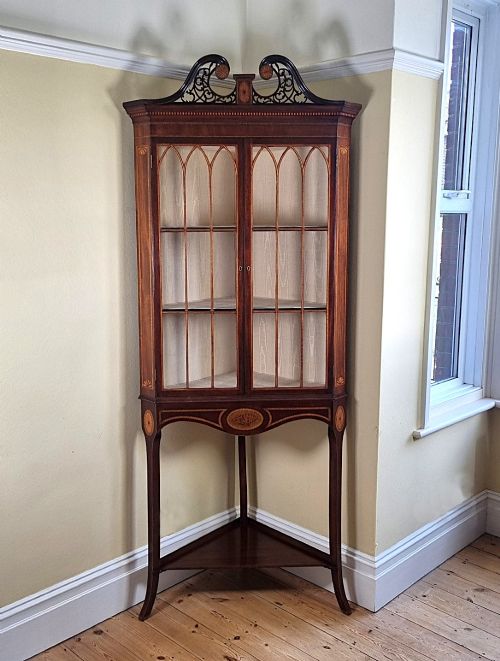
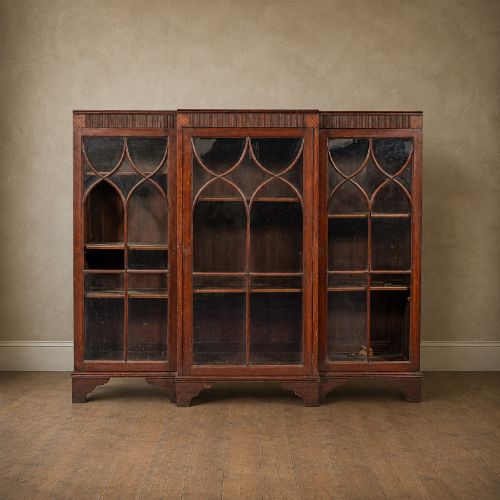
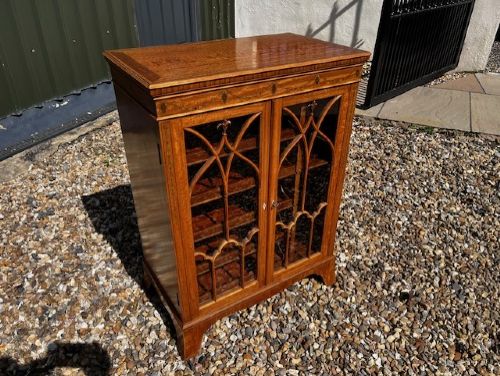


Gothic Astragal Glazing Cabinet
These gothic astragal glazing cabinet designs unite structural timber with intricate glazed partitions, offering functional storage with pointed architectural lines.
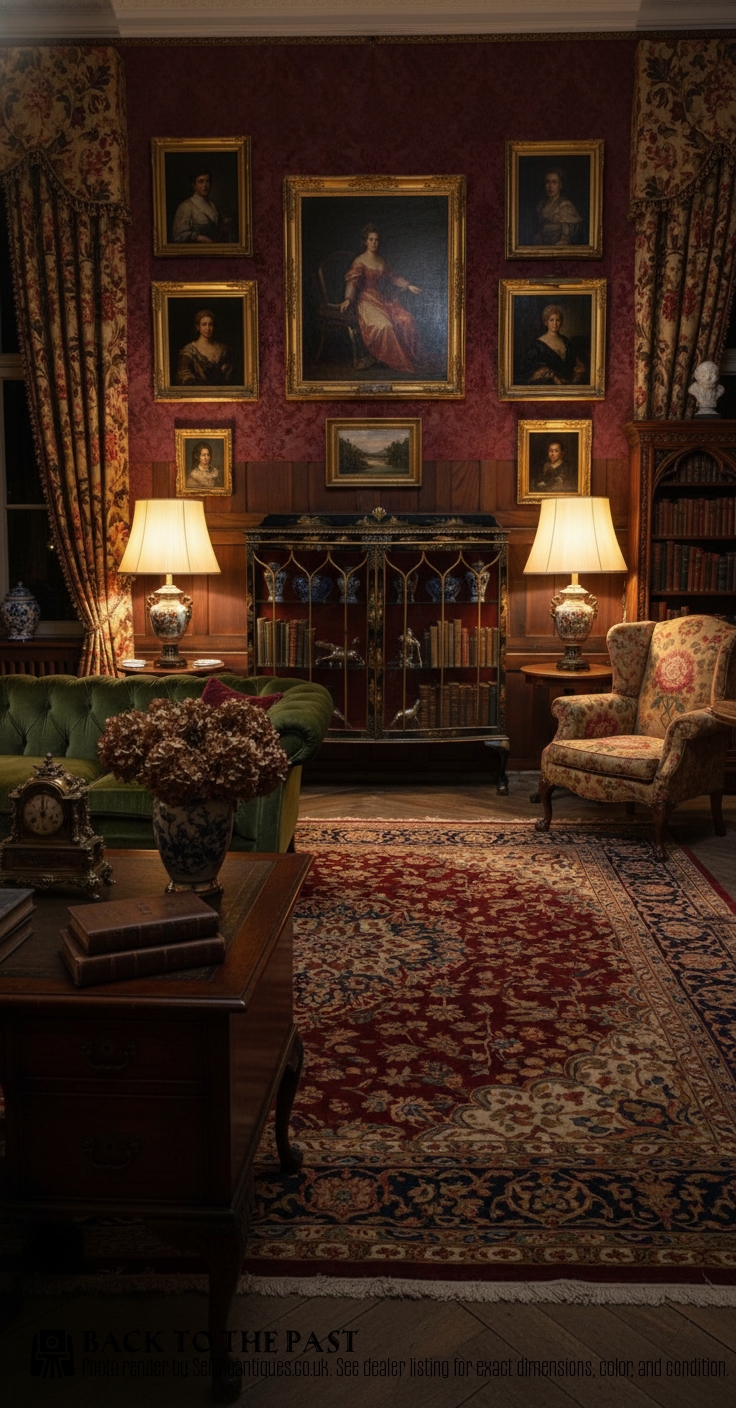
Gothic Astragal Glazing Cabinet
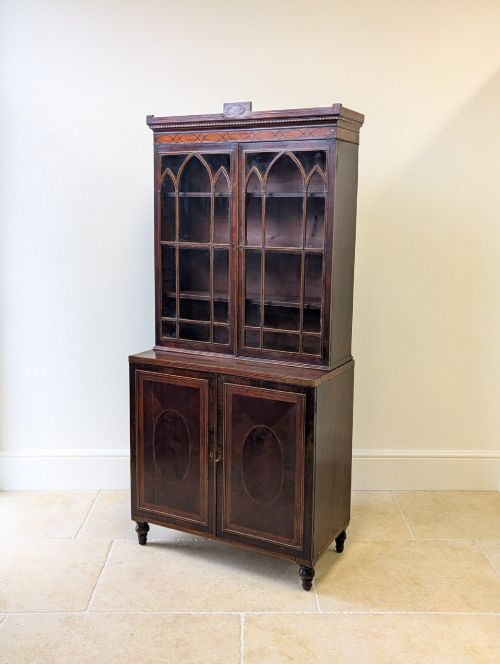
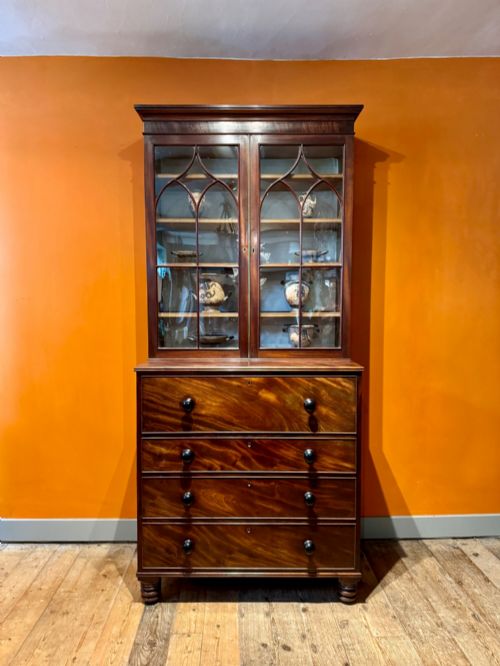
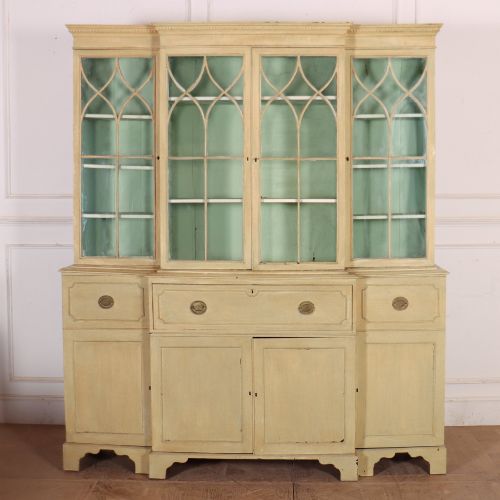
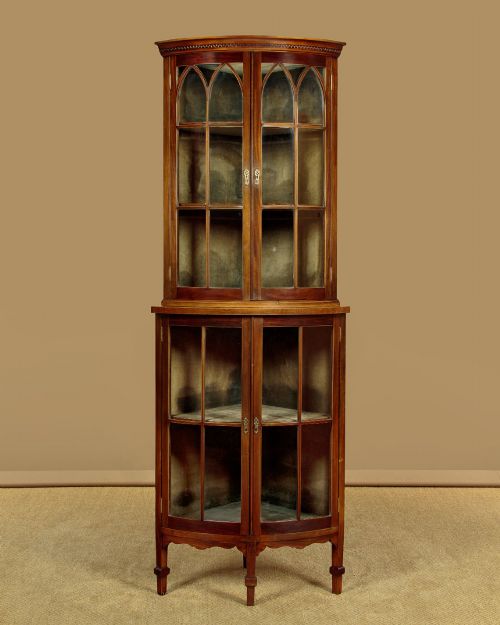
A gothic astragal glazing cabinet combines timber framework with glazed doors divided by slender moulding strips, creating distinct window-like panes across the front. When searching for a gothic astragal glazing cabinet, buyers encounter forms ranging from tall breakfront bookcases and bureau bookcases to corner cabinets and display units. The pieces on this page span several periods including Georgian, Regency, Victorian, and Edwardian, reflecting shifting interpretations of Gothic revival styles.
Most examples rely on mahogany as the primary structural timber, often shaped into breakfront proportions or fitted with secretaire drawers. Alongside standard upright bookcases, the selection includes wall-mounted and freestanding corner cabinets designed to utilise domestic space efficiently. These items serve primarily to display and protect books or collections behind glass panels secured by wooden glazing bars.
How they were made
Makers constructed these cabinets predominantly using solid and veneered mahogany, sometimes incorporating secondary woods such as satinwood for inlay or brass for hardware and fittings. The characteristic lattice work of the doors requires precise carpentry to join narrow wooden astragals into pointed arch or geometric patterns that support the individual glass panes. Structural elements frequently employ traditional joinery techniques to sustain the weight of large glazed sections and internal shelving.
Surface finishes involve careful polishing of the wood to accentuate natural grain patterns, while occasional variants feature paint or fabric linings within the display compartments. The integration of satinwood inlay and marquetry appears on specific Edwardian and Victorian pieces to provide decorative contrast against the darker mahogany backdrop. Brass handles, escutcheons, and hinges complete the construction of the doors and drop-front writing compartments.
Object forms span standard bookcases, breakfront libraries, bureau bookcases, and corner display units.
What varies in quality
Quality in these cabinets depends on the precision of the joinery within the glazing bars and the selection of timber figures for the main facades. Finer examples display finely proportioned wooden astragals that form crisp architectural lines without clumsy joints or heavy framing. The choice between standard mahogany and figured flame mahogany significantly alters the visual depth of larger breakfront and bookcase doors.
The sophistication of internal fittings, such as fitted secretaire drawers with pigeonholes or specialised marquetry inlay, distinguishes standard utility pieces from higher-tier commissions. Structural integrity in the cornice mouldings and the alignment of large multi-door fronts further separates workshop output. Cabinets retaining original glass panes and uncompromised internal configurations hold greater architectural coherence.
Jas Shoolbred
The Gothic Astragal Glazing Cabinet Glossary
- Astragal
- A small convex moulding or glazing bar that holds panes of glass within a door frame. In gothic designs, these bars often intersect to form pointed arches.
- Breakfront
- A large cabinet design where the central section projects forward from the flanking wings. This configuration breaks up the flat facade of extensive bookcases.
- Secretaire
- A desk form featuring a pull-down writing flap concealing small drawers and pigeonholes. It integrates smoothly into the upper framework of a bookcase cabinet.
- Marquetry
- Decorative veneer work arranged in pictorial or geometric patterns using various coloured woods. It appears frequently on Edwardian and Victorian iterations.
- Cornice
- The ornamental moulding running around the top edge of a piece of furniture. It provides a finished architectural cap to tall library and display cabinets.
Gothic Astragal Glazing Cabinet: Frequently Asked Questions
What defines a gothic astragal glazing cabinet?
These cabinets feature glazed doors segmented by narrow wooden bars that form pointed architectural arches or geometric patterns. The framework is typically executed in mahogany with tall upright proportions.
Such designs draw on historical revival movements, adapting ecclesiastical window tracery for domestic library and display furniture.
How do I date a mahogany bookcase?
Dating relies on observing construction methods, timber selection, and stylistic details such as the presence of Georgian breakfront proportions or Victorian Gothic revival motifs. Secondary woods and hardware also offer clues to the manufacturing decade.
Earlier pieces from the eighteenth century often display hand-cut joinery and simpler interior configurations compared to later revival variants.
Where were corner cabinets placed?
Corner cabinets were designed to fit snugly into room angles, maximising storage and display space in domestic interiors. They functioned as both wall-mounted units and freestanding furniture.
This placement kept valuable books and porcelain visible while preserving open floor space in smaller rooms.
What is a secretaire bookcase?
A secretaire bookcase combines a bookshelf top with a central drawer that folds down to reveal a writing surface and small storage compartments. This dual function allowed owners to write letters and read library volumes within a single piece of furniture.
The exterior maintained the appearance of a standard drawer chest or cabinet when closed.