
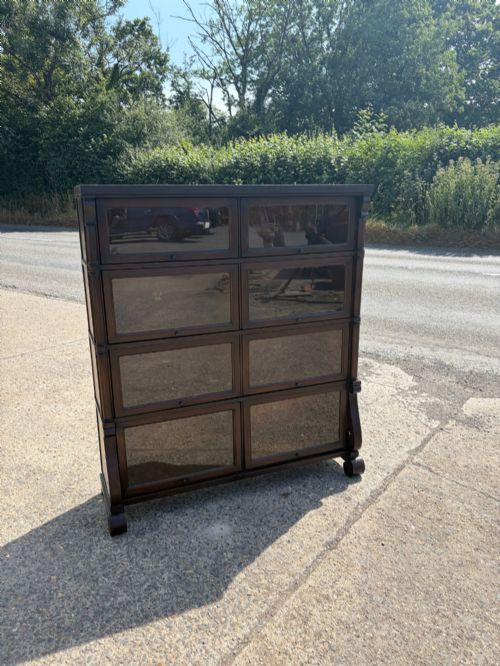
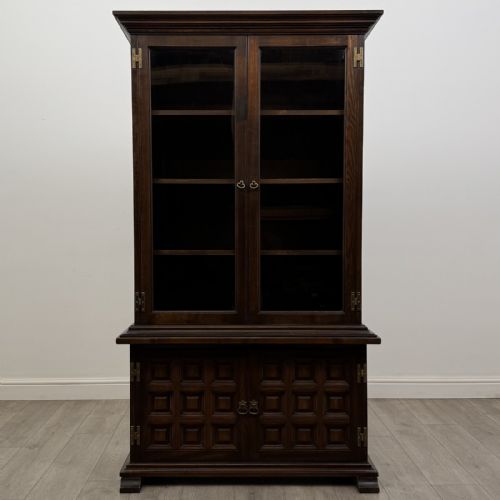
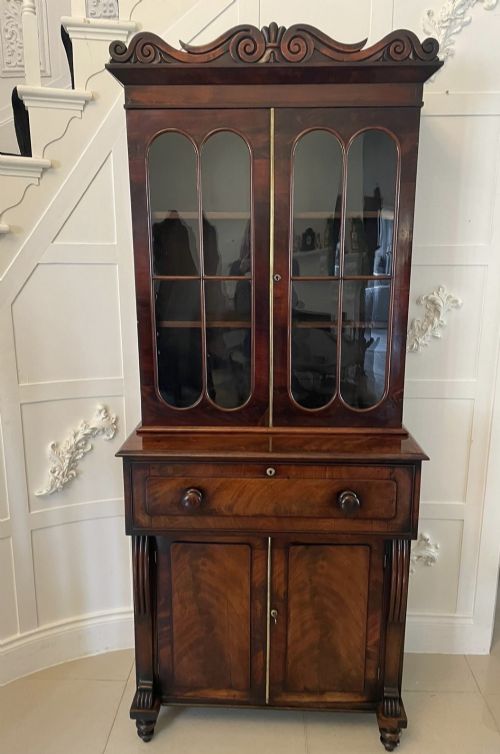
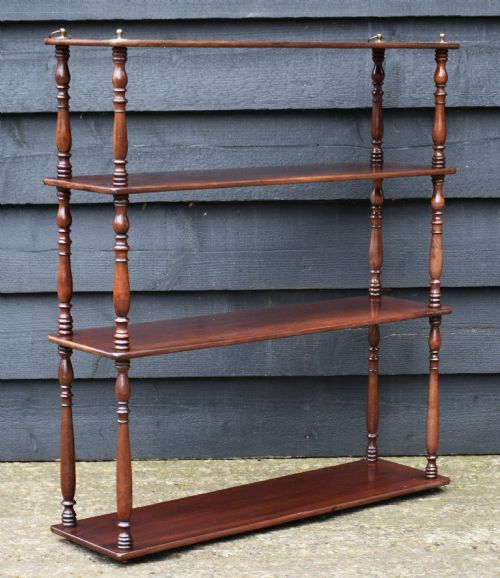
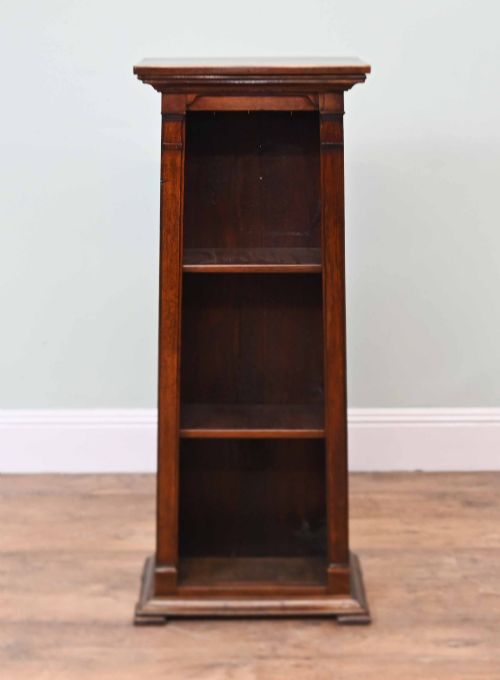
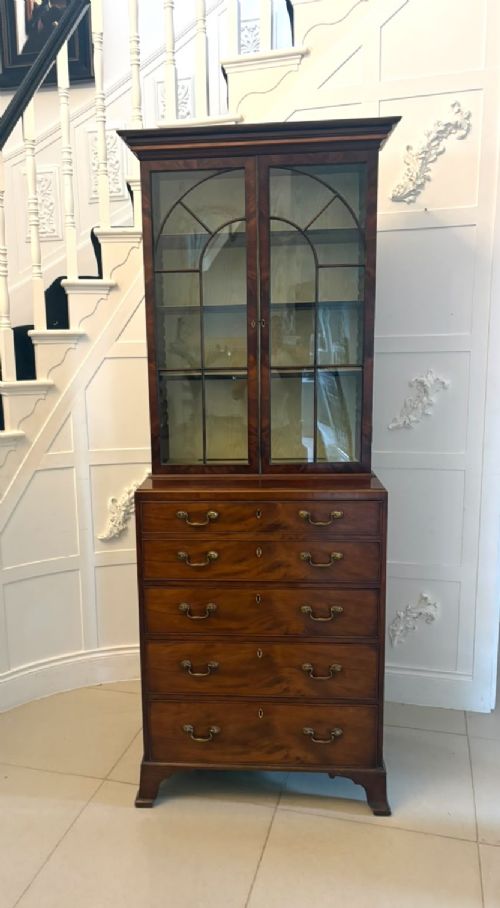
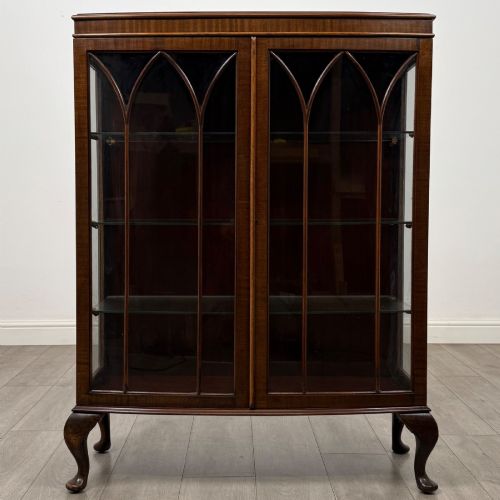
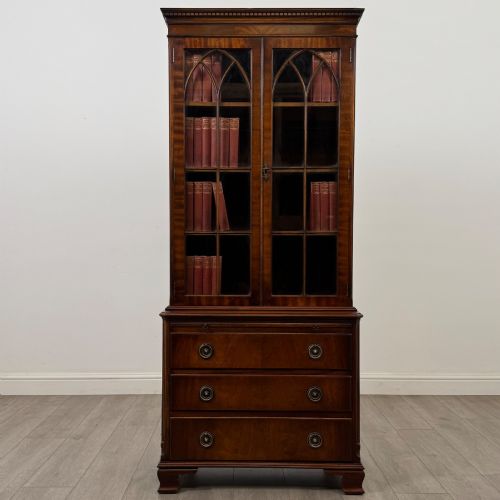
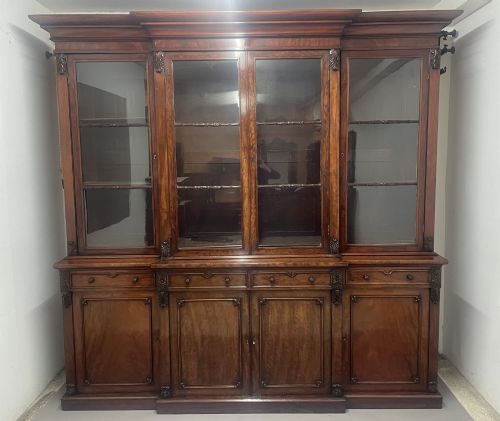
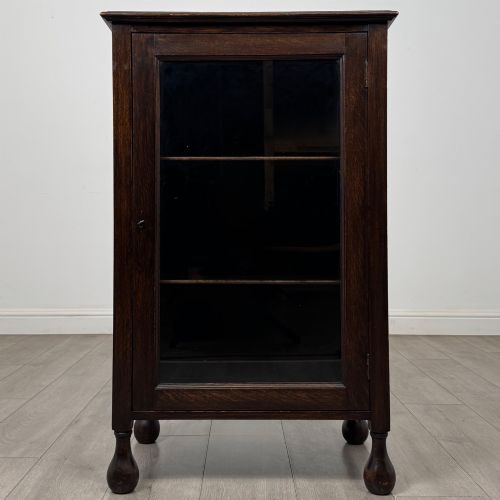
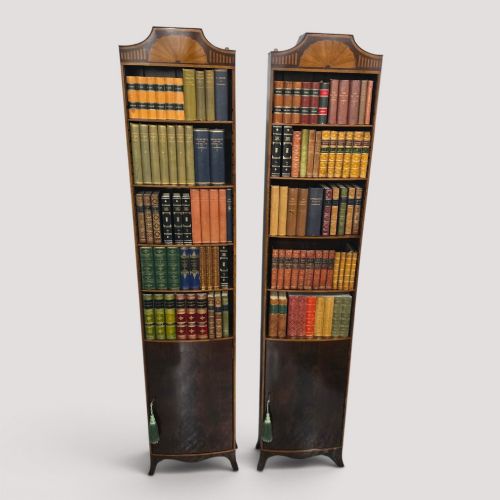
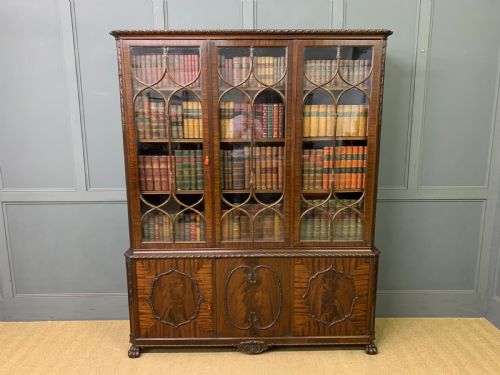
Dark Wood Display Bookcase
A dark wood display bookcase combines utilitarian storage with glass-fronted visibility, bringing rich timber tones to rooms requiring both book organisation and cabinet display.
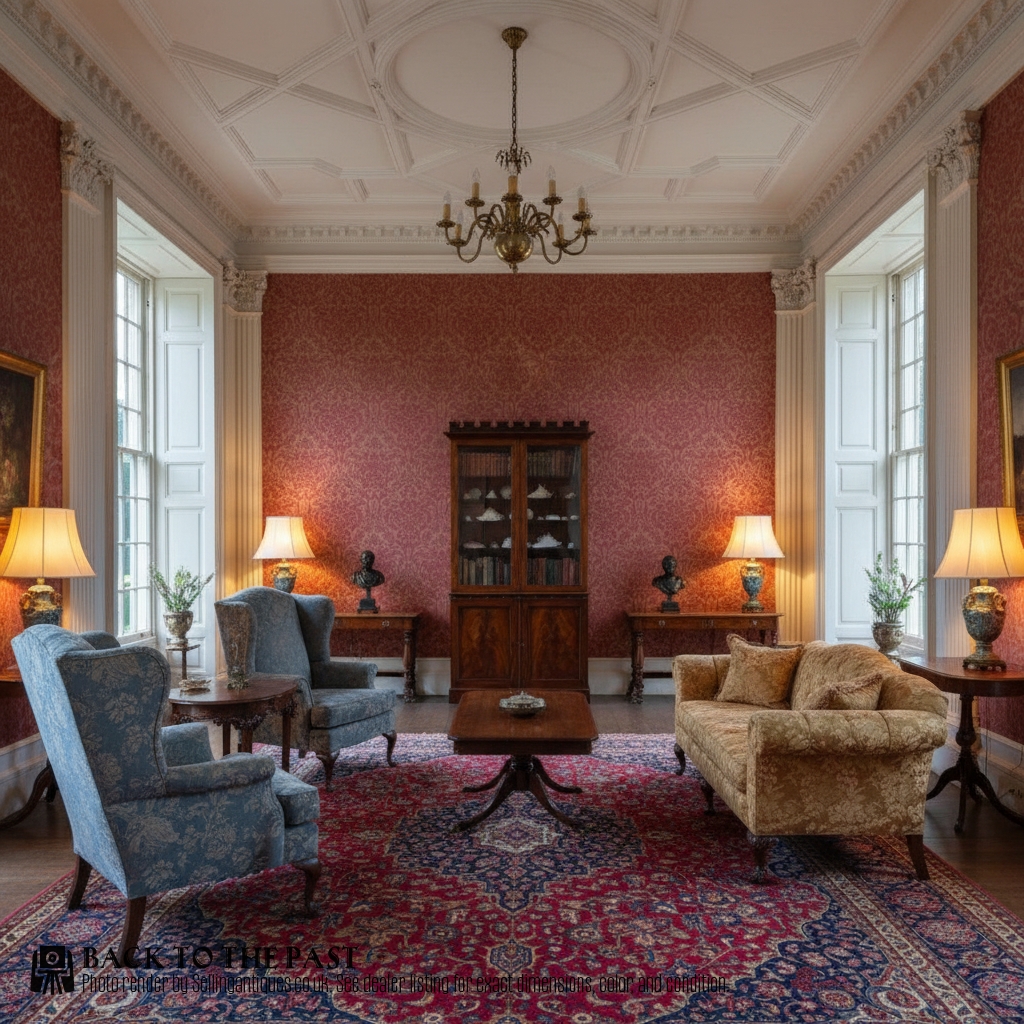
Dark Wood Display Bookcase
A dark wood display bookcase serves as both a library storage unit and a vitrine for valued objects, combining open shelves or glazed doors within a single piece of furniture. These cabinets appear primarily in mahogany, oak, rosewood, and walnut across Victorian, Edwardian, and Regency periods.
The most common form met on this page is the mahogany open bookcase or glazed display cabinet, often featuring adjustable shelves and classical styling such as Chinese Chippendale or Neoclassical details. Pieces range from large late Victorian items to smaller Edwardian and early twentieth-century examples.
Makers and workshops including Jas Shoolbred, Collinson & Lock, and Gabriel Viardot occasionally contribute specialised cabinets, ranging from music cabinets to large carved oak display units and secretaire bookcases.
Materials and Construction Techniques
Construction relies heavily on dense hardwoods like mahogany, oak, rosewood, and walnut, frequently enhanced by flame mahogany veneer or intricate inlay work. Timber frames support glass panels for display functions, while brass hardware secures doors and adjustable shelf mechanisms.
Cabinetmakers utilised traditional joinery alongside carving, turning, and glazing techniques to construct tiered what-nots, vitrines, and open shelving units. Surviving examples demonstrate structural adaptability through adjustable wooden shelving and fitted secretaire drawers.
Common forms include open bookcases, glazed display cabinets, music cabinets, and secretaire bookcases equipped with adjustable shelving.
Distinctions in Quality and Execution
Quality differentiates itself through the selection of timber, such as figured mahogany or rich rosewood, and the precision of decorative carving and inlay work. Superior examples demonstrate refined proportions and considered details like astral glazing bars.
The sophistication of internal fittings, including adjustable shelving systems and integrated secretaire compartments, separates standard utility furniture from finer cabinetmaking. Attribution to notable makers or specific stylistic movements adds further distinction to individual pieces.
Jas Shoolbred·Collinson & Lock·Gabriel Viardot
The Dark Wood Display Bookcase Glossary
- Astral Glazed
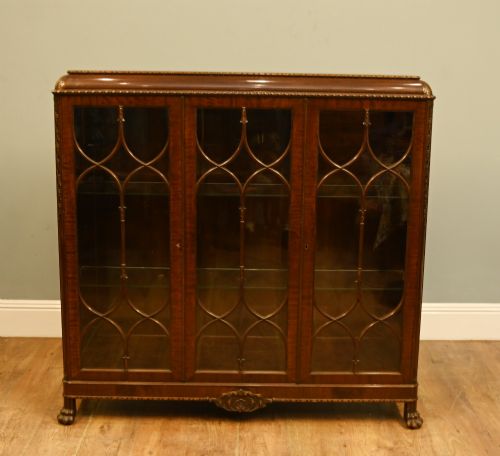
- Glazing bars dividing a glass door into smaller geometric panes. This technique is frequently seen on Georgian and Victorian display cabinets.
- Secretaire Bookcase
- A bookcase featuring a pull-down writing drawer that conceals small compartments and pigeonholes. It merges desk functionality with traditional shelving.
- What-Not
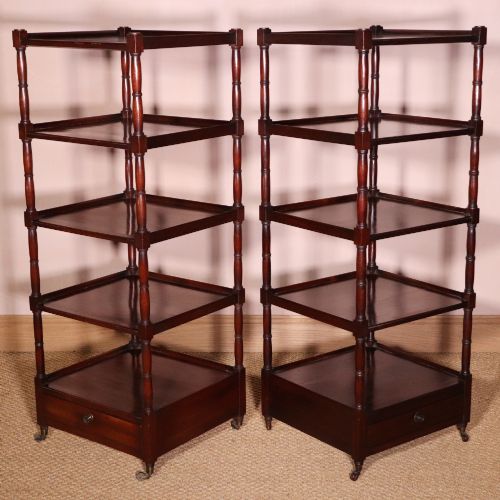
- An open set of tiered shelves used for displaying ornaments and books. These pieces often feature delicate turned supports.
- Vitrine
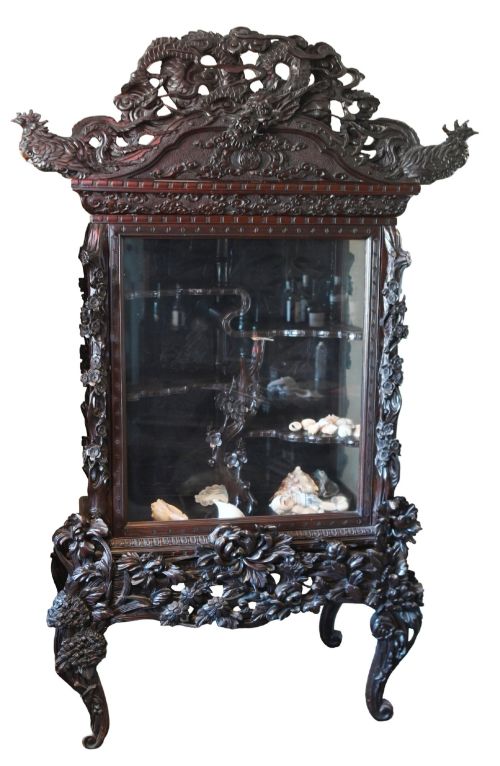
- A glass-fronted display cabinet designed specifically for showing porcelain and objets d'art. They appear across various periods with glazed doors or sides.
- Flame Mahogany Veneer
- A thin layer of timber sliced from mahogany showing a distinctive flamelike grain pattern. Cabinetmakers applied this to prominent surfaces for visual impact.
Dark Wood Display Bookcase: Frequently Asked Questions
How do I adjust the shelves?
Many Victorian and Edwardian bookcases incorporate adjustable wooden shelving resting on wooden or brass support systems within the cabinet interior.
Users can alter shelf heights by repositioning the supports inside the upright channels provided in the bookcase carcase.
What is the difference between an open bookcase and a display cabinet?
An open bookcase provides accessible, unglazed shelving primarily intended for book storage and everyday handling.
A display cabinet incorporates glass doors or vitrine panels to protect collectibles and bound volumes from dust while maintaining full visibility.
How do I identify a Regency bookcase?
Regency pieces often display classical architectural motifs, clean lines, and dark mahogany timbers reflecting early nineteenth-century design principles.
They frequently take the form of tiered what-nots, hanging shelves, or secretaire bookcases dating from the early decades of the eighteen-hundreds.
Can these bookcases support heavy books?
Solid hardwood construction in mahogany, oak, and walnut provides sturdy structural support suitable for standard collections of volumes.
However, shelf capacity depends on the thickness of the individual timber boards and the condition of their internal supports.