
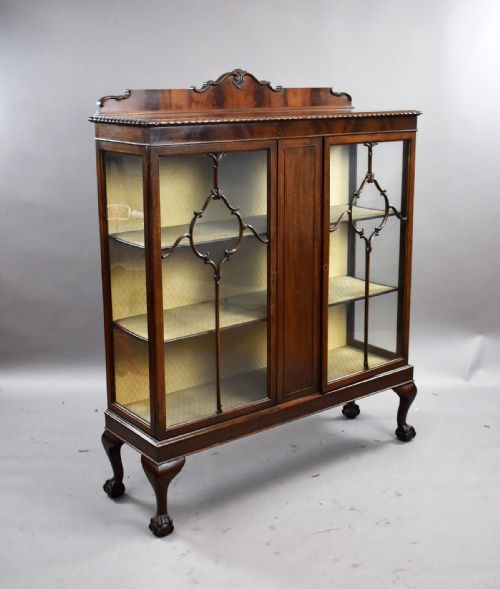
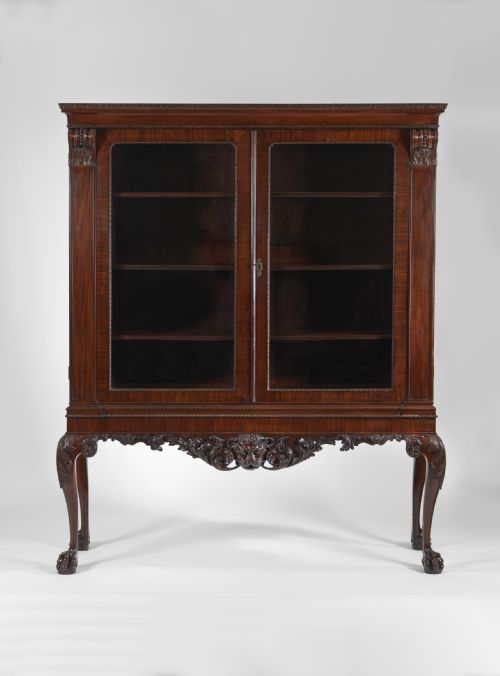


Claw and Ball Display Cabinet
These claw and ball display cabinet examples bring period elegance and refined timber work to a room, offering glazed storage for cherished collections.
Claw and Ball Display Cabinet
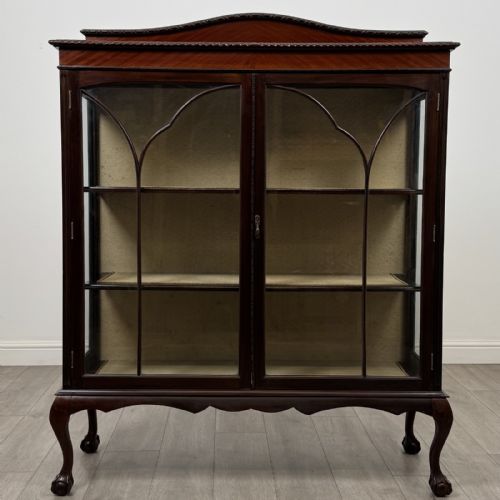
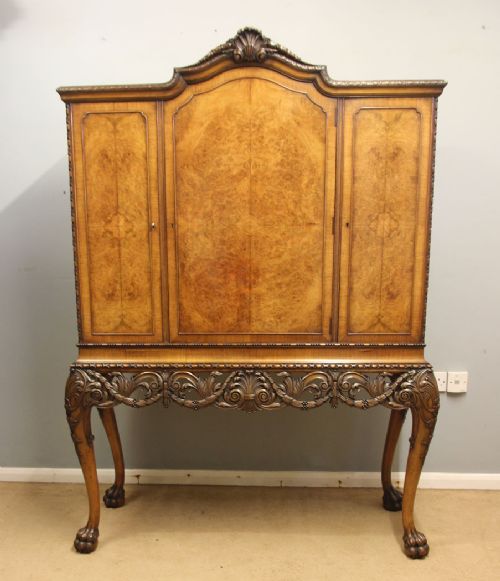
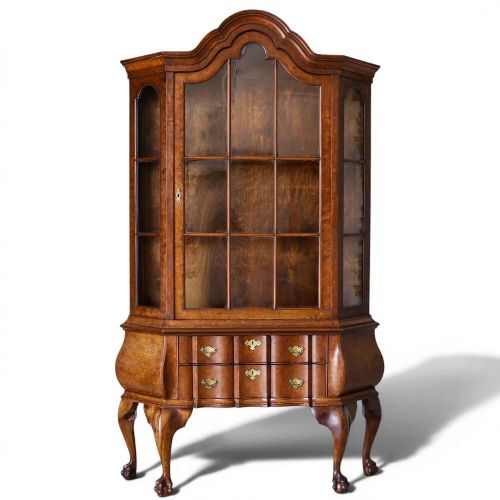
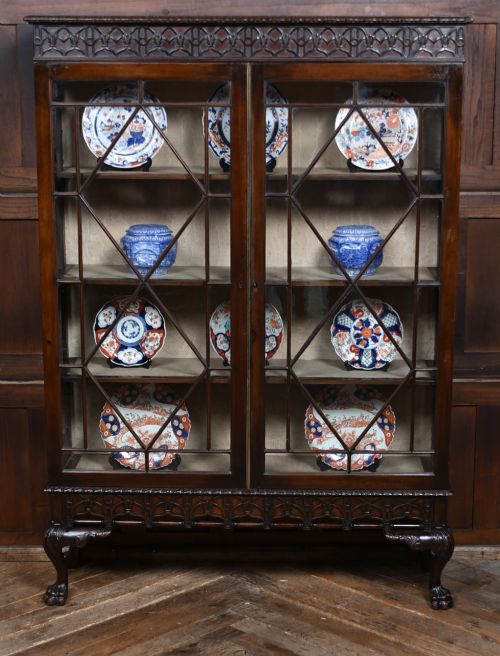
When you search for a claw and ball display cabinet, you are looking at tall timber furniture designed to showcase ceramics, books, or curios behind glass doors. These pieces combine practical storage with decorative presence, standing upon distinctive carved foot forms.
The versions most commonly met on this page span the Edwardian era and the early twentieth century, alongside revivals reaching back to the eighteenth century. They appear in forms such as glazed bookcases, side cabinets, and narrow vitrines.
Construction relies heavily on mahogany and walnut, frequently following Chippendale, Queen Anne, or Dutch Baroque revival styles. Makers adapted historical forms to suit Edwardian and later domestic interiors.
How they were made
Cabinet makers utilised solid timber frames alongside figured veneers such as burr walnut and mahogany to build these display units. Glass panels were fitted into glazed upper doors or side panels to protect the contents while maintaining visibility.
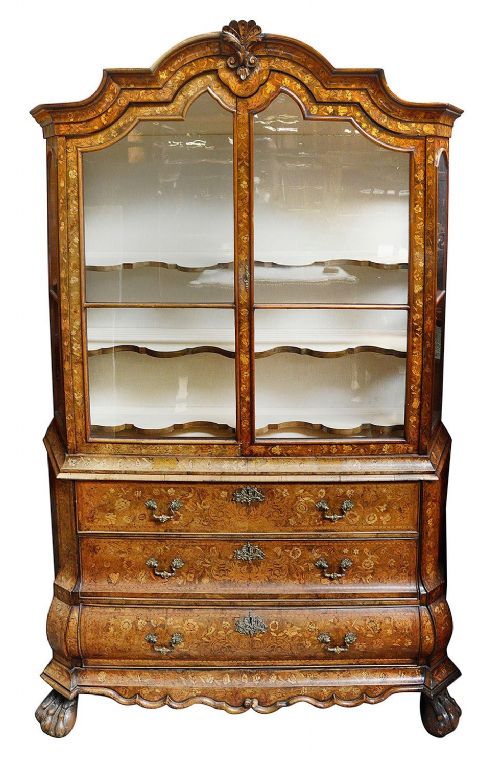
Carving defined the lower supports, where wooden feet took the shape of talons grasping a sphere. Additional decorative elements included brass hardware, fabric linings, and marquetry inlay.
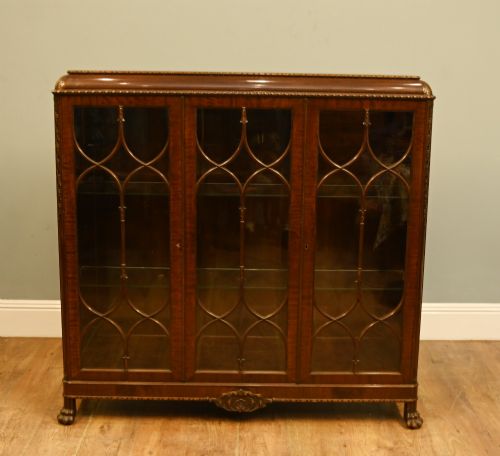
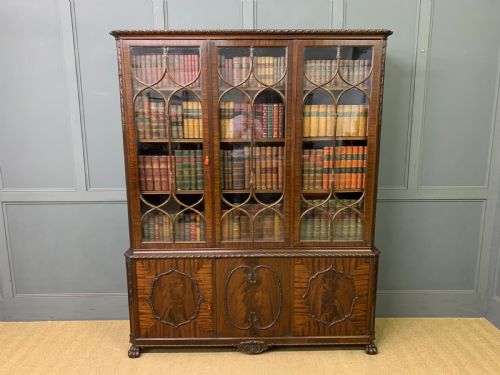
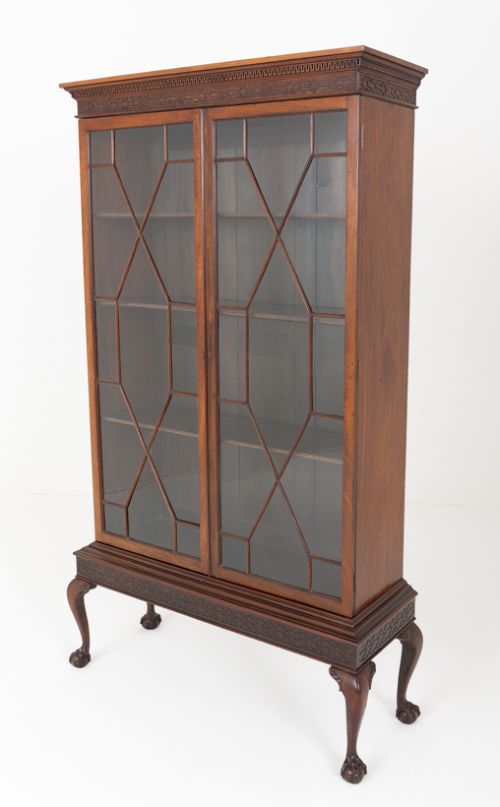
Structures ranged from single door bow front cabinets to substantial four door breakfront bookcases and tall narrow vitrines.
Styles represented on this page include Chippendale Revival, Queen Anne Revival, Dutch Baroque, and Art Deco influences.
What varies in quality
The standard of a claw and ball display cabinet rests upon the depth and crispness of the wood carving on the feet and frames. Hand carved details show greater vitality than machine shaped mouldings.
Timber selection distinguishes the builds, with well matched grain patterns and choice veneers indicating finer cabinet making. The thickness of the glass, the fit of the doors, and the quality of interior fabric linings complete the distinction between basic production and superior work.
Hille·William Kent
The Claw and Ball Display Cabinet Glossary
- Claw and ball
- A furniture foot carved to represent a bird's talons grasping a ball, popular in eighteenth century design and later revivals.
- Vitrine
- A glass fronted cabinet or display case designed specifically for showing porcelain, glassware, or small decorative objects.
- Breakfront
- A piece of furniture where the central section projects forward from the flanking sections, creating architectural depth.
- Marquetry
- Decorative veneer work formed by fitted pieces of different coloured woods or other materials to create pictorial patterns.
- Chippendale
- A style of English furniture originating in the eighteenth century, known for elaborate carving, cabriole legs, and gothic or Chinese influences.
Claw and Ball Display Cabinet: Frequently Asked Questions
What is a claw and ball display cabinet?
A claw and ball display cabinet is a glazed wooden case used to store and exhibit objects, distinguished by its carved feet depicting talons gripping a sphere.
These pieces emerged in various revival styles during the Edwardian period and earlier centuries, combining practical shelving with decorative timber framing.
How do I date an Edwardian display cabinet?
Dating relies on stylistic clues, construction methods, and materials recorded in historical examples from the early twentieth century. Edwardian pieces often adopt Chippendale or Dutch Baroque revival motifs while using machine finished internal elements alongside hand worked details.
Examining the type of timber veneer, brass hardware, and glass manufacturing helps confirm the period of production.
Where should I place a display cabinet?
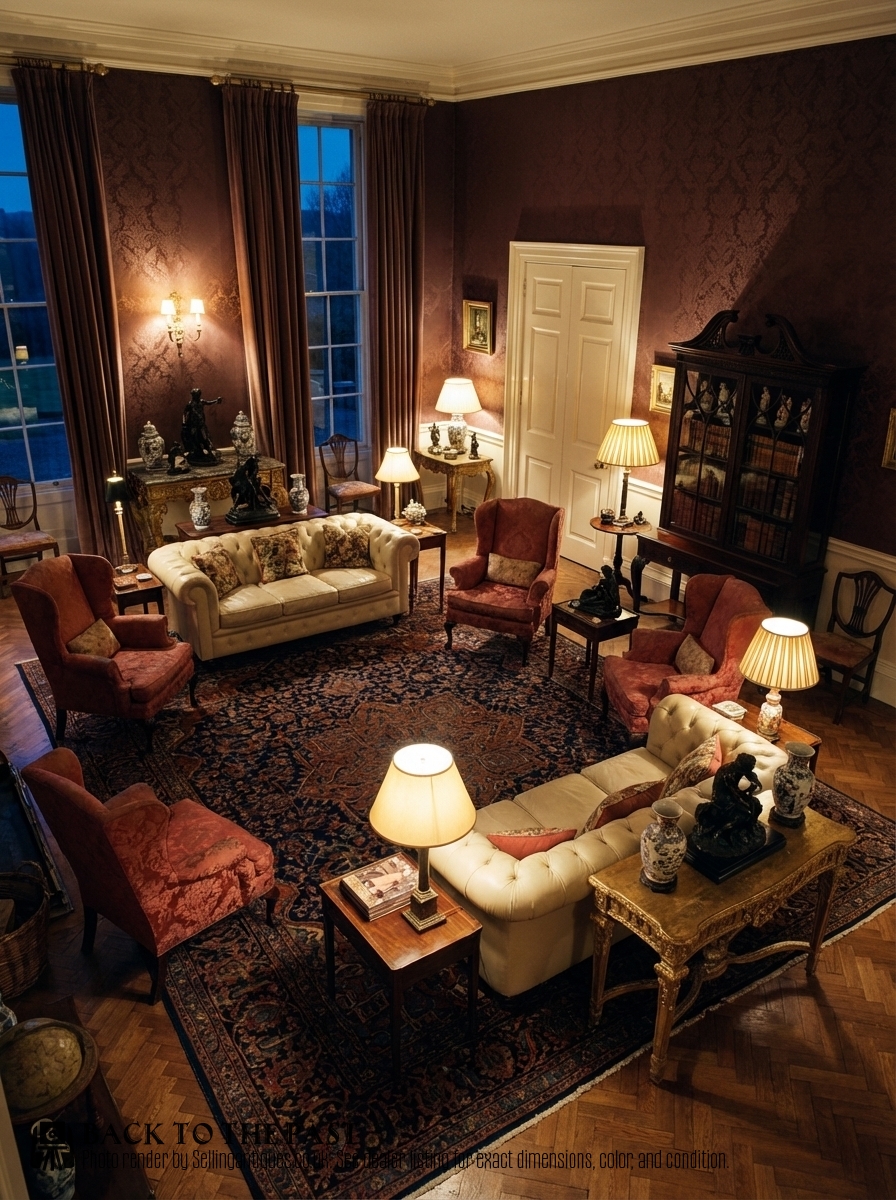
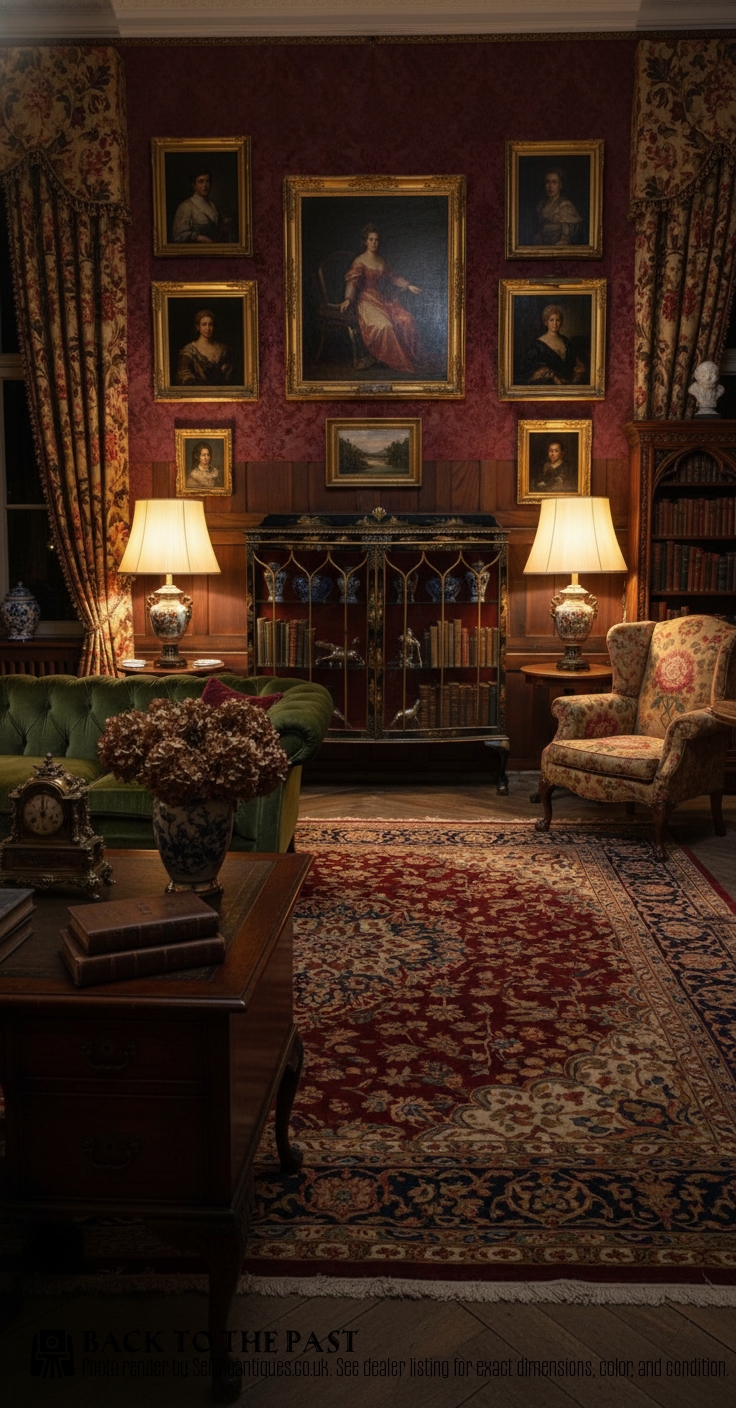
These cabinets suit principal reception rooms, dining spaces, or libraries where their glazed doors can showcase collections safely. Positioning them away from direct sunlight protects both the timber finish and any fabric lined interiors.
Allow sufficient floor clearance for the projecting carved feet so the proportions of the base remain visible.
How are Chippendale revival cabinets different?
Chippendale revival cabinets draw upon eighteenth century design principles, featuring characteristic carved mouldings, tracery in the glazed doors, and prominent ball and foot supports. They often employ solid mahogany or rich veneers.
Later revival interpretations balance classical proportions with the domestic scale typical of Edwardian homes.