


Standing Brass Vanity Mirror
A standing brass vanity mirror brings both useful reflection and warm metallic light to a dressing table.
Standing Brass Vanity Mirror
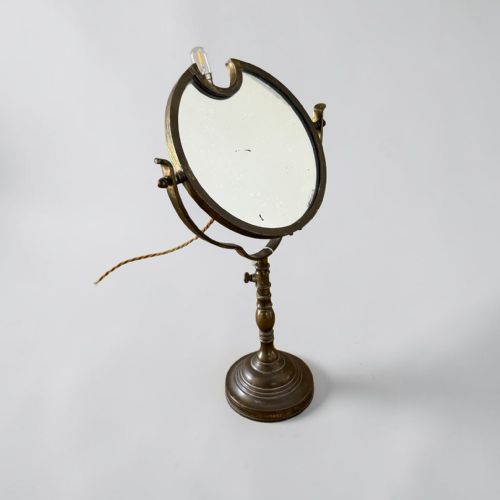
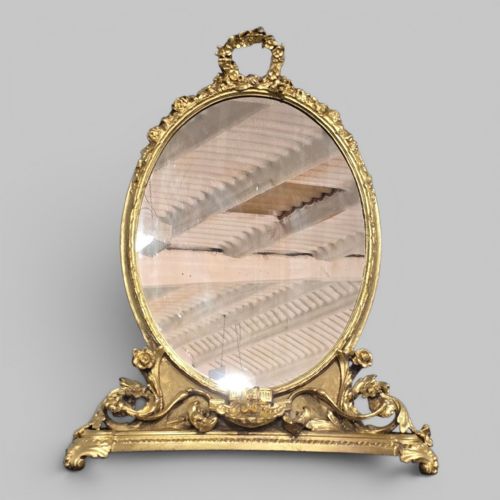
A standing brass vanity mirror is a portable looking glass designed to sit upon a table, chest of drawers or wash stand for daily grooming. These pieces take many forms, from simple swinging plates on wooden stands to elaborate pivoting frames with adjustable heights.
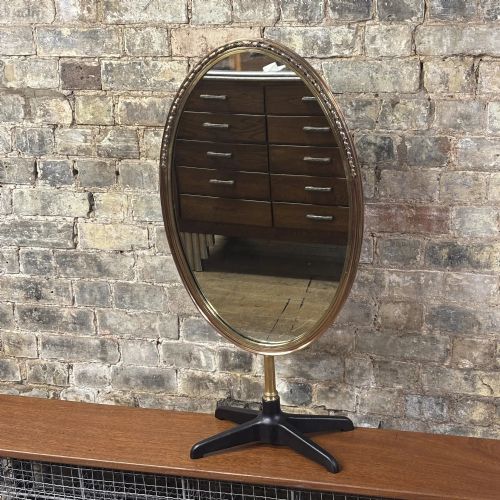
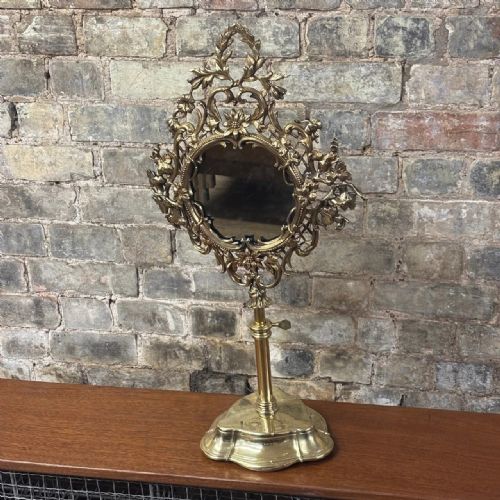
The versions most commonly met on this page date from the Victorian and Edwardian eras, alongside early twentieth-century French examples. These range from plain brass ovals to ornate revival styles decorated with cast ornamentation.
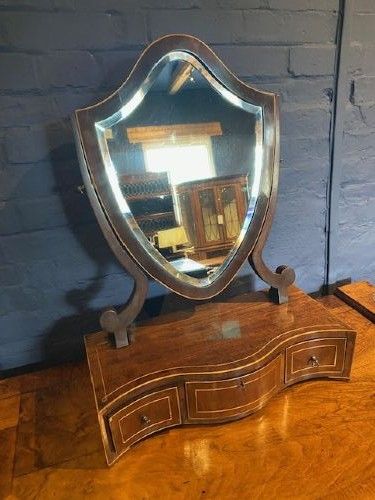
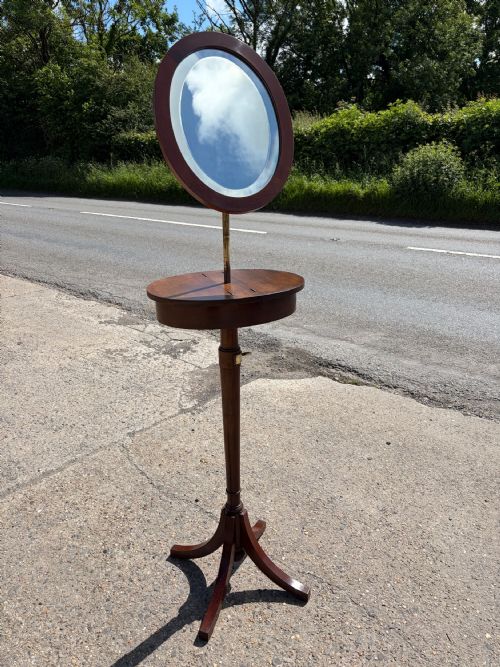
Makers produced these mirrors for both ladies' dressing tables and gentlemen's shaving stands, incorporating materials like mahogany, walnut and bevelled glass alongside solid brass and gilt bronze.
What varies in quality
Quality rests in the weight of the metal casting and the crispness of the chased or repoussé decoration on the frame. Finer examples display heavier gauge brass, well-fitted hinges that hold the glass steady at any angle, and genuine bevelled mirror plates.
The choice of secondary materials also marks the standard of the piece, with solid mahogany, walnut or gilt bronze frames representing higher production values than simpler constructions.
Listings for standing brass vanity mirror pieces span the Victorian, Edwardian, and Regency periods, alongside early twentieth-century French designs.
Thomas Rubergall·F. Bienvue
The Standing Brass Vanity Mirror Glossary
- Swing mirror
- A looking glass hung on pivots within a vertical frame, allowing the plate to tilt back and forth. This common mechanism appears on most table dressing mirrors.
- Telescopic shaving mirror
- A standing mirror mounted on an adjustable vertical shaft that raises or lowers the glass to suit the user. These frequently feature tripod bases for stability.
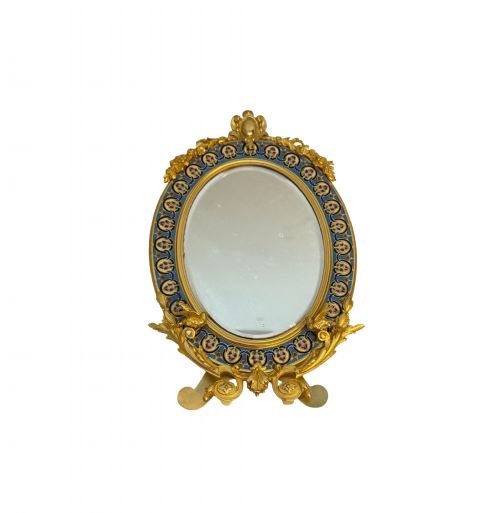
- Champleve
- An enamelling technique where troughs are dug into the metal surface and filled with coloured glass paste before firing. This decorative method decorates French table mirrors.
- Repousse
- A metalworking technique where the artisan hammers the design from the reverse side to form raised patterns on the front. This gives texture to brass dressing table frames.
- Ormolu
- Gilt bronze ornamentation applied to furniture and decorative objects during the eighteenth and nineteenth centuries. It provides a rich golden finish on French table mirrors.
- Bevelled glass
- A mirror plate with edges cut and polished at an angle to create a framed effect. Finer antique looking glasses usually feature this detail.
Standing Brass Vanity Mirror: Frequently Asked Questions
How do I clean an antique brass mirror frame?
Dust the brass gently with a soft, dry cloth to remove surface grime without disturbing the aged patina. Avoid harsh commercial dips or abrasive cleaners that strip the historic finish.
Clean the glass plate using a modest amount of glass cleaner applied to a cloth rather than sprayed directly onto the mirror, protecting the surrounding metal and backing.
Why do some mirrors adjust in height?
Telescopic stems and pivoting mounts were engineered to give the user control over the angle and elevation of the reflection during shaving or dressing. This adaptability suited pieces intended for domestic dressing tables and wash stands.
Heavier friction joints kept the mirror plate fixed in position once adjusted by hand.
How can I tell a Victorian mirror from an Edwardian one?
Victorian examples often favour heavier cast brass, rich mahogany or walnut frames, and sometimes incorporate elaborate French revival styles. They can also include scientific or mechanical telescopic adjustments.
Edwardian pieces frequently showcase lighter brass repoussé work or simpler oval forms, reflecting changing domestic tastes at the turn of the twentieth century.
Where should I place a standing vanity mirror?
Position the mirror on a sturdy chest of drawers, dressing table or sideboard where natural light from a window can illuminate the glass. Ensure the surface is level so the pivoting frame stays balanced.
Keep the piece away from damp areas like unventilated bathrooms to protect the mirror backing and metal joints.