
French Table Mirror
When you search for a french table mirror, you open a drawer of nineteenth-century boudoir design that brings polished brass, champleve enamel, and carved walnut directly to the tabletop.
French Table Mirror
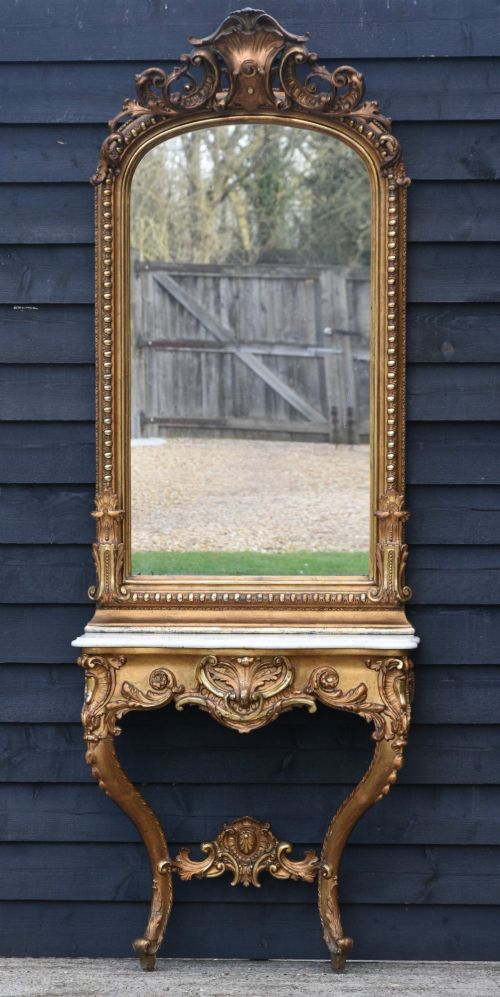
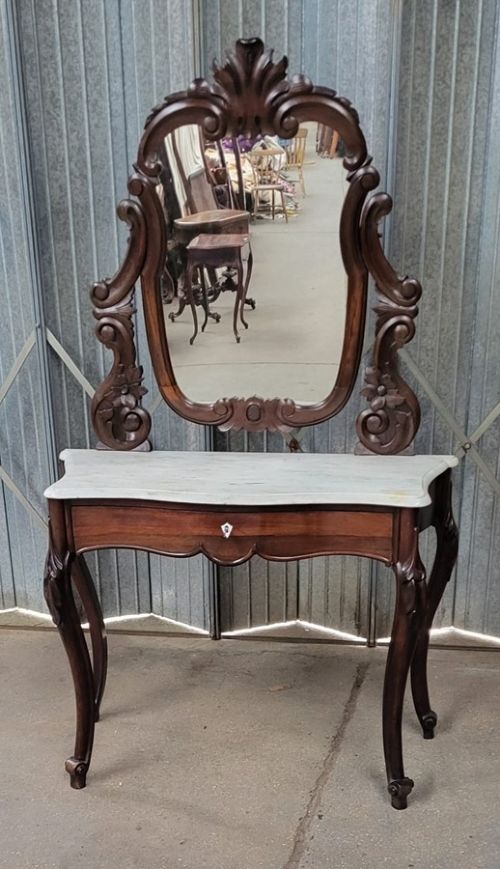
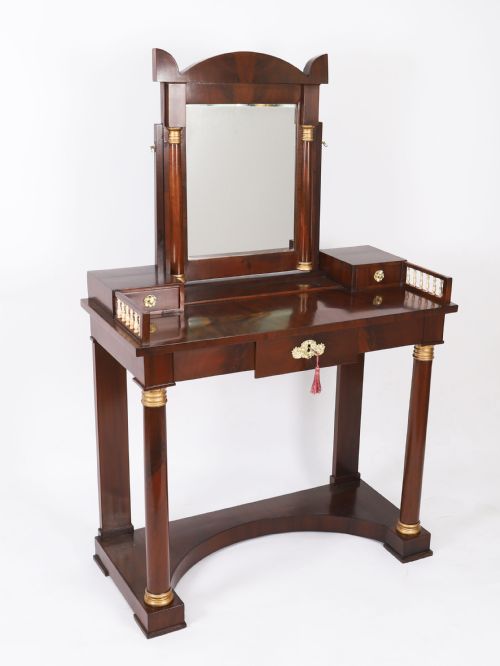
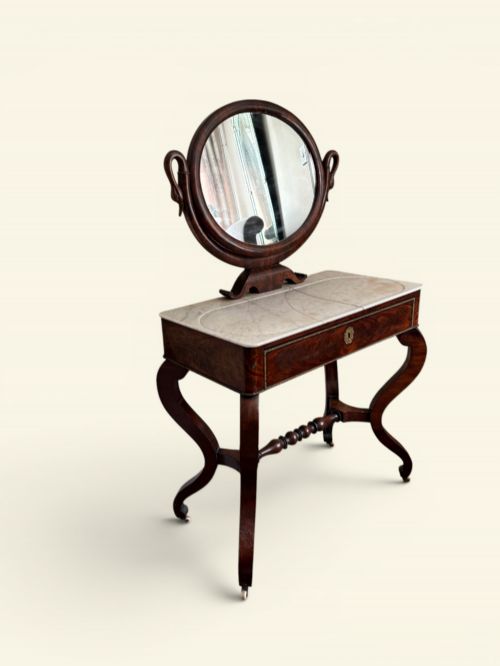
A french table mirror is a compact looking glass designed for a dressing table, chest, or vanity, intended to sit securely on a horizontal surface rather than hang upon a wall. The pieces recorded here predominantly step out of the nineteenth century, drawing on Rococo Revival, French Empire, and Edwardian aesthetic idioms.
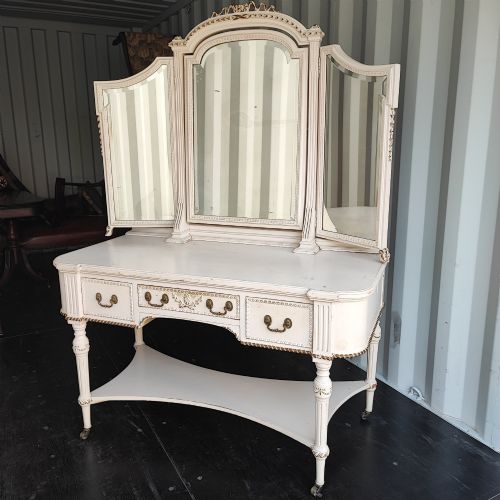
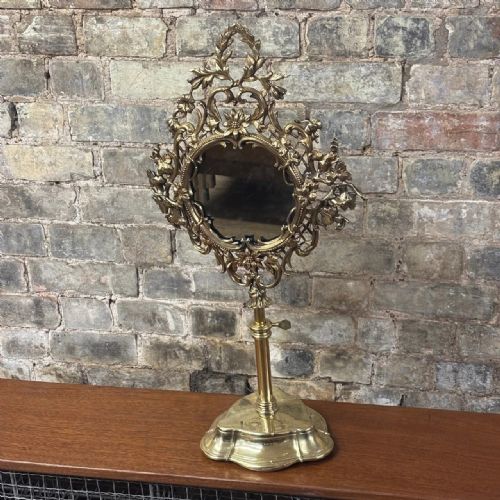
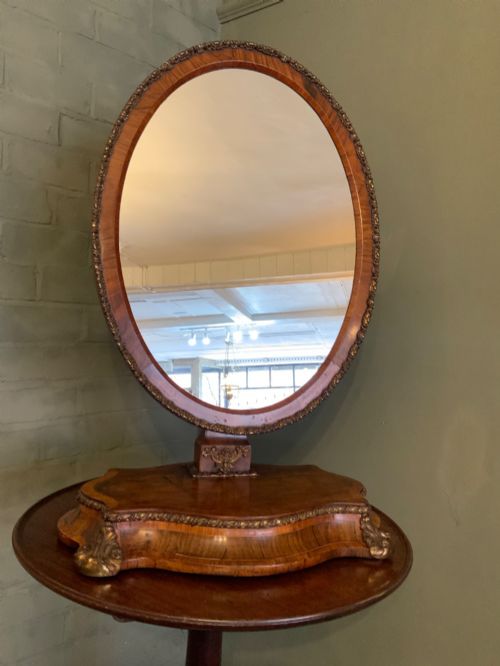
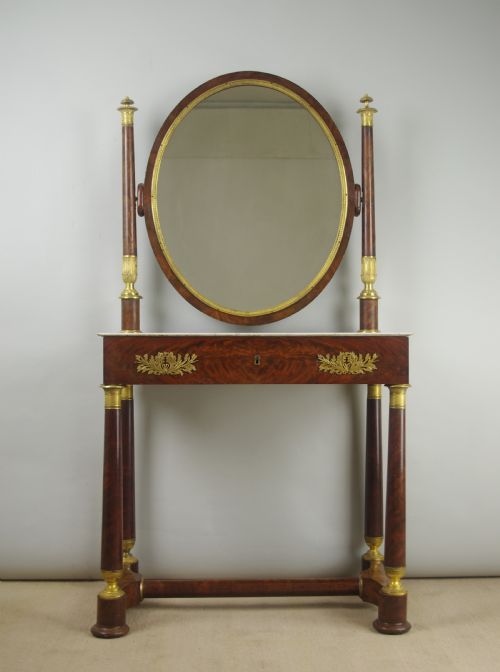
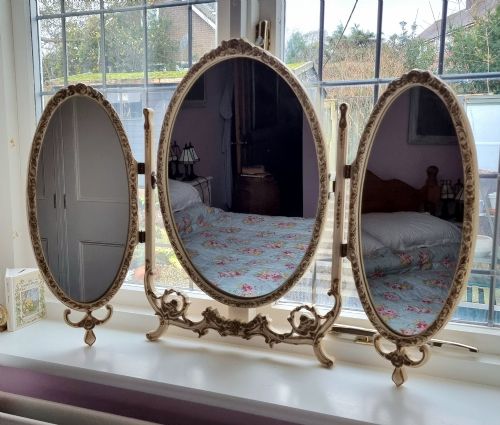
Most examples function as pivoting toilet mirrors held within upright scrolling arms, or emerge as folding triple mirrors that offer adjustable side angles. Alongside these standalone items, the category encompasses smaller easel-backed frames and dressing table attachments shaped from walnut, mahogany, or gilded bronze.
Materials and Construction
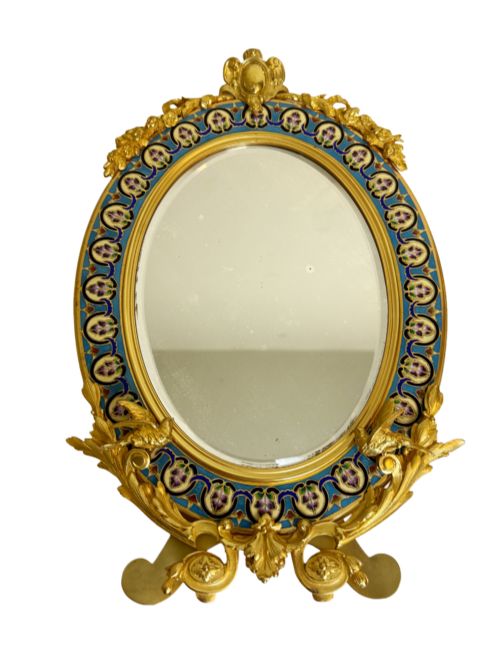
Makers of these looking glasses employed cast brass, gilt bronze, and ormolu alongside dense hardwoods such as mahogany and walnut to build durable, decorative frames. Many late nineteenth-century examples incorporate champleve enamel panels or delicate gesso work around the glass plate.
Support structures rely on sturdy easel backs, weighted brass feet, or carved wooden scrolling brackets that allow the mirror frame to tilt smoothly on pivoting screws. Glass plates are frequently bevelled at the edges and set into rebated timber or metal channels.
The listings show table mirrors fashioned from brass, marble, mahogany, and gilt bronze, spanning the Victorian era through the 1930s.
Assessing Craftsmanship
Quality rests upon the crispness of the cast metal mounts and the depth of the hand-carved woodwork, where sharper chisel work and heavier gauge brass separate finer pieces from mass-produced alternatives. Superior mirrors maintain smooth tension in their pivoting mechanisms without slipping or sagging.
The integrity of the mercury or silvered glass plate also influences the standing of a piece, alongside the preservation of original gilding, ebonising, or marquetry inlay across the frame and its supporting stand.
Louis Auguste Moreau·Thiebaut Freres
The French Table Mirror Glossary
- Champleve
- An enamelling technique where troughs are dug into a metal surface, filled with vitreous colour, and fired. This method decorates many nineteenth-century brass and bronze mirror frames.
- Ormolu
- Ground gold applied to a bronze base using a mercury amalgamation process, creating a bright metallic finish. It appears frequently on mounts across French Empire dressing pieces.
- Gesso
- A plaster mixture applied to wood and carved before gilding or painting. It forms the raised decorative flourishes seen on many nineteenth-century giltwood frames.
- Bevel
- An angled edge cut around the perimeter of a glass mirror plate. This technique catches the light and distinguishes higher-grade looking glasses.
- Easel back
- A hinged supporting strut attached to the reverse of a tabletop frame. It allows the glass to stand unsupported at an angle.
French Table Mirror: Frequently Asked Questions
What is a french table mirror?
A french table mirror is a portable looking glass designed to sit upon a dressing chest, bureau, or vanity table. These items range from simple brass-framed pivoting glasses to elaborate champleve and ormolu pieces.
They served both a practical purpose for grooming and an ornamental role in nineteenth-century boudoir decoration, often matching larger bedroom furniture suites.
How were these mirrors used?
Owners placed them on top of commodes, side cabinets, or dedicated dressing tables to assist with daily personal grooming. The pivoting frame allowed the user to adjust the angle of reflection.
Triple mirror variants provided side panels that could be angled to check hair and attire from multiple perspectives simultaneously.
How do I date a table mirror?
Dating relies on identifying the prevailing design style, such as Rococo Revival curves, Empire symmetry, or Art Nouveau whiplash lines. The choice of materials, from heavy cast ormolu to Edwardian brass, offers further chronological clues.
Examining the construction of the mirror back, screw threads, and the bevelling of the glass plate helps narrow the period of manufacture.
Where should I place one at home?
These mirrors suit dressing tables, chest tops, and hallway sideboards where their reflective glass can bounce light around the room. Their compact footprint allows them to sit safely on narrow surfaces.
Pairing a brass or giltwood mirror with a matching console or cabinet creates a cohesive historic display reminiscent of a nineteenth-century interior.