
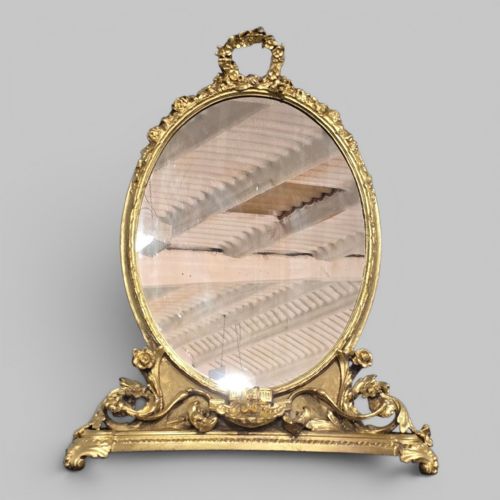


French Ormolu Vanity Mirror
These french ormolu vanity mirror pieces bring genuine nineteenth-century gilt bronze and glass to a dressing table.
French Ormolu Vanity Mirror
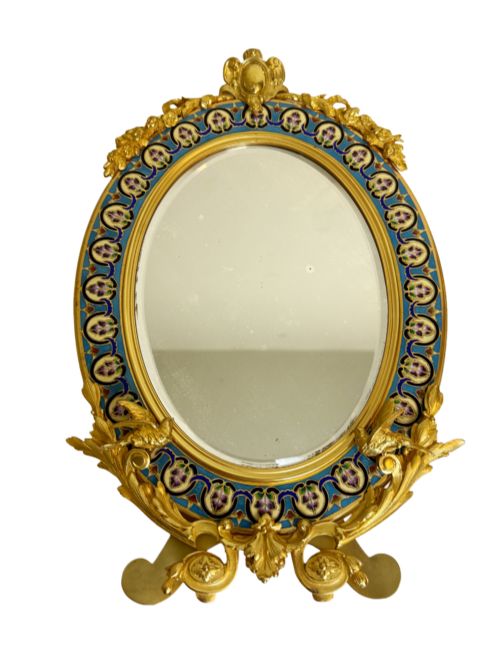
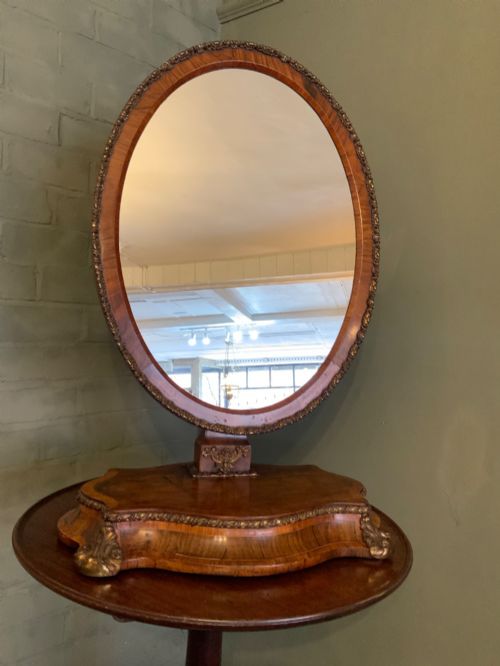
A french ormolu vanity mirror brings nineteenth-century craftsmanship to domestic dressing spaces through tabletop and dressing table mirrors. Buyers encounter table top designs, hand mirrors, and larger toilet mirrors framed in gilt bronze and ormolu.
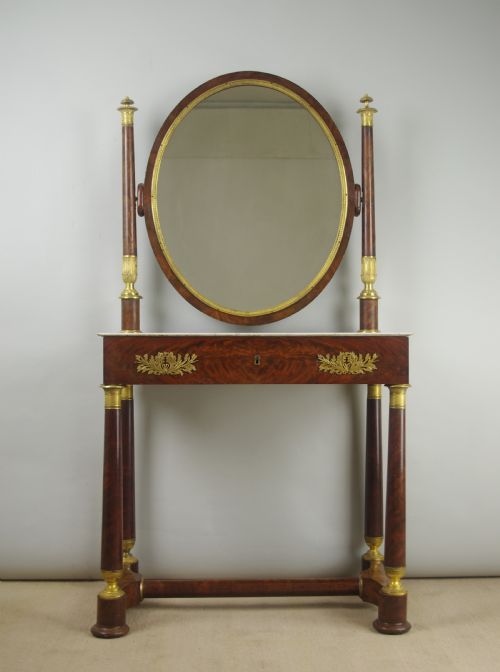
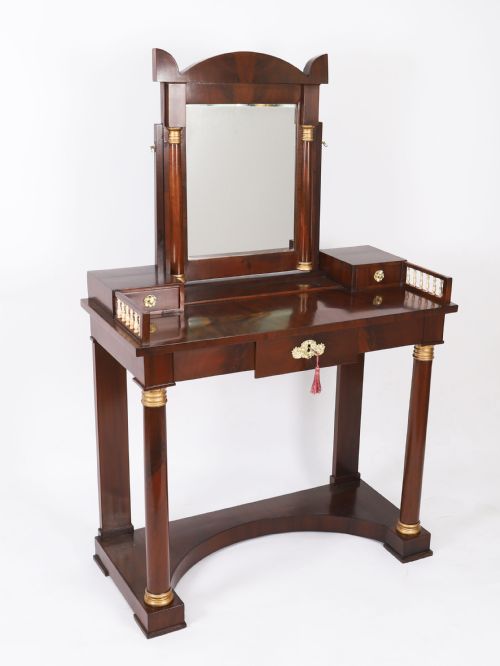
The selections span the Victorian era and the nineteenth century, featuring French Empire and Rococo Revival styles. Pieces frequently incorporate mahogany, walnut, marble, and enamel alongside the characteristic gilt metal mounts.
Makers and workshops of the period utilised bronze, champleve, and porcelain plaques to enrich the frames. Objects range from portable hand mirrors to substantial console and dressing table combinations.
Materials and construction
Craftsmen built the structural frames from dense timbers such as mahogany and walnut, often applying polished finishes to contrast with the metalwork. Ormolu and gilt bronze mounts were cast and chased by hand before being secured to the wood or stone.
Makers integrated decorative elements including Sevres porcelain plaques, Limoges enamel, and champleve enamel directly into the bronze frames. Heavy glass plates provide the reflective surface, held securely within hinged or fixed bezels.
Materials recorded across the inventory include glass, ormolu, mahogany, gilt bronze, enamel, marble, bronze, and walnut.
Judging the work
Quality rests in the crispness of the bronze chasing and the depth of the gilding on the ormolu mounts. Finer examples display sharp detail in the cast foliage and scrollwork rather than soft, smoothed edges.
The integration of secondary materials like marble bases, porcelain inserts, and champleve enamel distinguishes standard production from exceptional studio output. Timber selection and the weight of the supporting construction also mark the tier of the piece.
Thiebaut Freres·Joseph Meissonnier·F.Bienvue
The French Ormolu Vanity Mirror Glossary
- Ormolu
- Gilded bronze produced by applying a mercury-gilding process to cast bronze figures and mounts. This technique creates a durable, warm metallic finish characteristic of nineteenth-century French luxury goods.
- Champleve
- An enamelling technique where troughs are gouged into a metal surface and filled with vitreous enamel powder before firing. The resulting coloured patterns sit flush with the surrounding metal mount.
- Empire
- A nineteenth-century design style drawing on classical Roman, Greek, and Egyptian motifs. Pieces from this period favor symmetry, architectural lines, and restrained ormolu mounts.
- Rococo Revival
- A decorative movement reviving eighteenth-century asymmetrical scrollwork, naturalistic floral motifs, and shell shapes. Frames in this style exhibit exuberant curves and deeply chased bronze work.
- Toilet mirror
- A traditional term for a small dressing mirror designed to sit atop a chest of drawers, console table, or dedicated dressing table. These mirrors frequently feature adjustable pivoting frames.
French Ormolu Vanity Mirror: Frequently Asked Questions
How do I date a french ormolu vanity mirror?
Dating relies on stylistic markers from the nineteenth century, such as the symmetrical discipline of the French Empire period or the flowing curves of Rococo Revival designs. Material combinations like mahogany, marble, and early cast bronze help narrow the production window.
Examination of construction techniques, mirror glass bevelling, and assembly screws provides further confirmation of the period. Makers' signatures and workshop stamps on the bronze elements offer definitive chronological placement.
Where were these mirrors placed?
These mirrors were designed for nineteenth-century dressing rooms, boudoirs, and bedrooms, resting upon dedicated dressing tables or console tables. Portable hand mirrors served immediate personal grooming needs.
Larger tabletop and toilet mirrors anchored the surface of a chest of drawers or a washstand. Their pivoting frames allowed users to adjust the angle of reflection during daily routines.
What is ormolu?
Ormolu describes gilded bronze decorative hardware applied to furniture, clocks, and mirrors during the nineteenth century and earlier. The process involves creating a mercury-gold amalgam on the cast bronze surface to produce a durable golden sheen.
In these pieces, ormolu provides the ornate frames, scroll feet, and decorative mounts. It requires gentle cleaning to preserve the underlying layer without stripping the original finish.
How should I clean the glass?
Cleaning requires a soft microfiber cloth and a mild glass cleaner applied sparingly to the cloth rather than directly onto the mirror plate. This prevents liquid from seeping behind the glass and damaging the antique silvering.
Great care must be taken to keep moisture away from the surrounding ormolu mounts and wooden frames. Harsh chemical solvents should be avoided to protect both the metal gilding and the antique timber.