

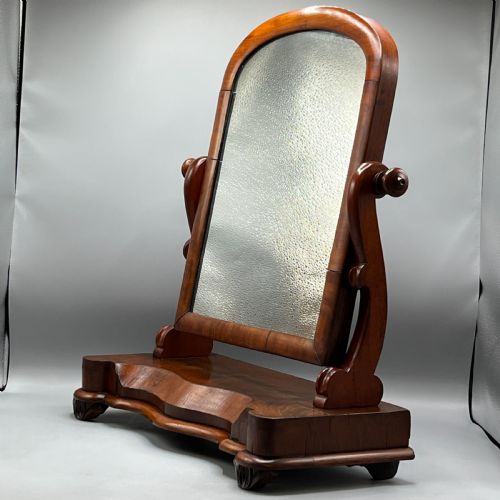


Vintage Swivel Table Mirror
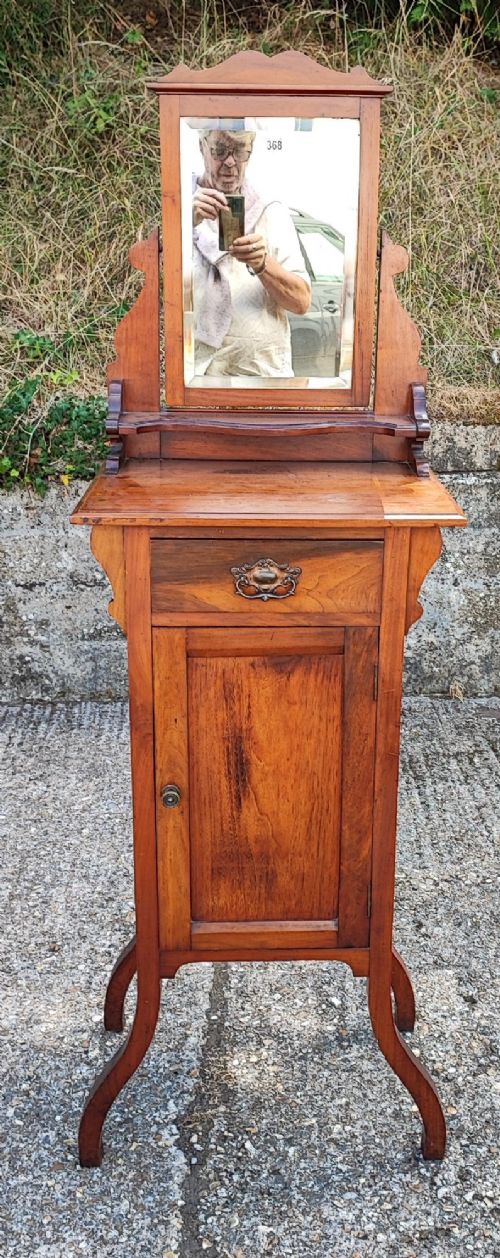
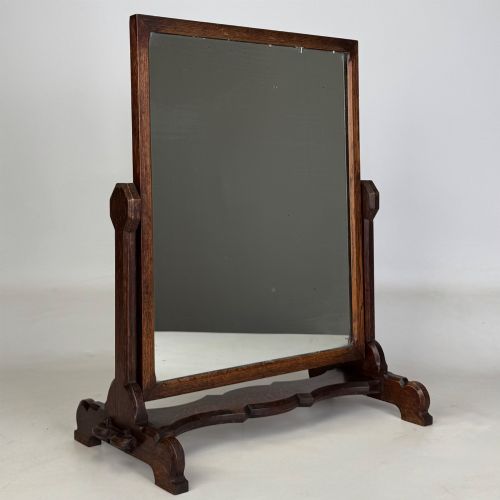
A vintage swivel table mirror sits on a chest or dresser, holding glass that tilts to catch the light.
Vintage Swivel Table Mirror
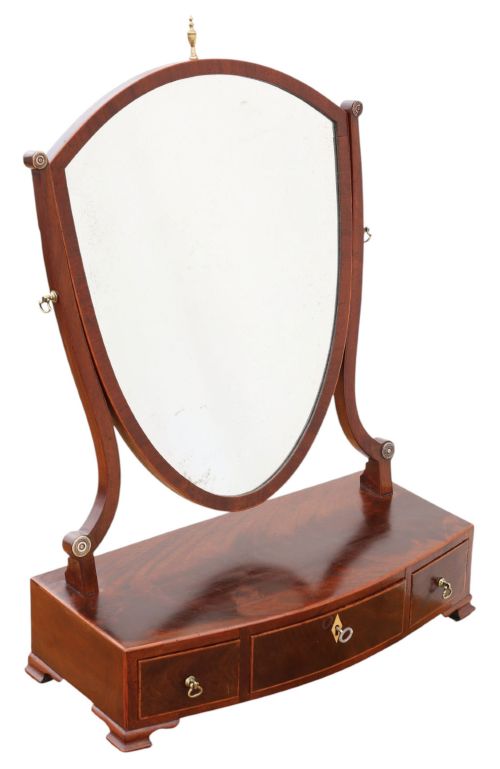
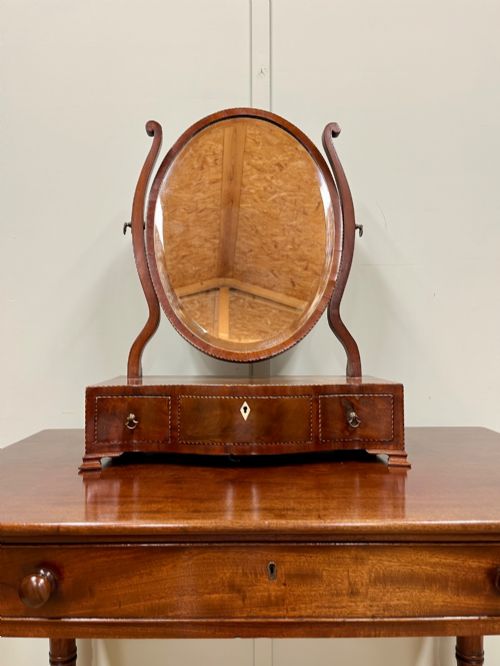
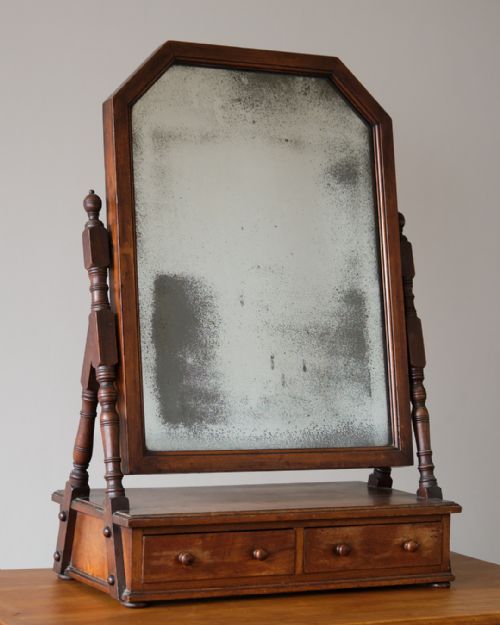
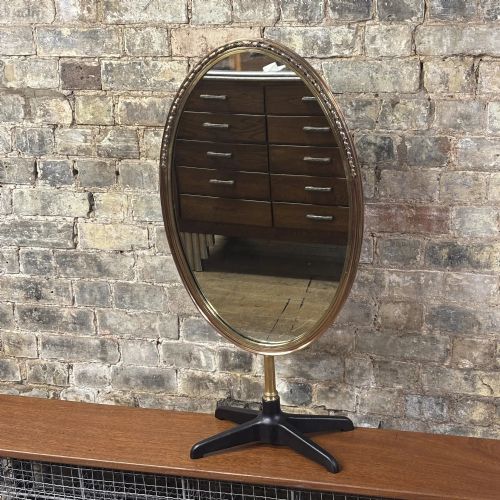
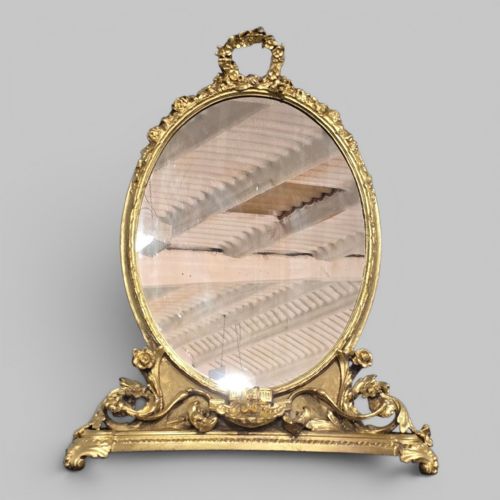
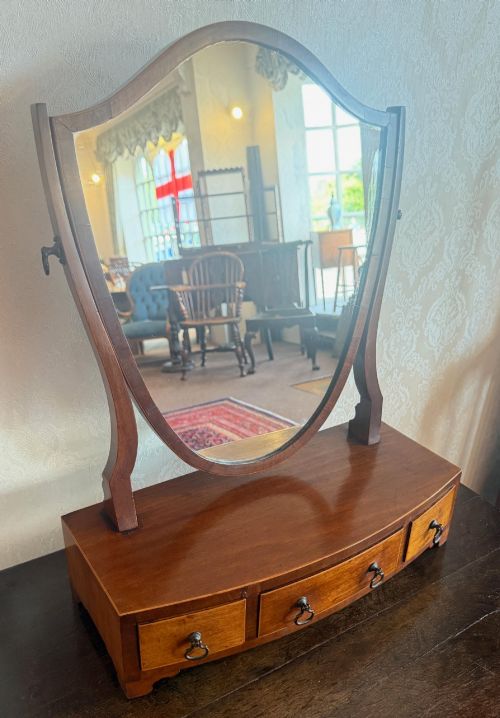
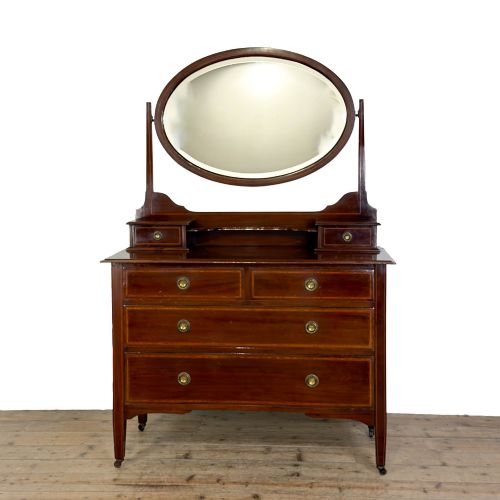
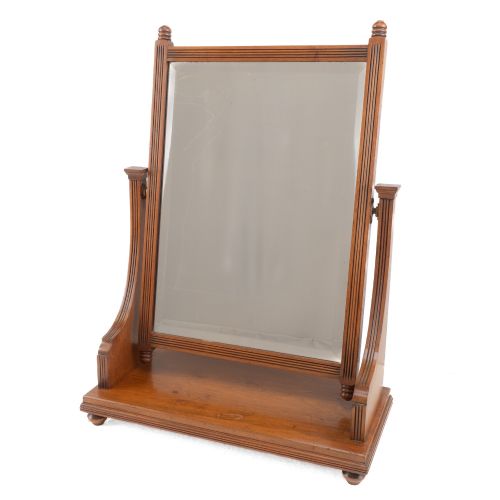
A vintage swivel table mirror provides a tilting glass surface supported by a frame and base, designed to sit upon a chest or dressing table. You will frequently encounter mahogany and walnut examples from the Georgian, Victorian, and Edwardian periods on this page.
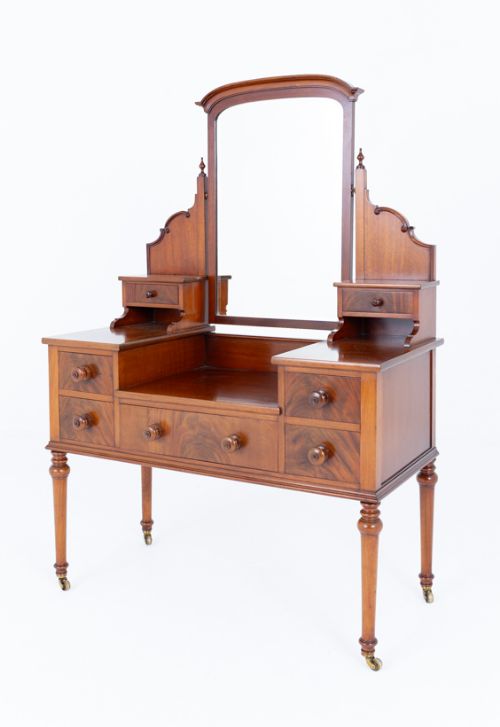
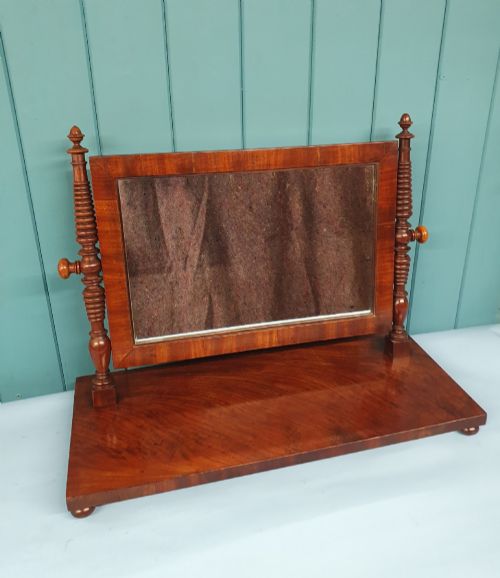
The form often incorporates small drawers in the base for trinkets, though simpler standing frames also appear. These pieces range from shield and oval shapes to rectangular plates set on upright pillars with brass knobs.
Origins span British workshops as well as continental European makers, utilising native timbers alongside imported hardwoods. The primary function remains personal grooming, though many survive simply as decorative table furniture.
How they were made
Cabinetmakers constructed the frames using solid timbers such as mahogany, walnut, and oak, frequently employing veneers on secondary woods for curved surfaces. Joinery relied on dovetails for small drawers and turned wooden or brass pivots to allow the glass to tilt smoothly.
Mirror plates were historically silvered on glass, sometimes held within gilt or parcel-gilt surrounds. Details like bone escutcheons, satinwood stringing, and cast bronze mounts added refinement to the structural woodwork.
Some Victorian mirrors hide secret compartments behind tiny drawers, perfect for losing your favourite cufflinks.
What varies in quality
The choice of timber and veneer figure dictates much of the visual appeal, with richly grained mahogany and burr walnut sitting at the upper end. Finely turned uprights, original brass hardware, and well-executed dovetail joints distinguish superior cabinetwork.
Proportion and balance also matter, as finer examples maintain a harmonious relationship between the size of the mirror plate and the weight of the supporting base. The clarity of the glass and the retention of original surfaces contribute further to the distinction between pieces.
Heal & Sons·Thomas Rubergall
The Vintage Swivel Table Mirror Glossary
- Swing mirror
- A glass plate mounted on pivots within a frame that tilts back and forth. This mechanism allows the user to adjust the angle during dressing.
- Toilet mirror
- A traditional term for a small dressing mirror designed to sit on a table. These often feature a box base fitted with small drawers.
- Cheval mirror
- A large standing mirror, though the term also describes larger table-top versions with vertical floor-standing proportions. They allow a full-length view depending on scale.
- Parcel-gilt
- Partially gilded woodwork where gold leaf highlights specific carved details. It appears frequently on Georgian and Regency frames.
- Shield mirror
- A glass plate shaped like a heraldic shield, popular during the 18th and 19th centuries. The curved top sits atop scroll supports.
Vintage Swivel Table Mirror: Frequently Asked Questions
What is a vintage swivel table mirror used for?
These mirrors were placed upon dressing tables or chests of drawers to assist with personal grooming and styling. The pivoting frame allowed users to adjust the angle of the glass for better light.
Today, they function as decorative accessories in bedrooms and living spaces while retaining their practical tilting ability.
How do I date a wooden swivel mirror?
Dating relies on timber choices, construction methods, and the overall style of the frame. Georgian and Regency examples often feature finer mahogany veneers and slender proportions, while Victorian pieces tend to be heavier with bolder mouldings.
Hardware such as brass screw knobs, drawer construction, and the shape of the mirror plate also provide clear clues to the period of manufacture.
Are the mirror plates original?
Many older pieces retain their original glass, which can show foxing, slight silvering loss, or minor blemishes. Replacement glass was common over the long lifespan of these items if the original broke.
Examining the backboards and the way the glass is secured in the rebate helps determine whether the plate belongs to the period of the frame.
Where should I place a table mirror?
They sit well on top of chests of drawers, dressing tables, sideboards, or console tables. Placing them near a natural light source enhances their reflective quality and practical use.
Ensure the surface is stable and deep enough to support the footprint of the base and the weight of the tilting frame.