





Staffordshire Flatback Ornament
Staffordshire flatback ornament figures bring Victorian domestic life, theatrical heroes and royal subjects directly onto the mantelpiece.
Staffordshire Flatback Ornament
A staffordshire flatback ornament is a ceramic figure shaped to stand against a wall, leaving the reverse largely unglazed and flat. The listings on this page belong to the nineteenth century, stretching from the eighteen-fifties through to nineteen hundred.
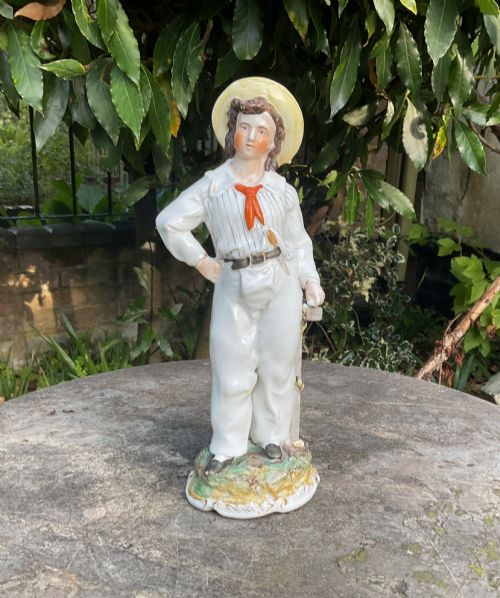
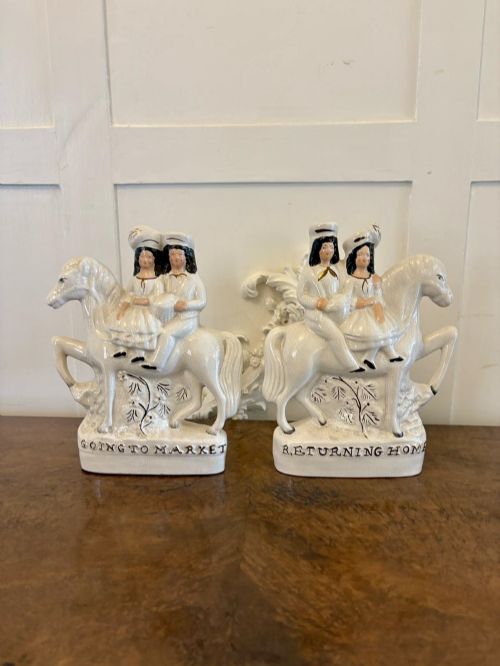
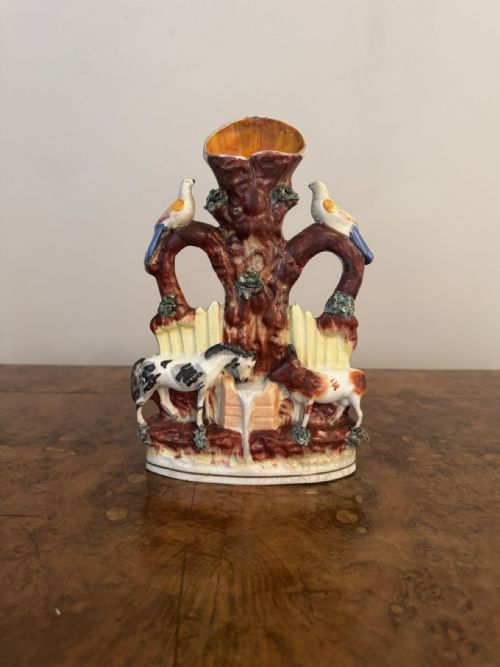
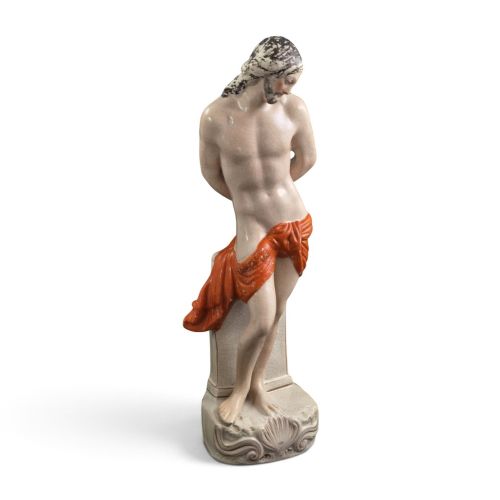
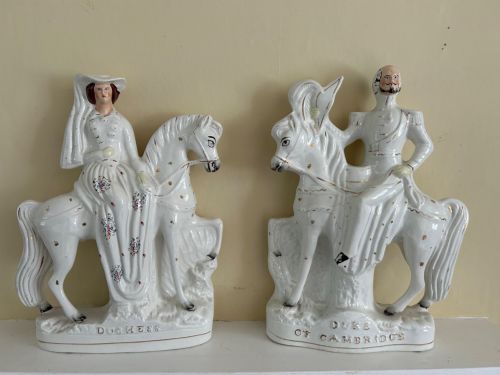
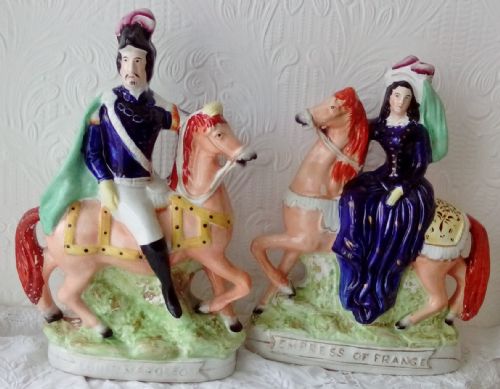
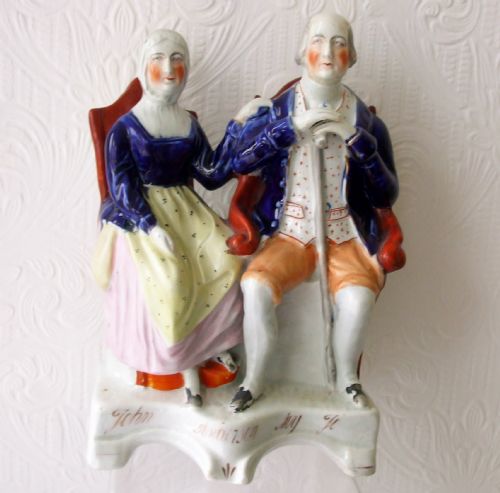
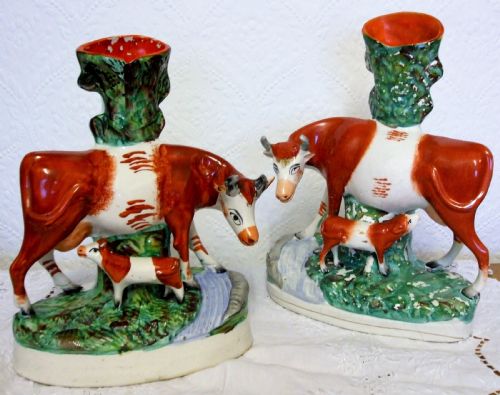
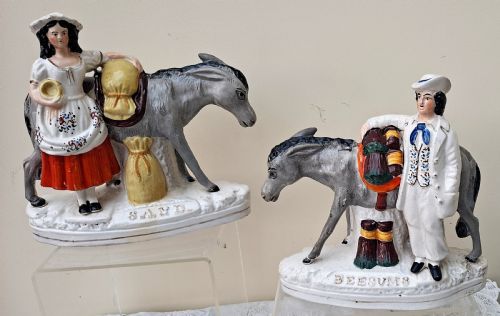
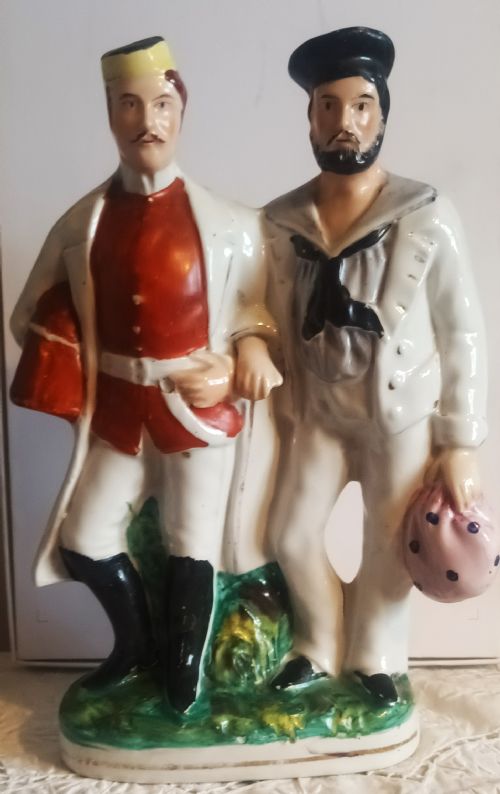
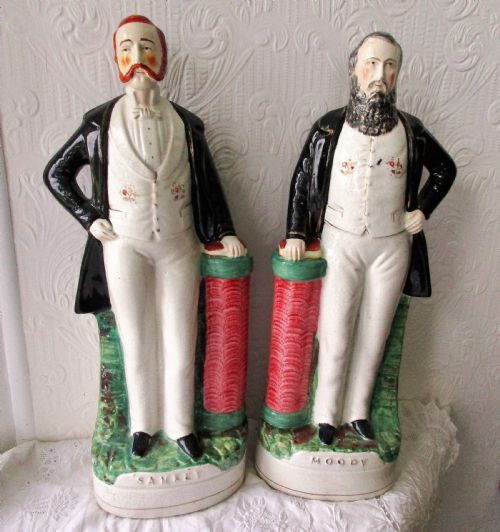
Subjects range from royal portraits and military commanders to theatrical characters, literary figures, and domestic scenes like cottages and animals. Many examples take the form of spill vases or pairs representing historical couples and companions.
Makers produced these decorative figures in earthenware, finished with lead glaze and enamel paint. The Victorian style dominates the selection, encompassing both refined portraiture and simpler folk art pieces.
Materials and production methods
Potters shaped these figures using clay pressed into moulds, creating the hollow, flat-backed construction designed for display on shelves. Earthenware served as the primary ceramic body for the output.
Staffordshire Flatback Ornament Retail Price Guide 2026
Typical asking prices for staffordshire flatback ornament among the pieces listed under this phrase on Sellingantiques today, from the lower quarter to the upper quarter. They describe what is for sale here now, not the wider market.
Queen Victoria appears seated with crown and cobalt blue details, sharing mantelpiece space with Scottish highlanders and cow spill vases.
Assessing quality in the figures
Scale and ambition also define the better pieces, such as large equestrian groups or intricate spill vases featuring multiple figures. Pairs matched by subject and size generally represent a higher standard of original production.
The Staffordshire Flatback Ornament Glossary
- Flatback
- A ceramic figure designed with a flat, unglazed reverse so it sits flush against a wall or mantelpiece. This method saved time and materials during manufacture.
- Spill vase
- A hollow pottery cylinder integrated into a figure, intended to hold wooden spills used for lighting fires or pipes. These often depict animals, forest scenes or human figures.
- Earthenware
- A porous pottery body fired at lower temperatures than stoneware or porcelain. It forms the structural base for nineteenth-century Staffordshire figures.
- Lead glaze
- A shiny coating applied to pottery before a final kiln firing to seal the earthenware body and enrich the colours underneath. It gives the surface a characteristic gloss.
Staffordshire Flatback Ornament: Frequently Asked Questions
What is a Staffordshire flatback?
A Staffordshire flatback is a moulded ceramic figure produced in the nineteenth century for domestic display. The back of the piece is flat and usually unglazed because it was meant to stand against a wall.
Subjects cover a wide range of popular culture, including royalty, military heroes, literary characters, and rustic cottages.
How were these figures used?
These ornaments served primarily as decorative items for mantelpieces, sideboards, and drawing-room shelves during the Victorian era. Some variants, such as spill vases or money boxes, incorporated practical functions.
They allowed ordinary households to display portraits of monarchs, theatrical idols, and scenes from current events or morality tales.
How can I date a flatback ornament?
Dating relies on historical subjects, clothing styles, and the characteristics of the ceramic body and glaze. Most pieces on this page date from the mid to late nineteenth century, specifically between eighteen-fifty and nineteen hundred.
Royal marriages, military campaigns like the Crimean War, and specific theatrical productions provide precise chronological markers for when a subject was popular.
Why are some figures found in pairs?
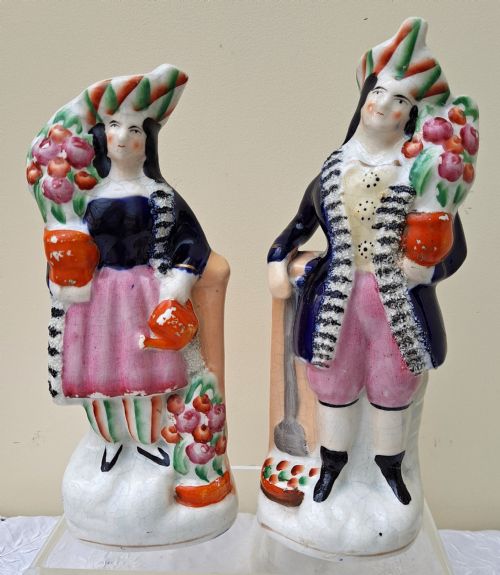
Victorian makers frequently produced figures in matching pairs to balance mantelpiece displays. These often depicted political allies, royal couples, theatrical partners, or complementary characters like gardeners and country folk.
Collectors prize surviving pairs because keeping two companion pieces together through generations is less common than finding single figures.