



Antique Flatback Mantle Ornament
An antique flatback mantle ornament brings Victorian parlour character to a room through colourful earthenware figures designed to stand against a wall.
Antique Flatback Mantle Ornament
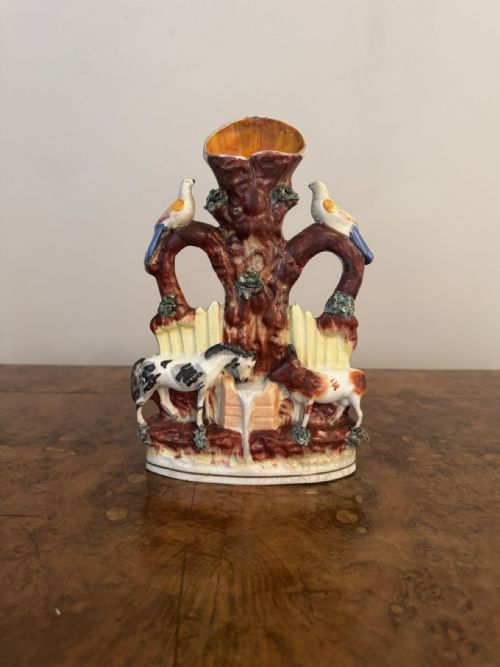
When you search for an antique flatback mantle ornament, you are looking at pottery figures and spill vases made during the Victorian era. These decorative pieces were moulded to display from the front, leaving the flat reverse unglazed or plainly finished to sit neatly on a fireplace shelf.
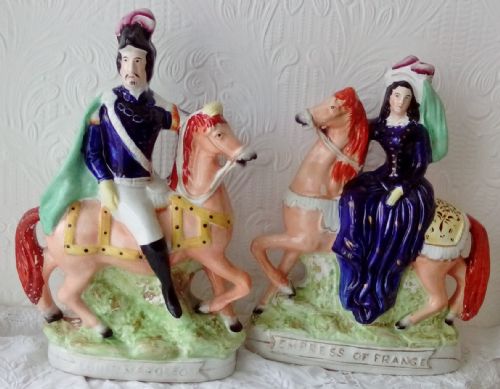
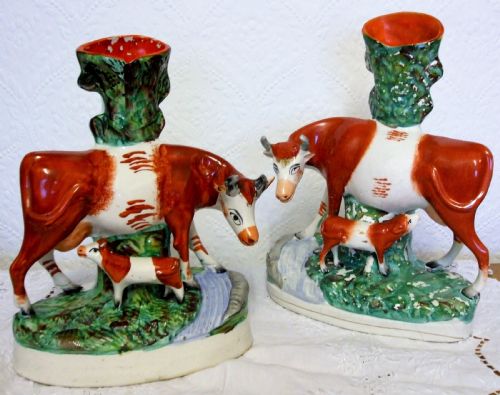
The pieces on this page span the late nineteenth century, predominantly featuring Staffordshire pottery figures and pairs of spill holders. Common subjects include royal portraits, literary characters, Scottish figures, and pastoral scenes featuring animals like cows and calves.
Makers produced these ornaments to brighten modest homes, combining popular portraiture with functional vessels like spill vases used to hold tapers for lighting fires. They survive today as charming examples of Victorian mantelpiece decoration.
How they were made
Potters shaped these earthenware figures using press moulds, joining the front and flat back sections before firing the ceramic body. This technique allowed for efficient mass production of popular subjects while keeping the weight light enough for a mantle shelf.
Once fired, artisans applied enamel paint and lead glaze over the ceramic surface to add bright colour and a protective shine. The characteristic hand-painted details in the enamel give each piece its individual expression and lively palette.
Antique Flatback Mantle Ornament Retail Price Guide 2026
Typical asking prices for flatback mantle ornament among the pieces listed under this phrase on Sellingantiques today, from the lower quarter to the upper quarter. They describe what is for sale here now, not the wider market.
What varies in quality
Pairs show greater desirability when the two figures match closely in size, stance, and decoration, reflecting the skill of the pottery in producing balanced mantel displays.
The Antique Flatback Mantle Ornament Glossary
- Flatback
- A figure moulded with a detailed front and a flat, unadorned reverse designed to stand against a wall. This construction saved clay and kept the piece stable on a narrow mantel shelf.
- Spill vase
- A hollow pottery cylinder integrated into a figure or pairing, intended to hold wooden spills for lighting candles or fires. They combine domestic utility with decorative portraiture.
- Earthenware
- A porous, opaque ceramic fired at lower temperatures than porcelain. It forms the standard body for Victorian Staffordshire pottery figures.
- Enamel glaze
- A vitreous coating mixed with enamel paint used to colour and seal the ceramic surface. It provides the glossy finish characteristic of these nineteenth-century ornaments.
Antique Flatback Mantle Ornament: Frequently Asked Questions
What is an antique flatback mantle ornament?
It is a Victorian earthenware pottery figure or spill vase designed with a flat back to stand securely on a mantelpiece. These pieces often depict historical figures, literary characters, or animals.
Potters created them during the nineteenth century to adorn domestic parlours with colourful and engaging ceramic art.
Where were these figures made?
The majority of these pieces originate from the Staffordshire potteries in England during the Victorian period. They were produced in large quantities for the domestic market.
Potteries in the region specialised in press-moulded earthenware decorated with hand-applied enamel paints.
How were spill vases used?
Spill vases served a practical purpose by holding thin wood tapers known as spills next to the fireplace. People used these spills to transfer a flame from the fire to candles or lamps.
In many Victorian ornaments, the vase forms part of a figural composition depicting animals or pastoral scenes.
How do you date a flatback figure?
Dating relies on stylistic clues, historical subjects, and the characteristics of the ceramic body and lead glaze. Victorian examples typically date from the mid to late nineteenth century.
Subjects depicting specific historical events or rulers, such as Napoleon III, help narrow down the period of production.