



English Country Pottery Ornament
An English country pottery ornament brings unmistakable folk charm into a room, capturing Victorian life in durable earthenware through figures, animals, and cottages.
English Country Pottery Ornament
An English country pottery ornament encompasses figures, animals, and architectural pieces created during the nineteenth century. These objects include decorative figurines, spill vases, flatback figures, and portrait busts that populated domestic interiors during the Victorian period.
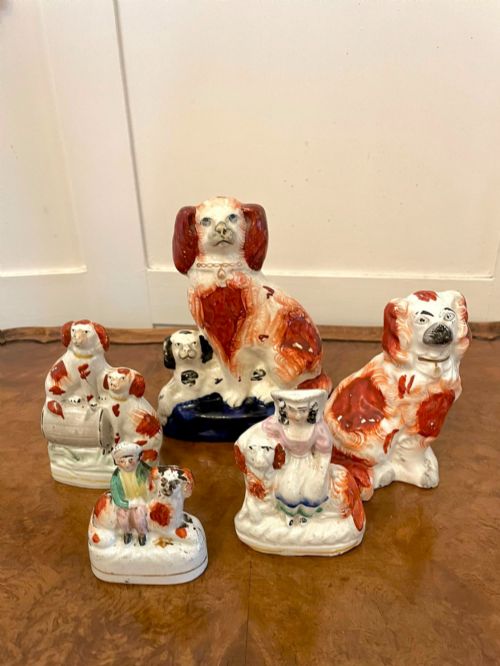
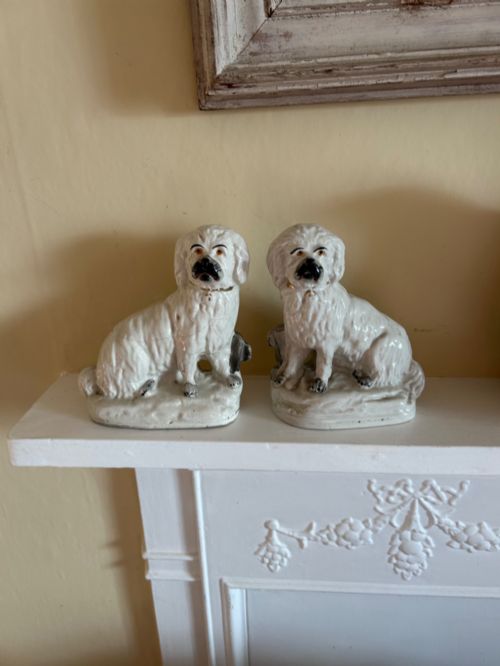
The most common examples encountered on this page are Staffordshire pottery figures, ranging from paired spaniels and terriers to theatrical characters, hunting dogs, and Scottish lairds. Makers produced these pieces for mantelpieces and shelves, combining portraiture, folk art, and everyday rural themes.
Forms span simple pearlware sheep and lambs from around eighteen hundred to larger flatback figures and cottages dated towards eighteen eighty. Buyers encounter both single decorative objects and matched pairs designed to sit symmetrically on either side of a fireplace centre.
What varies in quality
The condition of the glaze and the preservation of the original enamel paint strongly influence the character of each piece. Intact surfaces with minimal wear retain the lively visual appeal intended by the nineteenth-century potter.
English Country Pottery Ornament Retail Price Guide 2026
Typical asking prices for english country pottery ornament among the pieces listed under this phrase on Sellingantiques today, from the lower quarter to the upper quarter. They describe what is for sale here now, not the wider market.
Walton
The English Country Pottery Ornament Glossary
- Flatback
- A figure moulded with a detailed front and a flat, unpainted or simply glazed back designed to stand against a wall.
- Pearlware
- A refined type of earthenware developed in the late eighteenth century featuring a subtle bluish glaze over a white body.
- Spill vase
- A hollow ceramic figure incorporating a small cylindrical holder designed to store wooden spills used for lighting fires.
- Lead glaze
- A glossy coating containing lead oxide applied to ceramics before firing to create a durable, waterproof surface.
English Country Pottery Ornament: Frequently Asked Questions
What is an English country pottery ornament?
These ornaments are nineteenth-century ceramic figures and objects made primarily in Staffordshire for domestic display. They depict animals, historical figures, cottages, and theatrical characters in glazed earthenware.
Potters painted these pieces by hand using enamel colours over a ceramic body. They served as mantelpiece decoration in Victorian homes.
Where were these pottery ornaments displayed?
Victorian households placed these figures on mantelpieces, sideboards, and shelves where they added colour to the room. Flatback figures suited narrow mantel ledges because their unglazed backs sat flush against the wall.
Pairs of dogs, sheep, or theatrical figures often stood symmetrically at either end of a fireplace. Their cheerful presence brought rural and popular culture into the Victorian parlour.
How can I tell the age of a Staffordshire figure?
Dating relies on stylistic clues, materials such as pearlware versus later earthenware, and subject matter reflecting the nineteenth century. Earlier pieces from around eighteen hundred often display simpler forms and pearlware glazes.
Later Victorian flatback figures from the eighteen eighties tend to feature bolder enamel painting and more complex architectural or theatrical subjects. Examining the ceramic body and glaze helps confirm the period.
How do I care for antique pottery ornaments?
Keep these glazed earthenware pieces out of direct sunlight to protect the hand-painted enamel colours from fading over time. Dust them gently with a soft, dry cloth rather than using liquid cleaners.
Place them on stable surfaces away from high-traffic areas to prevent accidental knocks. Careful handling preserves the original glaze and delicate ceramic details.